
Being referred for an apicoectomy can introduce an unfamiliar word at an already stressful time. You may have a tooth that has received root canal treatment, a crown that seems intact, and an area near the root that is not healing as expected. The proposed procedure approaches the root from a different direction, which can make the explanation difficult to picture at first.
For someone considering apicoectomy and root-end surgery in Milton, the most useful starting point is the reason for recommending it. Ask what the clinician is trying to resolve, why surgery fits the findings, and how the tooth will be monitored afterwards. A good consultation makes the decision understandable before you begin organizing time off or thinking about recovery.
What the procedure is intended to do
An apicoectomy is a form of endodontic surgery involving the end of a tooth’s root. The American Association of Endodontists describes root-end surgery as an option when inflammation or infection persists around the root after root canal treatment. The clinician accesses the area through the gum, removes affected tissue and the root tip, and may place a small seal at the root end before closing the site.
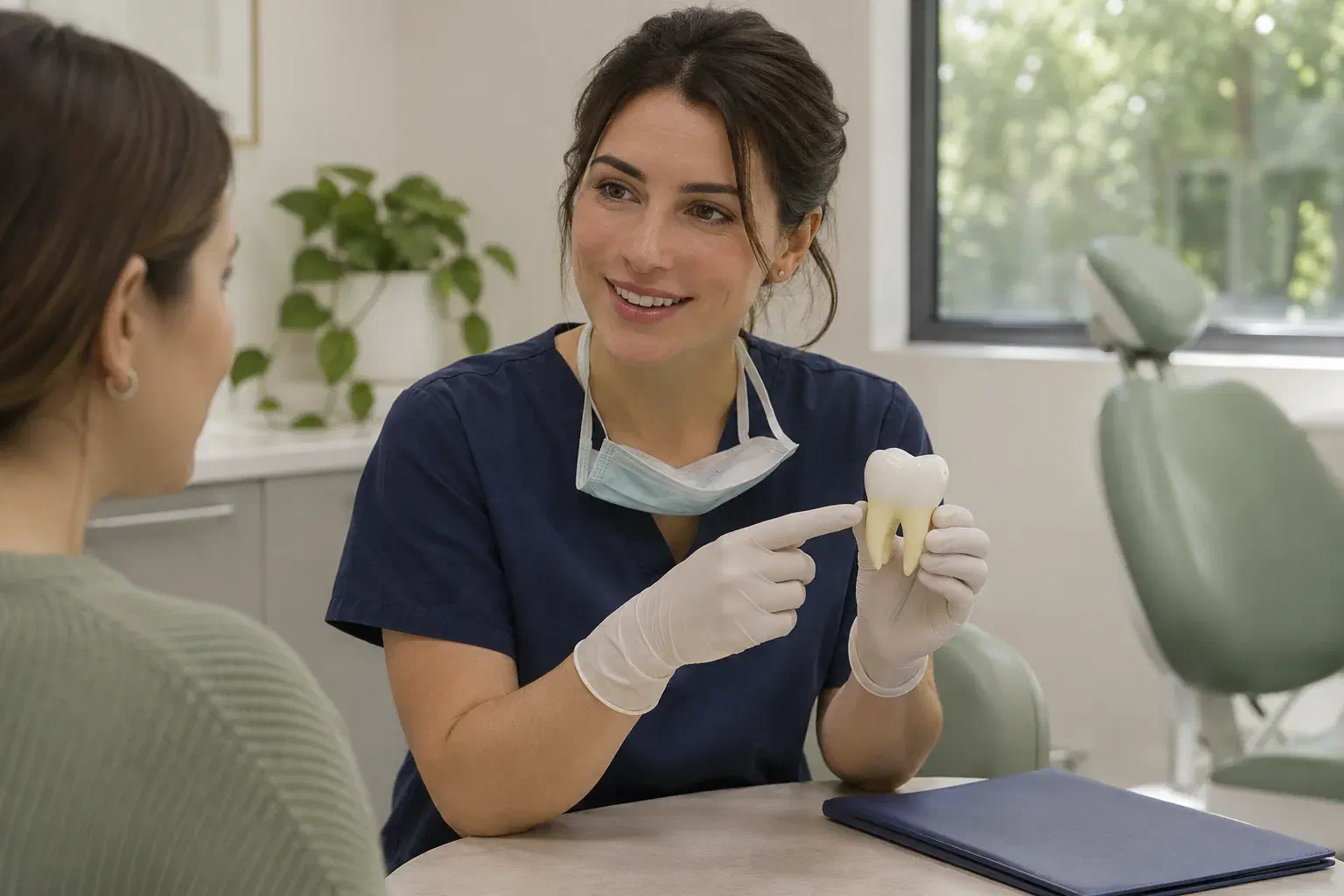
That description explains the general approach. Your procedure depends on the tooth, its position, the previous treatment, and nearby anatomy. Ask the clinician to point out the relevant area on an image or model. You should be able to identify the tooth involved and explain, in your own words, what part of it is being treated.
The aim is to retain a suitable natural tooth. It is not a guarantee that every tooth with a persistent problem can be saved through surgery.
Why another root canal procedure may not be the first choice
One of the most useful consultation questions is why the clinician recommends approaching the root surgically instead of reopening the tooth. There may be features of the existing restoration or canal system that influence the decision. Ask for the reason in your case rather than assuming surgery is simply the next step after any unsuccessful treatment.
Nonsurgical retreatment deserves consideration when appropriate. Our guide to root canal retreatment explains the questions involved in reopening and reassessing a previously treated tooth. The two approaches are different, and the preferred option should follow the clinical findings.
If you hear several possible explanations, ask which one is best supported and which remain possibilities. It is acceptable for a clinician to explain that some uncertainty cannot be resolved until treatment. What matters is understanding how that uncertainty affects consent, the likely benefit, and the fallback plan.
Evaluate the whole tooth before arranging surgery
A root-end problem is only one part of the decision. Ask about the remaining tooth structure, crown or filling, gum support, and any concern about a fracture. If the surgical area heals, will the tooth still have a reasonable role in chewing and a restoration that can be maintained?
This discussion can prevent a narrow focus on one radiographic finding. It may also explain why two apparently similar teeth receive different recommendations. A tooth with a sound restoration and adequate support presents a different planning problem from one with extensive structural damage.
Request an explanation of the alternatives, including what would follow extraction if it becomes necessary. You do not have to choose a replacement immediately to ask about its broad implications. The comparison should include future appointments, maintenance, cost, and the effect on your bite, as well as the proposed surgical visit.
If you are seeking a second opinion, take the existing images and treatment summary when available. Ask the reviewing clinician to address the same tooth and the same proposed outcome. That makes differences in recommendations easier to understand and helps separate a difference in diagnosis from a difference in preferred treatment approach.
Ask about risks in relation to the tooth’s location
General descriptions of surgery cannot tell you which risks matter most for an individual site. The Gloucestershire Hospitals apicectomy information discusses issues such as discomfort, swelling, gum recession, and the possibility that treatment may not succeed. Ask your clinician how the position of your tooth and nearby structures affect your own risk discussion.
For a visible front tooth, changes in the gumline may matter to you even if the tooth remains functional. Mention that concern before treatment. For another tooth, access or surrounding anatomy may be more relevant. A useful consent conversation connects the risk to something you can understand, rather than only listing technical terms.
If additional imaging is recommended, ask what it will clarify. It may help to write your questions in advance because it is easy to forget them while looking at unfamiliar images.
Clarify who will perform the procedure
Depending on the circumstances and referral arrangements, care may involve an endodontist or another appropriately trained dental clinician. Ask who is responsible for surgery, postoperative advice, and later assessment. A referral does not necessarily mean every subsequent visit will occur at the same office.
Confirm whether the first appointment is a consultation or a treatment visit. If it is a consultation, ask whether any preparation is needed beyond your medical history and previous records. If treatment is planned, follow the specific written instructions supplied by the treating team.
Tell the team about medications, allergies, previous surgical difficulties, and relevant medical conditions. Do not independently stop prescribed medicines because you have read a general surgery checklist online. The clinician needs to assess your circumstances and coordinate with your medical prescriber when necessary.
Prepare your day around the actual anaesthesia plan
Local anaesthetic and sedation are different matters. Ask what is planned and what that means for meals, driving, accompaniment, and returning to work. If sedation is involved, obtain the precise instructions in advance and make the required transport arrangements.
Think about your work rather than only the job title. A day spent at a desk, a shift involving heavy lifting, and several hours of public speaking may create different practical challenges after oral surgery. Describe the activities you actually perform so the clinician can advise appropriately.
Arrange meals and necessary supplies before the appointment using the office’s recommendations. If you care for children or another adult, consider whether some help would make the first part of recovery easier. Practical planning reduces the need to solve ordinary household problems while you are uncomfortable or tired.
Leave with clear written recovery instructions
After the procedure, ask the team to explain wound care, eating, brushing, activity, and any prescribed medicines. Instructions may vary with the surgical site and the closure used. A friend’s experience after a different operation should not replace the plan you receive.
Make sure you know whether sutures require removal and when the first review is expected. Ask what changes are anticipated over the next few days and what changes should trigger a call. Recovery is easier to judge when the team describes the expected direction, rather than simply saying that some discomfort is normal.
If pain medicine is recommended, clarify the product, dose, timing, and any restrictions that apply to your health or other medications. A pharmacist can help check medicine questions. Do not combine products casually; different brand names can contain the same active ingredient.
Look after the surgical area without repeatedly checking it
It is tempting to pull the lip away every hour to see whether the site is healing. Ask the clinician how to inspect the area safely and follow their advice about avoiding disturbance. Your role is to follow the care plan and report meaningful changes, not to test the wound.
Use the recommended cleaning approach and ask when you should resume your ordinary technique around the site. If instructions mention a rinse, establish exactly when and how it should be used. Do not add strong mouthwashes, peroxide, or other home treatments because they sound more thorough.
Keep the written instructions and office number together. If another person is helping you, let them read the same information. Consistent advice is especially useful when you are tired and cannot remember whether a particular instruction applied only to the first day or to the whole recovery period.
Separate early comfort from long-term healing
Feeling better is welcome, but it is not the sole measure of the result. The tissues around the root need follow-up, and the clinician may recommend later imaging at an appropriate interval. Ask how they will judge healing and when that assessment is expected.
The AAE’s surgery overview notes that healing around the root takes place over the following months. This is one reason to keep review visits even after everyday activities feel normal again. The timing should be individualized rather than borrowed from someone else’s treatment schedule.
If you are moving or will be away for an extended period, discuss follow-up before surgery. Find out whether a local review can be coordinated and which records should travel with you. A plan that works on the day of treatment also needs to work during the months afterwards.
Know which changes deserve an earlier call
Contact the treating office for bleeding that is not controlled by the instructions you were given, increasing or unexpected swelling, worsening pain, fever, or concerns about the wound. Explain when the change began and whether it is getting better or worse. If the office is closed, use the after-hours route they have provided.
Difficulty breathing or swallowing and rapidly spreading facial or neck swelling require emergency medical attention. Call 911 in Canada for a medical emergency. Do not wait for a routine dental review when those symptoms occur.
The consultation should end with more than a procedure name. You should understand why surgery is proposed, its limitations, what alternatives remain, and how the outcome will be reviewed. To begin that discussion, contact Milton Dental Clinic for an assessment and advice about appropriate referral. Bring the previous treatment history and the questions you most want answered before making a decision.
