
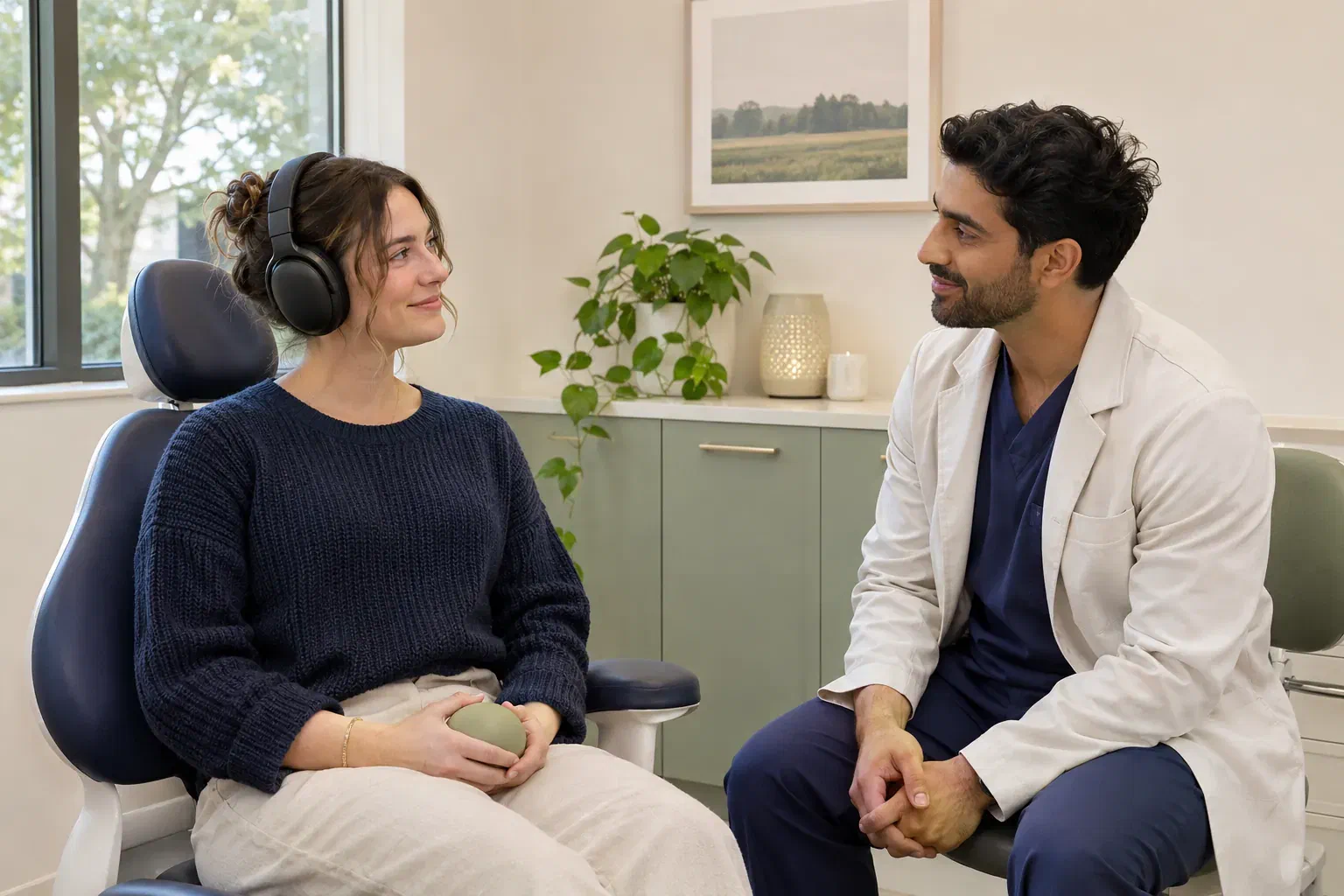
A dental appointment combines close physical contact, unfamiliar sounds, bright lighting, and a sequence of events that may be difficult to predict. For an autistic person, any one of those features can matter. Another autistic person may be comfortable with the equipment but find the phone call, waiting room, or open-ended questions much harder.
Autism-friendly dental visit planning in Milton therefore starts with the individual. A label such as autism-friendly is useful only when it leads to a conversation about actual adjustments. The goal is to make assessment and treatment more accessible while respecting the person’s communication, autonomy, and limits. No single sensory kit or appointment format suits everyone.
Describe what helps rather than assuming a standard package
Before booking, identify the two or three barriers most likely to affect the visit. Perhaps unexpected touch is difficult, spoken information becomes hard to process under stress, or waiting without knowing the delay creates distress. Concrete descriptions help the office understand what support is needed.
The NHS Autism Central guidance on healthcare recommends contacting a practice ahead of time to discuss adjustments and notes that an advance familiarization visit may sometimes be possible. Availability should be confirmed with the individual office.
A useful request might be, “Please explain before moving the chair,” or, “Written instructions are easier for me than instructions given while instruments are in my mouth.” These are specific enough for staff to act on. If you are arranging care for someone else, include that person’s own preferences wherever possible.
Make a brief appointment profile
A short written profile can reduce the need to repeat the same explanation to every team member. Include the preferred name, communication method, sensory concerns, helpful supports, and a clear pause signal. Add relevant medical information through the office’s usual process.
Keep the profile practical rather than trying to document a complete life history. A one-page note that a clinician can review before entering the room may be more useful than a long account that obscures the essential requests. You can offer additional context if needed.
Distinguish preferences from requirements. For example, a particular music choice may be helpful, while explaining touch before it happens may be essential to participation. Prioritizing those points allows the office to tell you what can be arranged and where another approach or referral may be needed.
Clarify the purpose of the first appointment
An appointment described as a checkup may include more steps than you expect. Ask whether it involves a conversation, examination, cleaning, images, or possible treatment. If the first visit is intended only for assessment and planning, have that understanding recorded.
You may prefer a written sequence: arrive, check in, meet the clinician, discuss the plan, examine as agreed, and review next steps. The sequence should allow for changes that are explained, rather than creating a promise that nothing unexpected can ever happen.
If a familiarization visit would help, ask what it would include and whether there is a fee. It may involve seeing the room or meeting staff without completing clinical care. Discuss how urgent dental needs will be handled separately so preparation does not become an indefinite barrier to necessary assessment.
For someone who uses visual preparation, ask whether the office can provide an accurate photograph of the entrance or room. Use images that match the actual setting when possible. A generic picture of a very different clinic may create expectations that add confusion rather than making arrival more predictable.
Reduce uncertainty around arrival
The journey and check-in can use considerable energy before treatment begins. Ask where to enter, what forms are required, and whether they can be completed ahead of time. If speaking at reception is difficult, ask about an alternative way to confirm arrival.
Discuss waiting preferences. Some people prefer a quieter space; others would rather wait outside and be contacted when the room is ready, if the office can support that arrangement. Confirm how you will receive updates and what happens if the schedule changes.
Choose timing based on your own pattern and the office’s capacity. An early appointment is not automatically best for someone who finds mornings difficult. Describe when communication, energy, or tolerance is usually strongest and see whether a workable time is available.
Match sensory adjustments to the procedure
Headphones, tinted glasses, a familiar object, or different lighting may help some people. Others find extra equipment distracting or uncomfortable. Ask which supports can be used safely during the planned procedure and how communication will be maintained if hearing is reduced.
Tell the team which sensations are difficult: suction noise, water pooling, vibration, flavours, or the chair moving backwards. The National Autistic Society’s dental guidance provides resources for autistic adults, families, and dental professionals, reflecting the value of preparation suited to the person.
Do not feel obliged to use every suggested aid. A support that looks reassuring in a photograph may not help you. The aim is a workable combination, with permission to change it if the experience differs from what you expected.
Agree on communication before instruments are introduced
A person may communicate fluently in a quiet conversation and find speech much harder during sensory stress. Discuss alternatives in advance, such as pointing to a written choice, using a device, or signaling with a hand. Make sure the device or communication board remains accessible.
Agree on what a pause signal means. For example, raising a hand can mean the clinician stops when it is safe, removes instruments, and allows time to communicate. The team should explain any brief step required to stop safely so the response is predictable.
Ask for processing time after questions. Repeating a question immediately in different words may add pressure rather than help. A short, concrete question followed by a quiet pause can be easier to answer than several options delivered at once.
Consent is a continuing conversation
Autism does not by itself establish whether someone can consent to treatment. The person should be involved directly in the discussion to the extent appropriate to their circumstances, and the team must address consent according to Ontario requirements. A support person does not automatically replace the patient’s voice.
The RCDSO’s consent guidance emphasizes communication of the information needed for a treatment decision. Ask for that information in a form you can use, with time to consider it where the clinical situation allows.
Silence, stillness, or enduring an uncomfortable situation should not be treated as a reliable communication plan. Agree explicitly on how the team will check understanding and willingness to continue. If you need a break to process a new recommendation, say so through your preferred method.
Decide what role a support person will have
A trusted person may help with remembering information, communicating preferences, or managing the journey. Before the visit, discuss whether you want them in the room, speaking only when invited, or helping with a specific task. Tell the office your preference.
For adults, it may be important that the clinician addresses the patient first rather than directing every question to the companion. For children, parents can provide valuable history while the clinician still explains steps directly to the child in an accessible way.
The support person can also help notice early signs that the plan is becoming difficult. Agree on how they should communicate that observation without speaking over the patient or creating a public discussion of private needs. Clear roles reduce uncertainty for everyone.
Plan for distress without turning the visit into a test
Discuss what should happen if the person becomes overwhelmed. Options may include a pause, reducing conversation, changing the environment, ending a nonurgent step, or reconsidering the treatment setting. Which options are appropriate depends on the clinical situation and available support.
Avoid framing success as tolerating everything without protest. Useful outcomes can include completing an agreed examination, identifying a source of pain, or learning which adjustment makes a future visit feasible. The plan still needs a route to necessary care, but progress should be described accurately.
If sedation or another treatment setting is raised, ask why it is being considered, what alternatives exist, and what preparation is required. It should be an individualized clinical discussion, not an automatic assumption based on an autism diagnosis.
Carry useful information into home care
After the appointment, request instructions in the format that works best for you: a short written list, photographs of the recommended tools, or a demonstration with time to practise. A long spoken explanation at the end of a demanding visit may be difficult to retain.
Describe sensory difficulties with toothpaste, brushing, or interdental cleaning. The dental team can help assess suitable alternatives while keeping preventive needs in view. Do not assume that difficulty with one flavour or brush means no routine can work.
For caregivers, ask how to provide support respectfully and safely. A routine should account for consent, comfort, and the person’s ability to participate. Avoid turning every evening into an escalating struggle; bring persistent barriers back to the dental team for a more workable plan.
Review the visit while the details are fresh
After some recovery time, note what helped and what should change. Perhaps the written sequence worked but the waiting area was difficult, or the lighting adjustment helped while headphones complicated communication. Specific feedback can improve the next visit more than a general label of good or bad.
Ask the office to record the successful adjustments, while recognizing that needs can vary between appointments. Keep your own copy of the profile and update it when preferences or health information change. If a different clinician will provide the next stage, confirm that the information will be available.
You can contact Milton Dental Clinic to discuss appointment needs before booking. Explain the dental concern and the adjustments that would help, and ask what can be accommodated. Accessible planning works best when the person, their chosen supporters, and the dental team share a clear, practical understanding of how the visit will proceed.
