
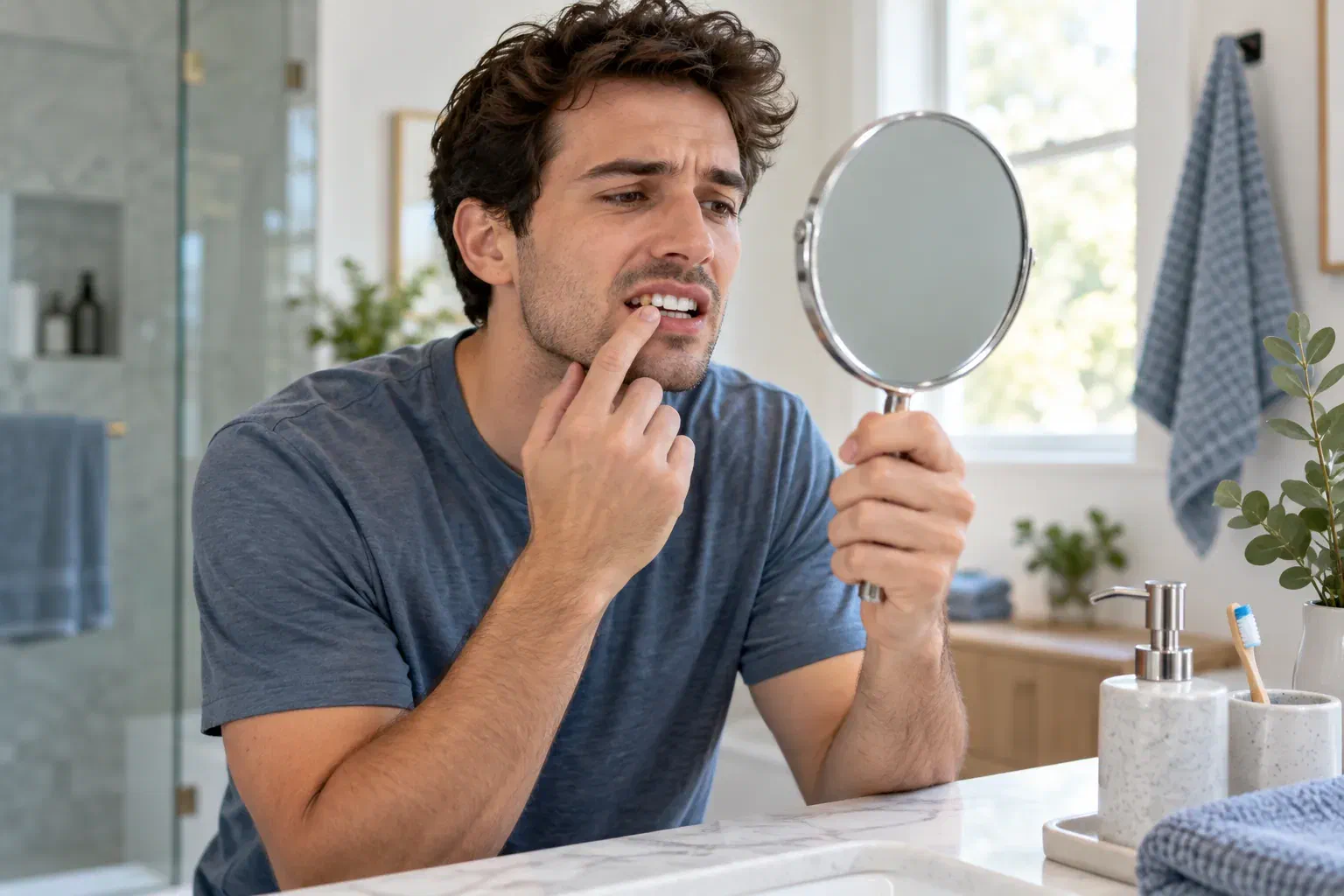
A chipped front tooth is difficult to ignore. Even a small change can feel large to your tongue, catch your attention in a mirror, or make you hesitate before smiling. If it happened during a fall or a collision, concern about appearance may arrive alongside uncertainty about whether the tooth has suffered a deeper injury.
The next step is an assessment, not an immediate assumption about the repair. For a chipped front tooth in Milton, the right plan depends on the extent of the damage, symptoms, and the condition of the rest of the tooth. Some repairs are limited; others require investigation and follow-up before a lasting decision can be made. Knowing what to do first can make a stressful moment more manageable.
Check for more than the visible chip
After an accident, consider the whole injury. Is the tooth loose, pushed out of position, or missing entirely? Is there a cut to the lip or tongue? Was there a head injury, loss of consciousness, or difficulty breathing? Tell the dental office about the event rather than describing only the size of the missing corner.
Serious facial injury, uncontrolled bleeding, or symptoms suggesting a head injury may require emergency medical assessment. Call 911 for a medical emergency. A tooth that has been knocked out is also a time-sensitive dental emergency and needs different instructions from a small chip; see our guide to a knocked-out tooth while arranging immediate professional help.
For a chip without those emergency features, contact a dentist for advice on timing. Do not use the absence of pain as proof that there is no deeper injury. The American Association of Endodontists’ guidance on traumatic dental injuries explains why injured teeth need professional evaluation, including assessment of damage that may not be obvious at first.
Keep a fragment if you find it
If you can safely find the broken piece, keep it and bring it to the dentist. The NHS guidance on chipped and broken teeth advises storing a fragment in milk or saliva because reattachment may be possible in some cases. Use a clean container rather than holding a loose piece inside the mouth, where it could be swallowed or inhaled.
Do not delay urgent care while searching for a fragment. The dentist can still assess the tooth and discuss options when the piece is missing. Also avoid scrubbing, filing, or trying to reshape either the fragment or the remaining tooth.
Household glue is not a dental repair material. Trying to attach the fragment yourself can complicate assessment and expose oral tissues to unsuitable substances. Bring the piece as it is, explain where you found it, and let the dentist determine whether it has a useful role in treatment.
Protect the area while you arrange care
Avoid biting hard foods with the affected tooth and avoid repeatedly testing whether it can still withstand pressure. Choose foods that are comfortable to eat and do not require forceful biting through the front teeth. If the edge is cutting your lip or tongue, ask the dental office for advice rather than filing it down at home.
The ADA’s dental-emergency guidance recommends gently rinsing after a broken tooth and using a cold compress for swelling. It also warns against placing aspirin directly against the gums or tooth. If you need pain relief, ask a pharmacist or clinician what is appropriate for you, considering your medicines and health conditions.
Keep the area clean gently. If brushing is difficult because of tenderness, tell the dentist. Avoid assuming that leaving an injured area untouched for several days is the safest option. The office can help you balance comfort with appropriate care until the tooth is examined.
Give the dentist a useful account of the event
Write down approximately when the chip happened and what caused it. A fall, a blow during sport, biting something hard, and an edge breaking without a clear event provide different context. Mention whether the tooth had a filling, crown, or previous injury.
Describe symptoms in ordinary language. Is cold water uncomfortable? Does the tooth hurt when you bite? Has the bite changed? Does the tooth feel loose? If the tooth looked different before the accident, a recent photograph may help explain its previous shape, although it does not replace examination.
For a child, tell the team the child’s age and whether you know if the tooth is a baby or permanent tooth. Do not guess if you are unsure. Advice and treatment choices depend on the tooth involved and the child’s development, so that distinction should be established by the clinician.
Why a small-looking chip may need a fuller assessment
The dentist will consider more than the visible missing piece. The remaining tooth, surrounding tissues, bite, and response to appropriate tests can help determine the extent of injury. Images may be recommended when they would add useful information.
The AAE’s information on cracked teeth distinguishes different patterns of damage and explains that treatment depends on their location and extent. A surface chip and a deeper fracture are not interchangeable diagnoses. You cannot determine the full pattern solely by how sharp the edge feels.
Ask whether the assessment is complete or whether the tooth needs review over time. An initial repair may address the edge or appearance while follow-up checks assess how the tooth responds after trauma. Understanding that distinction helps avoid interpreting a later review as evidence that the first appointment was unnecessary.
Repair may involve several possible approaches
For some limited chips, smoothing or a tooth-coloured repair may be considered. In selected cases, the original fragment can be reattached. More extensive damage may lead to a discussion of a crown or other treatment. The NHS patient guide outlines these broad possibilities without suggesting that one applies to every broken tooth.
Ask how much healthy tooth would need to be changed for each reasonable option. Also ask whether the proposal is intended to be a temporary measure or the definitive restoration. Those questions are especially useful when an immediate cosmetic concern makes it tempting to choose the fastest-sounding solution.
If the pulp inside the tooth is involved, the conversation may include treatment beyond replacing the missing edge. The dentist should explain the finding and the purpose of any additional procedure. Root canal treatment is not automatically required simply because a tooth is chipped, and a cosmetic repair alone is not sufficient for every injury.
Discuss the shape as well as the colour
A front tooth affects the outline of the smile. Tell the dentist whether your concern is the uneven edge, a visible colour difference, a gap, or how the tooth feels against your lip. Being specific gives the repair discussion a clearer target than simply asking for it to look normal.
Consider how the tooth looked before the chip. Was the edge naturally rounded, slightly uneven, or longer than the neighbouring tooth? A photograph can be useful for discussing those preferences, particularly if the injury changed a feature you liked.
Ask what can realistically be matched and whether the result needs to be judged after the tooth has been cleaned or after the immediate injury has settled. Lighting can change the appearance of teeth and restorative materials. The goal is a result that fits your mouth, not a guarantee that a repair will be invisible under every possible condition.
A special event does not remove the need for assessment
If you have a wedding, interview, school photograph, or presentation coming up, tell the office when you call. The team can explain what may be possible within that timeframe and whether the first appointment is likely to focus on assessment, protection, repair, or a combination.
Avoid assuming that a short-term cosmetic improvement is the final answer to the injury. Ask whether further treatment or monitoring will still be needed after the event. If a temporary approach is used, find out how to care for it and what limitations apply.
Planning openly is better than waiting until the day before an important occasion. It gives the dentist a chance to explain choices and gives you time to understand the difference between what can be done promptly and what requires more information or additional appointments.
Protect the repair during everyday use
Once the tooth is repaired, ask for instructions specific to the material and the injury. Find out whether there are temporary eating restrictions and whether you should avoid biting directly with the tooth while treatment is incomplete. Do not assume that every front-tooth repair has the same aftercare.
Habits such as opening packages with teeth, biting pens, or chewing ice are worth discussing. If the chip happened during sport, ask about appropriate mouth protection before returning to that activity. If you notice repeated chipping without an obvious accident, explain that history so the dentist can investigate contributing factors.
Keep brushing and cleaning between teeth according to the advice you receive. Report a repair that becomes rough, loose, or uncomfortable. A small change noticed early is easier to describe than a problem you have been compensating for by changing how you bite for months.
Follow-up matters after an injury
Attend the review appointments recommended for the injured tooth, even if the appearance has been restored and the tooth feels comfortable. Ask what the dentist is monitoring and which changes should prompt a call before the scheduled visit.
New pain, swelling, increasing looseness, or a noticeable change in the tooth’s colour should be reported. Do not repeatedly test the tooth to decide whether it is still injured. Instead, note when the change began and whether it is affecting eating or sleep, then contact the office for guidance.
If you move or change dental practices during follow-up, make sure the new dentist knows about the injury. Records of the event, images, treatment, and reviews can provide useful context. A repaired front tooth may look ordinary to someone who has not heard the history.
Arrange help with a clear first call
When calling about a chipped tooth, explain when it happened, whether there was an accident, and whether there is pain, bleeding, looseness, or a change in position. Mention any recovered fragment and any important event affecting your scheduling. These details help the team understand what kind of appointment is needed.
For assessment and advice, contact Milton Dental Clinic at (905) 876-4488. A front-tooth chip can be upsetting, but you do not need to decide on the final repair before making the call. The first task is to understand the injury; the next is to choose a repair and follow-up plan that fit the tooth.
