
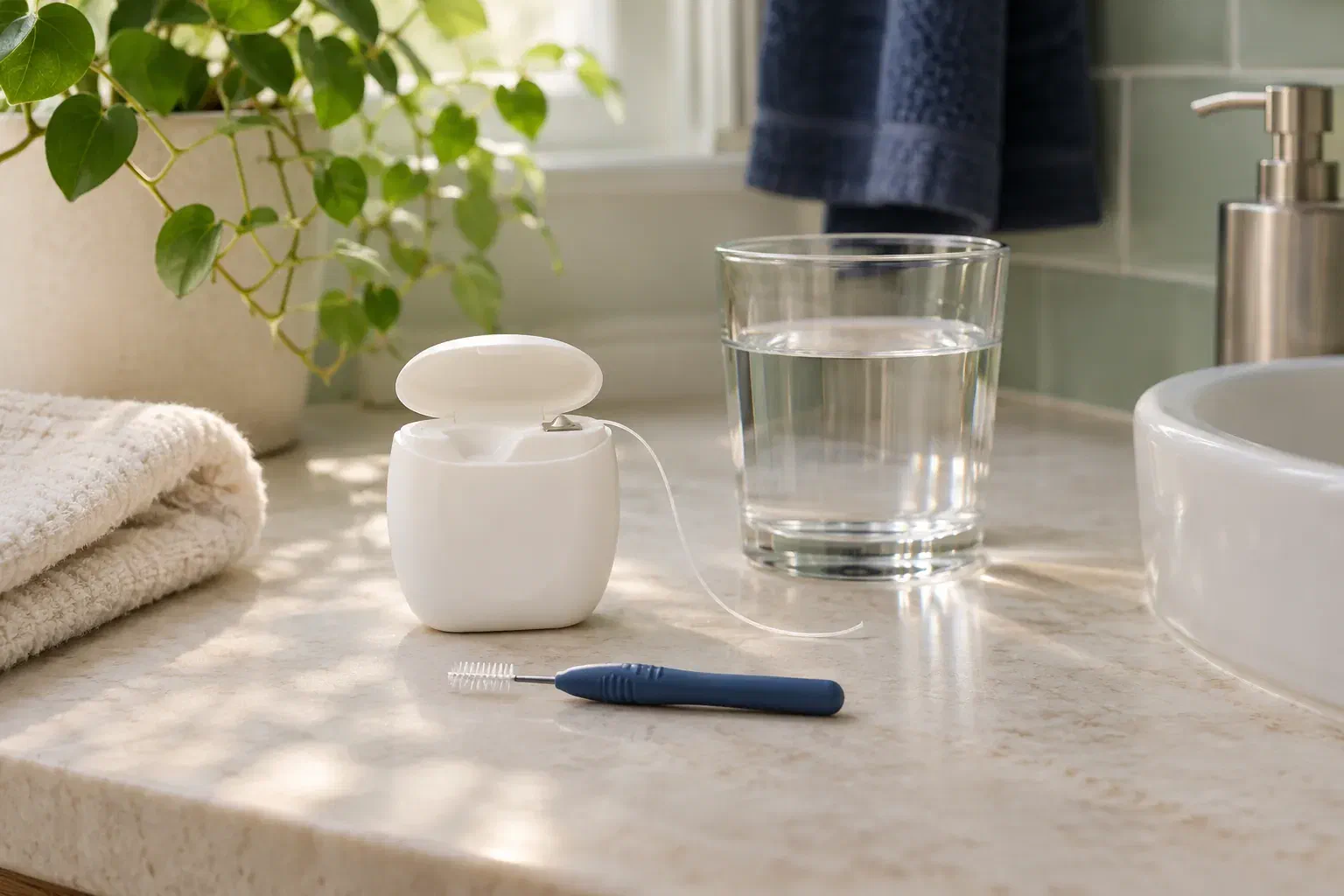
An occasional piece of food between teeth is familiar. A particular space that traps food after nearly every meal is different. You may find yourself chewing on the other side, carrying floss everywhere, or spending several uncomfortable minutes trying to clear the same spot. The repeated pattern is worth bringing to a dental appointment.
Food getting stuck between teeth in Milton is a reason for assessment when it is persistent, painful, or newly noticeable. The important question is why that location keeps catching food. Cleaning the space may provide relief, but an examination can determine whether tooth shape, a restoration, gum changes, or another finding needs attention.
The pattern tells a useful story
Notice whether the food trap has always existed or appeared recently. A longstanding space that is easy to clean raises different questions from a new problem after a filling, a chipped tooth, or a change in the bite. You do not need to identify the cause before calling; describing the timing gives the dentist a useful place to begin.
Try to identify the location in everyday terms, such as between two lower back teeth on the left. Record whether the feeling is pressure in the gum, a sharp edge, temperature sensitivity, or pain during chewing. Mention whether the discomfort disappears after gentle cleaning or continues afterward.
There is no need to deliberately eat troublesome foods to reproduce the problem. A short record of what happens during normal meals is enough. If you have begun avoiding otherwise comfortable foods or taking much longer to eat, include that in the description. Those changes show how much the problem is affecting daily life.
Why brushing alone may leave the area feeling full
Toothbrush bristles do not reliably reach every surface between neighbouring teeth. Interdental cleaning has a separate role: removing debris and plaque from these spaces. The American Dental Association describes floss and other interdental devices, including appropriately selected brushes and water flossers, as ways of reaching areas that ordinary brushing can miss. ADA guidance on floss and interdental cleaners.
However, the fact that interdental cleaning is useful does not mean repeated food trapping should simply be accepted. If a space remains uncomfortable despite gentle, effective cleaning, the solution may require more than changing brands of floss. The dentist needs to look at the local conditions.
Bring the cleaning tool you currently use. Demonstrating where it catches or fails to reach can be helpful, provided you do not force it into a painful area. A hygienist can check technique and fit while the dentist assesses whether there is a structural reason for the recurring problem.
The contact and the space below it are different
Two neighbouring teeth may touch near their chewing surfaces while leaving a space closer to the gum. Understanding that distinction helps explain why floss can pass through a tight point and still enter a larger area underneath. Conversely, a contact that feels more open than before may allow food to enter differently.
During the examination, the dentist can assess where the teeth meet, the shape of nearby restorations, and the condition of the gum between them. If an image is needed, its purpose should be explained. A radiograph is one source of information; it does not replace inspecting the surfaces and listening to the symptom history.
Ask the clinician to show the area on a photograph or model. Seeing where food is collecting can make the cleaning advice much clearer. It can also help you understand why a recommendation involves a restoration in one case and a change in interdental technique in another.
New trapping after a filling deserves a review
If the problem started after dental work, contact the treating practice and describe the timing. Do not assume you must wait for the next routine visit because the filling is new. A review allows the dentist to evaluate the contact, contour, bite, and surrounding tissues in the context of the procedure.
Be specific about what has changed. Does floss now shred? Does it slide through more easily than before? Does food pack into the space only when you chew a certain type of meal? These observations are more informative than saying the filling “feels wrong,” although that concern is also a valid reason to seek review.
Avoid trying to smooth an edge yourself with a file or other object. Also avoid pulling repeatedly on material that feels caught around the restoration. Let the office know if floss becomes trapped, and ask how to manage the area until it is checked. A home repair can create a second problem without resolving the first.
Use tools made for the job
When something is lodged between teeth, reaching for a pin, fingernail, folded card, or cutlery can be tempting. The ADA’s patient information specifically cautions against using unusual objects to remove food and encourages suitable interdental products. Gentle cleaning is preferable to pushing a sharp object into the gum. MouthHealthy information on flossing.
If you use floss, guide it carefully rather than snapping it down. If you use an interdental brush, the size and access should be comfortable; forcing a large brush through a tight space is not a useful test of thoroughness. A water flosser may suit some routines, but it does not eliminate the need to investigate persistent symptoms.
Stop trying to excavate the area if gentle cleaning does not resolve the feeling. What seems like a trapped piece of food may be another problem, and repeated probing can leave the tissue sore. Contact the dental office for advice, especially when pain, swelling, or bleeding is increasing.
The gum’s response matters as much as the food
Persistent tenderness, a swollen bump, a bad taste, or bleeding around the food trap should be reported. The clinician will want to know whether these signs are limited to one location or occur elsewhere. Local discomfort does not tell you the full condition of the supporting tissues.
If there is worsening facial swelling, fever, or significant pain, seek prompt dental advice. Difficulty breathing or swallowing, or swelling spreading toward the eye or neck, requires emergency medical attention. Do not keep treating a worsening problem as an ordinary food trap because that was how it first presented.
The gum disease warning signs article may be relevant if the assessment identifies a broader concern, but a recurring food trap does not by itself prove gum disease. Diagnosis depends on examination. It is possible to have several issues around one area, which is why the dentist may discuss more than one next step.
Food choices can reduce frustration while you wait
Until the area is assessed, it is reasonable to avoid repeatedly provoking a painful spot. Choose meals you can manage comfortably and keep your overall diet varied. Do not respond by excluding whole food groups indefinitely or relying only on sweet drinks and snacks because they are easy to swallow.
Cutting suitable foods into smaller pieces may be more practical than taking large bites that repeatedly pack the same gap. This is a temporary comfort measure, not a repair. If the problem has become severe enough that you struggle to eat, tell the office when arranging the appointment.
For work or school, a small clean container with your recommended interdental supplies may make after-meal care easier. Store reusable tools according to their instructions and replace damaged items. The goal is a simple routine you can use discreetly, rather than an elaborate kit that still leaves the underlying issue unexamined.
Repairs should address the reason for the trap
A treatment recommendation should explain what is being corrected. Replacing an entire restoration is different from making a minor adjustment, and a naturally open space is different from a newly damaged contact. Ask which finding the proposed treatment is intended to change and how the dentist will judge whether it helped.
There may be tradeoffs. Altering a restoration can affect its contour or contact, while managing a space through cleaning may leave the original shape unchanged. You should understand why one approach is considered appropriate for your tooth and what alternatives are reasonable.
If the recommendation is to monitor, request a plan for continued discomfort. How long should you try the revised cleaning technique? What symptoms mean you should return sooner? A clear follow-up prevents a recurring nuisance from becoming an indefinite experiment with different products.
Explain the problem when away from your usual dentist
If the food trap becomes troublesome while travelling or after moving to Milton, describe any recent treatment in that area. A date and the type of restoration can help the examining dentist request relevant records. Bring a list of symptoms and mention whether the problem existed before the dental work.
If temporary management is provided, obtain a short summary for your regular practice. It should identify what was found, what was done, and what still needs review. This prevents an uncomfortable space from being repeatedly treated as a brand-new concern when the history could help explain its persistence.
Recheck the experience of eating afterward
After an adjustment or treatment, pay attention to ordinary meals rather than repeatedly testing with a hard object. Notice whether the original pressure returns, whether cleaning feels easier, and whether the gum is becoming more comfortable. Report persistent symptoms instead of assuming the first treatment must have settled everything.
If your usual tool no longer fits, request a new demonstration. A changed contact or contour may call for a different approach. The professional teeth cleaning page and oral hygiene instruction page describe related care that can support a more manageable routine.
Repeated food trapping deserves an explanation that matches the exact space. A focused appointment can connect the timing, tooth shape, gum findings, and cleaning experience into a practical plan. For someone in Milton who is tired of interrupting every meal to clear the same area, that is a more useful endpoint than simply collecting another type of floss.
