
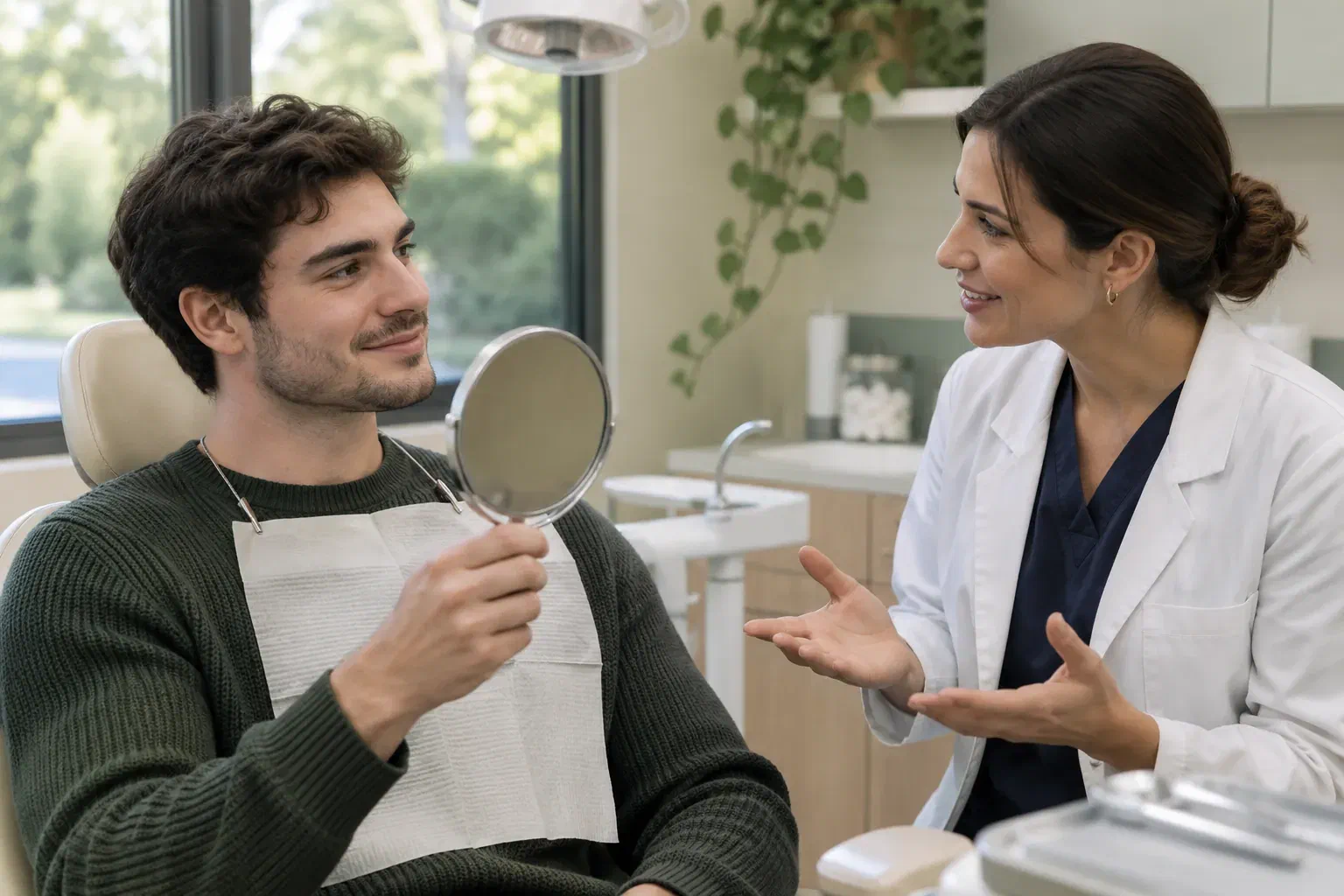
A lateral incisor is the tooth beside a central front tooth. When it develops smaller or more tapered than expected, the difference can affect the spaces and proportions of the smile. Some people barely notice it. Others become aware of it during orthodontic treatment or when comparing the two sides in a photograph.
An assessment of small lateral incisors and peg-shaped teeth in Milton should begin with the person’s own concern. A smaller tooth is not automatically unhealthy or in need of cosmetic treatment. The useful discussion considers its condition, position, available space, bite, and whether a change would offer a worthwhile benefit for that individual.
Identify the tooth before choosing a treatment
The phrase peg-shaped usually describes a tooth that tapers more than expected. A small tooth may also have an ordinary shape but reduced dimensions. These descriptions help communication, but an examination is needed to confirm what is present and whether other developmental findings affect the plan.
University College London Hospitals notes that some people with hypodontia have small or tapered teeth and describes composite material as one way of changing their shape. That association does not mean every small lateral incisor is accompanied by missing teeth. UCLH information on hypodontia and tooth shape.
Bring up any history of delayed eruption, retained baby teeth, or previous orthodontic treatment. If one lateral incisor is small and the other seems absent, say so. The dentist can establish whether the concerns belong to one broader plan or need separate assessment.
Start with the change you actually want
Before discussing materials, describe the feature that bothers you. It might be the pointed tip, a gap beside the tooth, uneven width, or a difference in the gumline. Saying “make it look normal” leaves a great deal open to interpretation and may lead to a proposal more extensive than you intended.
Ordinary photographs can help, especially ones that show your natural smile rather than only an extreme close-up. Explain which features you would like to preserve. Some people prefer a subtle adjustment that leaves natural variation; others want a more symmetrical result. Neither preference should be assumed.
If you are comfortable with the appearance and the tooth is healthy, discuss whether observation is reasonable. Learning about options does not commit you to treatment. For a teenager, make sure the conversation reflects their own priorities rather than only an adult’s concern about how the teeth look.
The available space shapes the possible result
Making a narrow tooth wider sounds simple until the surrounding spaces are examined. There may be more room on one side than the other, an adjacent tooth may be rotated, or the opposing teeth may limit how the surface can be built. These are reasons to evaluate the whole local arrangement before adding material.
Ask the dentist to explain whether the existing space is suitable for the proposed shape. If orthodontic movement would improve the arrangement, have the restorative clinician and orthodontist agree on the intended dimensions before movement begins. A tooth can be aligned neatly yet still lack the space needed for a balanced restoration.
This is especially relevant near the end of braces or aligner treatment. Do not assume all gaps should be closed before the bonding consultation. Some spaces may be deliberately arranged for later reshaping. Confirm the plan before final retainers are made, because changing tooth contours can affect appliance fit.
Composite bonding may allow an additive approach
Bonding uses tooth-coloured material shaped on the tooth. The Canadian Dental Association explains that bonding and veneers can change colour, shape, or spacing, with bonding generally used for smaller areas and veneers covering the front surface. Suitability depends on the tooth and clinical situation. CDA guidance on bonding and veneers.
For a small lateral incisor, ask whether the proposed change can be mainly additive and how much, if any, tooth preparation is expected. The word bonding does not by itself describe every step or guarantee that treatment is entirely reversible. Have the clinician explain the actual procedure being proposed.
Also ask how the material will meet the gum and adjacent teeth. A restoration should be considered as something you will clean, bite with, and maintain, not only photograph. The cosmetic dental bonding article provides broader background, while your consultation should focus on the size and position of the particular tooth.
A preview can reveal preferences before treatment
A drawing, digital proposal, model, or temporary mock-up may help you judge the intended shape. Ask what the preview represents and whether it can show the tooth during speech and smiling rather than only from straight ahead. A shape that looks appealing on a close-up may feel too prominent in the whole face.
Pay attention to width, length, edge shape, and the way light reflects from the surface. Use ordinary language to describe what you like or dislike. You do not need to know technical dental proportions to say a proposed tooth looks too square or the change feels larger than expected.
Remember that a preview is a discussion aid. The final result depends on the clinical situation, material, and treatment details. Have the dentist identify any limits that are not obvious in the simulation, such as bite constraints or a gumline that the proposed bonding will not change.
If you want time to consider the proposal, ask whether you can keep a photograph of the preview. Reviewing it calmly can help you express a specific preference at the next discussion instead of making a rushed decision in the chair.
Veneers require their own consent discussion
Ceramic veneers may be considered in some circumstances, but they are not automatically the next step simply because a tooth is small. Ask why a veneer is preferred over bonding, orthodontic adjustment, or observation in your case. The comparison should include the tooth structure involved, future repair options, and maintenance.
The American Dental Association’s patient guidance explains that veneer treatment involving enamel removal is irreversible and that veneers can require repair or replacement. It also emphasizes examining the health of the teeth and gums before treatment. MouthHealthy information on veneers.
Be particularly clear about terminology. A veneer and a full crown are different restorations, even if both are described casually as ways to improve appearance. Request an explanation of which surfaces would be covered and why. For a young person, the lifetime implications of an irreversible procedure deserve careful consideration.
Colour planning belongs before the final shade decision
If you are also considering whitening, mention that before the restoration’s colour is selected. Existing restorative materials and natural teeth do not respond to whitening in the same way. The ADA notes that whitening does not change the colour of crowns, veneers, or fillings. ADA information on teeth whitening.
This does not mean whitening is necessary. It means the sequence should reflect what you actually want. Someone satisfied with their natural shade may prefer the restoration to match it, while someone already planning whitening should discuss timing with the dentist rather than starting a product independently.
Judge colour in realistic conditions and allow time for the clinical process the dentist recommends. A phone filter or heavily edited reference photograph is a poor standard for matching a single tooth. The aim is a result that fits the surrounding teeth and your preferences in everyday light.
After treatment, comfort and cleaning matter
Before leaving, tell the dentist if the new shape feels high in the bite, unusually bulky, or sharp against the lip. Some awareness of a changed contour is understandable, but a persistent functional concern deserves review. Do not try to adjust the material with a file or abrasive product at home.
Have the team show how to clean beside the restored tooth. Floss should be used as demonstrated, and any repeated catching, shredding, or soreness should be reported. A contact that looks attractive still needs to be comfortable and accessible for daily care.
If you wear a retainer or mouthguard, bring it to the relevant appointment and follow the clinician’s advice about checking or replacing it. Do not force an old appliance over the altered tooth. The fit should be considered part of the treatment sequence, especially when bonding immediately follows orthodontics.
Think beyond the first photograph
Ask what changes may occur with the proposed material and which problems can be polished, repaired, or require replacement. The answer depends on the restoration and how it is used. A promise that a cosmetic change will last forever is not a useful basis for consent.
Discuss habits that could place unusual demands on the restored tooth, such as biting nails or opening packaging with the front teeth. If you play contact sports, ask how to protect the result with an appropriate mouthguard. If grinding is suspected, have it assessed rather than assuming a cosmetic restoration will solve it.
Keep routine dental visits so the restoration and surrounding tissues can be checked. Report a chip or rough edge instead of leaving it until a large repair seems necessary. Maintenance should feel like a known part of the choice, with clear instructions about what to do when a concern arises.
Make room for a staged decision
You may be ready to explore the possibilities without being ready to choose a permanent approach. A consultation can document the findings, explain options, and identify whether orthodontic input would help. If there is no urgent health concern, taking time to consider a cosmetic decision can be reasonable.
Request an estimate that distinguishes examination, planning, treatment, and possible later maintenance. If more than one tooth is proposed for treatment, understand the reason for each one. Changing neighbouring healthy teeth should not be an unexplained consequence of asking about one small lateral incisor.
For small or peg-shaped lateral incisors in Milton, the best plan fits the whole mouth and the person living with it. Whether the decision is observation, a limited addition, or coordinated treatment, you should understand the expected benefit, the compromises, and the care that follows. The shape of one tooth is a starting point for discussion, not a prescription for a particular smile.
