

Illustrative parent holding a baby during a first dental conversation
Children’s Dentistry

Baby’s First Dental Visit in Burlington

Night feeds, sippy cups and the first few teeth often prompt the same question: are we doing this right? A baby’s first dental visit for Burlington families offers calm answers and a routine you can keep.

The 2 a.m. feed and the new tooth

Feeds at night. Teeth by day.

Somewhere between the late-night bottle and the morning wipe-down, many parents start to wonder what those feeds mean for brand-new teeth. It is a sensible question and a good reason for a first dental visit. The appointment gives a dentist the chance to examine your baby’s mouth, discuss early risks, and show you how to look after teeth as they come in. Teething, cleaning, and anything odd along the gums are all fair topics too.

Timing matters less than many people think. The Canadian Dental Association suggests a first assessment by the first birthday, or six months after the first tooth erupts if that happens sooner, so a single tooth is enough. Pain, swelling, a fall, or any other concern should prompt a call before then.

Booking from Burlington is simple: phone our Bronte Street practice, give your baby’s age, and mention anything that has caught your eye. Bring an honest account of the routine you follow, including which products you have tried and which you have abandoned. The visit is a conversation and a baby-appropriate check, and no one expects a one-year-old to cooperate like a big kid.

Schedule a first dental visit
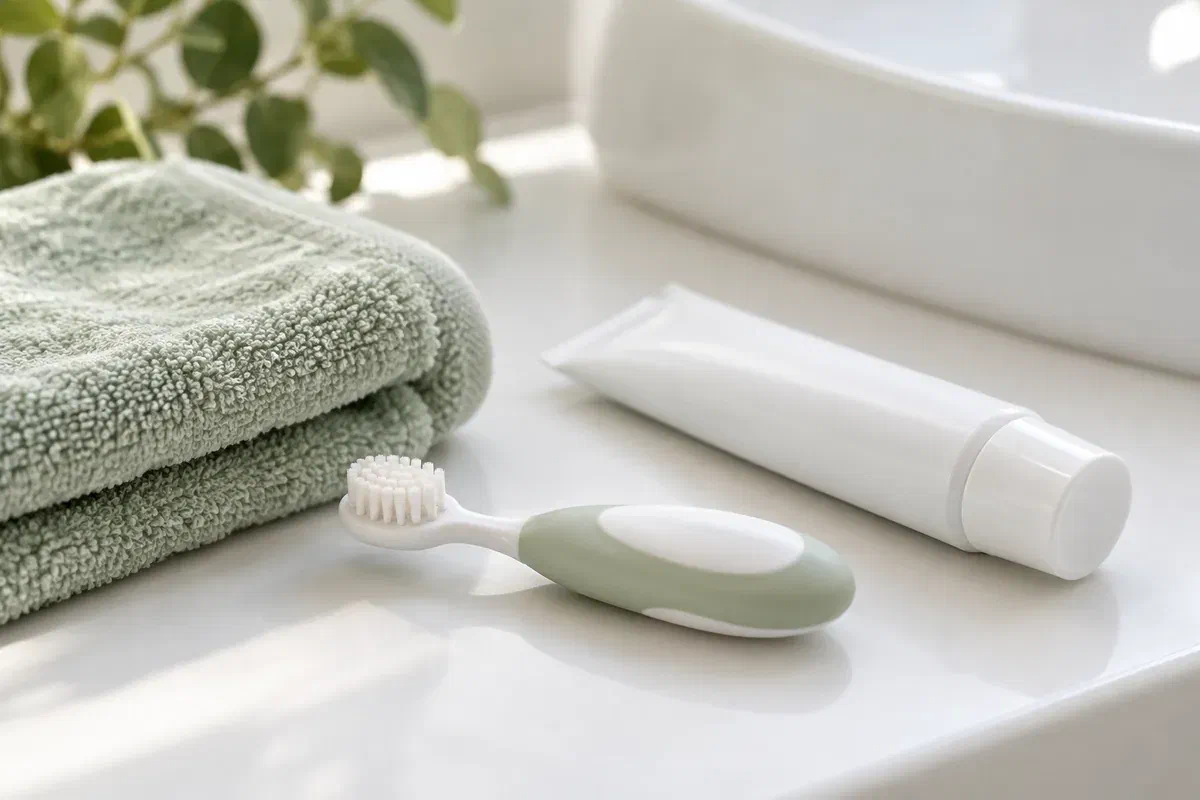
Illustrative baby toothbrush, soft washcloth, and plain toothpaste tube
Questions worth writing down

Three areas most parents ask about

Few parents arrive with a single clear problem. Usually it is a cluster of small questions, and a list keeps them from vanishing once you are in an unfamiliar room.

Changes you have seen in the mouth

Which teeth are through? Have you noticed a dull patch, a chip, a swollen spot, or somewhere your baby flinches? Share roughly when it began. Do not chalk everything up to teething, especially if feeding has changed or your baby seems unwell.

Cleaning that feels impossible

Maybe your baby clamps down, twists away, or chews the brush. Tell the team what happens and bring the brush or product name if you like. A demonstration suited to the teeth present works better than trying to brush like an adult.

Bottles, cups, and bedtime habits

Explain the real rhythm of feeds, drinks, snacks, and falling asleep, including the nights that go off plan. That honesty helps the dentist suggest oral-health steps that suit your family. Concerns about growth or nutrition should go to your baby’s doctor as well.

Tell us about medical conditions, medications, allergies, or support needs when you book. If your baby gets sick in the days before the visit, call so we can talk about the symptoms and whether to proceed.

Why the first year?

Routines are still flexible, so advice lands well.

Habits are easier to shape in the first year than later on. An early assessment lets prevention lead the conversation before any problem is visible. Drawing on the state of the teeth and gums, your baby’s history, and your daily routine, the dentist explains what care and review schedule make sense. It is a start, not a guarantee that decay will never appear.

The other benefit is simpler: you have somewhere to take questions as they come. Expect to leave knowing what to clean, what changes to watch for, and who to call if something shifts. Any plan worth keeping is one you can carry out at home without a manual.

Patient information: CDA — your child’s first dental visit

A brushing technique, shown not told

Many brushing questions disappear after one demonstration. Ask how to hold the brush, where to place it, and how to reach small teeth without a fight. If it still feels awkward, raise it before you leave so another option can be tried.

Sensible advice on fluoride

Whether fluoride toothpaste or another preventive measure is right for your baby depends on risk. Bring the name of your current toothpaste and mention other fluoride sources, then ask what product and amount, if any, the dentist suggests under current Canadian guidance.

A plan that changes with your baby

Cleaning gets harder, and questions change, as more teeth arrive. Ask when your next visit should be and which signs warrant an earlier call. Good guidance moves along with your child instead of staying frozen at one appointment.

What to expect on the day

Each step, one at a time

Your baby sets the pace, and the assessment adapts. You are welcome to ask the clinician to walk you through the plan before anything begins.

  1. A conversation to begin

    You will talk about health history, feeds, cleaning, and any changes you have spotted. Mention what usually soothes your baby, along with any sensory or positioning sensitivities. Lead with your biggest worry so it gets attention even if the appointment turns busy.

  2. Finding a comfortable hold

    Babies are often held by a parent for part of the examination. The clinician will explain how to position your baby safely and what you can do to help. Ask whenever a suggestion is unclear; you are not expected to know the set-up.

  3. A look and an explanation

    Whatever can reasonably be checked, the dentist will check, while weighing risk factors raised earlier. Ask what was seen and whether anything needs follow-up. Should your baby become upset, you should still hear which parts were finished and what remains.

  4. Hands-on practice and next steps

    Try out the cleaning approach, talk through products, and agree on small changes at home. If preventive care is suggested, find out why. Before you leave, confirm when to return, how to reach us between visits, and whether any finding needs another appointment.

Once you’re home

Little and often beats perfect.

A simple exam does not usually need any recovery. Follow any short instructions if fluoride or another product was applied during the visit.

Practise the method you learned

Keep using the recommended brush, technique, and amount of toothpaste. Store toothpaste out of reach and stay involved with every brush. If cleaning is consistently difficult or seems painful, call us for suggestions rather than letting the routine lapse.

Treat feeding as a whole-child issue

Use the oral-care pointers from the visit, and take ongoing feeding or growth worries to your baby’s doctor. Avoid sudden changes based on general online advice. Dental guidance is meant to work with your child’s wider health care, not replace it.

Don’t sit on a new concern

Call if you notice a new spot, your baby bumps their mouth, there is swelling, or a tooth seems sore. Tell us what changed and when, particularly if it affects eating or sleep. Waiting for the next recall is not necessary just because the first check was fine.

The road ahead

What a first visit can lead to

The right next step follows the findings and what could be comfortably assessed. Feel free to ask what any recommendation aims to achieve.

When everything is just beginning

Preventive guidance and routine review

Here the emphasis is on the exam, a discussion of risk, and a manageable home routine. Your next review should have a clear purpose and an agreed interval. Other preventive steps may be raised if the findings suggest them.

When you have noticed a change

An assessment for one specific issue

A fall, a visible change on a tooth, or swelling may need a different kind of appointment from a first introduction. Mention the issue when you call. The team can advise how soon to come and whether medical or urgent dental care should come first.

When more than one visit is needed

Continuing care or a pediatric referral

Some situations, or a baby’s support needs, lead to further appointments or referral to a dentist experienced with young children. Ask why it is suggested and how it will be organised. You should understand what the referral is for.

Parents’ questions, answered

Quick answers before the visit

Here is a starting point on timing, preparation, and everyday care. The appointment is where your baby’s individual needs are discussed.

(905) 876-4488
Is it a problem if my baby falls asleep while feeding?
It is very common, and it is worth discussing at the first visit. Describe the routine honestly. The dentist can explain how night-time feeding may relate to tooth decay risk and suggest practical steps, while feeding questions themselves remain something to discuss with your baby’s doctor.
When should my baby move from a bottle to a cup?
Ask the dentist and your baby’s doctor, since the answer involves both oral health and development. The dental team can explain why the timing matters for teeth. Bring your current routine so the advice fits your situation.
Do I need to brush the gums before any teeth appear?
Gently wiping the gums with a clean, damp cloth is a common way to start a mouth-care habit. Once teeth come in, cleaning them becomes important. Ask at the visit which method suits your baby’s stage.
Should I give my baby water or juice between feeds?
Talk to your baby’s doctor about drinks for their age. At the dental visit, describe what your baby currently drinks and how often. The dentist can explain how different drinks may affect teeth and what to watch for.
Can I book a first visit for my baby and a check-up for myself together?
Ask when you call. The team can tell you what scheduling options are available and how the visits might be arranged so the day runs smoothly for you and your baby.
We’re in Burlington. What should we do if a concern comes up between visits?
Call the clinic to describe what you have noticed and when it started. The team can advise on timing and whether to come in. For breathing or swallowing difficulty, or a baby who seems very unwell, seek urgent medical care nearby.
Burlington babies welcome

A gentle first visit starts with a call.

Ring our Bronte Street practice, share how old your baby is, and tell us what you would like to talk about. We can book a suitable first assessment and explain how best to prepare.

Have your baby assessed by age one, or within six months of that first tooth if sooner. Report pain, injury, or swelling without waiting.

Visit Milton Dental Clinic
Unit 1, 342 Bronte St. S, Milton, ON L9T 5B7
Get directions Clinic hours
Monday–Thursday
11am–7pm
Friday–Sunday
By appointment only

Areas we serve

  • Milton
  • Oakville
  • Mississauga
  • Georgetown
  • Halton Hills
  • Acton
  • Campbellville
  • Brampton
  • Burlington
  • Puslinch
  • Rockwood
  • Erin
  • Caledon
  • Etobicoke
  • Old Milton
  • Bronte Meadows
  • Timberlea
  • Dorset Park
  • Dempsey
  • Clarke
  • Beaty
  • Coates
  • Harrison
  • Scott
  • Willmott
  • Ford
  • Bowes
  • Cobden
  • Walker
  • Mountain View
  • Milton Heights
  • Hawthorne Village
  • Valley View
  • Fallingbrook
  • Nassagaweya
  • Trafalgar
  • Esquesing
  • Nelson
  • Brookville
  • Moffat
  • Glen Williams
  • Norval
  • Limehouse
  • Stewarttown
  • Ashgrove
  • Hornby
  • Silver Creek
  • Speyside
  • Scotch Block
  • North Oakville
  • River Oaks
  • Glen Abbey
  • West Oak Trails
  • Palermo
  • Bronte Creek
  • College Park
  • Joshua Creek
  • Uptown Core
  • Preserve
  • Iroquois Ridge
  • Lisgar
  • Meadowvale
  • Meadowvale Village
  • Churchill Meadows
  • Erin Mills
  • Central Erin Mills
  • Streetsville
  • East Credit
  • Creditview
  • Heartland
  • Sheridan
  • Mount Pleasant
  • Credit Valley
  • Huttonville
  • Churchville
  • Springbrook
  • Northwest Brampton
  • Bram West
  • Fletcher's Meadow
  • Fletcher's Creek South
  • Alton Village
  • Orchard
  • Millcroft
  • Headon Forest
  • Tansley
  • Brant Hills
  • Tyandaga
  • Kilbride
  • Lowville
  • Aberfoyle
  • Morriston
  • Arkell
  • Hillsburgh
  • Freelton
  • Carlisle
  • Waterdown
  • Flamborough
  • Mountsberg

How can we help?

Milton Dental Clinic

Have a question about your smile? Choose the option that works best for you.

For urgent dental concerns, please call.
Messages are reviewed during clinic hours.