Illustrative parent holding a baby during a first dental conversation
Children’s Dentistry

Baby’s First Dental Visit in Campbellville

Worried your baby will cry the whole time? That is fine. A first dental visit for Campbellville families still gives you a look at new teeth and practical help with cleaning, feeding and next steps.

What if my baby cries?

Tears are allowed.

Picture the worst case: your baby wails from the moment you sit down. Many parents hold off on a first dental visit because of exactly that image. Yet crying is common at this age, and it rarely spoils the appointment. Even a short, noisy look can tell the dentist a lot, and much of the visit is conversation with you about early risks, caring for new teeth, cleaning, feeding, teething, and anything you have spotted near the gums.

As for timing, Canadian Dental Association advice is to have a baby assessed once six months have passed since the first tooth, or at one year old, whichever milestone is reached first. You can go with just one tooth. Pain, a fall, swelling, or any other concern is a reason to ask sooner.

For households in Campbellville, booking simply means a call to our Bronte Street practice. Mention your baby’s age, anything you have noticed, and whether you are worried about how they will cope. Paint a true picture of your home routine, including what has and has not worked. The team expects babies to be babies; a squirm or a sob is part of the job.


Book a relaxed first visit
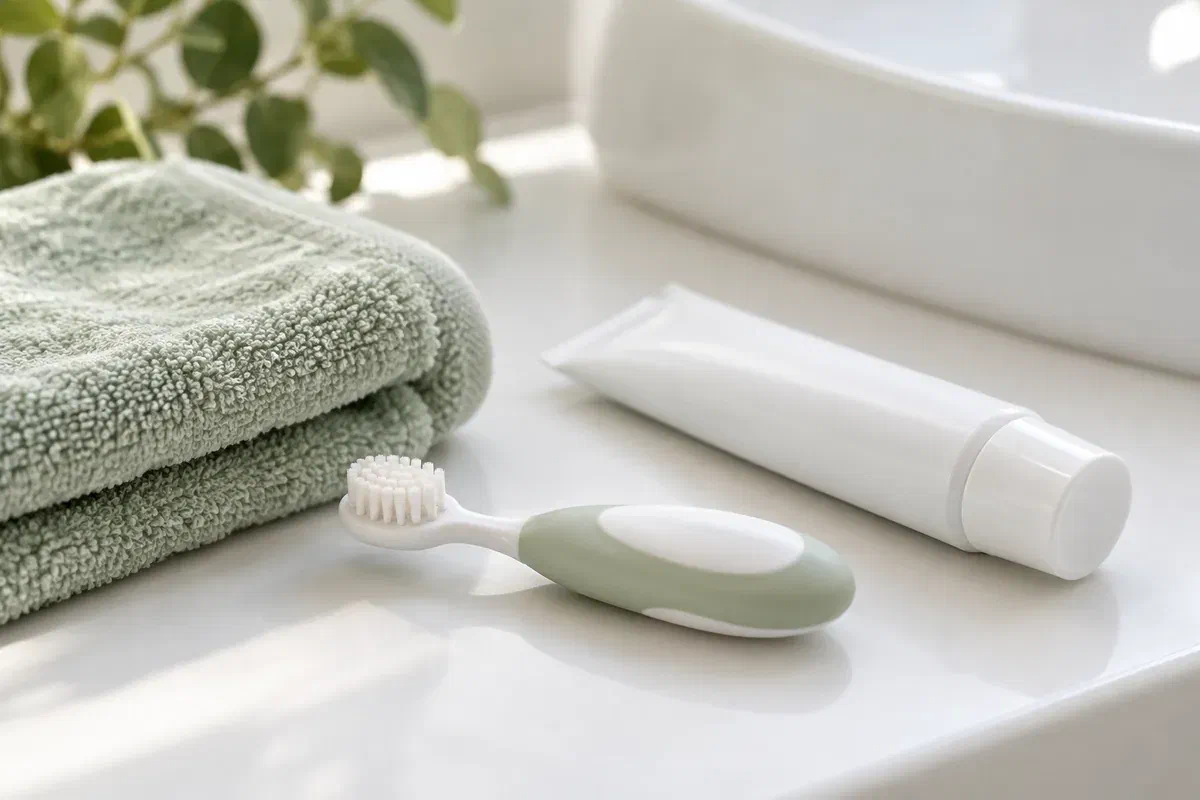
Illustrative baby toothbrush, soft washcloth, and plain toothpaste tube
Notes to bring along

If the visit gets loud, your list keeps you on track.

A fussy baby can scatter your thoughts. Writing questions down beforehand means you can still cover them, even if the appointment turns noisy.

Teeth and anything that looks different

Write down which teeth are through and anything unusual, such as a discoloured spot, a chip, a swollen patch, or a place your baby guards. Note when it began. Do not assume teething explains it all, especially alongside fever, illness, or a change in feeding.

Brushing that ends in tears already

If cleaning at home is a nightly protest, say so and describe what happens. Bringing the brush you use can help. The team can show a technique and hold suited to your baby’s stage, which may make home brushing a little calmer.

Feeding, drinks, and settling

Describe the real routine around feeds, sips, snacks, and sleep, including what you do to settle a teary baby at night. The dentist can then offer suggestions that are realistic for your home. Growth or nutrition questions also belong with your baby’s doctor.

Let us know about medical diagnoses, regular medicines, allergies, or support needs when you book. If your baby is unwell beforehand, call so we can talk through the symptoms and decide whether to keep the date.

Why it’s still worth it

A quick look still tells a story.

Even a brief examination lets prevention take the lead. Combined with what you share about health and habits, it helps the dentist recommend sensible care and a review interval. It is an early foundation, not a guarantee that decay will never develop.

Familiarity counts as well. Babies who visit early grow used to the room, the light, and the people, which may make later visits easier. You also gain a place to take questions as they arise, and you should go home sure of the cleaning steps, the signs worth watching, and how to reach us. Practical advice is the kind you can use on a tired evening.

Patient information: CDA — your child’s first dental visit

Seeing a calmer brushing hold

Sometimes the position matters as much as the brush. Ask to see a hold that keeps your baby secure and lets you see the teeth. If it still feels like a struggle, say so and try a variation before you leave.

Guidance on toothpaste and fluoride

Ask whether a fluoride toothpaste or another preventive measure suits your baby, and which product and quantity would be right. Share what you currently use and any other fluoride your baby receives, so the advice reflects their risk.

A plan for the coming months

More teeth bring new cleaning challenges and fresh questions. Ask when the next visit should be and which signs mean calling earlier. Each visit can build on the last as your baby grows more familiar with it.

Moment by moment

How a first visit works, even with a fussy baby

The team follows your baby’s mood rather than a fixed script. Ask the clinician what they would like to do and how you can help before anything starts.

  1. Talking while your baby settles

    Most of the start is conversation about health, feeding, cleaning, and anything you have noticed. This gives your baby a chance to look around from your lap. Mention what usually soothes them and any sensory or positioning sensitivities.

  2. Holding your baby securely

    Often the parent holds the baby, sometimes with the baby lying back so the mouth is visible. The clinician will show you how to keep your baby safe and steady. If you are unsure, ask before trying anything.

  3. The exam, crying or not

    A crying baby’s open mouth can actually help the dentist see. The teeth and gums that can reasonably be checked will be examined, along with relevant risk factors. Ask what was seen, and what still needs checking if the look was brief.

  4. Calm again, then the plan

    Once your baby has settled, review cleaning, products, and any changes for home. Ask about the purpose of any preventive care offered. Before you leave, confirm when to come back, how to phone with a worry, and whether a particular finding needs another appointment.

After the appointment

A cuddle, then back to normal

There is usually nothing to recover from after an infant exam, beyond a little comfort. If a preventive coating was applied, follow the short instructions you were given.

Try the hold and technique you learned

Use the recommended brush, method, and toothpaste amount, and keep the tube out of reach. Practise the hold you were shown. If brushing keeps ending in tears or seems to hurt, call for ideas rather than letting it lapse.

Keep feeding advice in proportion

Use the oral-care tips from the visit, and let your family doctor or pediatrician handle anything about weight gain or feeding difficulty. Avoid sweeping changes based on general online advice. Dental suggestions should sit alongside your baby’s wider health care.

Ring us about anything new

A new spot, a bump to the mouth, swelling, or apparent tooth pain is worth a call. Tell us what changed and when, particularly if eating or sleep is affected. You do not need to wait until the next recall.

Where to from here?

Next steps, whatever the mood on the day

Recommendations follow the findings and how much could be assessed. If the look was short, ask whether that affects what comes next.

When the first look is reassuring

Prevention and a routine review

For most babies, the outcome is a home routine, a talk about risk, and a next review with a clear purpose and interval. Additional preventive measures may be suggested depending on what the dentist saw and what you described.

When something needs a closer look

Another visit for a specific worry

An injury, a visible change on a tooth, or swelling may call for its own assessment. Explain what happened when you phone; the urgency, and whether a doctor should see your baby first, can then be judged properly.

When support goes beyond one visit

Further care or a pediatric referral

Some findings or a baby’s support needs lead to further visits or to a dentist with particular experience with young children. Ask why it is recommended, what it involves, and how it will be arranged.

Questions about fussy first visits

Answers for parents bracing for tears

Here is what to expect on timing, behaviour, and care at home. The appointment is where your baby’s individual needs are looked at.

(905) 876-4488
Will the dentist still be able to look if my baby cries the whole time?
Often, yes. A crying baby’s mouth is open, which can make a quick look possible. The team will tell you what was assessed and whether a follow-up makes sense. The conversation with you, about cleaning, feeding, and risk, goes ahead either way, so the visit is still useful.
Should I try to keep my baby quiet during the exam?
Focus on comfort rather than silence. Hold your baby securely, speak calmly, and follow the clinician’s guidance on positioning. Nobody expects a baby to stay quiet during a first visit, and trying hard to hush them can add to your own stress.
Is it better to reschedule if my baby is having an off day?
A grumpy day is not usually a reason to cancel, since many babies are unsettled in a new place anyway. If your baby is actually unwell, with a fever or other symptoms, call to talk about whether to keep the appointment or choose another date.
Does crying at the first visit mean my baby will fear the dentist?
Not necessarily. Babies often cry in new situations, and it says little about how they will feel later. Regular, calm visits may help the setting feel familiar over time. Stay relaxed and reassuring, and bring a favourite blanket or toy.
Can I feed my baby during or right after the visit to settle them?
Ask the team. Comforting your baby after the exam is usually fine, though if any preventive product was applied there may be short instructions about eating and drinking.
We live out in Campbellville. Can we combine the visit with other errands?
Many rural households group appointments and errands into one outing. Choose a time when your baby is usually rested, and call before setting out if your baby becomes unwell.
Campbellville babies

Bring your baby, tears and all.

Give our Bronte Street office a ring. Tell us how old your baby is and what is on your mind, including how they might cope. We will find a suitable time for a first assessment and explain how to prepare.

Book by age one, or once a tooth has been in for six months if that comes sooner. Report pain, injury, or swelling promptly.

Visit Milton Dental Clinic
Unit 1, 342 Bronte St. S, Milton, ON L9T 5B7
Get directions Clinic hours
Monday–Thursday
11am–7pm
Friday–Sunday
By appointment only

Areas we serve

  • Milton
  • Oakville
  • Mississauga
  • Georgetown
  • Halton Hills
  • Acton
  • Campbellville
  • Brampton
  • Burlington
  • Puslinch
  • Rockwood
  • Erin
  • Caledon
  • Etobicoke
  • Old Milton
  • Bronte Meadows
  • Timberlea
  • Dorset Park
  • Dempsey
  • Clarke
  • Beaty
  • Coates
  • Harrison
  • Scott
  • Willmott
  • Ford
  • Bowes
  • Cobden
  • Walker
  • Mountain View
  • Milton Heights
  • Hawthorne Village
  • Valley View
  • Fallingbrook
  • Nassagaweya
  • Trafalgar
  • Esquesing
  • Nelson
  • Brookville
  • Moffat
  • Glen Williams
  • Norval
  • Limehouse
  • Stewarttown
  • Ashgrove
  • Hornby
  • Silver Creek
  • Speyside
  • Scotch Block
  • North Oakville
  • River Oaks
  • Glen Abbey
  • West Oak Trails
  • Palermo
  • Bronte Creek
  • College Park
  • Joshua Creek
  • Uptown Core
  • Preserve
  • Iroquois Ridge
  • Lisgar
  • Meadowvale
  • Meadowvale Village
  • Churchill Meadows
  • Erin Mills
  • Central Erin Mills
  • Streetsville
  • East Credit
  • Creditview
  • Heartland
  • Sheridan
  • Mount Pleasant
  • Credit Valley
  • Huttonville
  • Churchville
  • Springbrook
  • Northwest Brampton
  • Bram West
  • Fletcher's Meadow
  • Fletcher's Creek South
  • Alton Village
  • Orchard
  • Millcroft
  • Headon Forest
  • Tansley
  • Brant Hills
  • Tyandaga
  • Kilbride
  • Lowville
  • Aberfoyle
  • Morriston
  • Arkell
  • Hillsburgh
  • Freelton
  • Carlisle
  • Waterdown
  • Flamborough
  • Mountsberg

How can we help?

Milton Dental Clinic

Have a question about your smile? Choose the option that works best for you.

For urgent dental concerns, please call.
Messages are reviewed during clinic hours.