Illustrative parent holding a baby during a first dental conversation
Children’s Dentistry

Baby’s First Dental Visit in Puslinch

Well water, toothpaste and new teeth: rural parents often ask how these fit together. A baby’s first dental visit from Puslinch sorts out fluoride, cleaning, feeding and when to come back.

Wells, water, and baby teeth

Where does your baby’s water come from?

It sounds like an odd question for a dental visit, but it matters. Plenty of rural homes draw from a private well rather than a municipal supply, and the fluoride level in well water is not always known. That detail can shape the toothpaste advice your baby receives. A first appointment covers it, along with a look at the mouth, a discussion of early risks, and help caring for new teeth, plus your questions on cleaning, feeding, teething, and the gums.

The Canadian Dental Association recommends assessing infants by age one, or earlier if a first tooth has already been in for six months. More teeth are not required. If you notice pain, an injury, swelling, or anything else worrying, ask for advice before that milestone.

Coming from Puslinch, you can start by calling our Bronte Street practice. Share your baby’s age, what you have noticed, and whether your household uses well water. Describe the routine you follow, toothpaste and all, without tidying it up. The visit is meant as a practical conversation and a check designed for an infant.


Plan your baby’s first visit
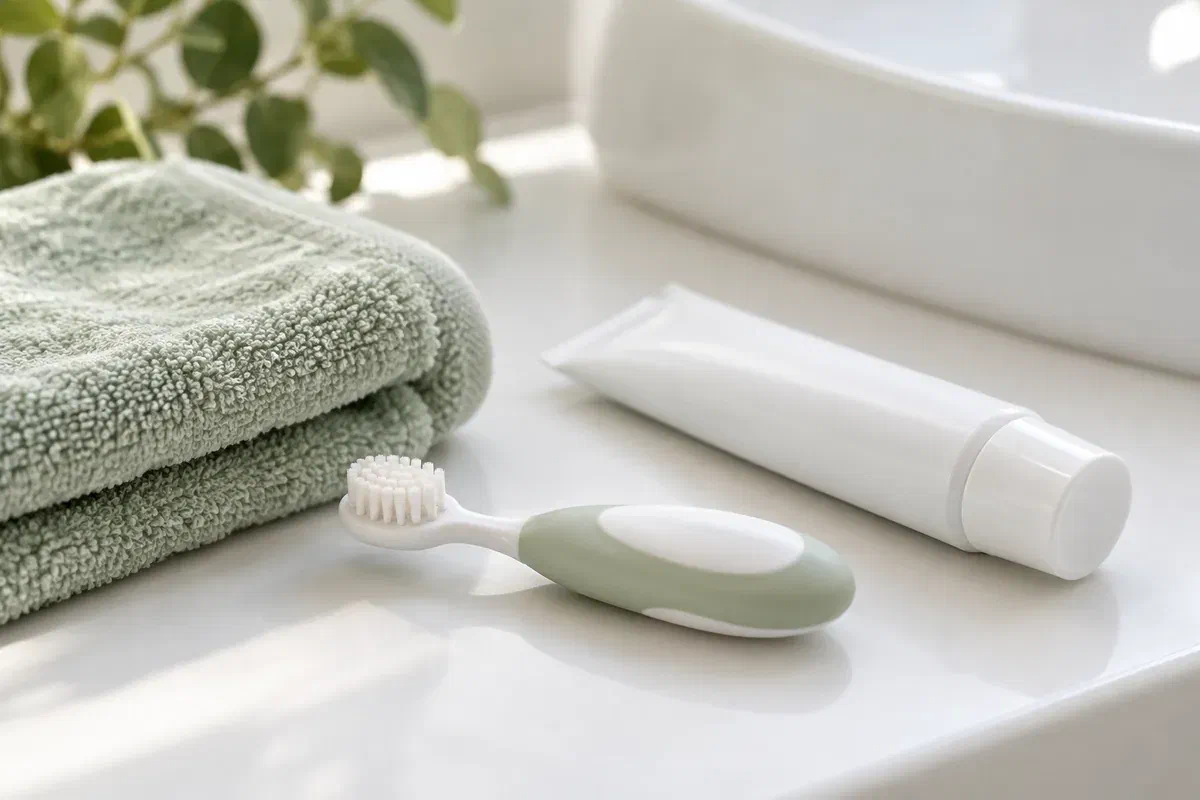
Illustrative baby toothbrush, soft washcloth, and plain toothpaste tube
What to gather beforehand

Bring the details, including the water.

Small questions tend to build up over weeks. Writing them down, along with a few household facts, makes the visit more productive.

Teeth, spots, and swelling

Make a note of which teeth are through and any mark, chip, swollen patch, or tender spot. Mention when it appeared. If your baby has a fever, seems sick, or has changed how they feed, say so rather than assuming it is teething.

How cleaning goes now

Describe the brush or cloth you use, the toothpaste, if any, and where things go wrong. Bringing the tube makes the fluoride conversation easier. Ask for a hands-on demonstration matched to your baby’s current teeth.

Feeding, drinks, and water source

Outline feeds, drinks, snacks, and bedtime as they really happen, and mention whether formula or drinks are prepared with well water. That helps the dentist give suitable oral-health advice. Your family doctor remains the right person for any worry about weight, growth, or nutrition.

When booking, share your baby’s health conditions, regular medicines, and allergies, plus any extra support they need. A baby who falls ill before the appointment is a reason to phone, so we can discuss the symptoms and whether to proceed.

Why an early visit helps

Advice that fits your household, not a label.

Prevention is easiest to discuss before a problem shows. With a look at the teeth and gums and an understanding of your baby’s health and habits, the dentist can recommend appropriate care and a review schedule. It sets a starting point, though it cannot guarantee freedom from decay.

Rural families gain something specific, too: advice that accounts for your water and your routine rather than a general rule. You should leave knowing what to clean, what changes to look for, and how to reach the clinic. A plan only helps if it fits the way your home actually works.

Patient information: CDA — your child’s first dental visit

Brushing, demonstrated

A short demonstration can answer questions no leaflet manages. Ask how to position the brush and how to reach small teeth gently. If it still feels awkward, mention it while there is time to try a different approach.

Fluoride that accounts for your water

Tell the dentist whether you are on a well and whether the water has been tested. With that in mind, you can talk through whether a fluoride toothpaste or other preventive step is advisable, and what kind and quantity. The dentist may suggest finding out more about your water.

A schedule that suits you

Cleaning gets more involved as teeth arrive. Ask when to return and what signs should prompt an earlier call. Rural households often find it useful to plan the next visit before leaving.

During the visit

Questions, a look, and a plan to take home

Every appointment bends around the baby in the room. Before the exam, it is worth hearing the clinician’s plan and what they would like you to do.

  1. Your baby’s story and your household

    Expect to talk through health, feeding, cleaning, water source, and anything you have spotted. Let the team know what usually soothes your baby, and anything that tends to upset them. Ask the question that matters most first.

  2. Settling on a safe hold

    Parents often hold their baby for part of the exam. The clinician will show a safe way to position your baby and explain what you need to do. If you are unsure, ask before trying anything.

  3. Checking the mouth

    The dentist examines the teeth and soft tissues that can comfortably be seen and weighs any risk factors you have described. Ask what they found and whether anything needs follow-up. If your baby fusses, ask which parts were completed.

  4. Practice, products, and follow-up

    Try the cleaning method with guidance and discuss toothpaste in light of your water. Ask why any preventive care is recommended. Before you go, confirm when to return, how to phone the clinic, and whether any finding needs its own visit.

Back home in the country

Make the routine part of the day.

An infant exam does not usually require any recovery. When fluoride varnish is painted on, the team will mention any brief eating or brushing precautions.

Use the method you practised

Stick with the recommended brush, technique, and amount of toothpaste, and store the tube out of reach. Stay hands-on for every brush. If cleaning is regularly difficult or seems painful, phone for advice rather than stopping.

Keep feeding and water questions connected

Put the dentist’s suggestions to work, and keep your doctor in the loop on anything about feeding or growth. If you were advised to look into your water, ask your local public health unit how to have it tested. Avoid big changes based on general online information.

Call before making the trip

A new spot, a fall, swelling, or apparent tooth pain is worth a phone call. Describe what changed and when, especially if eating or sleep is affected. The team can help you decide whether to come in.

After the visit

Three ways things may go

The findings decide the route. For any suggestion, it is fair to ask what it is for and how many trips it is likely to mean.

When all appears healthy

Preventive guidance and review

Most first visits wrap up with a home routine, a frank talk about risk, fluoride included, and a review date. That date should come with a reason you understand and an interval that makes sense for your family. Other preventive measures may be raised depending on what the dentist sees.

When something has changed

A visit for a specific concern

A tumble onto the mouth, a tooth that has darkened or developed a chalky patch, or a swollen gum is assessed differently from a routine check. Describe it when you call. The team can advise on timing and whether medical attention or urgent dental care closer to home is the better first step.

When needs go further

Further visits or referral

Occasionally, what the dentist finds, or your baby’s own support needs, point to more appointments or care from someone who works mainly with young children. Ask why that route is suggested, how it will be arranged, and how to plan the travel involved.

Rural families ask

Water, toothpaste, and timing

Here are answers on fluoride, planning, and daily care. Your baby’s specific needs are discussed at the appointment itself.

(905) 876-4488
Does well water affect my baby’s fluoride needs?
It can. Fluoride levels in private wells vary from one property to the next and are not always known. Tell the dentist about your water source, and whether it has ever been tested, so that toothpaste and other fluoride advice takes it into account.
How do I find out how much fluoride is in our well water?
A water test is the usual way to find out, since you cannot tell by taste or appearance. Your local public health unit can explain the testing options available to you. Bring any results you already have to the visit so the dentist can see them.
Should I use well water to mix my baby’s formula?
That is a question for your baby’s doctor or the public health unit, who can advise on safe preparation. Mention what you currently do at the dental visit too, since the water your baby drinks may be relevant to the fluoride advice you receive.
What amount of toothpaste is right for a baby?
It depends on your baby’s age, decay risk, and other fluoride exposure, so there is no single answer for every infant. Ask the dentist to show you the amount they recommend on the brush, and keep the tube well out of reach between uses.
Is bottled water better for my baby’s teeth?
Not automatically. Bottled waters differ in their fluoride content, and some labels say little about it. Mention what your baby drinks and how often, and the dentist can explain how it fits with the rest of their oral-health advice.
We’re in Puslinch. How can we keep trips to a minimum?
Bring a full list of questions and raise the most important ones first. Ask the dentist how often reviews are needed, and book the next visit before leaving. If a new concern comes up later, call before driving in so the team can say whether a trip is needed.
For Puslinch families

Bring the baby, and the water question.

Ring our Bronte Street practice, tell us your baby’s age, and mention whether your home is on well water. We will book a suitable first assessment and suggest what to bring, including any water test results you may have.

Plan the first check for around the first birthday, sooner if a tooth has been through for six months. Report pain, injury, or swelling right away.

Visit Milton Dental Clinic
Unit 1, 342 Bronte St. S, Milton, ON L9T 5B7
Get directions Clinic hours
Monday–Thursday
11am–7pm
Friday–Sunday
By appointment only

Areas we serve

  • Milton
  • Oakville
  • Mississauga
  • Georgetown
  • Halton Hills
  • Acton
  • Campbellville
  • Brampton
  • Burlington
  • Puslinch
  • Rockwood
  • Erin
  • Caledon
  • Etobicoke
  • Old Milton
  • Bronte Meadows
  • Timberlea
  • Dorset Park
  • Dempsey
  • Clarke
  • Beaty
  • Coates
  • Harrison
  • Scott
  • Willmott
  • Ford
  • Bowes
  • Cobden
  • Walker
  • Mountain View
  • Milton Heights
  • Hawthorne Village
  • Valley View
  • Fallingbrook
  • Nassagaweya
  • Trafalgar
  • Esquesing
  • Nelson
  • Brookville
  • Moffat
  • Glen Williams
  • Norval
  • Limehouse
  • Stewarttown
  • Ashgrove
  • Hornby
  • Silver Creek
  • Speyside
  • Scotch Block
  • North Oakville
  • River Oaks
  • Glen Abbey
  • West Oak Trails
  • Palermo
  • Bronte Creek
  • College Park
  • Joshua Creek
  • Uptown Core
  • Preserve
  • Iroquois Ridge
  • Lisgar
  • Meadowvale
  • Meadowvale Village
  • Churchill Meadows
  • Erin Mills
  • Central Erin Mills
  • Streetsville
  • East Credit
  • Creditview
  • Heartland
  • Sheridan
  • Mount Pleasant
  • Credit Valley
  • Huttonville
  • Churchville
  • Springbrook
  • Northwest Brampton
  • Bram West
  • Fletcher's Meadow
  • Fletcher's Creek South
  • Alton Village
  • Orchard
  • Millcroft
  • Headon Forest
  • Tansley
  • Brant Hills
  • Tyandaga
  • Kilbride
  • Lowville
  • Aberfoyle
  • Morriston
  • Arkell
  • Hillsburgh
  • Freelton
  • Carlisle
  • Waterdown
  • Flamborough
  • Mountsberg

How can we help?

Milton Dental Clinic

Have a question about your smile? Choose the option that works best for you.

For urgent dental concerns, please call.
Messages are reviewed during clinic hours.