

Illustrative child and parent discussing a tooth model with a dental clinician
Children’s Dentistry

Children’s Cavity Treatment in Acton

Monitor it, fill it, crown it, or something else? Families making the trip from Acton can sit down with the dentist, see why one option is recommended for their child’s tooth, and weigh comfort, follow-up and prevention before deciding.

Weighing the options

Which treatment, and why this one?

Parents are sometimes surprised to hear more than one possible approach for a single cavity. A small, early lesion might be watched and treated with preventive measures. A larger one could need a filling, and a badly damaged baby molar might be better protected with a crown. Understanding why one route is recommended makes the decision feel like your own.

The answer depends on details only an exam can reveal: whether the tooth is a baby tooth or an adult one, how far decay has spread, how much healthy tooth is left, and what your child can manage in the chair. Coming from Acton, it is worth bringing your questions in writing so every option is discussed before you leave.

Share any pain, eating changes, earlier dental experiences and what helps your child relax. Ask what the risks of waiting are, too. Your child should be included in the explanation in a way that suits their age, and nobody should feel judged because decay appeared.

Discuss treatment choices
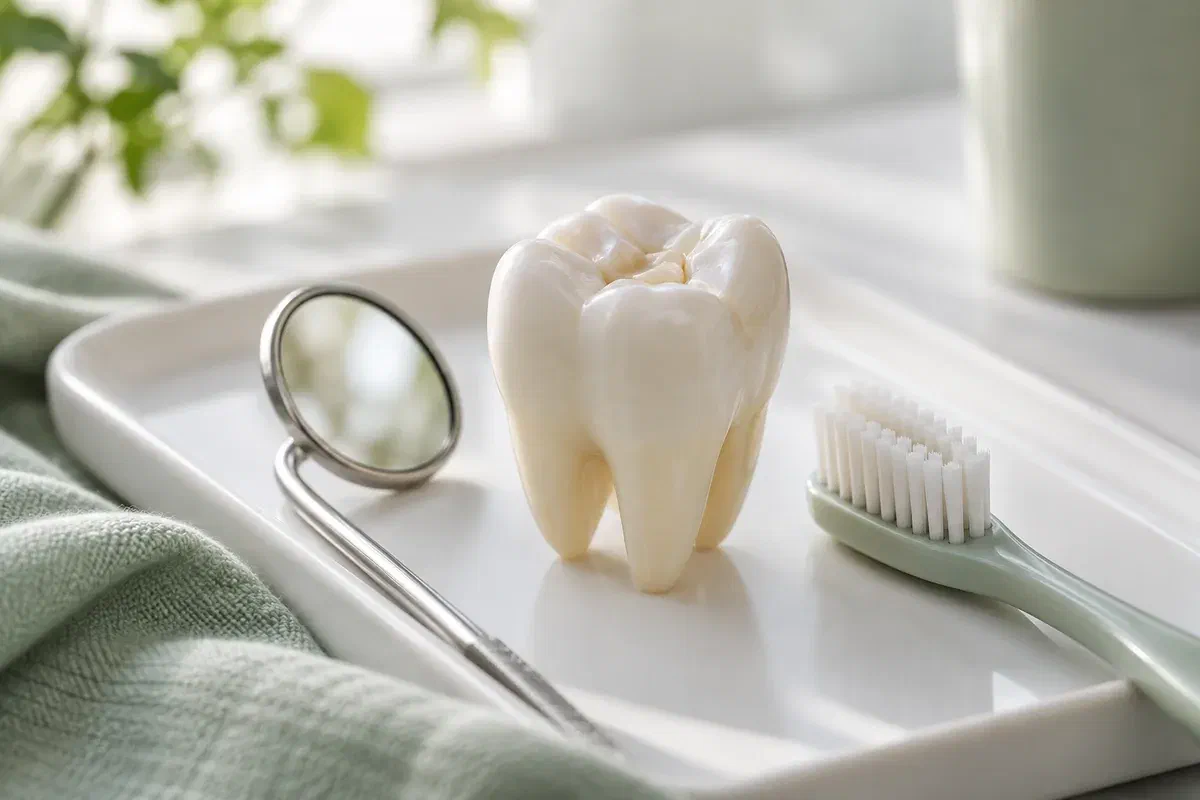
Illustrative tooth teaching model, dental mirror, and small soft toothbrush
Facts that influence the choice

What you report can tip the decision

Children may not describe symptoms clearly. Combine what they tell you with what you have noticed, and leave locating the tooth to the dentist.

Symptoms and eating habits

Pain with cold or sweet foods, discomfort chewing, or avoiding one side can all matter. So can pain at night or pain with no trigger. Those details help the dentist judge how advanced the problem may be and how quickly to act.

Visible damage

Report any dark patch, pit, broken surface or spot that traps food, and roughly when you first noticed it. Appearance cannot confirm how deep decay goes, which is why an exam and suitable images may be needed.

What your child can manage

Tell us about past dental experiences, sensory needs, how your child communicates and any health conditions. A child’s ability to cope with a longer procedure can affect which option is most realistic, so mention what has helped before.

Call promptly about swelling, fever with a dental problem, severe pain or trouble eating. Difficulty breathing or swallowing, or a child who looks seriously unwell, needs urgent medical attention.

What a sound choice achieves

The right repair for the tooth’s future

Depending on findings, treatment may aim to halt an early lesion, rebuild structure or deal with decay that has reached further in. A baby tooth may be needed for years. Its eventual replacement is a factor in the decision, but it does not make leaving decay safe.

Whatever option is chosen, it will not change the habits that allowed decay to form. That is why prevention and follow-up come with every plan. Ask how the treatment you choose and your home routine fit together, and what the dentist will look at next time.

Patient information: AAPD — pediatric restorative dentistry

A comparison you can follow

Ask the dentist to explain why a filling, crown, preventive approach or other care is suggested, how much healthy tooth remains and how long the tooth should stay. Knowing that lets you weigh options with real information.

A plan your child can tolerate

Some options take longer than others. Discuss explanations, breaks and comfort measures ahead of time, and ask whether care can be staged or provided elsewhere if needed. Ask what happens if the chosen approach proves too much.

Prevention that supports the choice

Review brushing help, fluoride advice and snacking or drinking patterns practically. A monitored lesion relies heavily on home care. Choose changes your family can maintain and ask how progress will be checked.

How the decision is made

Exam first, options second, treatment third

The order depends on what the dentist finds and the care you choose. Some children need more than one visit, and some need a referral.

  1. Gather the evidence

    The dentist reviews symptoms, examines the teeth and explains whether X-rays or other information would help. Share medical conditions, medicines, allergies and previous dental work. Ask which tooth is affected and whether it is primary or permanent.

  2. Lay out the options

    The dentist explains the recommended care, the alternatives, each one’s limits and what might happen without treatment. Ask about numbing and communication. Sedation or general anaesthesia would require separate assessment, consent and a confirmed provider and setting.

  3. Carry out the chosen treatment

    Your child hears each step in simple words before it happens. Treatment may involve managing the lesion, a restoration or other indicated care. If something new is found or your child needs a change, the team will discuss the plan with you first.

  4. Review how it went

    Confirm what was done, whether any temporary measure was placed and what remains. Go over instructions for eating, numbness, cleaning and symptoms. Arrange follow-up and find out which changes should prompt a call before then.

Care after the visit

Each type of treatment has its own instructions

Aftercare needs depend on the procedure and any medicines used. Make sure the directions are clear before leaving, especially if another adult will be caring for your child.

If freezing was used

Supervise your child so they do not bite or suck a numb lip, cheek or tongue. Follow the advice about eating and drinking until feeling returns, and explain the unusual sensation calmly rather than letting them test it.

Cleaning the treated tooth

Follow the brushing and cleaning steps for that specific restoration or treatment, along with adult help and fluoride as advised. If brushing is painful or food keeps catching, contact the clinic rather than skipping the area.

Symptoms to watch

Ask what mild discomfort may be normal. Call if pain grows, swelling appears, a restoration comes out or your child says their teeth do not close properly. Use medicines only as instructed for your child’s age.

Patient information: AAPD — local anaesthesia and postoperative instructions

Side by side

Three paths, compared

Each option fits some situations and not others. Ask what supports the recommendation and what follow-up it needs, and confirm that it is suitable and available for your child.

For early or slow lesions, with reviews

Monitoring with preventive care

Some lesions can be managed without a conventional filling, through preventive or caries-control measures and regular checks. If silver diamine fluoride is suggested, ask about the permanent dark discolouration it leaves on decay, how often it is reapplied and what it will not fix.

When structure is lost

Filling or crown

A small cavity may suit a filling, while a tooth with extensive damage may be better covered with a crown. Location, remaining tooth and treatment conditions all matter. Ask about the material, its look, durability and care.

When decay is deep or needs are complex

Deeper treatment or referral

A tooth with decay near the nerve may need more than a filling. Ask whether it can realistically be kept. If extraction is suggested, ask about the adult teeth developing below and whether space will need to be maintained or checked.

Decision-making questions

Things Acton parents ask before choosing

Bring these and your own questions to the appointment. A clear explanation makes the choice easier.

(905) 876-4488
How long does a filling in a baby tooth usually last?
It depends on the tooth, the size of the filling, the material and home care. Many are expected to last until the tooth is lost naturally, but that is not guaranteed. Ask the dentist what to expect for your child’s restoration.
Is a crown overkill for a small child’s tooth?
Not when a large amount of structure has been lost. A crown can protect a tooth that might not hold a filling well. Ask why the dentist believes a crown is more suitable than a filling for this tooth.
Can we choose to monitor instead of filling right away?
Sometimes, for selected early lesions with a defined review plan and strong home care. Not every cavity is suited to monitoring. Ask whether this lesion qualifies and what signs would change the recommendation.
Should I get a second opinion on my child’s treatment plan?
You are always welcome to ask questions or seek another view. A clear explanation of the diagnosis and options may answer many concerns. Ask the dentist to go over anything that seems uncertain.
What if the tooth needs more work than expected once treatment starts?
The dentist may find decay is deeper than it looked. In that case, they should pause and discuss what that means before continuing. Ask ahead of time how such changes will be handled.
Does the type of filling material matter for a child?
Material choice depends on the cavity’s size and location, whether the area can be kept dry and how long the tooth needs to last. Ask the dentist to explain the materials considered and why one suits your child.
From Acton

Choose the plan that fits your child’s tooth

Contact our Bronte Street practice to talk about a diagnosed cavity or something you have noticed. Mention pain, swelling and any support needs so we can arrange an appropriate assessment and treatment discussion.

Treatment choices follow examination. A swollen face, a fever or pain that is getting worse should be reported to us the same day.

Visit Milton Dental Clinic
Unit 1, 342 Bronte St. S, Milton, ON L9T 5B7
Get directions Clinic hours
Monday–Thursday
11am–7pm
Friday–Sunday
By appointment only

Areas we serve

  • Milton
  • Oakville
  • Mississauga
  • Georgetown
  • Halton Hills
  • Acton
  • Campbellville
  • Brampton
  • Burlington
  • Puslinch
  • Rockwood
  • Erin
  • Caledon
  • Etobicoke
  • Old Milton
  • Bronte Meadows
  • Timberlea
  • Dorset Park
  • Dempsey
  • Clarke
  • Beaty
  • Coates
  • Harrison
  • Scott
  • Willmott
  • Ford
  • Bowes
  • Cobden
  • Walker
  • Mountain View
  • Milton Heights
  • Hawthorne Village
  • Valley View
  • Fallingbrook
  • Nassagaweya
  • Trafalgar
  • Esquesing
  • Nelson
  • Brookville
  • Moffat
  • Glen Williams
  • Norval
  • Limehouse
  • Stewarttown
  • Ashgrove
  • Hornby
  • Silver Creek
  • Speyside
  • Scotch Block
  • North Oakville
  • River Oaks
  • Glen Abbey
  • West Oak Trails
  • Palermo
  • Bronte Creek
  • College Park
  • Joshua Creek
  • Uptown Core
  • Preserve
  • Iroquois Ridge
  • Lisgar
  • Meadowvale
  • Meadowvale Village
  • Churchill Meadows
  • Erin Mills
  • Central Erin Mills
  • Streetsville
  • East Credit
  • Creditview
  • Heartland
  • Sheridan
  • Mount Pleasant
  • Credit Valley
  • Huttonville
  • Churchville
  • Springbrook
  • Northwest Brampton
  • Bram West
  • Fletcher's Meadow
  • Fletcher's Creek South
  • Alton Village
  • Orchard
  • Millcroft
  • Headon Forest
  • Tansley
  • Brant Hills
  • Tyandaga
  • Kilbride
  • Lowville
  • Aberfoyle
  • Morriston
  • Arkell
  • Hillsburgh
  • Freelton
  • Carlisle
  • Waterdown
  • Flamborough
  • Mountsberg

How can we help?

Milton Dental Clinic

Have a question about your smile? Choose the option that works best for you.

For urgent dental concerns, please call.
Messages are reviewed during clinic hours.