

Illustrative child and parent discussing a tooth model with a dental clinician
Children’s Dentistry

Children’s Cavity Treatment in Caledon

Decay in a toddler or preschooler often starts along the front teeth near the gums, and little ones cannot always say what hurts. For families from Bolton and the villages of Caledon, we explain early childhood cavities, gentle treatment options and bedtime habits.

Very young children, very small teeth

Spots on a toddler’s smile

In children under five, decay often shows up first as chalky white lines near the gums on the upper front teeth, later turning yellow or brown. A toddler may not complain at all, or may simply become fussy at mealtimes or brushing. Parents usually notice it while lifting a lip to brush, and the next question is whether it is serious.

Only an examination can say how far it has progressed and how soon care is needed. For households spread across a large, mostly rural area like Caledon, it makes sense to bring everything to the first visit: what you have seen, how your child eats and sleeps, any bottle or cup habits, past visits and what calms them. The dentist can then suggest a plan that fits a very young child.

Early white spots can sometimes be stabilized with prevention, while larger cavities may need restoration or more. Ask what has been found, what is realistic at this age and what waiting might mean. These are among the most common problems in young children. They call for care and support, never guilt.

Ask about your toddler’s teeth
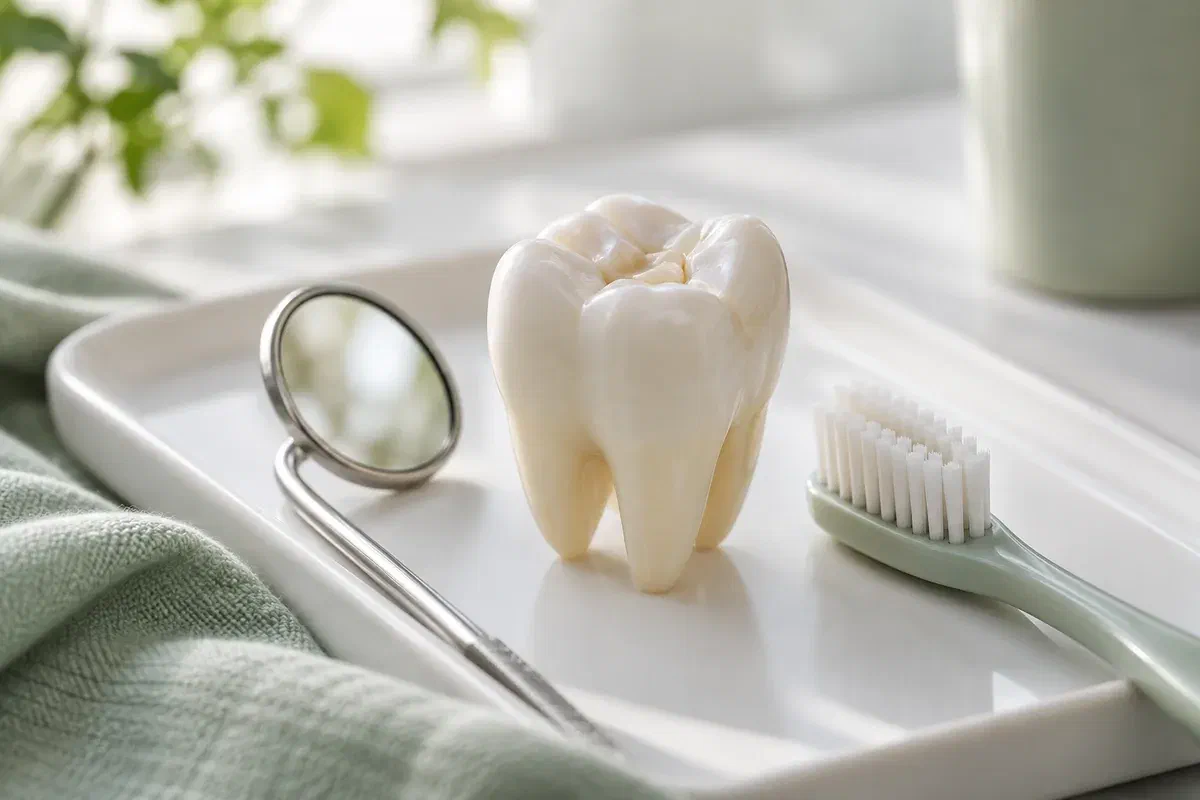
Illustrative tooth teaching model, dental mirror, and small soft toothbrush
What to watch for in little ones

Toddlers show, rather than tell

Young children rarely point to a sore tooth. Share the behaviour you have noticed along with anything you can see, and leave the diagnosis to the dentist.

Fussiness with food or brushing

Has your child started refusing certain foods, crying during brushing, rubbing a cheek or waking more at night? Any of these may be related to tooth discomfort. Tell the dentist when it started and what seems to trigger it.

White, yellow or brown marks

Lift the upper lip and look near the gumline. Describe chalky white bands, discoloured patches, pits or chipped edges, and when you first saw them. Colour cannot reveal depth, so an exam, and occasionally images, will be needed.

Temperament and health

Let us know how your child reacts to new places and people, any sensory sensitivities, medical conditions and what tends to soothe them. That helps the team decide how much can comfortably be done with a very young child.

Phone right away if your child has swelling of the face or gums, a fever with signs of tooth pain, refuses to eat or drink, or seems in severe pain. A little one who is struggling to breathe or swallow, or who looks seriously ill, needs emergency medical care.

Why early decay is worth treating

Small teeth with a long job ahead

Depending on findings, care may aim to arrest early white-spot decay, rebuild damaged structure or deal with deeper cavities. A toddler’s baby teeth may be needed for many years for eating, speech and holding space, so the fact that they will be replaced does not make decay safe to leave.

Treating cavities does not change the habits that caused them, especially bedtime feeding and frequent sipping. Prevention and follow-up visits are central at this age. Ask how treatment and your home routine can work together, and what the dentist will want to see at the next review.

Patient information: AAPD — pediatric restorative dentistry

A plan suited to a toddler

Ask why a preventive approach, a restoration or other care is being suggested, how much tooth remains and how long the tooth will be needed. Young children may manage some treatments better than others, and the reasoning should reflect that.

Short, gentle visits

Toddlers and preschoolers often do best with brief appointments, lots of reassurance and a parent close by. Discuss pacing and comfort before starting. Your child’s response may mean care is staged or arranged in a different setting.

Practical bedtime and snack changes

Talk about moving away from bottles or sippy cups of milk or juice at bedtime, offering water between meals and brushing with a fluoride toothpaste smear. Choose changes your family can keep, and ask how progress will be checked.

How care works for young children

Short steps, lots of reassurance

The approach depends on the extent of decay and what your child can manage. Several short visits, or a referral to a provider suited to very young children, may be part of the plan.

  1. A knee-to-knee look

    For many toddlers, the exam is done with your child sitting on your lap facing you, leaning back onto the dentist’s knees. Symptoms, feeding habits and medical history are reviewed. Ask what the findings show and whether images are needed.

  2. Choosing an approach

    The dentist explains the options, their limits and what might happen if decay is left. Ask how comfort will be managed for such a young child. If sedation or general anaesthesia is raised, ask about suitability, risks, the provider and setting, and preparation.

  3. Providing care gently

    Treatment might involve a preventive application, a restoration or other care the findings support. Steps are kept short, and you may be nearby to comfort your child. If your toddler becomes too upset, the team can stop and plan a different approach.

  4. Home plan and review

    Confirm what was done and what is still needed. Go over aftercare, bedtime changes and brushing technique for small mouths. Book follow-up, and ask which signs, such as swelling or fever, should lead to a call sooner.

Looking after a little one

Close supervision for the rest of the day

Aftercare depends on the treatment and any medicine given. Ask for written instructions, especially if a grandparent or daycare provider will be caring for your child afterward.

Watch for lip biting

Toddlers do not understand numbness and may chew on a frozen lip or cheek. Stay close, distract them and follow the advice on when to offer food and drinks again. Soft foods may be easier once feeling returns.

Keep up gentle brushing

Follow the cleaning advice for the treated teeth, using a soft brush and the recommended amount of fluoride toothpaste. If brushing seems painful or food keeps collecting at the treated tooth, contact the clinic.

Notice anything unusual

Ask what fussiness or discomfort is expected. Call if your child seems in more pain, develops swelling, a restoration comes off or they refuse to eat. Use only children’s medicines and doses as directed for your child’s age and weight.

Patient information: AAPD — local anaesthesia and postoperative instructions

Options at this age

Care that fits a small child’s mouth and attention span

Ask why the suggested approach suits your child’s diagnosis and age, and what follow-up it requires. Suitability and availability should be confirmed rather than assumed.

For white spots and some early cavities

Preventive management of early decay

Early lesions may be stabilized with fluoride, home-care changes and monitoring. If silver diamine fluoride is offered, know that it permanently darkens treated decay and may need reapplying. Ask whether it suits your child’s teeth and what it cannot do.

When baby teeth have lost structure

Fillings or small crowns

The size and position of damage and your child’s ability to sit for treatment guide the choice. Front and back baby teeth may be restored differently. Ask about materials, appearance, durability and how to clean around them.

When many teeth are affected or decay is deep

Extensive care or a specialist referral

When several teeth are involved or decay is deep, care may need a different setting or a referral. Ask whether teeth can be kept and, if extraction is discussed, how it may affect the developing adult teeth and spacing.

Toddler cavity questions

What Caledon parents of young children ask

These focus on the youngest patients. Bring your own questions, too.

(905) 876-4488
Can a bottle at bedtime really cause cavities?
Milk, formula or juice pooling around the teeth during sleep can raise the risk of decay, particularly in the upper front teeth. Ask the dentist how to transition to water at bedtime in a way that suits your child.
My toddler will not sit still. Can a cavity still be treated?
Yes, though the approach may differ. Some care can be done in short steps with a parent close by, and preventive approaches may help buy time. Ask what is realistic for your child.
How do I check my toddler’s teeth at home?
Gently raise the upper lip once a month or so in good light and look for white bands, brown spots or chips near the gumline. Mention anything unusual at your child’s next visit or sooner.
Is general anaesthesia common for toddler cavities?
It is not automatic. Many young children are managed with preventive care or short visits. If general anaesthesia is suggested, ask about why, risks, provider and setting, and how to prepare.
When should my child first see a dentist?
Many dental organizations recommend a first visit around the first tooth or first birthday. Early visits help catch white spots before they become cavities. Ask the team about scheduling a checkup.
Can a toddler’s visit be timed around a nap if we are coming from Caledon?
Ask the front desk for a time when your child is usually rested and fed. Many toddlers cope better earlier in their day. Let the team know how far you are travelling when booking.
Caledon families

Have those little spots looked at

Contact our Bronte Street practice if you have noticed marks on your toddler’s teeth or a cavity has been diagnosed. Tell us about feeding habits, any pain or swelling and what helps your child, and we will arrange a suitable assessment.

Recommendations follow an examination. Swelling, fever or a little one in obvious pain should be reported promptly.

Visit Milton Dental Clinic
Unit 1, 342 Bronte St. S, Milton, ON L9T 5B7
Get directions Clinic hours
Monday–Thursday
11am–7pm
Friday–Sunday
By appointment only

Areas we serve

  • Milton
  • Oakville
  • Mississauga
  • Georgetown
  • Halton Hills
  • Acton
  • Campbellville
  • Brampton
  • Burlington
  • Puslinch
  • Rockwood
  • Erin
  • Caledon
  • Etobicoke
  • Old Milton
  • Bronte Meadows
  • Timberlea
  • Dorset Park
  • Dempsey
  • Clarke
  • Beaty
  • Coates
  • Harrison
  • Scott
  • Willmott
  • Ford
  • Bowes
  • Cobden
  • Walker
  • Mountain View
  • Milton Heights
  • Hawthorne Village
  • Valley View
  • Fallingbrook
  • Nassagaweya
  • Trafalgar
  • Esquesing
  • Nelson
  • Brookville
  • Moffat
  • Glen Williams
  • Norval
  • Limehouse
  • Stewarttown
  • Ashgrove
  • Hornby
  • Silver Creek
  • Speyside
  • Scotch Block
  • North Oakville
  • River Oaks
  • Glen Abbey
  • West Oak Trails
  • Palermo
  • Bronte Creek
  • College Park
  • Joshua Creek
  • Uptown Core
  • Preserve
  • Iroquois Ridge
  • Lisgar
  • Meadowvale
  • Meadowvale Village
  • Churchill Meadows
  • Erin Mills
  • Central Erin Mills
  • Streetsville
  • East Credit
  • Creditview
  • Heartland
  • Sheridan
  • Mount Pleasant
  • Credit Valley
  • Huttonville
  • Churchville
  • Springbrook
  • Northwest Brampton
  • Bram West
  • Fletcher's Meadow
  • Fletcher's Creek South
  • Alton Village
  • Orchard
  • Millcroft
  • Headon Forest
  • Tansley
  • Brant Hills
  • Tyandaga
  • Kilbride
  • Lowville
  • Aberfoyle
  • Morriston
  • Arkell
  • Hillsburgh
  • Freelton
  • Carlisle
  • Waterdown
  • Flamborough
  • Mountsberg

How can we help?

Milton Dental Clinic

Have a question about your smile? Choose the option that works best for you.

For urgent dental concerns, please call.
Messages are reviewed during clinic hours.