

Illustrative child and parent discussing a tooth model with a dental clinician
Children’s Dentistry

Children’s Cavity Treatment in Milton

A checkup has found decay in your child’s tooth, and now you need to know what comes next. Talk with our Milton team about which tooth is affected, the options that fit, how your child will be supported, and how to lower the chance of another cavity.

After the word “cavity” comes up

One tooth, one child, one plan that makes sense to both of you.

Most parents hear about a cavity in the middle of an ordinary checkup, when they expected a quick cleaning and a sticker. You want to know whether the decay is in a baby tooth or an adult one, how deep it appears, and whether anything needs to happen soon. An examination of the actual tooth answers that, not a general rule.

Here in Milton, children are often juggling school, activities and full family calendars, so tell us early about pain, changes in eating, earlier dental experiences and what calms your child. The plan has to account for the lesion, the tooth and what your child can manage in one visit. Decay is not a verdict on anyone; it is a reason to start appropriate care.

Early decay and a larger cavity are often handled differently, and a filling is not always the right answer. Ask what was found, which choices are reasonable and what could happen if treatment waits. Your child deserves a version of that explanation too, pitched at their age.

Talk about your child’s cavity
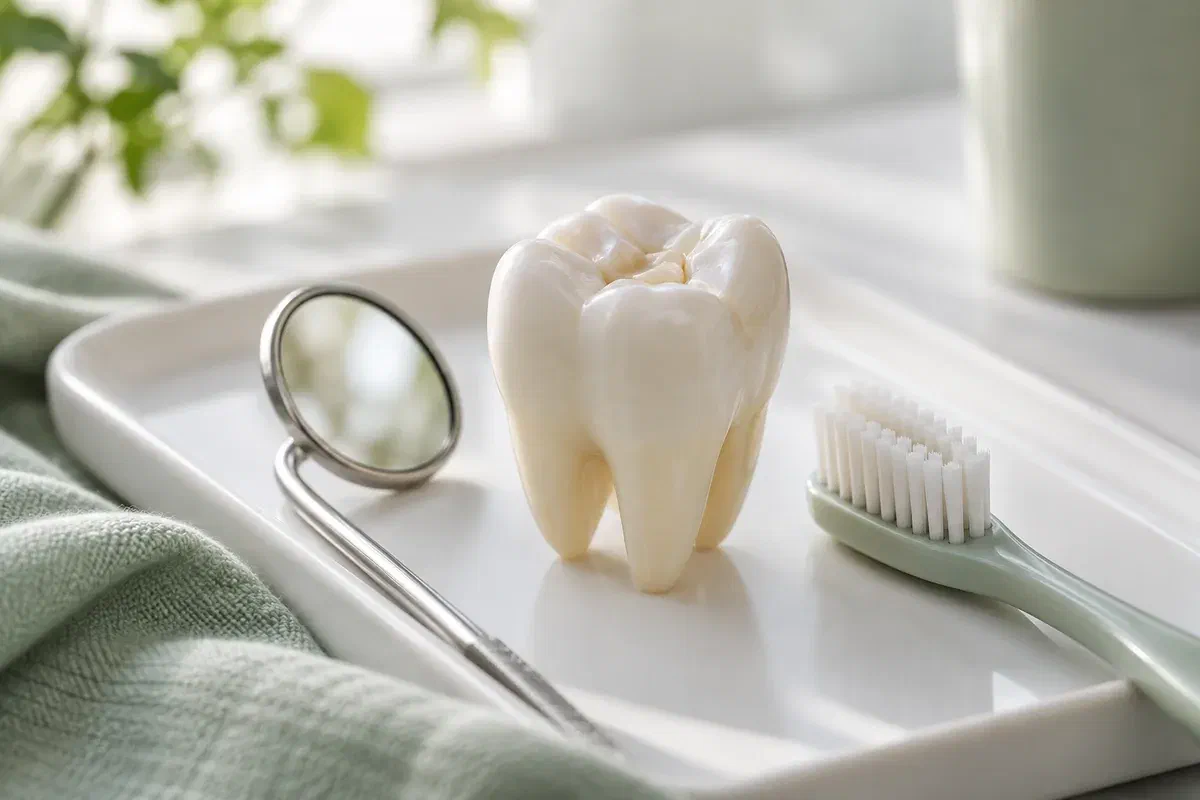
Illustrative tooth teaching model, dental mirror, and small soft toothbrush
Details worth bringing to the appointment

What you notice at home is part of the picture.

Children rarely describe tooth trouble the way adults do. Pass along their words and your own observations, and leave the job of pinpointing the tooth to the dentist.

Wincing, sensitivity or skipped foods

Let us know if cold drinks, sweets or chewing seem to bother your child, or if they have started favouring one side. Say whether discomfort wakes them at night or arrives for no obvious reason. Those clues can change how quickly they should be seen and what the dentist looks for.

Something you can see

A small hole, a brown or dark patch, a spot where food keeps collecting or a chipped edge are all worth mentioning, along with roughly when you first spotted them. Colour on its own does not reveal how deep or active decay is, so an exam and suitable records may be needed.

Nerves about the dentist

Share any past visit that went badly, sensory sensitivities, the way your child prefers to communicate and relevant health needs before treatment is booked. Tell us what has worked before and what has not. That lets the team shape the visit around your child instead of following a one-size routine.

Phone us promptly if your child has facial swelling, a fever along with a tooth problem, severe pain or trouble eating. Breathing or swallowing difficulty, or a child who looks seriously ill, calls for urgent medical help.

What good cavity care is trying to achieve

Fix today’s problem without losing sight of the next one

Depending on what the exam shows, the goal might be to slow or arrest an early lesion, rebuild damaged tooth structure or manage a deeper problem. Baby teeth can be needed for many years, so knowing a tooth will fall out someday is not a reason to leave decay in it.

A filling repairs the damage, but it does not change the habits and conditions that allowed decay to start. That is why prevention and follow-up stay on the agenda. Ask how the treatment and your home routine fit together, and what the dentist plans to check once the immediate issue is settled.

Patient information: AAPD — pediatric restorative dentistry

A reason tied to this particular tooth

You should hear why a filling, a crown, a preventive approach or something else is on the table. Ask how much healthy structure remains and how long the tooth is expected to stay. Then comparing options becomes a real choice.

A visit built around your child

Agree on explanations, breaks and comfort measures before anything starts. How your child copes may affect whether care is split up or provided elsewhere. Ask what the backup plan is rather than assuming the appointment must push on.

Prevention you can actually keep up

Go over brushing help, fluoride advice and the eating and drinking patterns that matter, without a list of forbidden foods. Pick changes your household can stick with, and ask how progress will be reviewed when several teeth are at risk.

How a cavity visit usually unfolds

From diagnosis to follow-up, step by step

The order depends on what is found and the treatment chosen. Some children need more than one visit, and some need a referral for care that suits them better.

  1. Look closely at the tooth and history

    The dentist asks about symptoms, examines your child’s mouth and talks through any X-rays or other information that would help. Mention health conditions, medicines, allergies and earlier treatment. Ask whether the tooth is a baby tooth or a permanent one and what the findings mean.

  2. Talk through options and comfort

    Go over the recommended treatment, the alternatives, their limits and what might happen if nothing is done. Ask how numbing and communication will be handled. Sedation or general anaesthesia, if raised at all, needs its own assessment, consent and a confirmed provider and setting.

  3. Carry out the agreed care

    The clinician describes each step in words your child can follow. Treatment may involve managing the lesion, placing a restoration or other care the findings call for. If something unexpected appears or your child needs a change of approach, the plan is discussed again before going further.

  4. Go over home care and next checks

    Before you leave, confirm what was done, whether anything temporary was placed and what is still outstanding. Review instructions on eating, numbness, cleaning and symptoms for that procedure. Book the right follow-up and ask which changes should prompt a call sooner.

The rest of the day

Simple instructions, followed closely, make the evening easier.

What your child needs afterward depends on the procedure and any medicines given. Get clear directions before heading home, especially if a grandparent or sitter is taking over.

Watch for chewing on numb areas

When freezing has been used, keep an eye on your child and gently stop any biting or sucking of the lip, cheek or tongue. Follow the team’s advice on food and drink until feeling comes back. Describe the odd sensation calmly so they are less tempted to test it with their teeth.

Clean the tooth the way you were shown

Follow the cleaning directions for the specific restoration or procedure, and keep helping with brushing and fluoride as advised. If brushing the area hurts, or food keeps getting stuck at the treated tooth, call the clinic instead of letting that spot go uncleaned.

Notice anything that seems off track

Ask what soreness, if any, is normal. Call about pain that increases, swelling, a filling that comes out or a bite that feels wrong. Give medicine only as directed for your child, never a guessed adult amount.

Patient information: AAPD — local anaesthesia and postoperative instructions

Matching treatment to the tooth

Why one child gets a filling and another does not

Ask how the suggested option suits the diagnosis and what follow-up it involves. Suitability and availability need to be confirmed for your child rather than assumed from a description like this one.

For some lesions, with planned reviews

Controlling decay without drilling

Certain lesions can be managed without a traditional filling, using preventive or decay-control measures. That depends on assessment and regular monitoring. If silver diamine fluoride comes up, ask about the permanent dark staining of treated decay, reapplication and what it cannot do.

When the tooth needs repair

Rebuilding with a filling or crown

How much damage there is, where it sits, how much tooth remains and whether a restoration can be placed well all shape this choice. A large lesion may need something different from a small one. Ask about the material, its look and how long it may last.

When deep decay or support needs shift the plan

Nerve care, removal or a referral

Decay that has gone deep may need more than a surface repair. The dentist can explain whether the tooth can be kept. If removing it is considered, ask about the adult teeth developing underneath and whether the space should be checked later.

Parents ask us

Questions to settle before the treatment day

Ask about the tooth, comfort and what happens after. A clear answer now can make the visit itself calmer for everyone.

(905) 876-4488
Can an early cavity in my child’s tooth heal by itself?
Some very early changes in enamel can be stabilized with good cleaning, fluoride and diet changes, but a true hole in the tooth does not grow back. The dentist can tell you which stage your child’s tooth is at and whether monitoring is reasonable.
Why does a cavity in a back baby molar still matter at age six?
Back baby molars often stay in place well beyond the early school years and help with chewing and holding space for adult teeth. Untreated decay in them can lead to pain or infection. Ask what role that particular molar is expected to play.
Will my child need an X-ray before the cavity is treated?
Often an X-ray helps show how deep decay goes or whether it sits between teeth, where it cannot be seen. The dentist will explain whether one is needed and why. Mention any recent images taken elsewhere so they can be considered.
Can I stay with my child during the filling?
Many parents do, and it can help a younger child feel secure. Talk with the team beforehand about where you will sit and how you can help, such as staying calm and letting the clinician lead the conversation.
Is a tooth-coloured filling an option for children?
It may be, depending on the size and location of the cavity and whether the area can be kept dry while it is placed. Ask which materials suit your child’s tooth and how each one compares in durability and care.
If the tooth stopped hurting, should we still keep the appointment in Milton?
Yes, check with the dentist before cancelling. Pain easing does not mean the decay has gone away, and sometimes it means the nerve is affected. Call if swelling, fever or other worrying signs appear in the meantime.
Book in Milton

Let’s look at the tooth together

Get in touch with our Bronte Street practice about a cavity that has been diagnosed or a change you have spotted. Tell us about pain, swelling and any support your child needs so we can arrange the right assessment and conversation.

Recommendations follow an examination. Strong pain, swelling or signs of illness are worth a phone call that same day.

Visit Milton Dental Clinic
Unit 1, 342 Bronte St. S, Milton, ON L9T 5B7
Get directions Clinic hours
Monday–Thursday
11am–7pm
Friday–Sunday
By appointment only

Areas we serve

  • Milton
  • Oakville
  • Mississauga
  • Georgetown
  • Halton Hills
  • Acton
  • Campbellville
  • Brampton
  • Burlington
  • Puslinch
  • Rockwood
  • Erin
  • Caledon
  • Etobicoke
  • Old Milton
  • Bronte Meadows
  • Timberlea
  • Dorset Park
  • Dempsey
  • Clarke
  • Beaty
  • Coates
  • Harrison
  • Scott
  • Willmott
  • Ford
  • Bowes
  • Cobden
  • Walker
  • Mountain View
  • Milton Heights
  • Hawthorne Village
  • Valley View
  • Fallingbrook
  • Nassagaweya
  • Trafalgar
  • Esquesing
  • Nelson
  • Brookville
  • Moffat
  • Glen Williams
  • Norval
  • Limehouse
  • Stewarttown
  • Ashgrove
  • Hornby
  • Silver Creek
  • Speyside
  • Scotch Block
  • North Oakville
  • River Oaks
  • Glen Abbey
  • West Oak Trails
  • Palermo
  • Bronte Creek
  • College Park
  • Joshua Creek
  • Uptown Core
  • Preserve
  • Iroquois Ridge
  • Lisgar
  • Meadowvale
  • Meadowvale Village
  • Churchill Meadows
  • Erin Mills
  • Central Erin Mills
  • Streetsville
  • East Credit
  • Creditview
  • Heartland
  • Sheridan
  • Mount Pleasant
  • Credit Valley
  • Huttonville
  • Churchville
  • Springbrook
  • Northwest Brampton
  • Bram West
  • Fletcher's Meadow
  • Fletcher's Creek South
  • Alton Village
  • Orchard
  • Millcroft
  • Headon Forest
  • Tansley
  • Brant Hills
  • Tyandaga
  • Kilbride
  • Lowville
  • Aberfoyle
  • Morriston
  • Arkell
  • Hillsburgh
  • Freelton
  • Carlisle
  • Waterdown
  • Flamborough
  • Mountsberg

How can we help?

Milton Dental Clinic

Have a question about your smile? Choose the option that works best for you.

For urgent dental concerns, please call.
Messages are reviewed during clinic hours.