

Illustrative child and parent discussing a tooth model with a dental clinician
Children’s Dentistry

Children’s Cavity Treatment in Old Milton

When a parent, grandparent or caregiver brings a child in for a cavity, everyone involved needs the same clear picture. From Old Milton, a short trip to Bronte Street lets you discuss the tooth, the treatment choices, comfort and the follow-up plan.

Old Milton households, shared care

Who brings your child in, and who looks after them later?

In many families around Milton’s historic downtown, the adult at the dental chair is not always the one who heard the diagnosis. A grandparent might handle the treatment visit while a parent is at work, or a sitter might take over in the afternoon. Cavity care goes more smoothly when each of those people understands what was found and what is planned.

Start by asking the basics: is the decayed tooth a baby tooth or a permanent one, how far has the damage gone, and how soon should it be dealt with? Only an examination of your child’s mouth can settle that. Then share what you know about pain, eating, past visits and what reassures your child, so the plan reflects the tooth and the child together.

Decay is common and nobody needs to feel blamed for it. Early lesions are sometimes managed without a filling, and some larger cavities need more than one. Ask what each option involves and what waiting would mean, and make sure your child hears an explanation suited to their age.

Plan your child’s cavity visit
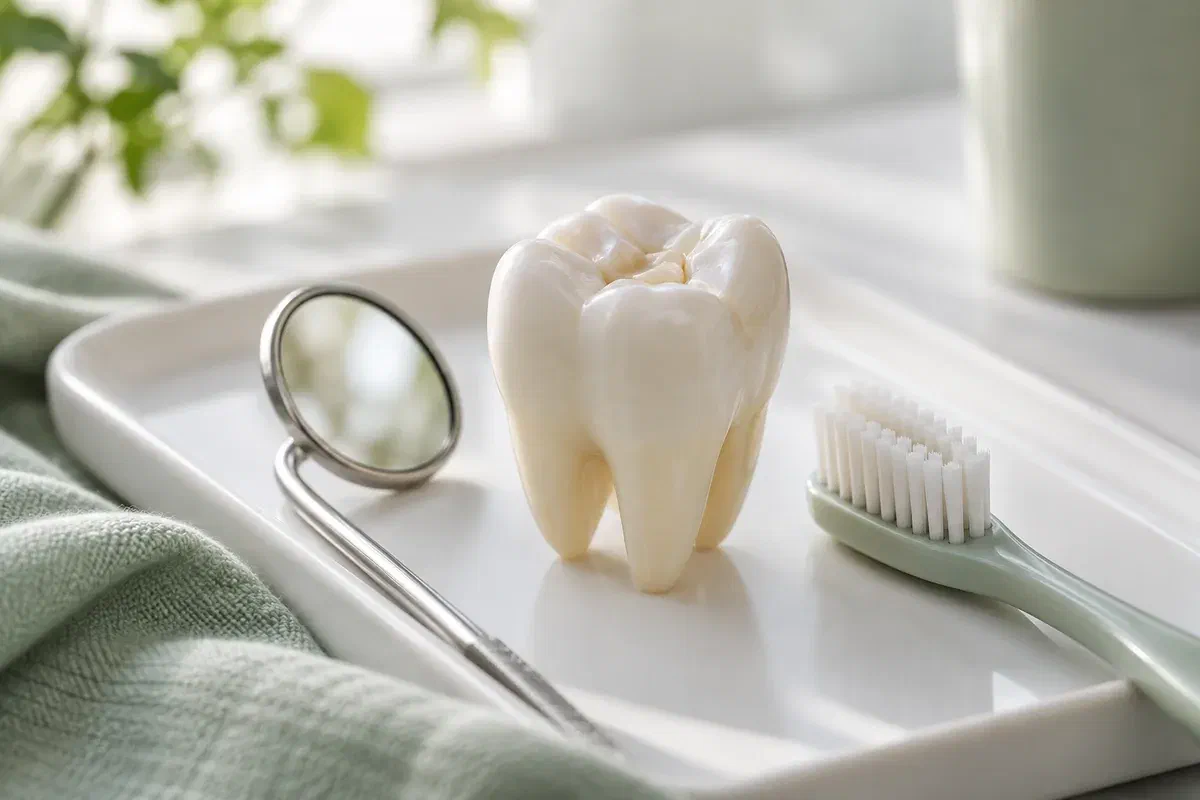
Illustrative tooth teaching model, dental mirror, and small soft toothbrush
Notes to pass along

Write it down, so every caregiver tells the same story

A child might mention a sore tooth to one adult and complain about food to another. Collect those comments and bring them to the visit rather than guessing which tooth is the problem.

Complaints at mealtimes

Has your child pushed away cold milk, a sweet treat or something crunchy, or started chewing only on one side? Does pain interrupt sleep or come and go without a reason? Those patterns help the dentist judge how quickly to act and where to look first.

Changes someone has spotted

Maybe a grandparent noticed a dark mark while brushing, or food keeps wedging in the same gap. Note what was seen and roughly when. A tooth’s colour cannot tell anyone how deep decay runs, which is why an exam and appropriate records may be needed.

How your child handles visits

Mention earlier appointments that were hard, sensitivities to noise or touch, how your child likes to be spoken to and any health conditions. Say what has helped in the past. The team can then plan an approach that fits your child rather than a generic routine.

Call right away about swelling, fever alongside a tooth complaint, severe pain or a child who cannot eat. If your child struggles to breathe or swallow, or seems seriously unwell, seek urgent medical attention.

The purpose behind the plan

Repair the tooth. Then protect the rest of the mouth.

Depending on the findings, treatment might hold back an early lesion, replace lost tooth structure or deal with decay that has reached deeper. A baby tooth can still have years of work ahead of it, and the fact that it will eventually fall out does not make it sensible to leave decay alone.

Placing a filling repairs a hole, but the conditions that caused it may still be there. Prevention and later reviews are part of the treatment, not extras. Ask how the dental work and your family’s routine are meant to support each other, and what will be checked once the urgent part is done.

Patient information: AAPD — pediatric restorative dentistry

A clear reason for the recommendation

Whatever is suggested, a filling, crown, preventive care or something else, ask why it suits this tooth. Find out how much sound structure is left and how long the tooth is likely to stay. That turns a list of options into a choice you can weigh.

Pacing that suits your child

Agree on signals for a break, how steps will be explained and what comfort measures are planned. Your child’s reaction might mean care is split over visits or arranged in another setting. Ask what happens if things are not going well.

Prevention every caregiver can follow

Talk about who helps with brushing, how fluoride is used and which snack and drink habits matter most, without a list of banned foods. Choose steps that work across households if your child moves between them, and ask how progress will be checked.

What to expect from start to finish

Four stages, each one explained before it begins

Exactly how care proceeds depends on the diagnosis and the treatment agreed. Some children need a series of appointments, and some are better served by a referral.

  1. An exam and a history

    The dentist asks about symptoms, checks the teeth and gums, and explains whether X-rays or other information are needed. Share health conditions, medications, allergies and earlier dental work. Ask which tooth is involved, whether it is a baby or adult tooth, and what the results show.

  2. A conversation about choices

    Review the proposed care, other reasonable options, their limits and the likely outcome of doing nothing for now. Ask how freezing and communication will work. Sedation or general anaesthesia would need separate assessment, consent and confirmation of a suitable provider and setting.

  3. Treatment as agreed

    The clinician tells your child what is happening in simple terms. Care might involve treating the lesion, placing a restoration or other work the findings call for. If something changes during the visit, the plan is talked over again before going on.

  4. Instructions for whoever is at home

    Confirm what was finished, whether anything temporary was placed and what remains to be done. Ask for clear directions on eating, numbness, cleaning and symptoms, ideally in writing if another adult is taking over. Book the follow-up and learn which signs mean calling sooner.

Handing over after treatment

Make sure the next caregiver knows what to watch for

Aftercare depends on what was done and which medicines were used. If your child is going to a grandparent, sitter or other parent, pass on the instructions before you part ways.

Numbness and the urge to nibble

After local anaesthetic, children often chew or suck on a numb lip, cheek or tongue without realizing it. Keep watch, gently redirect them and follow the advice on food and drinks until feeling returns. A calm explanation of the strange feeling helps.

Brushing near the treated tooth

Use the cleaning steps you were given for that restoration, along with the usual adult help and fluoride advice. If brushing there is painful or food keeps catching at the tooth, phone the clinic instead of skipping that area.

Signs that need a phone call

Ask what mild discomfort is expected and when to get advice. Call about pain that builds, swelling, a filling that falls out or a bite that feels uneven. Medicines should be given only as directed for your child, never at an adult dose.

Patient information: AAPD — local anaesthesia and postoperative instructions

Comparing the main approaches

Different cavities call for different care

Ask why the recommended option fits what was found and what follow-up comes with it. Whether a treatment is suitable or available should be confirmed for your child, not assumed.

For chosen lesions, reviewed on a schedule

Watch-and-control care

Some lesions can be slowed or stopped without a standard filling, using preventive or caries-control methods. That only works with assessment and monitoring. If silver diamine fluoride is mentioned, ask about the permanent dark colour it leaves on treated decay, repeat applications and its limits.

When lost structure needs replacing

Restoring the tooth

Size and position of the damage, how much tooth remains and whether a restoration can be placed under suitable conditions all guide this. A large cavity may need a crown rather than a small filling. Ask about the material, its appearance, durability and upkeep.

When the nerve or your child’s needs change things

Deeper treatment or a referral

When decay has gone deep, a surface repair may not be enough. The dentist can talk through whether the tooth can be saved and what else is appropriate. If removal is discussed, ask about the adult teeth below and whether the gap needs watching.

Common questions

What families near Main Street often want to know

Bring these to the appointment, along with your own. Answers given ahead of time help every adult involved feel ready.

(905) 876-4488
Can a grandparent sign for or attend my child’s cavity treatment?
Ask the clinic before the visit about consent and who may accompany your child. Arrangements depend on the treatment and the adults involved. Sorting this out ahead of time avoids a postponed appointment and lets the caregiver ask the right questions.
What should a sitter know if my child is numb after a filling?
Pass along when the freezing was given, the eating and drinking advice, and a reminder to stop any biting of the lip or cheek. Leave the clinic’s number and the signs that warrant a call, such as swelling or increasing pain.
How do I know whether a dark spot is a stain or decay?
You cannot tell reliably by looking, and neither can the dentist without examining the tooth. Some marks are surface staining, while others are decay of varying depth. An exam, and sometimes an X-ray, is needed to tell the difference.
Is a baby tooth with a cavity worth fixing if a loose tooth is nearby?
It depends on that tooth, not the neighbouring one. Some baby teeth stay for years after others start wobbling. The dentist will consider how long it is expected to remain and how deep the decay is before suggesting treatment or monitoring.
Do all children with a cavity need to be put to sleep for treatment?
No. Many children manage with good communication, local freezing and a well-paced visit. When sedation or general anaesthesia is raised, ask about suitability, risks, who provides it and where, and how to prepare. It should never be assumed to be available.
How can we describe the visit to our child honestly?
Keep it simple and calm: the dentist is going to help the tooth and will explain what happens. Avoid promising it will not feel like anything. Let your child know they can raise a hand or ask for a break whenever they need one.
Near the historic downtown

Bring the whole family into the conversation

Our Bronte Street practice is close to Old Milton. Contact us about a diagnosed cavity or something you have noticed, and tell us about pain, swelling or support needs so we can set up a suitable assessment and planning visit.

Any plan follows an examination. Let us know promptly about significant pain, swelling or a child who is unwell.

Visit Milton Dental Clinic
Unit 1, 342 Bronte St. S, Milton, ON L9T 5B7
Get directions Clinic hours
Monday–Thursday
11am–7pm
Friday–Sunday
By appointment only

Areas we serve

  • Milton
  • Oakville
  • Mississauga
  • Georgetown
  • Halton Hills
  • Acton
  • Campbellville
  • Brampton
  • Burlington
  • Puslinch
  • Rockwood
  • Erin
  • Caledon
  • Etobicoke
  • Old Milton
  • Bronte Meadows
  • Timberlea
  • Dorset Park
  • Dempsey
  • Clarke
  • Beaty
  • Coates
  • Harrison
  • Scott
  • Willmott
  • Ford
  • Bowes
  • Cobden
  • Walker
  • Mountain View
  • Milton Heights
  • Hawthorne Village
  • Valley View
  • Fallingbrook
  • Nassagaweya
  • Trafalgar
  • Esquesing
  • Nelson
  • Brookville
  • Moffat
  • Glen Williams
  • Norval
  • Limehouse
  • Stewarttown
  • Ashgrove
  • Hornby
  • Silver Creek
  • Speyside
  • Scotch Block
  • North Oakville
  • River Oaks
  • Glen Abbey
  • West Oak Trails
  • Palermo
  • Bronte Creek
  • College Park
  • Joshua Creek
  • Uptown Core
  • Preserve
  • Iroquois Ridge
  • Lisgar
  • Meadowvale
  • Meadowvale Village
  • Churchill Meadows
  • Erin Mills
  • Central Erin Mills
  • Streetsville
  • East Credit
  • Creditview
  • Heartland
  • Sheridan
  • Mount Pleasant
  • Credit Valley
  • Huttonville
  • Churchville
  • Springbrook
  • Northwest Brampton
  • Bram West
  • Fletcher's Meadow
  • Fletcher's Creek South
  • Alton Village
  • Orchard
  • Millcroft
  • Headon Forest
  • Tansley
  • Brant Hills
  • Tyandaga
  • Kilbride
  • Lowville
  • Aberfoyle
  • Morriston
  • Arkell
  • Hillsburgh
  • Freelton
  • Carlisle
  • Waterdown
  • Flamborough
  • Mountsberg

How can we help?

Milton Dental Clinic

Have a question about your smile? Choose the option that works best for you.

For urgent dental concerns, please call.
Messages are reviewed during clinic hours.