

Illustrative child and parent discussing a tooth model with a dental clinician
Children’s Dentistry

Children’s Cavity Treatment in Rockwood

Some cavity treatments leave a visible mark, and some take more time in the chair. Families from Rockwood can weigh appearance, comfort and follow-up for each option, and understand why the dentist recommends one approach for their child’s tooth.

Appearance, comfort and the tooth itself

Trade-offs worth talking through

Put simply, one option might leave the spot dark, another might mean a longer visit, and you may not know which matters more to your family until someone lays them side by side. That is the heart of many cavity decisions for children. A liquid treatment may arrest certain lesions but stains them permanently. A filling or crown rebuilds the tooth but asks more of your child in the chair.

Which trade-off makes sense depends on facts from the examination: is the tooth primary or permanent, how deep and active is the decay, and how much healthy structure remains? Coming from a village like Rockwood, you can save a second trip by raising appearance and comfort questions on the first visit. Share pain, eating changes, earlier visits and what helps your child, too.

Ask what has been diagnosed, which options are reasonable for that tooth and what waiting might mean. Make sure your child hears an explanation pitched at their age, including what the tooth may look like afterward. A cavity reflects a health process, and blame has no place in the conversation.

Compare your child’s options
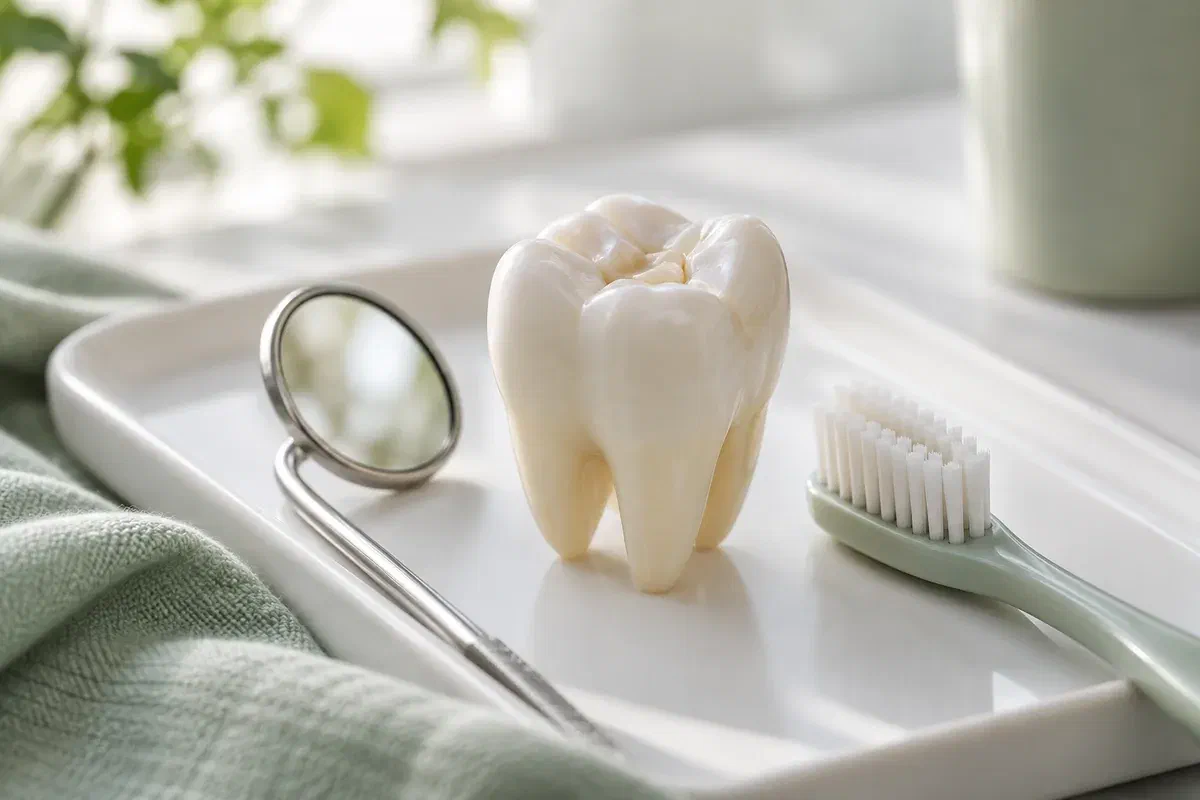
Illustrative tooth teaching model, dental mirror, and small soft toothbrush
Information that helps

Clues from home, in your child’s words and yours

Children often describe a sore tooth vaguely. Pass on what they say and what you have noticed, and let the exam pinpoint the tooth.

Discomfort with food or drink

Mention reactions to cold, sweet or chewy foods and any side your child avoids. Note whether pain wakes them or starts without a trigger. Those details affect urgency and help the dentist decide what to examine most carefully.

Colour changes and holes

Tell us about a brown, black or chalky white patch, a visible hole or a broken edge, and roughly when it appeared. Colour by itself cannot show whether decay is deep or active. An exam, and sometimes X-rays, may be required.

Sensory and emotional needs

Share past dental experiences, sensitivities to taste, sound or touch, communication preferences and health conditions. Mention what has helped your child before. The team can then shape an approach that suits them.

Call without delay about facial or gum swelling, fever with tooth pain, severe pain or a child who refuses food. Laboured breathing, trouble swallowing or a child who looks seriously unwell requires urgent medical attention.

The underlying goal

Stop the decay, whatever the method

Each option has the same basic purpose: to halt an early lesion, rebuild lost structure or address decay that has gone deeper. The method depends on findings. Primary teeth can be needed for years, and the fact that a tooth will be replaced eventually does not make decay in it harmless.

No treatment removes the habits and conditions that allowed decay. That is why prevention and review come with any choice. Ask how the chosen option and your home routine work together, and what the dentist will check at follow-up.

Patient information: AAPD — pediatric restorative dentistry

Reasons you can weigh

Ask why a preventive approach, filling, crown or other care is suggested, how much sound tooth is left and roughly when it would normally be lost. Understanding those facts makes the appearance and comfort trade-offs easier to judge.

An honest comfort plan

Discuss explanations, breaks and comfort measures for each option. A shorter, less involved treatment may suit some children better, while others manage a longer visit well. Ask what happens if the plan cannot continue on the day.

Prevention that protects the result

Review brushing help, fluoride advice and snack and drink patterns. Choose changes your family can sustain. If a lesion is being monitored, home care becomes especially important, so ask how progress will be tracked.

Four questions, in order

What is wrong, what could we do, how, and what next?

The steps vary with the diagnosis and chosen treatment. More than one visit, or a referral for better-suited care, is sometimes needed.

  1. What is going on?

    The dentist listens to the history, looks carefully at the teeth and tells you whether images are needed to see decay fully. Mention health conditions, medicines, allergies and earlier dental work. Find out which tooth it is, and whether it will be replaced by an adult tooth.

  2. What could we do?

    Each reasonable option is explained, including how it may look afterward, its limits and what might happen without care. Ask about numbing and how your child can signal. If sedation or general anaesthesia enters the discussion, it is assessed and consented to separately, with the provider and location confirmed first.

  3. How will it be done?

    Your child is told about each step in plain words beforehand. Care may involve applying a preventive treatment, rebuilding the tooth or other indicated work. If the findings or your child’s needs change, the team discusses it with you before continuing.

  4. What happens next?

    Confirm what was completed, whether anything is temporary and what remains. Go over eating, numbness, cleaning and symptom advice for that procedure. Book follow-up, including any reapplication, and ask which changes mean calling earlier.

After treatment

Instructions change with the method used

Preventive applications, fillings and crowns each come with their own aftercare. Make sure you have clear directions before leaving, especially if another caregiver takes over later.

If your child was numbed

Keep an eye on your child and discourage chewing or sucking on a numb lip, cheek or tongue. Follow the guidance on eating and drinking until normal feeling comes back, and describe the sensation calmly.

Cleaning and any eating limits

Follow the specific instructions for the treatment received, including any short wait before eating or brushing. Keep up adult help and fluoride as advised. If brushing hurts or food keeps catching, phone the clinic.

Changes that warrant a call

Ask what is normal afterward. Contact us about pain that increases, swelling, a restoration that loosens or teeth that no longer meet comfortably. Medicines should be given only according to directions for your child.

Patient information: AAPD — local anaesthesia and postoperative instructions

Looking at each option

What each approach asks of your child, and what it leaves behind

The dentist should explain how each fits the diagnosis and how often you would be coming back afterward. Suitability and availability need confirming for your child.

For some lesions, with scheduled checks

A preventive application

Certain lesions can be arrested without a conventional filling, using caries-control measures. Monitoring is essential. Silver diamine fluoride, if suggested, permanently darkens the treated decay and may need reapplying. Ask what it can and cannot do for this tooth.

When lost structure must be restored

Rebuilding the tooth

A filling or crown restores shape and function. The size and location of damage, remaining tooth and conditions for placing it guide the choice. Ask about tooth-coloured and other materials, appearance, durability and care.

When decay is deep or needs are complex

More involved treatment

If decay has reached deeper layers, a simple repair may not be enough. Ask whether the tooth can be saved and what other care is appropriate. If extraction is discussed, ask about the developing adult teeth and whether space should be assessed later.

Questions about looks and comfort

What Rockwood parents want to know

These focus on the trade-offs between options. Bring any other questions to the appointment.

(905) 876-4488
Will a black spot from a preventive liquid ever fade?
Staining from silver diamine fluoride on treated decay is generally permanent. Healthy enamel nearby is not meant to be stained, but the treated area stays dark. Ask the dentist where it would show and whether a restoration could cover it later.
Can a dark-stained tooth be filled later on?
In some cases a restoration can be placed over an area treated earlier. It depends on the tooth and how things develop. Ask whether this is a possibility for your child and what would make it necessary.
Are tooth-coloured crowns available for baby teeth?
Different crown types exist, and suitability depends on the tooth, the amount of damage and treatment conditions. Ask the dentist which options are realistic for your child and how they compare in appearance and durability.
Which option is easiest for a very young child to manage?
That depends on the child and the tooth. Some approaches take less time in the chair, while others need more cooperation. Ask the dentist how each option would work for your child specifically.
Does one approach mean more visits than another?
Monitoring or preventive applications usually involve scheduled reviews and possible reapplication, while a restoration may need fewer return visits for that tooth. Ask what follow-up each choice would require.
Can I explain the visit without making promises?
Tell your child the dentist will help the tooth and explain what happens. Avoid saying it will not feel like anything. Let them know they can ask questions or ask for a break, and ask the team for helpful words.
Rockwood to Bronte Street

Talk through looks, comfort and care

If a cavity has been found, or a tooth has changed colour, get in touch with our Bronte Street practice. Let us know about pain, swelling and anything that would help your child, and we will arrange an appropriate assessment.

Recommendations are made after examination. Report strong pain, swelling or a child who feels unwell without waiting.

Visit Milton Dental Clinic
Unit 1, 342 Bronte St. S, Milton, ON L9T 5B7
Get directions Clinic hours
Monday–Thursday
11am–7pm
Friday–Sunday
By appointment only

Areas we serve

  • Milton
  • Oakville
  • Mississauga
  • Georgetown
  • Halton Hills
  • Acton
  • Campbellville
  • Brampton
  • Burlington
  • Puslinch
  • Rockwood
  • Erin
  • Caledon
  • Etobicoke
  • Old Milton
  • Bronte Meadows
  • Timberlea
  • Dorset Park
  • Dempsey
  • Clarke
  • Beaty
  • Coates
  • Harrison
  • Scott
  • Willmott
  • Ford
  • Bowes
  • Cobden
  • Walker
  • Mountain View
  • Milton Heights
  • Hawthorne Village
  • Valley View
  • Fallingbrook
  • Nassagaweya
  • Trafalgar
  • Esquesing
  • Nelson
  • Brookville
  • Moffat
  • Glen Williams
  • Norval
  • Limehouse
  • Stewarttown
  • Ashgrove
  • Hornby
  • Silver Creek
  • Speyside
  • Scotch Block
  • North Oakville
  • River Oaks
  • Glen Abbey
  • West Oak Trails
  • Palermo
  • Bronte Creek
  • College Park
  • Joshua Creek
  • Uptown Core
  • Preserve
  • Iroquois Ridge
  • Lisgar
  • Meadowvale
  • Meadowvale Village
  • Churchill Meadows
  • Erin Mills
  • Central Erin Mills
  • Streetsville
  • East Credit
  • Creditview
  • Heartland
  • Sheridan
  • Mount Pleasant
  • Credit Valley
  • Huttonville
  • Churchville
  • Springbrook
  • Northwest Brampton
  • Bram West
  • Fletcher's Meadow
  • Fletcher's Creek South
  • Alton Village
  • Orchard
  • Millcroft
  • Headon Forest
  • Tansley
  • Brant Hills
  • Tyandaga
  • Kilbride
  • Lowville
  • Aberfoyle
  • Morriston
  • Arkell
  • Hillsburgh
  • Freelton
  • Carlisle
  • Waterdown
  • Flamborough
  • Mountsberg

How can we help?

Milton Dental Clinic

Have a question about your smile? Choose the option that works best for you.

For urgent dental concerns, please call.
Messages are reviewed during clinic hours.