

Illustrative child and parent listening to a dental clinician before a checkup
Children’s Dentistry

Children’s Dental Checkups in Burlington

The first wobbly tooth tends to bring a rush of questions. A children’s checkup gives them a proper home: we review teeth, gums, habits and anything new, and talk with your child as well as with you.

Burlington kids, growing teeth

One loose tooth, a dozen questions.

It usually starts at dinner. Your child bites into something, stops, and announces that a front tooth moves. Soon come the follow-ups: is the new one coming in crooked, why is there a gap, and is it normal for the gum to look a bit red? A checkup is a calm place to sort through all of it.

From Burlington, the trip northeast to our clinic is easier when you know what you want covered. Jot down the tooth that is loose, any sore spot, food that keeps getting trapped and whether brushing has become a fight. Your child may have their own list, perhaps about the tooth fairy or the tools on the tray, and we are happy to hear it.

Nothing in the appointment is automatic. Depending on what the dentist sees and how far along your child's teeth are, a cleaning, fluoride, sealants or an X-ray might be suggested. Ask what is planned, why it would help and how the timing of the next visit was decided.

Book a checkup from Burlington
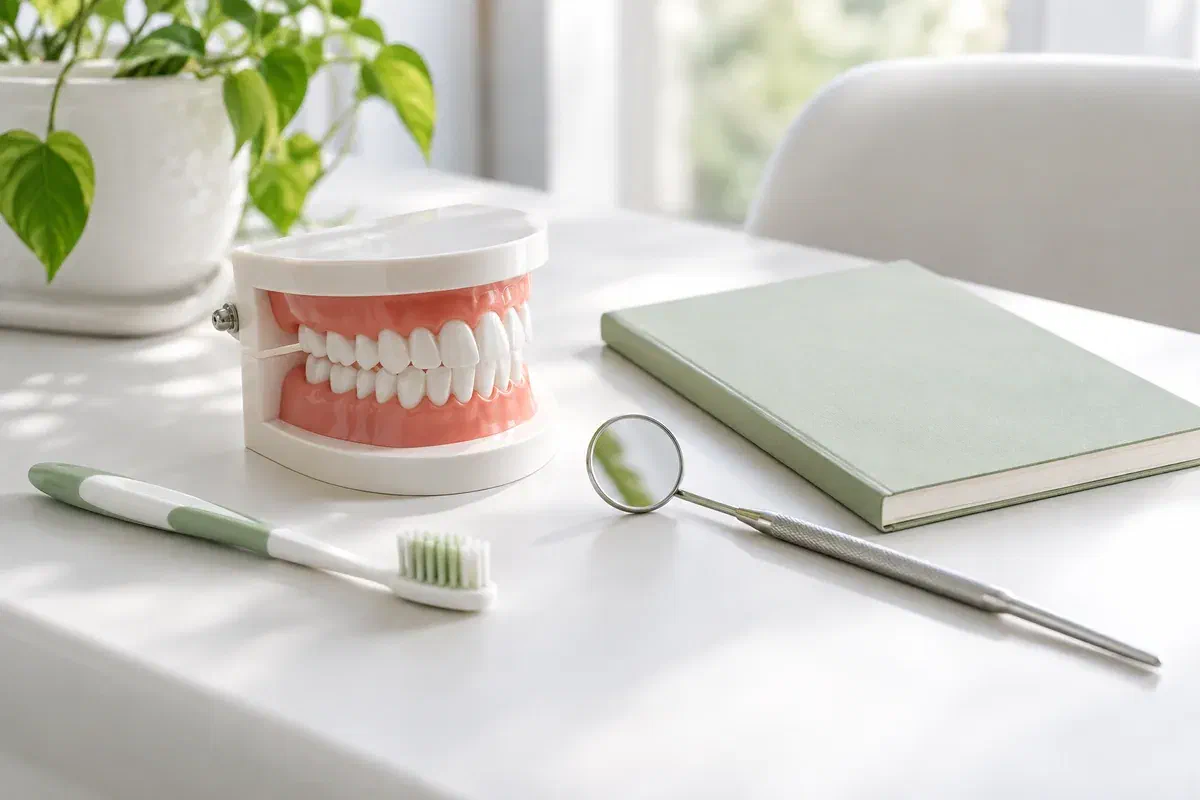
Illustrative child-sized toothbrush, dental model, mirror, and notebook
Notes worth bringing

Clues often come from your child, not the mirror.

A child may say a tooth feels “funny” or quietly chew on one side. Tell us what you saw or heard; there is no need to translate it into dental language first.

A tooth that is new, wobbly or out of place

Point out an adult tooth that has arrived, a baby tooth hanging on longer than expected, or an area that is now awkward to brush. The dentist can check how things are developing and whether simply watching is reasonable. Appearance alone is not proof that braces will be needed.

Sore spots, bleeding or picky chewing

Tell us about twinges, discomfort when biting, food that lodges in one place, or gums bleeding during brushing. Describe when you notice it and whether it is changing. Some of these are best seen in a dedicated visit rather than left until the next routine checkup.

Brushing that needs a new plan

Let us know who is brushing, what is hardest, and whether something new, like a sports schedule, has pushed the routine around. Ask about flossing and about the molars that have just come up. Advice should match your child's abilities, not only the number of candles on the cake.

Tell the team about medicines, health changes, injuries and any sensory or support needs before you come. If your child is in pain or has swelling, mention it when booking so the appointment can be set up for that.

What regular checkups add up to

Small visits, a clearer picture.

Coming back on a schedule lets the dentist see how the mouth is doing, judge the risk of decay and discuss growth and prevention. That schedule belongs to your child. A sister with an area being watched, or a brother more prone to cavities, may each be asked to return at a different time.

Even a thorough checkup cannot promise that nothing will develop before the next one. Its real use is in explaining what was seen and how to react if something changes. Aim to leave with a clear next step, not just a slip of paper with a date.

Patient information: AAPD — continuing examinations and preventive care

Noticing change across visits

Comparing findings over months can show whether a spot is staying the same or needs attention. Ask what the dentist is keeping an eye on and what would change the plan. Your reports from home help, particularly when a problem only shows up at certain times.

Brushing tips for the stage they are in

Cleaning around wobbly teeth and gaps is a different job from cleaning a mouth of adult teeth. Ask to see how to reach the areas that are tricky now. Once an old method stops working, the advice should be updated.

Letting your child have a say

Your child can be invited to ask questions and tell us what helps them stay comfortable. A few simple choices and clear descriptions keep them involved, without promises about how it will feel. Tell us if a different way of communicating or more preparation would help.

Step by step

How a children’s checkup unfolds.

Every visit follows your child's history and present needs. Ask what has been booked and which other services might come up after the dentist has looked.

  1. Hear what is new

    We go over symptoms, health changes, home care and earlier dental experiences. If your child has a question, now is a good moment. The team describes the exam in words that suit your child and agrees on a signal for a break or for discomfort.

  2. Examine and assess development

    The dentist looks at the areas relevant to your child's stage and any concerns. Ask which teeth are baby teeth and which are permanent, and whether anything needs follow-up. If your child could not manage the full exam, ask what was seen and how the rest will be checked.

  3. Decide on records and prevention

    Depending on findings and risk, X-rays, cleaning, fluoride or sealants could be suggested. Ask what an X-ray would show or which surface a sealant would protect. Each suggestion should come with a reason specific to your child.

  4. Explain and plan the follow-up

    We talk through any treatment needs, prevention advice and things to watch. Ask how soon the next checkup should be and whether one concern needs its own appointment. Your child can ask a final question before you go.

Back at home

Steady, realistic routines.

There is usually no recovery care after a routine exam. If a product or procedure was used during the visit, follow the instructions you were given.

Stay involved with brushing

Ask how much help your child still needs with brushing and flossing. Wanting independence does not guarantee every surface is reached. The team can suggest a way to share the task while your child's confidence grows.

Use the advice you were given

Follow the recommended toothpaste amount and technique, and any extra preventive steps. If a product is awkward or the routine keeps falling apart, tell us. A manageable tweak is better than an instruction nobody keeps.

Call for new problems

Get in touch about new pain, swelling, an injury or a tooth that changes noticeably. Say when it began and whether it affects eating or sleep. A reassuring checkup does not mean a new concern should wait for the next recall.

Different visits, different purposes

Checkup, problem visit or referral?

Telling us why you are booking means we can plan the right kind of appointment. A checkup may also show that a separate treatment or assessment is needed.

For regular review and prevention

A standard checkup

This appointment looks at overall oral health, development and an ongoing plan. Other services are discussed if they are needed. Ask what is included and whether a cleaning or other procedure is being booked separately.

When a finding needs treatment

A visit for one concern

Pain, a cavity, an injury or a damaged tooth may need care beyond a routine exam. The dentist will explain the choices and the timing. Ask what the follow-up is meant to address and which symptoms should bring you back sooner.

When development raises a further question

A review of growth or support needs

Some findings are best observed over time or seen by a clinician with relevant experience. Ask why it was suggested and what the referral should clarify. An early review does not automatically mean treatment starts at once.

Patient information: AAPD — selecting dental radiographs for children

Asked by Burlington parents

What families want to know.

Questions about loose teeth, nerves and what happens in the chair. Your child's questions are welcome too.

(905) 876-4488
My child’s new front teeth look too big. Is that a concern?
Adult front teeth often look large next to small baby teeth and a young face. Mention it at the checkup and the dentist can explain how things are developing. Appearance alone does not mean anything needs to be done.
Should I pull a very loose baby tooth before the appointment?
It is best not to force it. Many loose baby teeth come out on their own, and some situations need a look first. Bring it up at the visit, or call sooner if there is pain, swelling or a tooth that seems stuck.
Can my child bring a favourite toy or comfort item?
Usually, yes. Something familiar can help a nervous child settle. Let the team know what helps and they can work it into the visit where it is practical.
Is it okay to book siblings back to back even if their plans differ?
That can be convenient, and it is often possible. Each child will still be assessed on their own and may be given a different recall interval or recommendation. Ask the reasons for each plan so you can keep track.
My child is anxious about the dental mirror and tools. What helps?
Tell us beforehand. The team can show and name each item before using it, go at a slower pace and agree on a stop signal. Avoid promising that nothing will happen, but you can say the dentist will explain everything first.
Do X-rays get taken at every visit?
No. The dentist weighs what can be seen, your child’s history and what an image would add. Ask what a suggested X-ray is meant to show and whether earlier images are already on file.
Booking from Burlington

Bring the loose tooth and the questions.

Reach our Bronte Street practice to arrange your child's checkup. Tell us what has changed lately, how old your child is, and whether there is pain or a support need, so the visit can be planned well.

Intervals between checkups are decided individually. If your child has pain, swelling or an injury, let us know when it happens instead of waiting for the next routine appointment.

Visit Milton Dental Clinic
Unit 1, 342 Bronte St. S, Milton, ON L9T 5B7
Get directions Clinic hours
Monday–Thursday
11am–7pm
Friday–Sunday
By appointment only

Areas we serve

  • Milton
  • Oakville
  • Mississauga
  • Georgetown
  • Halton Hills
  • Acton
  • Campbellville
  • Brampton
  • Burlington
  • Puslinch
  • Rockwood
  • Erin
  • Caledon
  • Etobicoke
  • Old Milton
  • Bronte Meadows
  • Timberlea
  • Dorset Park
  • Dempsey
  • Clarke
  • Beaty
  • Coates
  • Harrison
  • Scott
  • Willmott
  • Ford
  • Bowes
  • Cobden
  • Walker
  • Mountain View
  • Milton Heights
  • Hawthorne Village
  • Valley View
  • Fallingbrook
  • Nassagaweya
  • Trafalgar
  • Esquesing
  • Nelson
  • Brookville
  • Moffat
  • Glen Williams
  • Norval
  • Limehouse
  • Stewarttown
  • Ashgrove
  • Hornby
  • Silver Creek
  • Speyside
  • Scotch Block
  • North Oakville
  • River Oaks
  • Glen Abbey
  • West Oak Trails
  • Palermo
  • Bronte Creek
  • College Park
  • Joshua Creek
  • Uptown Core
  • Preserve
  • Iroquois Ridge
  • Lisgar
  • Meadowvale
  • Meadowvale Village
  • Churchill Meadows
  • Erin Mills
  • Central Erin Mills
  • Streetsville
  • East Credit
  • Creditview
  • Heartland
  • Sheridan
  • Mount Pleasant
  • Credit Valley
  • Huttonville
  • Churchville
  • Springbrook
  • Northwest Brampton
  • Bram West
  • Fletcher's Meadow
  • Fletcher's Creek South
  • Alton Village
  • Orchard
  • Millcroft
  • Headon Forest
  • Tansley
  • Brant Hills
  • Tyandaga
  • Kilbride
  • Lowville
  • Aberfoyle
  • Morriston
  • Arkell
  • Hillsburgh
  • Freelton
  • Carlisle
  • Waterdown
  • Flamborough
  • Mountsberg

How can we help?

Milton Dental Clinic

Have a question about your smile? Choose the option that works best for you.

For urgent dental concerns, please call.
Messages are reviewed during clinic hours.