

Illustrative child and parent listening to a dental clinician before a checkup
Children’s Dentistry

Children’s Dental Checkups in Georgetown

Somewhere around the preteen years, kids start wanting to run their own routine. A children’s checkup helps with that handover, reviewing teeth, gums and habits while giving your child more say and you a clearer sense of where help is still needed.

Older kids from Georgetown

Handing over the toothbrush, gradually.

At some point the bathroom door closes and you are no longer invited in for brushing. That is a healthy step, but it raises questions. Is your child reaching the back molars? Are friends with braces making them self-conscious? A checkup at this age is partly about the teeth and partly about helping your child take over well.

For the drive down from Georgetown, encourage your child to think of their own questions. They might wonder about a tooth that looks crooked, a sore spot near the back, or why gums bleed when they floss. You can add what you have observed, such as late-night snacking or rushed mornings, without turning it into a lecture.

The dentist's recommendations will rest on what is seen and how far along your child's development is. Cleaning, fluoride, sealants for newer molars or an X-ray might be discussed; none of these is automatic. Encourage your child to ask what each step is for, and ask yourself how the next review was timed.

Schedule a Georgetown checkup
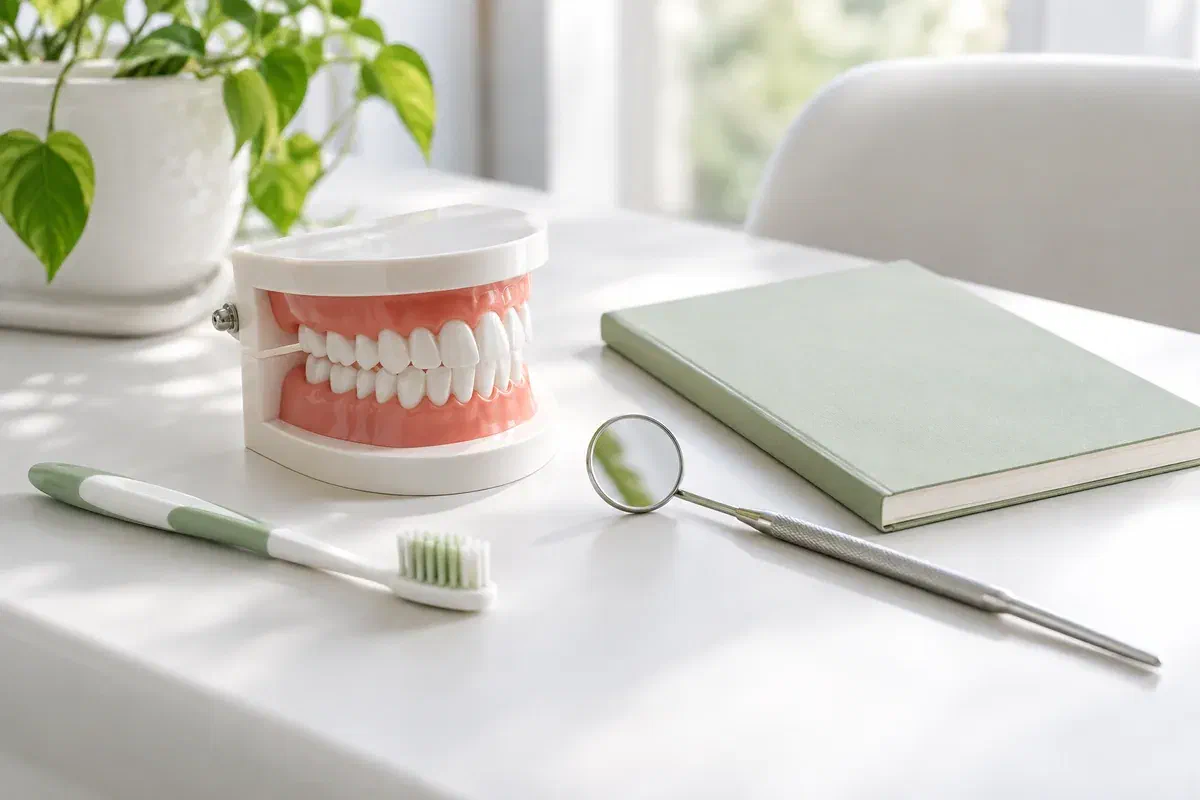
Illustrative child-sized toothbrush, dental model, mirror, and notebook
Questions your preteen might have

Let them describe it first.

Older children may be more willing to share a concern with the dentist than with a parent. Give them room, then fill in anything they leave out.

Teeth that are shifting or slow to arrive

Late-arriving adult teeth, a stubborn baby tooth or a crowded area that is awkward to clean are all worth raising. The dentist can assess development and say whether monitoring is enough. Teeth that look out of line do not, on their own, mean braces are necessary.

Sensitivity, sore gums or changed eating

Your child might mention twinges with cold drinks, discomfort when biting, food that lodges in one spot or gums that bleed. Ask them how often and whether it is getting worse. Some of these warrant a separate, focused visit.

A routine your child now owns

Talk about who brushes and flosses, which part gets skipped and how sports, sleepovers or late nights have changed the pattern. Ask about cleaning around the molars that have recently come through. Advice should fit your child's actual habits, not an ideal.

Tell us about medications, health changes, injuries and any sensory or support needs before the appointment. Mention pain or swelling when booking so the visit can be planned around it.

Why checkups still matter at this age

More independence, same need for review.

A routine visit lets the dentist look at oral health, consider how likely cavities are and talk about development and prevention. It is also a chance for an older child to hear advice directly. How often they come in is set for them alone and may not match a younger sibling's timetable.

No checkup can guarantee a problem will not appear before the next one. What it does provide is an explanation of the findings and a plan for responding to change. Your child should leave knowing what to do next, in words that make sense to them.

Patient information: AAPD — continuing examinations and preventive care

Seeing what has changed since last time

Comparing findings from earlier visits shows whether an area is stable or needs action. Ask what is being kept under watch and what would change the plan. Your child's own reports between visits are just as useful as yours.

Technique that fits a growing mouth

Once most adult teeth are in, the brushing approach that worked in early childhood may fall short. Ask the team to show your child how to reach the spots they miss. If a method has stopped working, it should be updated.

Your child leading the conversation

Older children can ask their own questions and say what helps them feel comfortable. Clear explanations and a few choices support that, without promising how it will feel. Let us know if your child prefers a particular way of communicating.

How the visit goes

What happens in the chair.

The appointment follows your child's history and current needs. Ask what is booked and which extras might come up once the exam is complete.

  1. Start by checking in

    We ask about symptoms, health updates, home routines and earlier visits, directing questions to your child where possible. The team explains what will happen and agrees on a way to signal discomfort or ask for a break.

  2. Examine and assess

    The dentist examines the teeth, gums and development relevant to your child's stage. Ask which teeth are still primary and whether any finding needs review. If part of the exam could not be completed, ask what was covered and how the remaining information will be gathered.

  3. Discuss prevention and imaging

    Depending on findings and risk, the dentist may suggest X-rays, cleaning, fluoride or sealants. Ask what an image would reveal or which surface a sealant would protect. Recommendations should be tied to a reason, not a routine list.

  4. Explain and plan

    We go over treatment needs, preventive tips and areas to watch. Ask about the next recall and whether anything needs a separate visit. Your child has a chance to ask a final question before leaving.

Back in Georgetown

Trust, but check now and then.

Your preteen can usually get straight back to school or practice after an exam. Any treatment or product applied that day comes with its own instructions, and your child should hear them too.

Step back gradually

Ask the team how much oversight your child still needs. Wanting privacy and independence is normal, yet back molars and gumlines are easy to rush. A quick check a few nights a week may be a reasonable middle ground.

Make the advice your child’s own

Encourage your child to follow the recommended toothpaste amount, technique and any extra preventive steps. If something feels like a chore they will not keep up, tell us. A realistic adjustment is more likely to stick.

Speak up about new problems

Let us know about new pain, swelling, a sports knock or a tooth that looks different. Explain when it started and whether it affects eating or sleep. A good checkup does not mean a fresh concern should wait for recall.

Which appointment fits

Routine, focused or referred.

Explaining why you are booking helps us schedule the right type of visit. A checkup may point toward a separate treatment or assessment appointment.

For routine review and prevention

Regular checkup

This covers current oral health, development and an ongoing plan. Other services are raised if needed. Ask what is included and whether a cleaning or procedure will be booked separately.

When something needs treatment

A focused visit

Pain, decay, an injury or a chipped tooth may need more than a routine exam. The dentist will explain the options and timing. Ask what the next visit will address and which symptoms mean calling sooner.

When growth or alignment raises a question

Developmental or specialist review

Some findings may need observation over time or review by a clinician with relevant expertise. Ask what prompted the suggestion and what the referral should clarify. A review does not automatically mean treatment will start right away.

Patient information: AAPD — selecting dental radiographs for children

Preteens and parents ask

Growing up, one checkup at a time.

Answers about independence, braces and what older kids want to know. Your child's questions come first.

(905) 876-4488
At what point can my child see the dentist without me in the room?
It depends on your child’s comfort and the clinic’s approach for minors. Talk to the team about what works. Even when a child is seen on their own, you can still be involved in decisions and kept informed.
Several of my child’s friends have braces. Will the dentist bring it up?
The dentist will look at how the teeth and jaws are developing and mention anything that needs monitoring or a referral. Ask directly if you or your child are curious. Appearance alone does not mean braces are required.
My child plays contact sports. Should we mention it?
Yes. Let the team know about sports and any past knocks to the mouth. They can talk about protection and what to do if a tooth is injured.
Why are sealants being suggested now when they weren’t before?
Sealants are considered for specific surfaces when the relevant teeth have come in and depending on your child’s risk. Ask which teeth would be covered and why the timing makes sense.
My child says brushing once a day is enough. How do I handle that?
Let the dentist and team talk it through with your child. Hearing advice directly often lands better than a reminder from a parent. Ask for a routine your child is willing to follow.
Will X-rays be taken every time?
No. The dentist considers findings, history, development and what an image would add. Ask why a particular X-ray is recommended and whether recent images are available.
Booking from Georgetown

Bring your preteen’s questions, not just yours.

Contact our Bronte Street practice to arrange a checkup. Share what has changed, your child's age and any pain or support needs, and let your child know they are welcome to ask whatever they like.

How often your child comes in is decided for them individually. If pain, swelling or an injury occurs, call at the time rather than waiting for the next routine appointment.

Visit Milton Dental Clinic
Unit 1, 342 Bronte St. S, Milton, ON L9T 5B7
Get directions Clinic hours
Monday–Thursday
11am–7pm
Friday–Sunday
By appointment only

Areas we serve

  • Milton
  • Oakville
  • Mississauga
  • Georgetown
  • Halton Hills
  • Acton
  • Campbellville
  • Brampton
  • Burlington
  • Puslinch
  • Rockwood
  • Erin
  • Caledon
  • Etobicoke
  • Old Milton
  • Bronte Meadows
  • Timberlea
  • Dorset Park
  • Dempsey
  • Clarke
  • Beaty
  • Coates
  • Harrison
  • Scott
  • Willmott
  • Ford
  • Bowes
  • Cobden
  • Walker
  • Mountain View
  • Milton Heights
  • Hawthorne Village
  • Valley View
  • Fallingbrook
  • Nassagaweya
  • Trafalgar
  • Esquesing
  • Nelson
  • Brookville
  • Moffat
  • Glen Williams
  • Norval
  • Limehouse
  • Stewarttown
  • Ashgrove
  • Hornby
  • Silver Creek
  • Speyside
  • Scotch Block
  • North Oakville
  • River Oaks
  • Glen Abbey
  • West Oak Trails
  • Palermo
  • Bronte Creek
  • College Park
  • Joshua Creek
  • Uptown Core
  • Preserve
  • Iroquois Ridge
  • Lisgar
  • Meadowvale
  • Meadowvale Village
  • Churchill Meadows
  • Erin Mills
  • Central Erin Mills
  • Streetsville
  • East Credit
  • Creditview
  • Heartland
  • Sheridan
  • Mount Pleasant
  • Credit Valley
  • Huttonville
  • Churchville
  • Springbrook
  • Northwest Brampton
  • Bram West
  • Fletcher's Meadow
  • Fletcher's Creek South
  • Alton Village
  • Orchard
  • Millcroft
  • Headon Forest
  • Tansley
  • Brant Hills
  • Tyandaga
  • Kilbride
  • Lowville
  • Aberfoyle
  • Morriston
  • Arkell
  • Hillsburgh
  • Freelton
  • Carlisle
  • Waterdown
  • Flamborough
  • Mountsberg

How can we help?

Milton Dental Clinic

Have a question about your smile? Choose the option that works best for you.

For urgent dental concerns, please call.
Messages are reviewed during clinic hours.