

Illustrative child and parent listening to a dental clinician before a checkup
Children’s Dentistry

Children’s Dental Checkups in Mississauga

What you say the night before can shape how a child feels walking in. Our children’s checkups combine a careful look at teeth, gums and habits with honest, child-sized explanations, so there are fewer surprises for everyone.

Getting ready, from Mississauga

“What will the dentist do?”

That question tends to arrive at bedtime, the evening before the appointment. A truthful answer is short: the dentist will look at and count the teeth, check the gums, ask how brushing is going and explain what they see. Beyond that, the visit depends on what turns up, which is why honest preparation matters more than reassurance.

Families from Meadowvale, Churchill Meadows and other western neighbourhoods of Mississauga can make the trip simpler by noting a few things in advance. Is a tooth loose or newly through? Does anything hurt with cold drinks? Has your child started brushing alone? Encourage your child to save up a question to ask in the chair, about anything at all.

Your child's findings and stage of development guide the recommendations. The team might suggest a cleaning, fluoride, sealants or an X-ray, though none comes automatically with the visit. You can ask what is planned, the purpose of each step and what decided the timing of the next review.

Request a checkup from Mississauga
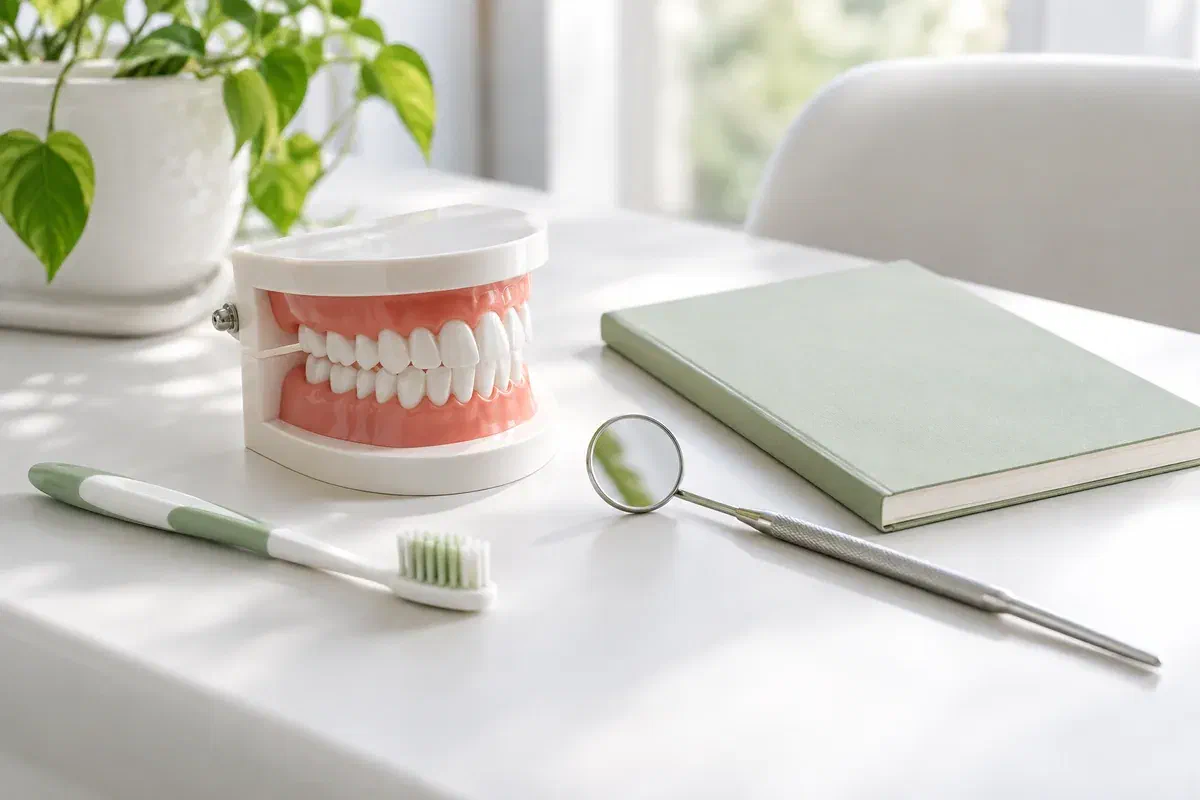
Illustrative child-sized toothbrush, dental model, mirror, and notebook
Tell us ahead of time

Changes that shape the visit.

Your child might mention a worry once, then never again. If they told you, tell us, even if it sounded vague or they could not show you where.

Adult teeth arriving or baby teeth lingering

A new permanent tooth, a baby tooth that stays put, or a crowded corner that is hard to clean are all useful to know. The dentist can assess the development and say whether keeping watch is the right approach. How teeth look does not on its own mean orthodontic care is needed.

Discomfort, bleeding or avoiding certain foods

Share any sensitivity, pain when chewing, food that keeps packing into the same spot, or bleeding gums. Tell us when it shows up and whether it is changing. A concern like this may warrant a focused visit rather than waiting for the next checkup.

A routine that has become a struggle

Explain who brushes, which step is hard and whether a change in schedule has thrown things off. Ask about cleaning between teeth and around newly arrived molars. The advice you get should fit what your child can manage today.

Before the appointment, tell us about medications, health updates, injuries or sensory and support needs. If your child has pain or swelling, mention it at booking so we can plan for it.

The case for coming back

Familiar visits tend to feel easier.

Returning regularly gives the dentist a chance to look at current oral health, consider cavity risk and talk about growth and prevention. It also lets a child grow used to the setting. The interval is chosen for each child, so a sibling being watched for something specific may be booked differently.

Regular checkups cannot guarantee that nothing new will appear in between. What they offer is a clear explanation of the findings and a plan for responding to change. Ideally, you and your child walk out knowing what happens next, not just when.

Patient information: AAPD — continuing examinations and preventive care

Tracking a pattern

Comparing findings between visits can reveal whether an area is stable or calls for action. Ask what is being monitored and what would shift the plan. Your notes between appointments fill gaps, since some symptoms never appear while the dentist is looking.

Updating home care as teeth change

A child with gaps from lost baby teeth may need a different technique from one with a full set of adult teeth. Ask the team to demonstrate on the areas that are hard right now. If an old method misses surfaces, the advice should be refreshed.

Helping your child feel included

That saved-up question from bedtime finally gets its moment. Children can also tell the team what makes the chair easier, and naming each step before it happens tends to help, without anyone promising how it will feel. Some kids need longer to warm up; just say so.

What happens, in order

From hello to the next booking.

The visit adapts to your child's history and current needs. Ask what is scheduled, and which further services, if any, might be raised after the exam.

  1. Settle in and share updates

    We ask about symptoms, health changes, home habits and how earlier visits went. Your child can ask their saved-up question. The team explains the exam in simple words and agrees on a hand signal for a pause or for discomfort.

  2. Look at teeth, gums and growth

    The dentist checks what matters for your child's stage and any concerns you raised. You might ask how many of the teeth are now permanent, and whether any spot deserves a second look. When a nervous child manages only part of the exam, find out what the dentist could assess and what is left for later.

  3. Consider X-rays and prevention

    Based on findings and risk, imaging, cleaning, fluoride or sealants may be suggested. Ask what question an X-ray would answer or which tooth surface would be protected. Every recommendation should be tied to a clinical reason for your child.

  4. Explain and look ahead

    We go over treatment needs, prevention tips and anything to monitor. Ask when to return, and whether anything found today is best handled at its own appointment. Before you go, your child gets the last word.

Afterward

Keep it simple at home.

A routine exam normally needs no recovery period. If a product or procedure was used, follow the specific instructions you received.

Brush together for as long as it helps

Ask how much adult involvement your child still needs with brushing and flossing. Insisting on doing it alone does not mean the back molars are clean. The team can suggest taking turns, so you check the tricky spots while your child stays in charge of the rest.

Follow the prevention advice

Stick to the recommended toothpaste amount, technique and any added preventive steps. If something is unpleasant or impractical, tell us. A routine your family can keep up is more valuable than a perfect one that falls apart.

Report new symptoms early

Call about new pain, swelling, a knock to the mouth or a tooth that suddenly looks different. Mention when it began and whether it is disturbing meals or sleep. However well the last visit went, a fresh symptom deserves its own call.

Matching the appointment to the reason

A checkup is one kind of visit among several.

When you tell us why you are calling, we can reserve the right appointment. A checkup may also lead to a separate visit for treatment or a further assessment.

For prevention and routine review

Ongoing checkup

This looks at oral health, development and a plan going forward. Other services are brought up only if needed. Ask what is covered and whether a cleaning or procedure will be booked for another time.

When a finding needs care

Treatment or problem visit

Pain, decay, an injury or a broken tooth may need more than a checkup can provide. The dentist will explain options and timing. Ask what the next appointment is for and which symptoms should prompt an earlier call.

When growth or support needs prompt a question

Developmental or specialist assessment

Some findings need watching over time or a review by a clinician with particular expertise. Ask what led to the recommendation and what the referral should clarify. An early assessment does not automatically mean treatment must begin.

Patient information: AAPD — selecting dental radiographs for children

Questions from Mississauga parents

Preparing your child, and yourself.

Answers about nerves, honesty and what to expect. Your child's own questions are just as important.

(905) 876-4488
Should I tell my child about the checkup days in advance or on the morning?
It depends on your child. Some do better with time to ask questions, others worry more the longer they wait. Keep the description simple and accurate. Picture books or a pretend visit at home can help some children feel prepared.
Is it okay to say the visit won’t hurt?
It is better not to promise how anything will feel. Instead, say the dentist will explain each step and your child can signal if they need a break. If treatment is suggested, it will be discussed with both of you first.
My child was anxious last time. Can the visit be paced differently?
Yes, let us know. The team can allow more time, show instruments before using them and agree on a stop signal. Tell us what has helped or not helped before, so the plan fits your child.
We have records from another dentist. Should we bring them?
That can help. Previous findings or X-rays may give useful context and sometimes avoid repeating an image. Let us know which clinic your child saw, and ask how records can be shared with your consent.
Why might the dentist suggest an X-ray this time but not last time?
The decision depends on findings, history, development and what an image could add at that point. Ask what the X-ray is meant to show. It should be recommended because of a need, not simply because a visit is labelled a checkup.
My child had no cavities. Can they brush on their own now?
Not automatically. One good result does not confirm every surface is being cleaned well. Ask about technique and how much help still makes sense, and review it as your child’s skills and teeth change.
Checkups for kids from Mississauga

We will explain every step, to both of you.

Get in touch with our Bronte Street practice to book a checkup. Let us know what has changed since the last visit, plus your child's age and any pain or support needs, so we can plan an appointment that works.

Your child's next checkup date is chosen for them alone. Pain, swelling or an injury between visits is a reason to phone us that day, not to wait it out.

Visit Milton Dental Clinic
Unit 1, 342 Bronte St. S, Milton, ON L9T 5B7
Get directions Clinic hours
Monday–Thursday
11am–7pm
Friday–Sunday
By appointment only

Areas we serve

  • Milton
  • Oakville
  • Mississauga
  • Georgetown
  • Halton Hills
  • Acton
  • Campbellville
  • Brampton
  • Burlington
  • Puslinch
  • Rockwood
  • Erin
  • Caledon
  • Etobicoke
  • Old Milton
  • Bronte Meadows
  • Timberlea
  • Dorset Park
  • Dempsey
  • Clarke
  • Beaty
  • Coates
  • Harrison
  • Scott
  • Willmott
  • Ford
  • Bowes
  • Cobden
  • Walker
  • Mountain View
  • Milton Heights
  • Hawthorne Village
  • Valley View
  • Fallingbrook
  • Nassagaweya
  • Trafalgar
  • Esquesing
  • Nelson
  • Brookville
  • Moffat
  • Glen Williams
  • Norval
  • Limehouse
  • Stewarttown
  • Ashgrove
  • Hornby
  • Silver Creek
  • Speyside
  • Scotch Block
  • North Oakville
  • River Oaks
  • Glen Abbey
  • West Oak Trails
  • Palermo
  • Bronte Creek
  • College Park
  • Joshua Creek
  • Uptown Core
  • Preserve
  • Iroquois Ridge
  • Lisgar
  • Meadowvale
  • Meadowvale Village
  • Churchill Meadows
  • Erin Mills
  • Central Erin Mills
  • Streetsville
  • East Credit
  • Creditview
  • Heartland
  • Sheridan
  • Mount Pleasant
  • Credit Valley
  • Huttonville
  • Churchville
  • Springbrook
  • Northwest Brampton
  • Bram West
  • Fletcher's Meadow
  • Fletcher's Creek South
  • Alton Village
  • Orchard
  • Millcroft
  • Headon Forest
  • Tansley
  • Brant Hills
  • Tyandaga
  • Kilbride
  • Lowville
  • Aberfoyle
  • Morriston
  • Arkell
  • Hillsburgh
  • Freelton
  • Carlisle
  • Waterdown
  • Flamborough
  • Mountsberg

How can we help?

Milton Dental Clinic

Have a question about your smile? Choose the option that works best for you.

For urgent dental concerns, please call.
Messages are reviewed during clinic hours.