

Illustrative child and parent listening to a dental clinician before a checkup
Children’s Dentistry

Children’s Dental Checkups in Oakville

How often should your child be seen, and what is the visit actually for? Our children’s checkups look at teeth, gums, routines and new concerns, then set a timetable that suits your child rather than a one-size rule.

For children coming from Oakville

The right interval is the one that fits your child.

Parents often ask one thing first: how often? The honest answer is that it depends. A seven-year-old swapping front teeth, a ten-year-old with fresh molars and a teenager running their own routine can each need something different. The checkup is where that timing gets worked out, along with what looks healthy and what needs watching.

If you are driving up from Oakville, it helps to arrive with a few notes. Which tooth is loose? Is there a spot that catches food or stings with cold water? Has your child started brushing without help? Our team wants to hear your child's questions as well, even the ones that seem off topic.

The dentist's findings, and your child's stage of growth, decide what is recommended. Cleaning, fluoride, sealants or X-rays are possibilities, but they are not bundled into every appointment. Ask what today's visit includes, what each step is for and how the next booking was chosen.

Plan a checkup from Oakville
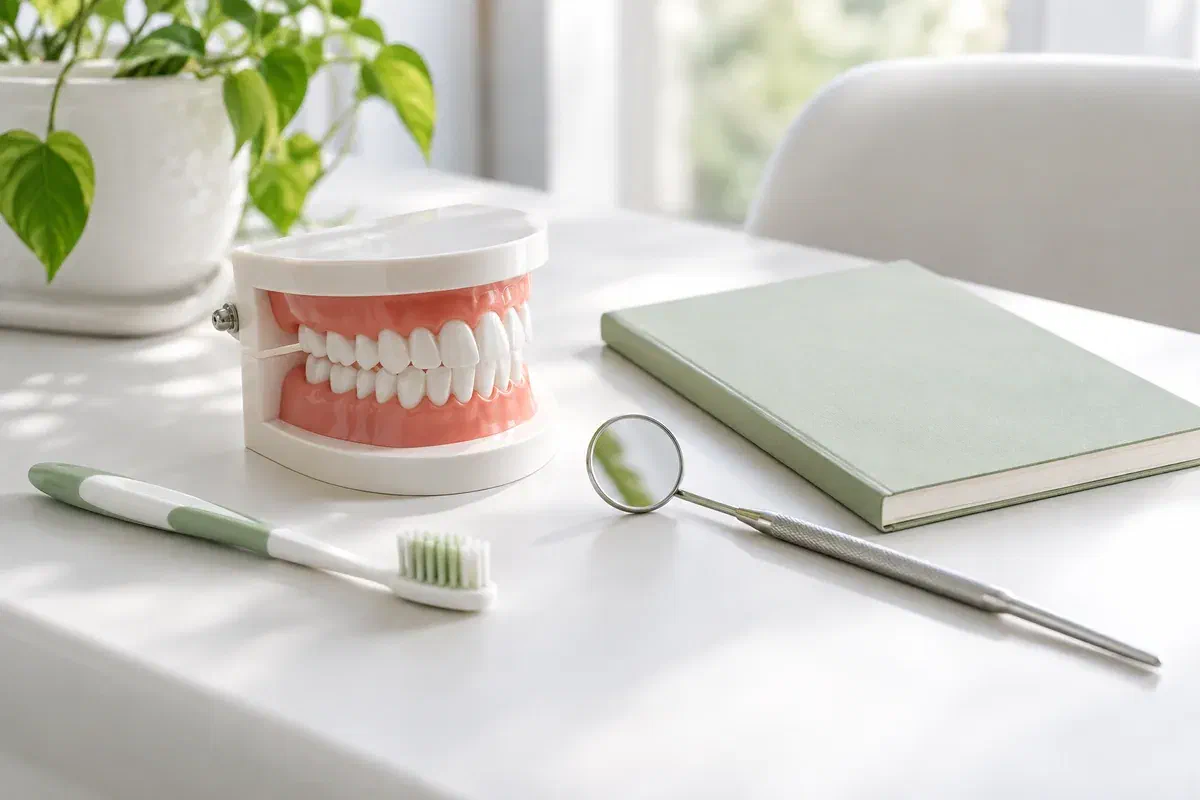
Illustrative child-sized toothbrush, dental model, mirror, and notebook
Before you book

Three kinds of change to tell us about.

A child might mention a sore spot only at bedtime or in the car. Pass along what they said in their words; nobody expects a parent or child to know tooth names.

Teeth coming, going or shifting position

Note any adult tooth that has appeared, a baby tooth that seems stubborn, or an area that has become hard to clean. The dentist can assess development and say whether monitoring is enough. The way teeth look does not on its own prove that orthodontic treatment is required.

Pain, bleeding or eating differently

Let us know about sensitivity, sore chewing, the same gap trapping food, or gums that bleed during brushing. Say when it happens and whether it is improving. These may call for a focused visit instead of waiting until the regular checkup comes round.

Home care that needs a rethink

Tell us who does the brushing, which part goes badly, and whether busy evenings or new activities have changed things. Ask about flossing and newly erupted molars. Suggestions should match your child's real abilities, not an age-based guess.

Share any medicines, health changes, injuries or sensory and support needs before the visit. If your child has pain or swelling, tell us when booking so we can plan accordingly.

Timing and value

A schedule set by need, not by habit.

Regular visits let the dentist review oral health, estimate decay risk and talk through growth and prevention. The spacing is decided child by child. A son with an area being monitored may return sooner than his sister, even though they live in the same house and eat the same meals.

No visit can rule out a problem arising before the next one. The value is in understanding what was found and knowing how to respond if anything changes. You and your child should leave with a clear next step, not simply a reminder on the calendar.

Patient information: AAPD — continuing examinations and preventive care

Comparing one visit to the next

Lining up findings over time can show whether a tooth or area is steady or needs attention. Ask what is being watched and what would change the plan. Your observations at home fill in the picture, especially for symptoms that come and go.

Instructions that change with the mouth

Brushing around gaps and loose teeth is not the same as brushing a full set of adult teeth. Ask for a quick demonstration on whichever areas are awkward now. When a routine stops reaching the right surfaces, it should be updated.

A voice for your child

Children can be encouraged to ask about what is happening and say what helps them relax. Small choices and clear explanations keep them included, without any promise about how a visit will feel. Tell the team if your child needs extra time or a different approach.

Inside the appointment

Listen. Look. Explain. Decide.

Your child's history and current needs shape each visit. Ask what has been scheduled and which other services may be suggested once the dentist has examined your child.

  1. Start with a conversation

    We ask about symptoms, health updates, home habits and earlier dental visits. Your child is welcome to ask something. The team explains the exam in child-friendly terms and agrees how your child can show they need to stop for a moment.

  2. Check the teeth, gums and growth

    The dentist examines what is relevant to your child's stage and the concerns raised. Ask which teeth are primary and which are permanent, and whether a finding needs review. If the exam was partial, find out what was assessed and how the rest will be handled.

  3. Talk through records and prevention

    X-rays, cleaning, fluoride or sealants might be suggested based on findings and risk. Ask what an image would reveal or which surface a sealant would cover. A recommendation should come with a reason that applies to your child.

  4. Agree on next steps and timing

    We summarize any treatment needs, prevention tips and areas to watch. Ask about the recall interval and whether one issue needs its own appointment. Your child gets a moment to ask a last question before leaving.

Between visits

Good enough, most nights, is a fine goal.

An exam by itself usually needs no special aftercare. If a product or treatment was used during the visit, follow the instructions that came with it.

Share brushing until your child is ready

Ask how much adult help your child still needs with brushing and cleaning between teeth. Being eager to go solo does not mean every back surface is clean. The team can suggest a split that lets your child feel capable while you check the hard spots.

Keep to the prevention plan

Use the toothpaste amount and technique recommended, plus any extra preventive steps. If a product is hard to use or a step keeps getting missed, say so. A routine your child will actually follow is worth more than an ideal one.

Do not save new symptoms for the recall

Call about fresh pain, swelling, an injury or a tooth that suddenly looks different. Mention when it began and whether eating or sleep is affected. A reassuring last visit does not mean a new problem should wait.

Picking an appointment type

Tell us the reason, and we will book the right visit.

Explaining why you are calling helps us reserve a suitable appointment. A routine checkup may point to a separate visit for treatment or further assessment.

For ongoing review and prevention

Routine checkup

The visit focuses on oral health today, development and a plan going forward. Other services are raised only when indicated. Ask what is included and whether cleaning or any procedure will be scheduled on a different day.

When a finding needs action

Problem-focused visit

Pain, a cavity, an injury or a cracked tooth may need care beyond a routine exam. The dentist will explain the choices and when to act. Ask what the next appointment will address and which symptoms mean calling sooner.

When growth or support needs need another view

Developmental or specialist review

Certain findings are best watched over time or reviewed by a clinician with relevant expertise. Ask what prompted the suggestion and what the referral aims to find out. An early review does not mean treatment has to start immediately.

Patient information: AAPD — selecting dental radiographs for children

Checkup questions

Answers for busy parents.

These cover timing, preparation and what a checkup includes. Bring your child's questions along as well.

(905) 876-4488
Why can’t you just tell me a standard number of months between visits?
Because the right gap depends on your child’s teeth, history and risk. Some children are seen more often while something is being monitored. Ask the dentist to explain the interval chosen and what would make it shorter or longer.
We are coming from Oakville. Can we combine the checkup with other care?
Ask when you book. Sometimes a cleaning or other step can follow in the same visit, and sometimes a separate appointment makes more sense. Telling us about travel and school schedules helps the team plan, though the clinical need always comes first.
My child keeps sipping juice after school. Should I mention it?
Yes. Frequent sugary drinks and snacks are part of the decay-risk picture the dentist considers. Share what and how often, without worrying about being judged. The team can suggest practical changes that fit your household.
Is a cleaning always done at a children’s checkup?
Not always. A cleaning may be recommended based on what the dentist sees, and it may be booked at the same visit or separately. Ask what has been scheduled so you know what to expect.
What should I do if a baby tooth is still there and the adult one is already showing?
Mention it when you book so the dentist can take a look. What happens next depends on the teeth and your child’s development. Avoid pulling at the baby tooth yourself, and do not assume it will automatically need removing.
My child refuses to talk to the dentist. Does that affect the exam?
Tell us how your child usually communicates. You can describe what you have seen while the clinician invites your child to join in at their own pace. A quiet child may still be worried, so extra time or a different approach can help.
Planning from Oakville

Let’s find the right rhythm for your child.

Contact our Bronte Street practice to book a checkup and talk about what has changed since the last visit. Share your child's age, any symptoms and support needs, so we can prepare an appointment that fits.

Recall intervals are set child by child. If your child develops pain, swelling or an injury, call at the time rather than waiting for the next scheduled visit.

Visit Milton Dental Clinic
Unit 1, 342 Bronte St. S, Milton, ON L9T 5B7
Get directions Clinic hours
Monday–Thursday
11am–7pm
Friday–Sunday
By appointment only

Areas we serve

  • Milton
  • Oakville
  • Mississauga
  • Georgetown
  • Halton Hills
  • Acton
  • Campbellville
  • Brampton
  • Burlington
  • Puslinch
  • Rockwood
  • Erin
  • Caledon
  • Etobicoke
  • Old Milton
  • Bronte Meadows
  • Timberlea
  • Dorset Park
  • Dempsey
  • Clarke
  • Beaty
  • Coates
  • Harrison
  • Scott
  • Willmott
  • Ford
  • Bowes
  • Cobden
  • Walker
  • Mountain View
  • Milton Heights
  • Hawthorne Village
  • Valley View
  • Fallingbrook
  • Nassagaweya
  • Trafalgar
  • Esquesing
  • Nelson
  • Brookville
  • Moffat
  • Glen Williams
  • Norval
  • Limehouse
  • Stewarttown
  • Ashgrove
  • Hornby
  • Silver Creek
  • Speyside
  • Scotch Block
  • North Oakville
  • River Oaks
  • Glen Abbey
  • West Oak Trails
  • Palermo
  • Bronte Creek
  • College Park
  • Joshua Creek
  • Uptown Core
  • Preserve
  • Iroquois Ridge
  • Lisgar
  • Meadowvale
  • Meadowvale Village
  • Churchill Meadows
  • Erin Mills
  • Central Erin Mills
  • Streetsville
  • East Credit
  • Creditview
  • Heartland
  • Sheridan
  • Mount Pleasant
  • Credit Valley
  • Huttonville
  • Churchville
  • Springbrook
  • Northwest Brampton
  • Bram West
  • Fletcher's Meadow
  • Fletcher's Creek South
  • Alton Village
  • Orchard
  • Millcroft
  • Headon Forest
  • Tansley
  • Brant Hills
  • Tyandaga
  • Kilbride
  • Lowville
  • Aberfoyle
  • Morriston
  • Arkell
  • Hillsburgh
  • Freelton
  • Carlisle
  • Waterdown
  • Flamborough
  • Mountsberg

How can we help?

Milton Dental Clinic

Have a question about your smile? Choose the option that works best for you.

For urgent dental concerns, please call.
Messages are reviewed during clinic hours.