

Illustrative child and parent learning about molar chewing surfaces
Children’s Dentistry

Children’s Dental Sealants

Protect suitable chewing grooves with a plan based on your child’s teeth. Discuss dental sealants in Milton, including which surfaces may benefit, how they are placed, and why ongoing checks still matter.

A closer look at children’s dental sealants

Give vulnerable grooves another layer of protection.

The chewing surfaces of back teeth have small pits and grooves that can be difficult to clean. A dental sealant is a material placed over suitable areas to form a protective barrier. The decision starts with examining the tooth, its surface, and your child's risk of developing decay.

At Milton Dental Clinic, ask which teeth are being considered and why. A newly erupted permanent molar may prompt a prevention discussion, but age alone does not determine the recommendation. Tooth development, access, existing changes, and the ability to place and maintain the material all matter.

Sealants are one part of prevention. They do not cover every surface, replace brushing or appropriate fluoride, or guarantee a cavity-free tooth. A useful plan explains what the sealant is intended to protect, how it will be checked, and what to do if your child notices a change in the bite or surface afterward.

Discuss sealants for your child
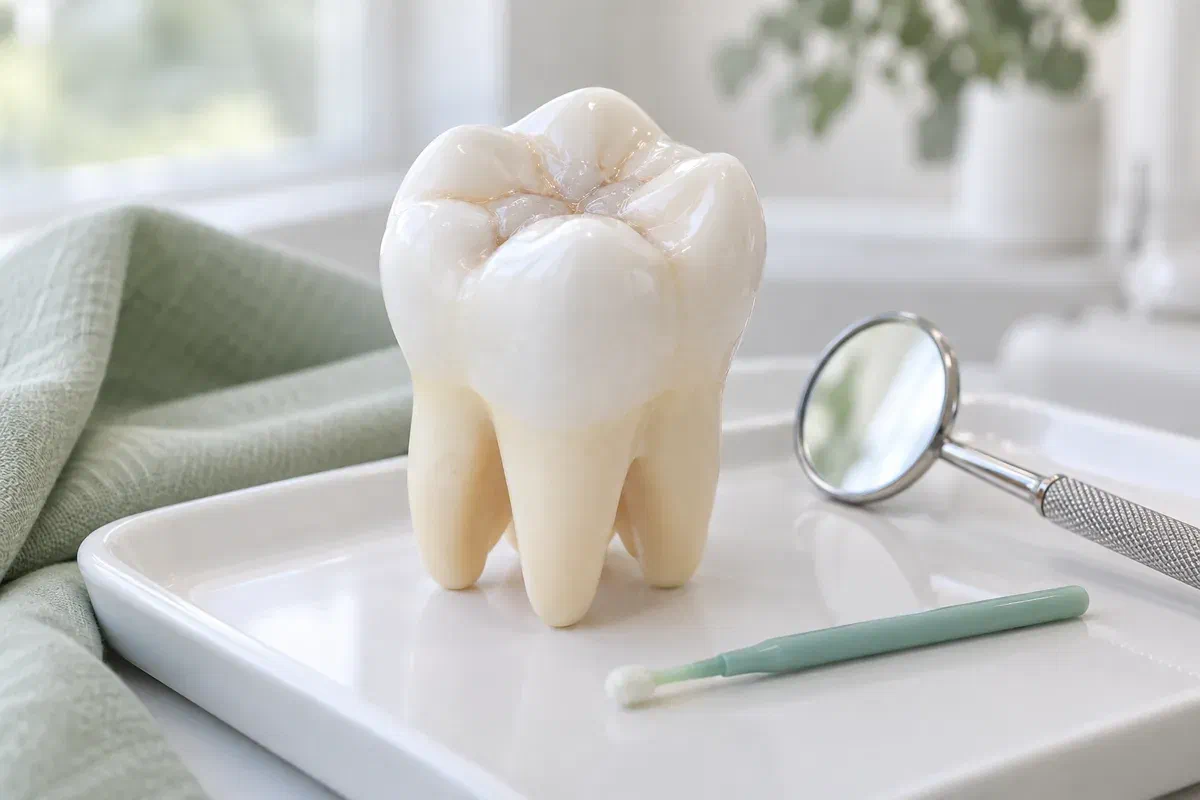
Illustrative molar teaching model, dental mirror, and sealant applicator
When to ask about sealants

Look at the individual tooth and the wider risk.

The dentist can assess whether a chewing surface is suitable. You do not need to judge groove depth or diagnose an early lesion by looking at the tooth at home.

New back teeth entering the mouth

Mention a molar that has recently appeared behind the baby teeth. Ask whether it is permanent and how to clean it while it is still emerging. The timing of a sealant discussion should reflect the tooth's position and the conditions needed for placement.

A history of cavities or difficult cleaning

Previous decay and trouble reaching certain surfaces can be useful context. Tell the team what cleaning help your child receives and which areas are awkward. The recommendation should connect the protective measure with the assessed risk rather than assume every tooth needs identical care.

An existing sealant that needs review

Mention a surface that feels rough, a bite that has changed, or a sealant placed by another provider. Ask whether it remains intact and suitable. Do not pick at the material or try to smooth it with a household tool.

Pain, a visible hole, or food trapping needs assessment rather than an assumption that a sealant will solve it. The dentist must distinguish a surface suitable for sealing from damage requiring another form of care.

What the protective barrier can do

Focus prevention on a surface that needs it.

Sealants can help prevent decay in suitable pits and fissures. In selected circumstances, they may also be used to manage an early lesion before the surface has broken down. That distinction requires professional assessment and a review plan; it is not a reason to cover an unassessed cavity.

Protection depends on the material remaining effective over time. The sealant and the tooth beneath and around it need review at appropriate visits. Ask how the surface will be checked and whether repair or replacement may be needed if the material wears or is lost.

Patient information: AAPD and ADA — pit-and-fissure sealant guideline

A targeted addition to the home routine

Sealants address particular chewing grooves while brushing, interdental care, and fluoride serve other parts of prevention. Ask how these measures work together for your child. A new sealant should make the overall plan clearer rather than create uncertainty about which habits still matter.

A chance to explain the new molars

Parents and children may not immediately recognize a permanent tooth appearing at the back of the mouth. The assessment can identify it and demonstrate cleaning access. Ask your child to show where the brush needs to reach, with adult help as appropriate.

A reviewable preventive choice

The dentist can explain the reason for sealing a particular surface and what will be monitored. If a different approach is recommended for another tooth, ask why. Comparing the actual findings is more useful than expecting one preventive treatment to fit the whole mouth.

What placement may involve

Assess the surface, prepare it, and check the result.

The method depends on the material and clinical situation. The team should explain the steps in language your child can follow and discuss what to do if they need a pause.

  1. Confirm suitability and the purpose

    The dentist examines the tooth and considers decay risk and any existing lesion. Ask whether the aim is prevention on a sound surface or management of a selected early change. Discuss alternatives and any additional records needed before placement.

  2. Prepare and isolate the chewing surface

    The surface is cleaned and prepared according to the chosen material. Keeping the working area appropriately controlled is important. Your child may notice water, suction, or materials used to keep the area dry; ask the team to explain these before starting.

  3. Place the selected sealant material

    The material is applied to the intended pits and grooves and allowed to set using the appropriate method. Some materials use a curing light. The clinician can explain what your child may see or feel without promising that every application uses exactly the same sequence.

  4. Check the seal and discuss maintenance

    The team checks the finished surface and bite as appropriate. Tell the clinician if your child says the tooth feels unusually high or uncomfortable. Confirm any material-specific instructions and when the sealant will be reviewed alongside the rest of the mouth.

After a sealant appointment

Keep cleaning and let us know about a new change.

Follow the instructions for the material used and any other care completed during the appointment. A sealant alone does not create one universal rule about eating afterward.

Continue the recommended daily care

Brush with the age-appropriate fluoride advice given for your child and clean between teeth as recommended. The sides and spaces between teeth still need attention. Keep providing the level of adult help your child needs, even when the sealed chewing surface looks smooth.

Report an uncomfortable bite or rough surface

If your child notices a persistent high spot, discomfort, or a change in the material, contact the clinic. Do not ask them to chew through discomfort or repeatedly test the surface with a hard object. The tooth and sealant can be assessed professionally.

Keep the planned review

A sealant may need repair or replacement as conditions change. Tell the dentist about sealants placed elsewhere and ask which surfaces are being monitored. Review is still useful when the tooth feels normal because not every change is obvious to a child.

Choosing prevention for the surface

Sealants, fluoride, and restorations have different roles.

Ask what the examination shows and which recommendation addresses it. More than one measure may be useful, but each should have a clear reason.

For a surface that may benefit from a barrier

A sealant on suitable pits and grooves

This approach targets selected chewing areas and requires appropriate placement and review. The dentist can explain which tooth is suitable and why. A sealant recommendation should include how its condition will be assessed over time.

For broader preventive support

Fluoride and a practical home routine

These measures may be recommended alongside a sealant or when sealing is not the immediate choice. Ask about products, amounts, and adult assistance appropriate to your child. Fluoride and sealants should not be treated as interchangeable versions of the same procedure.

When the surface or tooth needs different care

Another assessment or a restoration

A lesion with structural breakdown or another finding may require treatment beyond sealing. A partly erupted tooth may also need a different timing or interim plan. Ask what limits the current option and when the area should be reassessed.

Questions about children’s dental sealants

Understand what is protected and what still needs care.

Ask about the chosen teeth, the material, and the review plan. The answers should relate to your child's findings.

(905) 876-4488
Can sealants be considered for baby molars as well as permanent molars?
Yes, suitable primary molars may also benefit in selected circumstances. The decision depends on the surface, risk, and clinical situation. Ask why a particular baby tooth is being considered and how the sealant fits the expected period of care for that tooth.
Does a sealant protect the spaces between my child’s teeth?
A chewing-surface sealant does not provide protection for every surface or replace cleaning between teeth. Continue the home-care advice recommended for your child. Ask the team to show which areas the sealant covers and which still need particular cleaning attention.
Why might the dentist wait before sealing a molar that has just started to appear?
The amount of tooth visible and the ability to manage the working area can affect placement. Ask what can be done now and when to return for reassessment. Waiting should come with a preventive plan rather than leaving the new tooth without care.
Can a sealant be placed over an early change without drilling a conventional filling?
Some noncavitated chewing-surface lesions may be suitable for sealing after assessment. This does not apply to every cavity or unexplained mark. Ask what has been diagnosed, why sealing is appropriate, and how the surface will be monitored for stability.
What happens if part of a dental sealant comes away?
Contact the clinic to arrange advice or review, especially if the tooth feels rough or uncomfortable. The dentist can assess the remaining material and tooth and decide whether repair, replacement, or other care is needed. Do not attempt to remove the rest yourself.
Can my child stop using fluoride toothpaste after getting sealants?
Sealants do not replace the fluoride and cleaning routine recommended for your child. They protect selected surfaces, while the wider prevention plan addresses other risks and areas. Continue the individualized advice and ask if a product or technique is difficult to use.
Children’s dental sealants in Milton

Let’s assess which surfaces could benefit.

Contact our Bronte Street practice to discuss sealants for your child. We can review newly appearing molars, existing sealants, and the preventive measures that fit the findings.

Suitability depends on the tooth and assessment. Sealants need review and do not replace daily cleaning or other recommended preventive care.

Visit Milton Dental Clinic
Unit 1, 342 Bronte St. S, Milton, ON L9T 5B7
Get directions Clinic hours
Monday–Thursday
11am–7pm
Friday–Sunday
By appointment only

How can we help?

Milton Dental Clinic

Have a question about your smile? Choose the option that works best for you.

For urgent dental concerns, please call.
Messages are reviewed during clinic hours.