

Illustrative child and parent learning about molar chewing surfaces
Children’s Dentistry

Children’s Dental Sealants in Old Milton

Grandparents often say nobody sealed their teeth. For children in Old Milton, we explain what a sealant is today, which grooves might suit one, and how the coating is watched over the years.

Old Milton households and the back teeth

What exactly is being painted onto that molar?

In homes where a grandparent handles the school pickup or the evening brush, the word sealant can raise a fair question, since many adults never had one. A sealant is a thin protective material that settles into the deep pits and fissures on the chewing surface of a back tooth and hardens there.

Those grooves can be narrower than a single toothbrush bristle, which is why plaque lingers in them. Still, not every groove needs covering. Before recommending anything, the dentist considers how fully the tooth has erupted, what the surface looks like, any early change, and your child’s overall risk of decay.

Our Bronte Street practice is close to Milton’s historic downtown, and we see plenty of children whose care is shared between parents and grandparents. Whoever brings your child in, ask what the sealant is for, what it will not do, and when it gets checked. It protects selected surfaces only, so daily brushing and fluoride still matter.

Talk with us about sealants
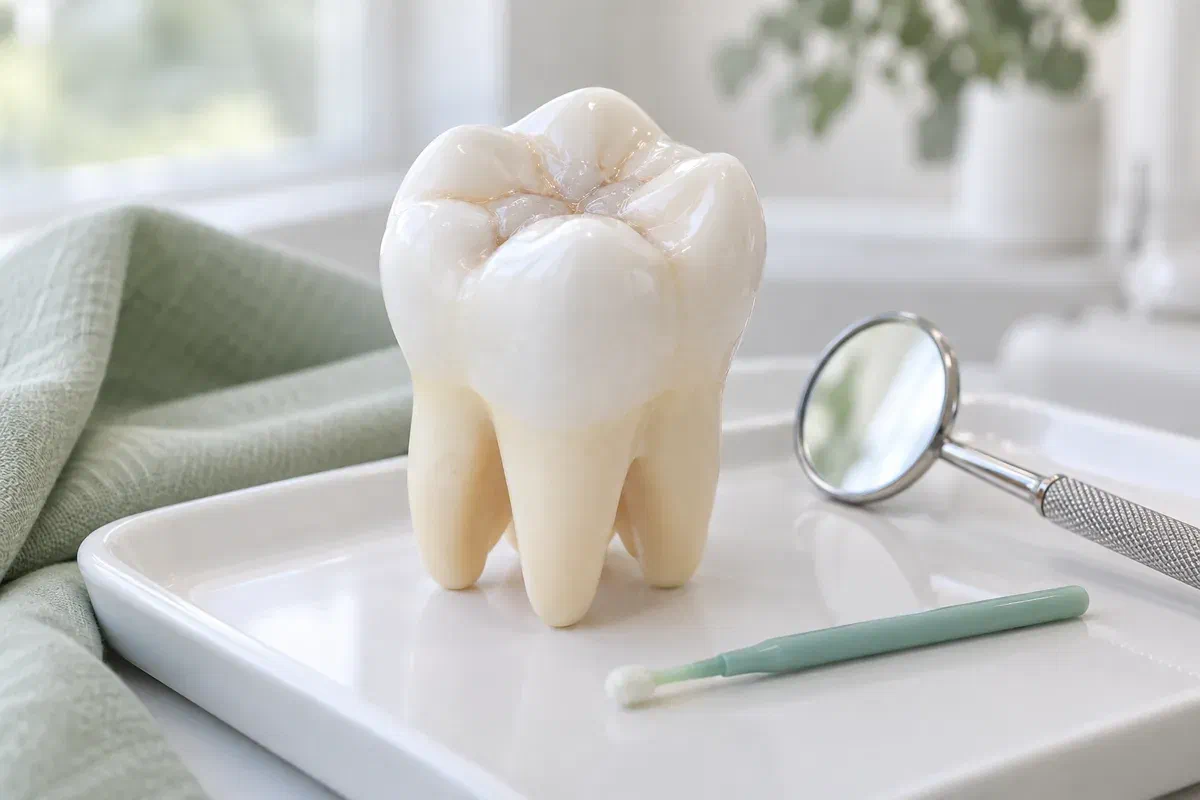
Illustrative molar teaching model, dental mirror, and sealant applicator
Reasons to raise it at a visit

Three situations worth mentioning.

You do not have to work out whether a groove is deep or whether a mark is an early cavity. Describe what you have noticed and the examination will do the sorting.

The six-year molar has started to show

A tooth breaking through behind the baby teeth is a natural point to ask. We can tell you if it is permanent and suggest ways to brush it while the gum still partly covers it. When sealing is discussed depends on how far the tooth has come through.

Earlier cavities or a tricky cleaning area

Let us know about previous decay and any spot your child dodges with the brush. Mention who helps at the sink and how often. That picture helps the dentist tie any recommendation to the actual risk instead of treating every child the same way.

Questions about an older sealant

Tell us if a coating feels rough, the bite has changed, or the sealant came from a previous dentist. We can see whether it is still intact. Please discourage picking at it, and skip any home remedy that involves scraping or sanding the tooth.

Pain, a hole you can see, or food catching in a groove needs a proper look rather than a sealant appointment by default. The dentist has to separate a healthy groove that could be sealed from one that needs repair.

What has changed since grandparents’ day

A small coating with a narrow, useful job.

Placed on a suitable surface, a sealant helps stop decay from taking hold in pits and fissures. In carefully chosen cases, it can also be used over an early lesion that has not yet broken through the enamel. That requires a diagnosis and a plan to monitor the spot; it is never a cover for an unchecked cavity.

How well it protects depends on the coating staying put. At later appointments the dentist looks at the material and at the tooth surrounding it. Ask what signs of wear the team looks for and whether a repair or a fresh layer could be needed down the road.

Patient information: AAPD and ADA — pit-and-fissure sealant guideline

Extra help in a hard-to-clean place

The sealant handles specific grooves, and brushing, cleaning between teeth and fluoride look after other surfaces. Ask how the pieces fit for your child. Every adult helping at home should come away clear on which habits continue as before.

A useful lesson for the whole household

A permanent molar at the very back is easy to miss for children and adults alike. The visit is a chance to locate it and show how a brush reaches it. Ask your child to demonstrate, and have the grandparent or parent who helps watch too.

Reasons you can ask about

The dentist should be able to say why this surface was chosen and what will be monitored. If a neighbouring tooth gets different advice, ask what separates them. Comparing findings tooth by tooth is more helpful than expecting one rule to cover them all.

How a sealant goes on

Four stages, explained as we go.

Details shift with the material and the tooth. We describe each part in plain words for your child and agree on how they can ask for a pause.

  1. Examine and agree on the goal

    The dentist checks the tooth, the decay risk and any early lesion. Ask whether the aim is protecting a healthy surface or managing a particular early change. This is also the time to discuss alternatives and whether more records, such as images, are needed.

  2. Clean and isolate the groove

    The chewing surface is cleaned and readied for the material selected. Keeping the area dry and controlled is important. Your child may hear suction or feel water and small cotton rolls, so ask us to name each one before it is used.

  3. Flow in the material

    The coating is applied to the chosen pits and fissures and set in the way that product requires, sometimes with a curing light. We can tell your child what they might see or feel, while being honest that the order may vary from visit to visit.

  4. Check the bite and the next review

    We look at the finished surface and how the teeth come together. If your child says something feels tall or sore, tell the clinician. Confirm any instructions specific to the material and when it will be examined again alongside the other teeth.

In the days that follow

Same brushing, same flossing, and a heads-up if anything changes.

Use the instructions for the material placed and any other treatment completed that day. Sealants do not come with one eating rule that fits all.

Carry on with the home routine

Brush with the fluoride amount suggested for your child’s age and clean between teeth as recommended. The sides of each tooth are not covered by a sealant. Keep giving hands-on help where it is still needed, even though the sealed groove feels smooth.

Call about a lasting high spot

Persistent discomfort, a bite that still feels off, or a visible change in the coating is a reason to contact us. Don’t ask your child to chew through it or test it with something hard. A short visit lets us check the tooth and material properly.

Keep the follow-up appointment

Sealants can need repair or replacement over time. Tell the dentist about any done elsewhere and ask which surfaces are on the watch list. The check is still worthwhile when nothing hurts, since early wear rarely bothers a child.

Comparing preventive choices

When is it a sealant, and when is it something else?

Ask what was found and which approach answers it. More than one measure can make sense, but each should come with a clear reason.

For surfaces that may need a barrier

Sealing a suitable groove

This focuses on selected chewing areas and depends on good placement and regular checks. The dentist can explain which tooth qualifies and why. A sealant plan should always say how the coating will be reviewed later.

For prevention across the mouth

Fluoride and everyday habits

These may be suggested along with a sealant or on their own when sealing can wait. Ask about the right product, amount and level of adult help for your child. Fluoride and a sealant are different tools, not two versions of one treatment.

When the tooth needs other care

A closer look or a filling

A lesion that has broken down, or another finding, may need more than a sealant. A molar that is only partway in may need different timing or a stopgap plan. Ask what rules out the current option and when the tooth will be rechecked.

Old Milton parents and grandparents ask

Questions we hear across the generations.

Ask about the particular teeth, the coating and the follow-up. Good answers point back to your child’s own findings.

(905) 876-4488
Why didn’t my generation get sealants as children?
Sealants have become a more common part of children’s prevention over the years. That does not mean every child needs them now. The dentist decides tooth by tooth based on the surface and decay risk, and can explain the reasoning to anyone helping with care.
Can a grandparent bring my child to the sealant appointment?
Please contact the clinic ahead of time about who will attend and any consent the team needs from a parent or guardian. It helps if the adult who comes knows your child’s health history and can pass on the aftercare instructions.
Is the coating made of the same thing as a filling?
Sealant materials are designed to flow into narrow grooves, which is different from rebuilding a damaged tooth. Several types exist. Ask which material is planned for your child and why it was chosen for that surface.
Would the dentist seal a molar that is only halfway through the gum?
Sometimes the tooth is not far enough in to keep the area dry for placement. The dentist may suggest returning later and give cleaning tips in the meantime. A delay should still come with a plan for protecting that tooth.
How long does a sealant usually last?
It varies with the material, the tooth and chewing habits. Some stay intact for years, while others wear or lose a section sooner. That is why the dentist checks them at regular visits and can repair or replace one when needed.
Does a sealant replace fluoride toothpaste?
No. A sealant covers chosen chewing grooves, and fluoride supports the rest of the tooth surfaces. Keep following the toothpaste advice given for your child’s age, and ask the team if a product or brushing technique is hard to manage.
Sealants near Old Milton

Come in and let’s look at those grooves together.

Contact our Bronte Street practice to arrange a sealant conversation for your child. We can check molars as they come in, review older sealants, and explain the prevention measures that suit the findings.

A sealant is recommended only when the examination supports it. Coatings need ongoing review and work alongside daily cleaning and other preventive care.

Visit Milton Dental Clinic
Unit 1, 342 Bronte St. S, Milton, ON L9T 5B7
Get directions Clinic hours
Monday–Thursday
11am–7pm
Friday–Sunday
By appointment only

Areas we serve

  • Milton
  • Oakville
  • Mississauga
  • Georgetown
  • Halton Hills
  • Acton
  • Campbellville
  • Brampton
  • Burlington
  • Puslinch
  • Rockwood
  • Erin
  • Caledon
  • Etobicoke
  • Old Milton
  • Bronte Meadows
  • Timberlea
  • Dorset Park
  • Dempsey
  • Clarke
  • Beaty
  • Coates
  • Harrison
  • Scott
  • Willmott
  • Ford
  • Bowes
  • Cobden
  • Walker
  • Mountain View
  • Milton Heights
  • Hawthorne Village
  • Valley View
  • Fallingbrook
  • Nassagaweya
  • Trafalgar
  • Esquesing
  • Nelson
  • Brookville
  • Moffat
  • Glen Williams
  • Norval
  • Limehouse
  • Stewarttown
  • Ashgrove
  • Hornby
  • Silver Creek
  • Speyside
  • Scotch Block
  • North Oakville
  • River Oaks
  • Glen Abbey
  • West Oak Trails
  • Palermo
  • Bronte Creek
  • College Park
  • Joshua Creek
  • Uptown Core
  • Preserve
  • Iroquois Ridge
  • Lisgar
  • Meadowvale
  • Meadowvale Village
  • Churchill Meadows
  • Erin Mills
  • Central Erin Mills
  • Streetsville
  • East Credit
  • Creditview
  • Heartland
  • Sheridan
  • Mount Pleasant
  • Credit Valley
  • Huttonville
  • Churchville
  • Springbrook
  • Northwest Brampton
  • Bram West
  • Fletcher's Meadow
  • Fletcher's Creek South
  • Alton Village
  • Orchard
  • Millcroft
  • Headon Forest
  • Tansley
  • Brant Hills
  • Tyandaga
  • Kilbride
  • Lowville
  • Aberfoyle
  • Morriston
  • Arkell
  • Hillsburgh
  • Freelton
  • Carlisle
  • Waterdown
  • Flamborough
  • Mountsberg

How can we help?

Milton Dental Clinic

Have a question about your smile? Choose the option that works best for you.

For urgent dental concerns, please call.
Messages are reviewed during clinic hours.