

Illustrative child and parent discussing a sports-related dental concern
Children’s Dentistry

Children’s Dental Trauma Treatment in Burlington

A stick, a ball or a teammate’s head can catch a young athlete’s teeth. If your Burlington family is dealing with a sports injury to the mouth, call us to talk it through, have the tooth assessed and plan a safe return to play.

Sports injuries to young teeth

Off the field first. Then think about the tooth.

Coaches and parents at practice usually spot a mouth injury quickly; the harder part is knowing what to do in the next few minutes. Bring your child off the field or rink and look for signs of a wider injury. A hard hit to the head or face, breathing or swallowing problems, or bleeding that pressure won’t stop means emergency medical care is the priority.

When the dental injury is the main concern, call a dental office and describe the play, the contact and the time. A permanent tooth knocked out during a game needs help immediately, while a baby tooth that comes out is never reinserted. Families travelling from Burlington can phone us about availability, and another emergency dental provider is the right choice if we cannot offer urgent care.

Getting back in the game is not the only goal. The dentist examines the tooth, the gum and bone, and how mature the tooth is, then explains immediate care and follow-up. Some complications surface later, so ask what will be monitored after the season moves on.

Book a non-urgent check after a sports injury
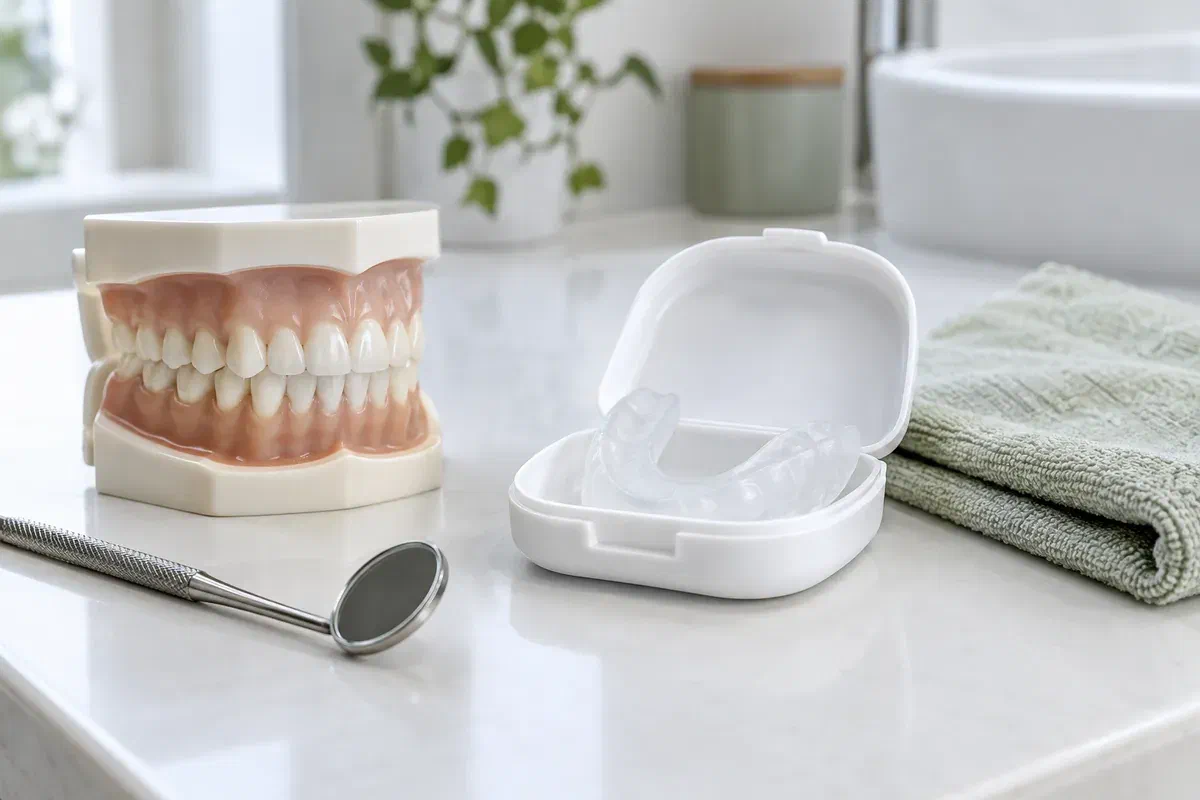
Illustrative dental model, mirror, and protective mouthguard in a case
What to tell us after the hit

How it happened guides what we check.

Whether it was a stick, a puck, a ball or a fall, the type of contact matters. Avoid moving the tooth around or having your child bite to see if it still hurts.

A tooth that chipped on impact

Describe how big the broken area looks and whether the tooth reacts to cold air or drinks. If a teammate or coach finds the fragment, keep it moist in milk or water and bring it. Avoid filing the edge or reattaching it at home.

A tooth knocked out of line

Report any tooth that looks pushed in, pushed out, tilted or crooked, and any sense that the bite has changed. These injuries need a prompt examination. Do not try to press the tooth into place, even if your child is eager to keep playing.

Cuts, swelling and other symptoms

Mention a split lip, bleeding gums, swelling and any tooth or piece that is unaccounted for. Tell us about concussion-type symptoms or other injuries from the same play. The clinician needs this to decide what to examine and whether medical care is also needed.

A knocked-out adult tooth calls for immediate first aid and dental care. Pick it up by the crown, keep it in milk if it can’t be replanted safely, and never let a young child carry it in their cheek.

Why a full assessment matters

Collisions don’t stop at the enamel.

The energy of a sports hit can travel into the root, the pulp and the ligament that holds a tooth in place. A careful examination looks at each of these where it is relevant. Fixing the chip may restore the smile in team photos without confirming that the inside of the tooth is recovering.

Young athletes are often still growing new adult teeth, and that stage of development affects the plan. A baby tooth and a recently erupted permanent tooth are managed differently. Ask which tooth was hurt, what has been confirmed and what remains uncertain.

Patient information: IADT and AAPD — fractures and luxations of permanent teeth

Treatment matched to the findings

Depending on the examination, care can mean watching the tooth, repairing it, splinting it or other steps. Ask what each measure achieves. A bonded repair might restore the shape while another part of the injury still needs a plan.

A reference point for later visits

Records from the first visit give later reviews something to compare. Tell the dentist about earlier knocks, which are common in contact sports. Ask what will be reviewed next time and what changes would prompt further care.

An honest account of the outlook

Not every result can be predicted early. Ask which signs are encouraging and which complications are being watched for. Clear follow-up advice is more useful than a guarantee that the tooth will never need more treatment.

Your child’s injury appointment

What happens between the phone call and the next season

The pace depends on the injury. For a fresh one, phone us instead of sending an ordinary online booking request.

  1. Recap the play

    Share when it happened, the sport, what hit the mouth, any first aid on the sidelines and whether a doctor has been seen. Note missing teeth or fragments and any change to the bite. Bring your child’s health information and a list of medicines given.

  2. Assess the injured teeth

    The dentist examines the teeth and soft tissue and discusses suitable imaging or tests. Teeth on either side, or in the opposite jaw, may need a look. Ask what can be confirmed now and whether some tests may need repeating as the tooth recovers.

  3. Treat what needs treating

    Care may involve a repair, a splint, pulp care, observation or another option. Let the team know how your child handles appointments and what helps them relax. If a referral is suggested, ask what it is for and how soon it is needed.

  4. Plan home care and the return to sport

    Confirm what was done, any limits on food, cleaning and activity, and when to come back. Ask which symptoms mean calling sooner. Follow-up may continue after the tooth looks and feels normal again.

Recovery between games

Rest the tooth, then protect it.

Your aftercare depends on the injury and treatment. A small repair may come with lighter advice than a displaced, splinted or replanted tooth.

Follow the food and cleaning advice

Ask which foods, chewing habits or snacks to avoid, and for how long. Clean the area as demonstrated, even when it’s sore. If a splint makes brushing tricky, call us for practical tips rather than giving up on it.

Keep track of how the tooth feels and looks

Call if pain worsens, swelling develops, a bump appears on the gum, the bite changes or the tooth darkens. A colour change alone does not decide the outcome; it is read alongside symptoms, the examination and the injury type.

Talk about mouthguards and timing

Ask when your child can return to practice, games or contact drills, and whether a mouthguard is recommended for their sport. If they already wear one, check that it still fits after treatment. A guard lowers risk but cannot rule out another injury.

Patient information: IADT — broken teeth and preserving a fragment

Treatment options after a sports injury

Which kind of care fits this injury?

The answer depends on the tooth, the injury, your child’s development and what the examination shows. Ask how today’s care connects to any later treatment.

When broken structure can be rebuilt

Repair with planned reviews

A recovered fragment may sometimes be bonded back, or the tooth built up with a suitable material. The dentist explains the limits and how to care for it. A tidy repair does not replace checking the pulp and supporting tissues when they were involved.

When position and healing need watching

Observation or a splint

Some injuries need a set observation plan; others need the dentist to reposition the tooth or hold it with a splint. The diagnosis guides both the choice and the review timing. Observation is an active plan, not waiting until pain appears.

When deeper structures are affected

More treatment or specialist input

Pulp treatment, extraction or other care may be discussed if indicated. With a baby tooth, the adult tooth developing underneath matters too. Ask why extra treatment is suggested and whether a clinician with particular experience should be involved.

Patient information: IADT and AAPD — injuries to primary teeth

Sports and dental injury questions

Questions sports parents bring to us

Jot down what you want to know about the hit, the fix and the weeks ahead. Some answers depend on how the tooth responds over the coming weeks and months.

(905) 876-4488
Should my child keep playing if a tooth gets chipped during a game?
It is safer to stop, check for other injuries and call a dental office. Continuing to play risks further damage, and a chip may come with injuries you cannot see. Keep any fragment moist and bring it with you.
When can my child return to hockey or soccer after a tooth injury?
That depends on the injury, the treatment and how the area is healing. Ask the dentist for specific guidance, especially if a splint was placed or a tooth was repositioned, and check that any mouthguard still fits.
Does wearing a mouthguard mean a dental injury can’t happen?
No. A suitable, well-fitting mouthguard can reduce the risk, but it cannot prevent every injury. Ask the team whether one makes sense for your child’s sport and how to keep it fitting well as teeth change.
My child had a concussion check after the hit. Should I tell the dentist?
Yes. Share any medical assessment, head injury symptoms and treatment already given. It helps the dentist understand the whole event and plan care that fits with any medical advice your child received.
Why would the dentist want X-rays when the tooth looks only slightly chipped?
A small visible chip may sit alongside damage to the root, pulp or neighbouring teeth. Imaging can help the dentist see what an examination alone cannot. Ask what the images are for and whether they may be repeated at review.
We drive in from Burlington. How can we keep follow-up visits manageable?
Ask for the expected review schedule early so you can plan around practices and games. Some reviews continue for months, and keeping them is important even if the tooth seems fine. Call before coming in if a new symptom appears.
Children’s dental trauma care for Burlington

After the game, let’s look at that tooth.

Call our Bronte Street practice after a dental injury so we can go over availability and the right next step. For a recent urgent injury, use an available emergency dental provider if we cannot see your child.

If an adult tooth is knocked out, seek care immediately. Serious head injury, trouble breathing or swallowing, or heavy bleeding that won’t stop requires emergency medical attention.

Visit Milton Dental Clinic
Unit 1, 342 Bronte St. S, Milton, ON L9T 5B7
Get directions Clinic hours
Monday–Thursday
11am–7pm
Friday–Sunday
By appointment only

Areas we serve

  • Milton
  • Oakville
  • Mississauga
  • Georgetown
  • Halton Hills
  • Acton
  • Campbellville
  • Brampton
  • Burlington
  • Puslinch
  • Rockwood
  • Erin
  • Caledon
  • Etobicoke
  • Old Milton
  • Bronte Meadows
  • Timberlea
  • Dorset Park
  • Dempsey
  • Clarke
  • Beaty
  • Coates
  • Harrison
  • Scott
  • Willmott
  • Ford
  • Bowes
  • Cobden
  • Walker
  • Mountain View
  • Milton Heights
  • Hawthorne Village
  • Valley View
  • Fallingbrook
  • Nassagaweya
  • Trafalgar
  • Esquesing
  • Nelson
  • Brookville
  • Moffat
  • Glen Williams
  • Norval
  • Limehouse
  • Stewarttown
  • Ashgrove
  • Hornby
  • Silver Creek
  • Speyside
  • Scotch Block
  • North Oakville
  • River Oaks
  • Glen Abbey
  • West Oak Trails
  • Palermo
  • Bronte Creek
  • College Park
  • Joshua Creek
  • Uptown Core
  • Preserve
  • Iroquois Ridge
  • Lisgar
  • Meadowvale
  • Meadowvale Village
  • Churchill Meadows
  • Erin Mills
  • Central Erin Mills
  • Streetsville
  • East Credit
  • Creditview
  • Heartland
  • Sheridan
  • Mount Pleasant
  • Credit Valley
  • Huttonville
  • Churchville
  • Springbrook
  • Northwest Brampton
  • Bram West
  • Fletcher's Meadow
  • Fletcher's Creek South
  • Alton Village
  • Orchard
  • Millcroft
  • Headon Forest
  • Tansley
  • Brant Hills
  • Tyandaga
  • Kilbride
  • Lowville
  • Aberfoyle
  • Morriston
  • Arkell
  • Hillsburgh
  • Freelton
  • Carlisle
  • Waterdown
  • Flamborough
  • Mountsberg

How can we help?

Milton Dental Clinic

Have a question about your smile? Choose the option that works best for you.

For urgent dental concerns, please call.
Messages are reviewed during clinic hours.