

Illustrative child and parent discussing a sports-related dental concern
Children’s Dentistry

Children’s Dental Trauma Treatment in Oakville

“It’s only a baby tooth” is a common first thought after a toddler’s fall. For families in Oakville, a call to our team helps sort out which injuries need a prompt look, what treatment involves and why reviews matter.

Baby teeth, adult teeth and injuries

Is it “only” a baby tooth?

Toddlers learning to walk and older kids losing their first teeth both bump their mouths often, and parents naturally wonder whether a baby tooth is worth a visit. Start with your child, not the tooth. If there has been a serious blow to the head or face, breathing or swallowing is difficult, or bleeding will not ease with pressure, get emergency medical care.

For the tooth itself, call a dental office soon and explain how and when it was hurt. The rules differ by tooth: an adult tooth knocked out of its socket needs urgent help, while a baby tooth that comes out must not be replanted. From Oakville, phone us to ask about availability, and use another emergency dental provider if we cannot arrange urgent care.

Baby or adult, the injured tooth is assessed along with its gum, bone and stage of growth. The dentist explains what to do now and what to recheck later. Because some changes only appear with time, ask what follow-up is planned even if your child stops noticing the tooth.

Request a non-urgent injury appointment
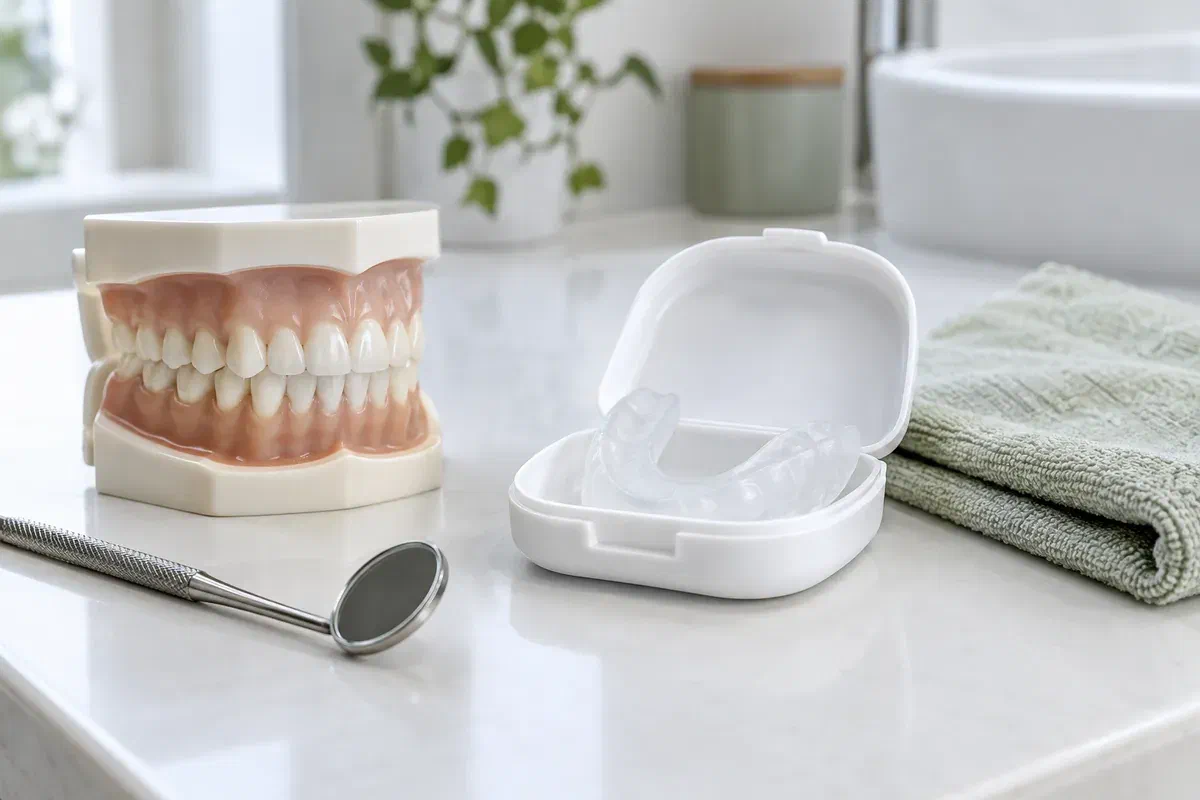
Illustrative dental model, mirror, and protective mouthguard in a case
Signs to describe when you call

Three kinds of injury, three things to mention.

Knowing the cause, the timing and the symptoms helps the dentist plan. Please don’t keep testing a sore tooth by moving it or asking your child to bite on it.

Chipped or cracked

Note whether a sliver or a larger part is gone and if the tooth reacts to cold or touch. A fragment you can recover safely should be kept in milk or water and brought to the visit. Gluing it or smoothing a sharp edge at home can cause more harm.

Wobbly, pushed or crooked

Point out a tooth that looks lengthened, shortened, angled or out of the row, or a bite that suddenly feels different. These need prompt assessment. With a young child, it is easy to blame natural loosening; please let the dentist decide, and never push the tooth back yourself.

Gum, lip and other injuries

Mention cuts, swelling, bleeding and any tooth or piece you could not locate. Share any other symptoms, including anything suggesting a head injury. This helps the clinician judge what to examine and whether your child should also see a physician.

A permanent tooth that has been knocked out needs urgent first aid and dental care. Handle it by the crown only and keep it in milk if replanting is not safe. Never place a tooth in a young child’s cheek to carry it.

Why each injury is looked at closely

One fall, several possible injuries

The visible damage may be accompanied by injury to the root, to the pulp inside, or to the fibres and bone holding the tooth. The dentist considers all of these where relevant. Restoring the tooth’s appearance is not the same as knowing those other structures have healed.

Development shapes every decision. Baby teeth and young adult teeth respond differently and are treated differently, so they are never handled as one problem. Ask which tooth is affected, what the dentist is confident about and what still needs time to show.

Patient information: IADT and AAPD — fractures and luxations of permanent teeth

Care that fits the damage

Watching, repairing, splinting and other approaches are all possible, depending on the findings. Ask what each one is for. A splint, for instance, may steady the tooth while other aspects of the injury still need attention.

A starting record

The first findings and records help later reviews make sense. Mention any previous injury to the area. Ask what will be compared at the next visit and what kind of change would lead to further care.

Clarity about what is uncertain

Some results can’t be known at the first appointment. Ask which signs are reassuring and which complications are being watched. Realistic follow-up advice is more helpful than a promise the tooth will never need care again.

Step by step

From a worried phone call to a clear follow-up plan.

The order and pace depend on the injury. After a recent knock, please call the clinic rather than using a routine online booking form.

  1. Tell us the story

    Explain when, where and how your child was hurt, any first aid and whether they have already had medical care. Mention lost teeth or fragments and changes to the bite. Bring your child’s health details and note any medicine already given.

  2. Examination of the area

    The dentist checks the teeth and soft tissue and explains any imaging or tests that would help. More than one tooth may need assessing. Ask what is clear now and whether a test may need repeating as the tooth recovers.

  3. The treatment that is indicated

    Care could include a repair, a splint, pulp treatment, observation or another option. Share what helps your child feel comfortable and how they communicate discomfort. If a referral or different setting is recommended, ask why and how quickly.

  4. Home care and next appointments

    Confirm what was done and what eating, play and cleaning limits apply. Ask when to come back and which symptoms mean calling earlier. Reviews may continue after the tooth looks and feels normal.

Aftercare for little mouths

Soft foods, careful brushing and a watchful eye

The advice you receive will suit the injury and treatment. Guidance after a small repair may differ from guidance for a moved, splinted or replanted adult tooth.

Eat and clean as advised

Ask which foods to skip and for how long, and whether a soother, sippy cup or thumb-sucking habit matters for your child’s injury. Clean the area using the method you were shown. If pain or a splint makes that hard, call us for help rather than stopping.

Notice changes and report them

Let us know about worsening pain, swelling, a bump on the gum, a changed bite or a tooth that turns darker. Don’t try to judge the outcome from colour on its own; it has to be weighed with the symptoms, the examination and the injury.

Return to play safely

Ask when your child can go back to sports or rough play and whether a mouthguard would be useful. If they already have one, check its fit after treatment. A guard reduces risk but cannot guarantee another injury won’t happen.

Patient information: IADT — broken teeth and preserving a fragment

Possible treatment directions

Different injuries call for different care.

Tooth type, injury, development and examination findings all guide the choice. Ask how the immediate step fits with what may come later.

When lost tooth structure can be restored

Rebuild and review

A fragment can sometimes be bonded back, or the shape rebuilt with a suitable material. The dentist will explain the limits and the care involved. A good repair still doesn’t replace assessing the pulp or supporting tissues if the injury reached them.

When healing and tooth position need tracking

Watch or stabilize

Some injuries need a structured observation plan; others need the tooth repositioned or splinted. The diagnosis sets the approach and review interval. Monitoring means following instructions and coming back, not ignoring the tooth until it hurts.

When deeper structures are involved

Further care or a specialist

Pulp treatment, extraction or another procedure may be suggested where needed. When a baby tooth is hurt, the adult tooth growing beneath it is part of the decision. Ask why more care is advised and whether someone with particular expertise should be involved.

Patient information: IADT and AAPD — injuries to primary teeth

Baby-tooth and adult-tooth questions

Answers for parents of young children

Bring questions about the injury, the repair and what might change. The first visit sets a baseline, and some questions take time to answer.

(905) 876-4488
How do I know whether the injured tooth is a baby tooth or an adult tooth?
Age gives a rough guide, since adult front teeth usually begin arriving from about age six, but it is not always obvious. Describe your child’s age and which tooth was hit when you call, and the dentist will confirm at the examination.
My toddler’s tooth was pushed up into the gum. Will it come back down on its own?
Please have it assessed rather than waiting to see. How a pushed-in tooth is managed depends on the tooth and the injury, and the adult tooth developing nearby is part of the decision. Don’t try to pull it down or press on it.
If a baby tooth is knocked out, why can’t it be put back?
Replanting a baby tooth can risk harm to the adult tooth forming beneath it, so it is not done. Bring the tooth if you have it, call for advice and let the dentist check the area and the space.
Can an injured baby tooth affect the adult tooth that comes in later?
In some cases, yes. It depends on the type of injury and how far along the adult tooth is. That is one reason baby-tooth injuries are followed up. Ask which signs to watch for at home and when to return.
Is a darker baby tooth after a fall a sign it needs to come out?
Not automatically. A colour change should be reported and assessed with your child’s symptoms and the examination. It doesn’t mean a set treatment is certain, and it shouldn’t be ignored either.
Would coming from Oakville make it harder to keep up with follow-up visits?
Ask for the expected review schedule at the first visit so you can plan ahead. Reviews may continue for some time, and keeping them matters even when the tooth looks fine. If something worrying appears between visits, call before setting out.
Children’s tooth injury care for Oakville

Tell us what happened. We will take it from there.

Phone our Bronte Street practice after your child injures a tooth to discuss availability and the right next step. If a recent injury is urgent and we cannot provide care, please use another emergency dental provider.

An adult tooth that has been knocked out needs immediate care. A serious head injury, difficulty breathing or swallowing, or heavy bleeding that won’t stop requires emergency medical attention.

Visit Milton Dental Clinic
Unit 1, 342 Bronte St. S, Milton, ON L9T 5B7
Get directions Clinic hours
Monday–Thursday
11am–7pm
Friday–Sunday
By appointment only

Areas we serve

  • Milton
  • Oakville
  • Mississauga
  • Georgetown
  • Halton Hills
  • Acton
  • Campbellville
  • Brampton
  • Burlington
  • Puslinch
  • Rockwood
  • Erin
  • Caledon
  • Etobicoke
  • Old Milton
  • Bronte Meadows
  • Timberlea
  • Dorset Park
  • Dempsey
  • Clarke
  • Beaty
  • Coates
  • Harrison
  • Scott
  • Willmott
  • Ford
  • Bowes
  • Cobden
  • Walker
  • Mountain View
  • Milton Heights
  • Hawthorne Village
  • Valley View
  • Fallingbrook
  • Nassagaweya
  • Trafalgar
  • Esquesing
  • Nelson
  • Brookville
  • Moffat
  • Glen Williams
  • Norval
  • Limehouse
  • Stewarttown
  • Ashgrove
  • Hornby
  • Silver Creek
  • Speyside
  • Scotch Block
  • North Oakville
  • River Oaks
  • Glen Abbey
  • West Oak Trails
  • Palermo
  • Bronte Creek
  • College Park
  • Joshua Creek
  • Uptown Core
  • Preserve
  • Iroquois Ridge
  • Lisgar
  • Meadowvale
  • Meadowvale Village
  • Churchill Meadows
  • Erin Mills
  • Central Erin Mills
  • Streetsville
  • East Credit
  • Creditview
  • Heartland
  • Sheridan
  • Mount Pleasant
  • Credit Valley
  • Huttonville
  • Churchville
  • Springbrook
  • Northwest Brampton
  • Bram West
  • Fletcher's Meadow
  • Fletcher's Creek South
  • Alton Village
  • Orchard
  • Millcroft
  • Headon Forest
  • Tansley
  • Brant Hills
  • Tyandaga
  • Kilbride
  • Lowville
  • Aberfoyle
  • Morriston
  • Arkell
  • Hillsburgh
  • Freelton
  • Carlisle
  • Waterdown
  • Flamborough
  • Mountsberg

How can we help?

Milton Dental Clinic

Have a question about your smile? Choose the option that works best for you.

For urgent dental concerns, please call.
Messages are reviewed during clinic hours.