

Illustrative parent and child discussing toothpaste with a dental clinician
Children’s Dentistry

Children’s Fluoride Treatment in Halton Hills

Town water, a private well or bottled water at the table? Where your drinking water comes from is one piece of your child’s fluoride picture. Review it from Halton Hills alongside toothpaste, cavity history and age.

Halton Hills households

Start with the glass of water.

Across Halton Hills, some homes are on a municipal supply, some rely on a private well and many families buy bottled or filtered water. Each can mean a different amount of fluoride reaching your child day to day. Rather than guess, tell the dentist what your household drinks so it can be weighed with everything else.

That everything else matters just as much. Note the toothpaste your child uses and how much goes on the brush, any rinse or supplement, previous fillings, medicines and whether brushing tends to be rushed or skipped. If you’ve had your well water tested, bring the results along. Together, these details shape whether a professional application is worth discussing.

Fluoride, from any source, is about prevention. It won’t stand in for an exam, for brushing every morning and night, or for treatment of a tooth that is already decayed. Ask what product is proposed, how it’s applied, what follows at home and when the recommendation will be looked at again.

Review your child’s fluoride sources
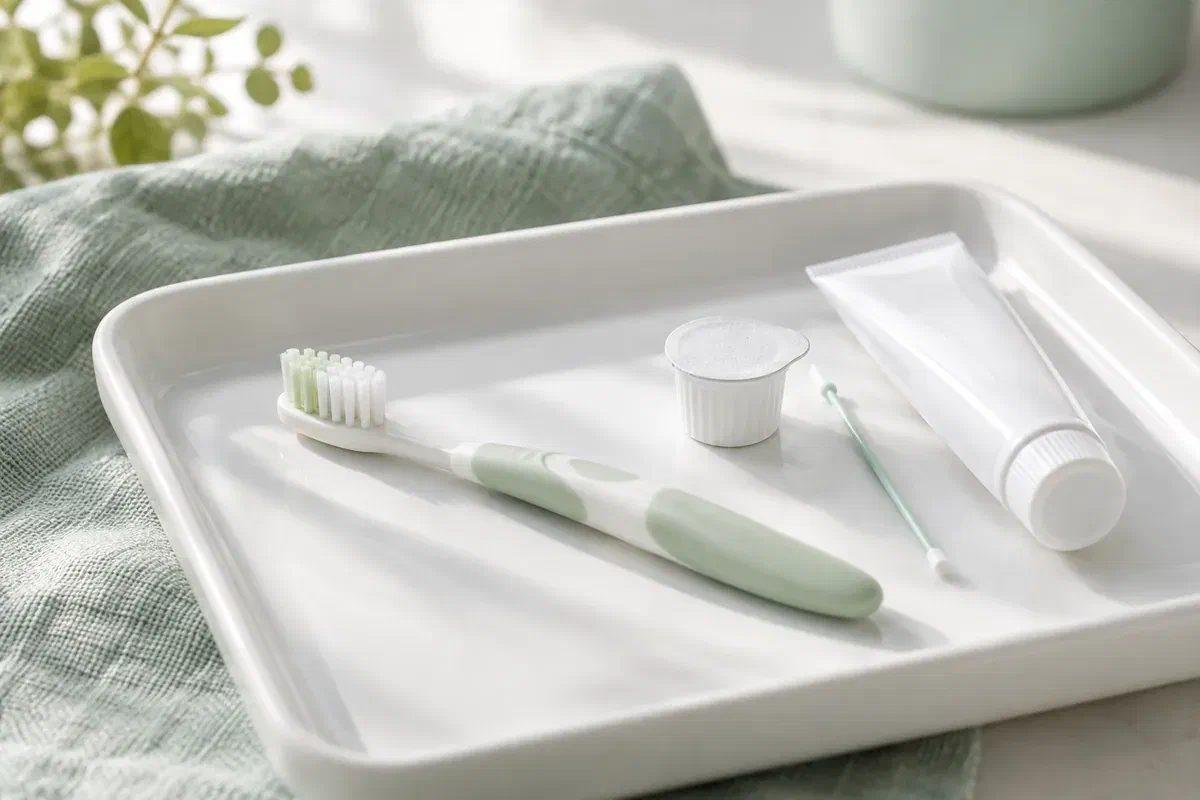
Illustrative fluoride applicator, small unit-dose cup, toothbrush, and toothpaste
Pieces of the puzzle

Water, toothpaste and a child’s own history

Adding a supplement or rinse on your own can tip the balance in the wrong direction. A full, accurate picture lets advice stay specific and safe.

Past cavities or new risk

Recent decay, an area being watched, or a stretch when cleaning became harder are all relevant. The dentist uses them to judge whether extra prevention would help. History counts, but the recommendation must reflect what is happening now.

What goes on the brush

Tell us who dispenses the toothpaste, how much, and whether your child can spit it out. Young children need an adult to control both. If you’re unsure what the right amount looks like, the team can show you during the visit.

Drinking water and other fluoride products

Mention whether you use town water, a well, or bottled or filtered water, and bring any test results you have. List rinses, supplements and prescription pastes too. The team can explain how these combine and which parts suit your child.

Tell the clinician about allergies or a reaction to a dental product before any application. Ingredients vary, so the discussion should be about the specific preparation, not fluoride as one interchangeable thing.

Where professional fluoride fits

Topical help for enamel, on top of daily sources

Professional fluoride is applied to the teeth, where it helps enamel resist acid and may support remineralization of suitable early changes. It does not rebuild a tooth that has broken down. Ask whether the advice is preventive, aimed at an early lesion, or part of a bigger treatment plan.

The benefit depends on your child’s whole routine and how often the plan is reviewed. One visit offers no guarantee against cavities. Brushing, the rhythm of meals and snacks, and treatment of anything already diagnosed all continue to matter between appointments.

Patient information: CDA — fluoride and prevention

A purpose you can name

Find out which risk or finding the application is meant to address. A clear purpose helps you follow the aftercare and keep up with reviews. If advice changes later, for instance after a new water test, ask what prompted it.

A routine that makes sense together

Professional fluoride, toothpaste and drinking water all contribute differently. Ask what to keep doing at home and what, if anything, to change. Simple, consistent steps are easier to maintain than a collection of products with competing directions.

Straight answers on concerns

Bring up ingredients, taste, swallowing or quantity. The clinician can discuss the actual product and any reasonable alternatives. You deserve an explanation that helps you decide, not an assumption that you’re already convinced.

The appointment, in order

Assess, describe, apply, follow up

Technique and timing depend on the selected preparation and on your child. Not every child or every visit needs the same product.

  1. Weigh every fluoride source

    The dentist reviews the exam, previous decay, age, toothpaste use and drinking water. Mention swallowing difficulties or health conditions. Ask whether the result is a professional application, a home-care change or both, and how it links to your child’s risk.

  2. Explain the proposed product

    Expect to hear what the preparation is, why it’s being suggested, how it’s applied and which precautions apply. A varnish is one professional option. Ask what your child might notice and mention any ingredients or reactions to review.

  3. Apply it suitably

    The clinician uses an amount and method appropriate for the product and the child. Let us know if your child needs a break or more explanation. When the standard method is hard, the team can talk about an adjustment or another approach.

  4. Confirm directions and the next check

    Find out when your child can eat, drink and brush after the specific product, and whether another application or review is planned. Make sure instructions are clear for any other adult caring for your child later on.

Afterwards, at home

Today’s product rules and an everyday balance

Different professional preparations have different directions. Follow what the treating team advises, not a general waiting time found online.

Ask about the first few hours

Before leaving, check when eating, drinking and brushing can resume for this preparation, and pass it on to other caregivers. Teeth may feel coated or look a bit different briefly; ask what’s expected. Call the clinic with questions rather than removing the coating.

Match toothpaste to age

For children younger than three, Health Canada recommends that a professional first assess risk, with a rice-grain smear of fluoride toothpaste for those at risk, applied by an adult. Three- to six-year-olds use a pea-sized amount with grown-up help, and should spit. Ask what suits your child.

No extra supplements without advice

Because water sources differ, don’t start fluoride drops or tablets without professional guidance. Keep toothpaste, rinses and prescriptions stored out of reach, with an adult controlling amounts. If a large quantity is swallowed, contact poison control or seek medical advice promptly.

Patient information: Health Canada — fluoride and children’s toothpaste use

Possible approaches

Balancing chairside, home and targeted care

Ask which choices fit your child’s risk and stage of development. Prevention should be kept distinct from treating an existing cavity.

When added topical prevention is supported

A professional application

Depending on the findings and the other fluoride your child receives, the dentist may suggest a suitable preparation and schedule. Ask about benefits, precautions and review. It shouldn’t be automatic at every visit, and the choice may shift if your water source or test results change.

When daily use needs clarifying

Home routine adjustments

The change might involve toothpaste choice, amount, technique or more adult help. Supplements, rinses and prescription products should only be added with clear direction. Ask for steps you can follow consistently and revisit as your child grows.

When a surface needs another kind of care

Sealants or restorations

A suitable groove may benefit from a sealant, and established damage may need a filling. Fluoride doesn’t make these interchangeable. Ask which finding each recommendation addresses, whether they’re intended to work together, and how soon each one should happen.

Water and fluoride questions

What’s in the tap, and what isn’t

Bring product details, water information and your questions. Advice should fit the whole prevention plan.

(905) 876-4488
We’re on a private well. Does that change my child’s fluoride advice?
It may. Well water can vary, so the dentist will want to know your source and any test results. That helps them judge your child’s overall exposure before suggesting professional fluoride, supplements or changes to the home routine.
Should I give my child fluoride drops if we drink bottled water?
Don’t start supplements without advice. The dentist will consider your child’s age, risk, toothpaste use and water sources together. Adding fluoride on your own can lead to more than your child needs while teeth are developing.
How do I find out how much fluoride is in our water?
For a municipal supply, the local water provider can usually tell you. For a private well, testing is the way to know. Bring whatever information you have to the visit so the dentist can factor it in.
If our water has fluoride, does my child still need fluoride toothpaste?
Water and toothpaste contribute in different ways, and most children benefit from an age-appropriate amount of fluoride toothpaste. The dentist can confirm what’s right for your child based on age, risk and all the sources involved.
Does a professional application make up for a missed brushing routine?
No. It adds topical protection but doesn’t replace daily cleaning. Ask the team about practical ways to keep brushing consistent, and whether your child’s risk supports professional fluoride alongside it.
Can my child’s fluoride review be booked during a regular checkup from Halton Hills?
Usually, since fluoride advice follows an exam. Mention your water source when booking and bring product details. Grouping it with the checkup helps households in Halton Hills avoid an extra trip.
Book from Halton Hills

Bring your water details, and the toothpaste.

Contact our Bronte Street practice to review your child’s fluoride exposure, past cavities and home products together. We’ll discuss whether professional care fits and give practical instructions based on the assessment.

Products and frequency depend on your child. Bring water test results if you have them, and mention allergies or earlier reactions before treatment.

Visit Milton Dental Clinic
Unit 1, 342 Bronte St. S, Milton, ON L9T 5B7
Get directions Clinic hours
Monday–Thursday
11am–7pm
Friday–Sunday
By appointment only

Areas we serve

  • Milton
  • Oakville
  • Mississauga
  • Georgetown
  • Halton Hills
  • Acton
  • Campbellville
  • Brampton
  • Burlington
  • Puslinch
  • Rockwood
  • Erin
  • Caledon
  • Etobicoke
  • Old Milton
  • Bronte Meadows
  • Timberlea
  • Dorset Park
  • Dempsey
  • Clarke
  • Beaty
  • Coates
  • Harrison
  • Scott
  • Willmott
  • Ford
  • Bowes
  • Cobden
  • Walker
  • Mountain View
  • Milton Heights
  • Hawthorne Village
  • Valley View
  • Fallingbrook
  • Nassagaweya
  • Trafalgar
  • Esquesing
  • Nelson
  • Brookville
  • Moffat
  • Glen Williams
  • Norval
  • Limehouse
  • Stewarttown
  • Ashgrove
  • Hornby
  • Silver Creek
  • Speyside
  • Scotch Block
  • North Oakville
  • River Oaks
  • Glen Abbey
  • West Oak Trails
  • Palermo
  • Bronte Creek
  • College Park
  • Joshua Creek
  • Uptown Core
  • Preserve
  • Iroquois Ridge
  • Lisgar
  • Meadowvale
  • Meadowvale Village
  • Churchill Meadows
  • Erin Mills
  • Central Erin Mills
  • Streetsville
  • East Credit
  • Creditview
  • Heartland
  • Sheridan
  • Mount Pleasant
  • Credit Valley
  • Huttonville
  • Churchville
  • Springbrook
  • Northwest Brampton
  • Bram West
  • Fletcher's Meadow
  • Fletcher's Creek South
  • Alton Village
  • Orchard
  • Millcroft
  • Headon Forest
  • Tansley
  • Brant Hills
  • Tyandaga
  • Kilbride
  • Lowville
  • Aberfoyle
  • Morriston
  • Arkell
  • Hillsburgh
  • Freelton
  • Carlisle
  • Waterdown
  • Flamborough
  • Mountsberg

How can we help?

Milton Dental Clinic

Have a question about your smile? Choose the option that works best for you.

For urgent dental concerns, please call.
Messages are reviewed during clinic hours.