

Illustrative parent and child discussing toothpaste with a dental clinician
Children’s Dentistry

Children’s Fluoride Treatment in Oakville

Standing in the toothpaste aisle, unsure which tube is right for a four-year-old? Bring that question from Oakville and talk through children’s fluoride, at home and in the chair, with your child’s risk in mind.

For parents coming from Oakville

It often starts with a toothpaste label.

Shelves are full of children’s pastes in bright packaging, some with fluoride, some without, many with claims that are hard to compare. The dentist can help you read past the marketing. The right choice, and whether a professional application is also worth discussing, depends on your child’s age, history and current risk of decay.

So bring the tube you’re using, or a clear picture of the label, along with any rinse or supplement. Mention earlier cavities, struggles at brushing time, regular medicines and the main source of drinking water at home. With those details, the conversation moves from general opinions to a recommendation that fits.

Professional fluoride is a preventive step. Exams, twice-daily brushing and treatment of any existing cavity still matter just as much. When it’s offered, find out which preparation would be used, how it is applied, what happens afterwards and when the dentist expects to revisit the plan.

Ask about your child’s fluoride routine
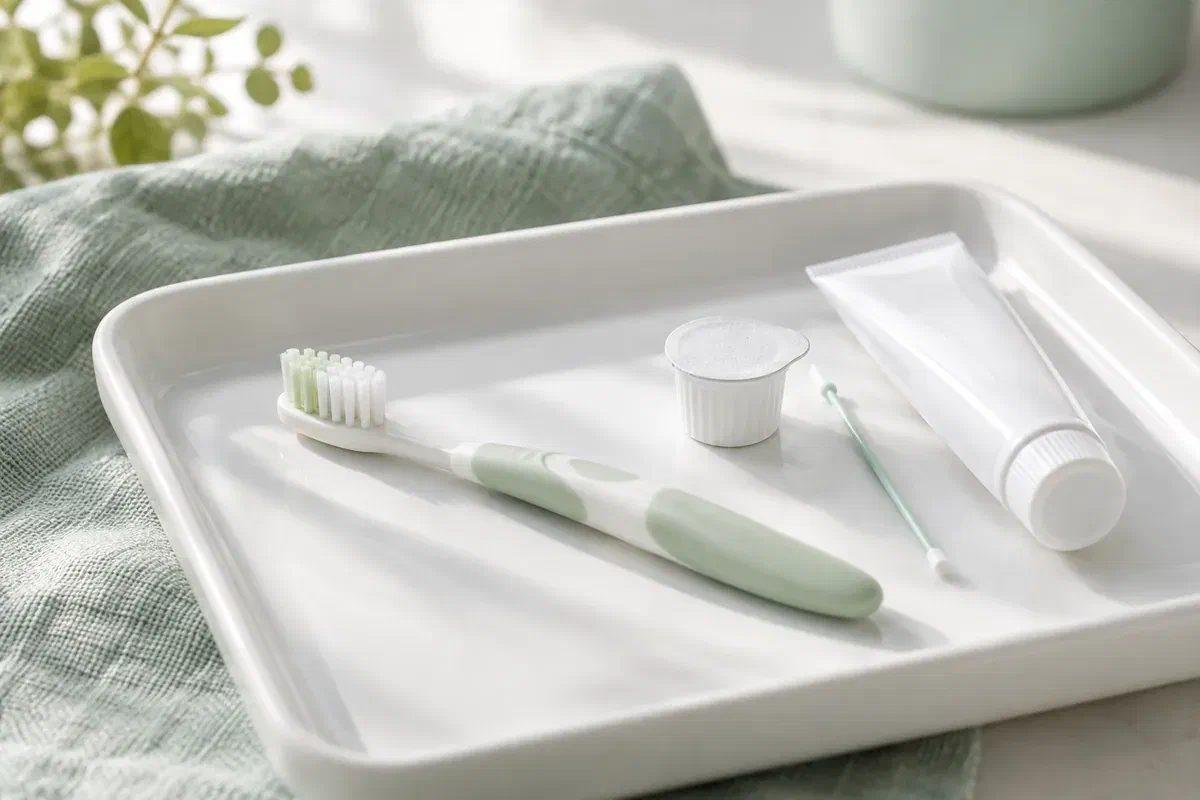
Illustrative fluoride applicator, small unit-dose cup, toothbrush, and toothpaste
Before you choose a product

Risk, routine and what’s already in the bathroom

Choosing more products does not guarantee better protection. The dentist needs an accurate picture of current habits to give advice you can use.

Signs that risk has gone up

Fillings in the recent past, early spots the dentist is tracking, or new difficulty cleaning around teeth are all worth raising. They help show whether extra prevention makes sense. Past decay counts, but the plan should match your child’s present situation.

Amount used and whether it’s swallowed

Let us know who puts the paste on the brush, how much, and whether your child can spit yet. Little ones need adult supervision and a measured amount. If a tube’s directions leave you guessing, the team can show you what the right quantity looks like.

Labels on every other product

Note any rinses, supplements, prescription toothpastes and your usual water source. A product suitable for a ten-year-old may not suit a toddler, even in the same home. The team can sort through the combination and tell you what fits this child.

Ask about ingredients and tell the clinician about allergies or a past reaction to any dental product before treatment. Preparations differ, so the discussion should be about the actual product, not fluoride as one generic item.

What you can reasonably expect

Help for enamel, within honest limits

Topical fluoride makes enamel more resistant to decay and can encourage some early surface changes to remineralize. A tooth that has already lost structure will not grow it back with fluoride. Ask whether the advice is preventive, meant to manage an early change, or one part of a broader plan.

Results depend on the routine around the application. No visit promises a cavity-free future. Daily cleaning, how often your child eats or sips sugary things, and treatment for any diagnosed problem remain central, and the plan should be reviewed at the intervals the dentist suggests.

Patient information: CDA — fluoride and prevention

Knowing the reason

Ask what finding or risk the treatment targets. A clear purpose makes aftercare easier to follow and follow-up visits easier to prioritize. If the dentist changes course later, ask what has changed to support it.

A routine without contradictions

What’s applied in the clinic and what’s brushed on at home do overlapping but separate jobs. Ask what to keep doing and what to adjust. A short, consistent routine is easier to stick with than an assortment of products with mixed directions.

Space to weigh alternatives

Bring questions about flavour, ingredients, swallowing or the amount used. The clinician can explain the actual product and any reasonable alternatives. A good answer helps you decide; it shouldn’t take your agreement for granted.

Step by step

What happens in the chair

The method and timing follow from the preparation chosen and from your child. Two children of the same age can get different advice.

  1. Assess the need

    Exam findings, earlier decay, age and the fluoride products already in use are reviewed together. Mention health conditions or swallowing concerns. Ask whether the dentist is recommending professional treatment, a home-care adjustment or both, and why.

  2. Name the product and its purpose

    The team should tell you which preparation is proposed, what it is for, how it is applied and what precautions apply. A varnish is one approach a dentist may consider. Ask what your child may feel or taste and mention any earlier reactions.

  3. Apply it at your child’s pace

    The clinician uses the amount and method suited to the product and the patient. If your child needs a pause or more preparation, say so. Where the usual approach doesn’t work for a child, the team can talk through an adjustment or another option.

  4. Wrap up with clear instructions

    Confirm when your child can eat, drink and brush after the specific product, and whether a further application or recheck is planned. Ask for directions clear enough for another caregiver or a teacher who will be with your child later.

Afterwards

Short-term directions, long-term habits

Aftercare differs from one professional preparation to the next. Go by the instructions you receive from the team, not a standard waiting time you read online.

Confirm today’s directions

Ask about eating and brushing for the exact product before you head out, and tell other caregivers. If teeth feel coated or look different for a while, ask whether that’s expected. Call with any doubts instead of scrubbing at the surface.

Get the amount on the brush right

Canadian guidance calls for a professional risk assessment for children under three; those at risk should have a rice-grain portion of fluoride toothpaste, brushed by an adult. Ages three to six use a small pea-sized amount with adult help and should spit. Ask what suits your child’s stage.

Keep everything supervised

An adult should manage how much toothpaste or rinse is used and store products where children cannot reach them. Don’t add supplements or stronger products without guidance. If a child swallows a large quantity, contact poison control or get medical advice promptly instead of waiting for symptoms.

Patient information: Health Canada — fluoride and children’s toothpaste use

Options to compare

Three ways prevention can take shape

Ask which options suit your child’s risk and stage of development. Prevention and treatment of an existing cavity should be kept clearly apart.

When extra topical protection makes sense

In-clinic fluoride

The dentist may propose a suitable preparation and a schedule based on the findings. Ask about its benefits, precautions and when it will be reviewed. It should be chosen for your child, not added to every appointment by default.

When home care needs adjusting

A clearer toothpaste routine

Often the helpful change is the paste itself, the amount, the technique or more adult support. Rinses and prescription products call for specific advice. Ask for a routine you can follow every day and revisit as your child develops.

When a specific surface needs attention

Sealants, fillings or other targeted care

Deep chewing grooves may benefit from sealants, and established damage may need a restoration. Fluoride doesn’t replace either. Ask which finding each option addresses and whether they’re meant to work side by side.

Common questions

Toothpaste, varnish and the in-between

Bring the labels and any concerns about home care. Each answer should make sense within your child’s full plan.

(905) 876-4488
How do I choose a children’s toothpaste when the labels all look different?
Bring the product to the visit and ask the dentist to look at it with you. The right choice depends on age, decay risk and whether your child can spit. Marketing terms on the front of the box are less useful than professional advice about your child.
Is a fluoride-free toothpaste safer for a young child?
Not necessarily. Whether fluoride toothpaste is appropriate depends on your child’s age, assessed risk and professional guidance. Share your concerns and ask what a given product does and doesn’t provide, and how it fits the plan the dentist recommends.
Does fluoride treatment hurt?
Topical fluoride is applied to the tooth surface, and children may notice a taste or a coated feeling. Ask the team what your child can expect from the specific product, and mention any sensitivity or worries ahead of time so the visit can be planned around them.
Do kids with braces need anything different?
Brackets and wires can make cleaning harder, which may change the assessed risk. Mention the orthodontic treatment and any rinses your child was given. The dentist can explain whether the routine or professional prevention should be adjusted while the braces are on.
Can swallowing toothpaste cause white marks on adult teeth later?
Taking in too much fluoride while permanent teeth are forming can cause fluorosis, which affects their appearance. That’s why young children need adult help and a measured amount. Talk to the dentist about the real routine rather than dropping useful prevention without advice.
Is it practical to book from Oakville around school hours?
Ask the team about appointment times that suit your schedule. Fluoride is usually decided after an assessment, so it often fits into a checkup visit. Planning ahead lets you sort out pickup, any aftercare for the rest of the day and the next review.
Booking from Oakville

Bring the tube; we’ll help you read it.

Contact our Bronte Street practice to go over your child’s fluoride needs, any past cavities and the products you use at home. We’ll explain what professional care might add and give clear instructions based on the assessment.

Products and frequency are tailored to each child. Bring the labels you use and mention allergies or earlier reactions before any treatment.

Visit Milton Dental Clinic
Unit 1, 342 Bronte St. S, Milton, ON L9T 5B7
Get directions Clinic hours
Monday–Thursday
11am–7pm
Friday–Sunday
By appointment only

Areas we serve

  • Milton
  • Oakville
  • Mississauga
  • Georgetown
  • Halton Hills
  • Acton
  • Campbellville
  • Brampton
  • Burlington
  • Puslinch
  • Rockwood
  • Erin
  • Caledon
  • Etobicoke
  • Old Milton
  • Bronte Meadows
  • Timberlea
  • Dorset Park
  • Dempsey
  • Clarke
  • Beaty
  • Coates
  • Harrison
  • Scott
  • Willmott
  • Ford
  • Bowes
  • Cobden
  • Walker
  • Mountain View
  • Milton Heights
  • Hawthorne Village
  • Valley View
  • Fallingbrook
  • Nassagaweya
  • Trafalgar
  • Esquesing
  • Nelson
  • Brookville
  • Moffat
  • Glen Williams
  • Norval
  • Limehouse
  • Stewarttown
  • Ashgrove
  • Hornby
  • Silver Creek
  • Speyside
  • Scotch Block
  • North Oakville
  • River Oaks
  • Glen Abbey
  • West Oak Trails
  • Palermo
  • Bronte Creek
  • College Park
  • Joshua Creek
  • Uptown Core
  • Preserve
  • Iroquois Ridge
  • Lisgar
  • Meadowvale
  • Meadowvale Village
  • Churchill Meadows
  • Erin Mills
  • Central Erin Mills
  • Streetsville
  • East Credit
  • Creditview
  • Heartland
  • Sheridan
  • Mount Pleasant
  • Credit Valley
  • Huttonville
  • Churchville
  • Springbrook
  • Northwest Brampton
  • Bram West
  • Fletcher's Meadow
  • Fletcher's Creek South
  • Alton Village
  • Orchard
  • Millcroft
  • Headon Forest
  • Tansley
  • Brant Hills
  • Tyandaga
  • Kilbride
  • Lowville
  • Aberfoyle
  • Morriston
  • Arkell
  • Hillsburgh
  • Freelton
  • Carlisle
  • Waterdown
  • Flamborough
  • Mountsberg

How can we help?

Milton Dental Clinic

Have a question about your smile? Choose the option that works best for you.

For urgent dental concerns, please call.
Messages are reviewed during clinic hours.