

Illustrative parent and child discussing toothpaste with a dental clinician
Children’s Dentistry

Children’s Fluoride Treatment in Rockwood

A rinse from the pharmacy, a prescription paste for an older child, drops someone recommended: products pile up. Bring the whole collection from Rockwood and we’ll help you sort out a fluoride routine that makes sense.

Clearing the bathroom shelf

More bottles, less clarity

It happens gradually. A rinse bought after a cavity scare, a high-strength paste prescribed for a teenager, a children’s toothpaste picked for the cartoon on the box. Before long, nobody is quite sure what the youngest is supposed to use. Sorting that out is a good reason to book a fluoride review.

The simplest preparation is to bring the products themselves, or clear photos of every label. Add notes on previous fillings, medications, any trouble with brushing and the water your household drinks. Coming from Rockwood, a single well-prepared visit lets the dentist go through each item and say what stays, what goes and whether a professional application is useful.

Remember what professional fluoride is for. It’s preventive and works alongside exams and daily brushing; it doesn’t repair a cavity. Ask which product the dentist proposes, how it differs from what you already have, how it’s applied, what happens afterwards and when the plan will be revisited.

Book a product review
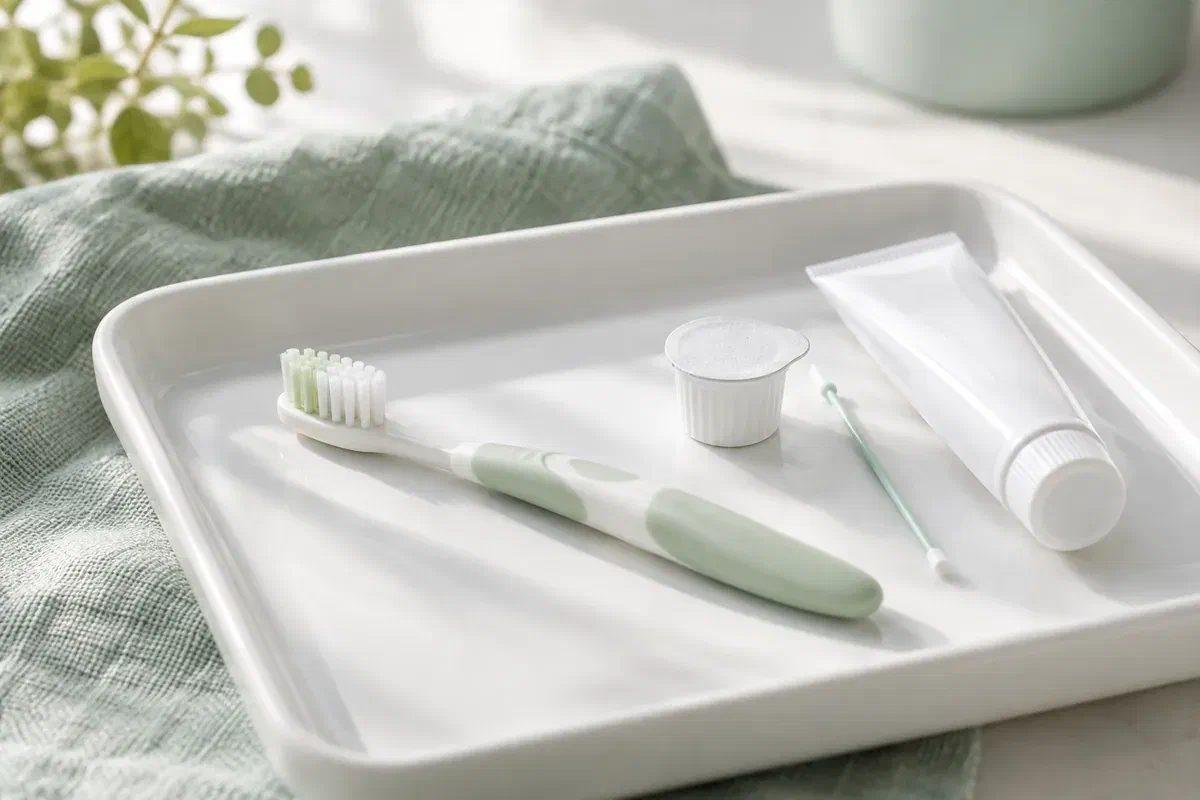
Illustrative fluoride applicator, small unit-dose cup, toothbrush, and toothpaste
Sorting it out

Which products does this child actually need?

A longer list of fluoride products does not equal better care. Knowing exactly what is in use keeps advice focused and safe.

Why the products were started

Tell us about the cavity, the spot being watched or the advice that led to each product. That context helps the dentist judge whether extra prevention is still needed. Old reasons may no longer apply, so the plan should match your child’s present situation.

Who uses what, and how much

In a busy home, the younger child may borrow an older sibling’s paste or rinse. Tell us which tube each child uses, who measures it and whether your youngest can spit. Ask the team to demonstrate a suitable amount if you’re unsure.

Prescription and supplement labels

Bring details of any prescription toothpaste, fluoride rinse, drops or tablets, plus your drinking water source. Products prescribed for one child should not be shared with another without advice. The team can explain which items suit which family member.

Share any allergies or reactions to dental products before an application. Preparations differ in ingredients, so the discussion should focus on the specific product rather than fluoride as one thing.

Where a professional application fits

One targeted step instead of several overlapping ones

Applied by a clinician, fluoride strengthens enamel against decay and may help suitable early changes harden again. It doesn’t replace lost tooth structure. Ask whether the recommendation is meant to prevent decay, manage an early change or support a broader plan, and how it compares with what’s already on your shelf.

Even a well-chosen application works only alongside good daily habits and periodic review. No single visit promises a child will stay cavity-free. Thorough brushing, sensible snack and drink patterns, and treatment of any diagnosed problem still do much of the work.

Patient information: CDA — fluoride and prevention

A reason for each product

Ask what each part of the routine is for, including any professional treatment. Knowing the purpose makes instructions easier to follow and helps you notice when something is no longer needed. If advice shifts later, ask why.

Fewer, clearer steps

The varnish applied in the clinic and the paste used at home serve related but separate purposes. Ask what to keep, what to stop and what to change. A simpler routine is easier to follow consistently and less likely to cause mix-ups between siblings.

Product questions settled

Bring concerns about ingredients, taste, swallowing or strength. The clinician can explain each product and suggest reasonable alternatives. You should leave with answers that help you decide, rather than another item to add.

Inside the appointment

Review the shelf, then decide on the chair

How a product is applied, and when, depends on the preparation chosen and your child. Your existing products help shape that choice.

  1. Go through what’s in use

    The dentist reviews the exam, past decay, age and every product you’ve brought. Mention health conditions or swallowing problems. Ask whether the result is a professional application, changes to home products, or both, and what each change addresses.

  2. Compare the proposed preparation

    The team should explain the product, why it’s suggested, how it’s applied and any precautions. Varnish is one professional option. Ask how it differs from the rinses or pastes you have at home, and raise any earlier reactions.

  3. Apply it in a suitable way

    The clinician uses the amount and technique appropriate for the product and your child. If a pause or extra explanation would help, let us know. Where the usual method isn’t workable, the team can discuss alternatives. Your child doesn’t need to manage it the same way an older brother or sister did.

  4. Leave with an updated list

    Confirm eating, drinking and brushing directions for the product used, and ask whether further applications or a review are planned. Write down which home products continue, so every caregiver follows the same simplified routine. Ask how to dispose of anything you’re told to stop using.

The new routine at home

Simplify, supervise and store safely.

Professional preparations can each have their own aftercare. Follow the team’s instructions instead of a universal waiting period from the internet.

Check aftercare before leaving

Ask about eating and brushing after the specific product, and let other caregivers know. Some preparations leave teeth feeling coated or looking a little different for a time. Call the clinic if you’re unsure rather than trying to clean it off.

Measure the daily paste

Health Canada advises that children younger than three have their risk professionally assessed; those at risk use a smear the size of a rice grain, brushed by an adult. Three- to six-year-olds use a pea-sized portion with grown-up help and should spit. Ask what suits your child.

Retire products you no longer need

Keep only the products the dentist recommends, and store pastes, rinses and prescriptions out of children’s reach. Don’t add drops or tablets without advice. Accidental ingestion of a sizeable amount of any of these products calls for prompt advice from poison control or a medical professional.

Patient information: Health Canada — fluoride and children’s toothpaste use

Choosing what stays

Three ways to streamline prevention

Ask which options fit your child’s age and risk. A clear plan separates prevention from treating a cavity that is already present.

When findings support added protection

A professional application in place of guesswork

The dentist may suggest a suitable preparation and schedule based on the exam. Ask about expected benefits, cautions and review timing. It should be chosen deliberately for your child rather than layered onto everything else.

When the shelf needs editing

A simpler home kit

Often the best change is one age-appropriate toothpaste, the right amount and steady adult help. Any rinse or prescription product should come with clear, child-specific directions. Ask for a short list you can stick to and review it as your child grows.

When a surface needs a different solution

Sealants or a restoration for a specific tooth

A deep groove may benefit from a sealant, and structural damage may call for a filling. No rinse or paste replaces these. Ask what each recommendation addresses and whether they’re meant to work together.

Product questions

Rinses, drops and prescription pastes

Bring the labels and your questions. Answers should fit your child’s whole prevention plan.

(905) 876-4488
At what age can a child start using a fluoride mouth rinse?
Rinses are generally not suitable until a child can reliably spit, and they should be used only when the dentist recommends one. Bring the product to the visit and ask whether it’s appropriate for your child’s age and risk.
Can my younger child use the prescription toothpaste our older one was given?
Prescription products are chosen for a particular person. Don’t share them without advice, as the strength may not suit a younger child. Ask the dentist what toothpaste fits your younger child’s age and risk.
Are fluoride drops or tablets still recommended for children?
Supplements are considered only in specific situations, taking into account water sources and other fluoride exposure. Don’t start them on your own. Ask the dentist whether they are appropriate for your child. If someone outside the clinic suggested them, mention who and why, so the advice can be weighed against everything else your child already receives.
Do whitening or ‘natural’ toothpastes suit kids?
Many products are designed for adults or don’t contain fluoride. Bring the tube and ask the dentist whether it suits your child’s age and decay risk, and what it provides or leaves out. Labels such as “gentle” or “natural” say little about how a paste protects against decay, so the ingredient list matters more than the front of the box.
If my child gets professional fluoride, can we drop the rinse?
Possibly, but ask the dentist first. Professional applications and home products play different roles, and the decision depends on your child’s risk. The aim is a routine that’s complete without being excessive.
How should we bring all our products from Rockwood without forgetting any?
Put everything in a bag the night before, or photograph each label, including any prescription packaging. Write down how often each product is used and by which child, so the dentist can review the full routine in one visit.
Book from Rockwood

Bring the bag of products.

Book with our Bronte Street practice and we’ll go through every fluoride product your child uses, along with past cavities and brushing habits. We’ll explain what professional care might add and leave you with a simpler routine.

Products and frequency are set for each child. Bring labels or the products themselves, and mention allergies or earlier reactions before treatment.

Visit Milton Dental Clinic
Unit 1, 342 Bronte St. S, Milton, ON L9T 5B7
Get directions Clinic hours
Monday–Thursday
11am–7pm
Friday–Sunday
By appointment only

Areas we serve

  • Milton
  • Oakville
  • Mississauga
  • Georgetown
  • Halton Hills
  • Acton
  • Campbellville
  • Brampton
  • Burlington
  • Puslinch
  • Rockwood
  • Erin
  • Caledon
  • Etobicoke
  • Old Milton
  • Bronte Meadows
  • Timberlea
  • Dorset Park
  • Dempsey
  • Clarke
  • Beaty
  • Coates
  • Harrison
  • Scott
  • Willmott
  • Ford
  • Bowes
  • Cobden
  • Walker
  • Mountain View
  • Milton Heights
  • Hawthorne Village
  • Valley View
  • Fallingbrook
  • Nassagaweya
  • Trafalgar
  • Esquesing
  • Nelson
  • Brookville
  • Moffat
  • Glen Williams
  • Norval
  • Limehouse
  • Stewarttown
  • Ashgrove
  • Hornby
  • Silver Creek
  • Speyside
  • Scotch Block
  • North Oakville
  • River Oaks
  • Glen Abbey
  • West Oak Trails
  • Palermo
  • Bronte Creek
  • College Park
  • Joshua Creek
  • Uptown Core
  • Preserve
  • Iroquois Ridge
  • Lisgar
  • Meadowvale
  • Meadowvale Village
  • Churchill Meadows
  • Erin Mills
  • Central Erin Mills
  • Streetsville
  • East Credit
  • Creditview
  • Heartland
  • Sheridan
  • Mount Pleasant
  • Credit Valley
  • Huttonville
  • Churchville
  • Springbrook
  • Northwest Brampton
  • Bram West
  • Fletcher's Meadow
  • Fletcher's Creek South
  • Alton Village
  • Orchard
  • Millcroft
  • Headon Forest
  • Tansley
  • Brant Hills
  • Tyandaga
  • Kilbride
  • Lowville
  • Aberfoyle
  • Morriston
  • Arkell
  • Hillsburgh
  • Freelton
  • Carlisle
  • Waterdown
  • Flamborough
  • Mountsberg

How can we help?

Milton Dental Clinic

Have a question about your smile? Choose the option that works best for you.

For urgent dental concerns, please call.
Messages are reviewed during clinic hours.