

Illustrative child learning about a toothbrush before a cleaning appointment
Children’s Dentistry

Children’s Teeth Cleaning

Help your child become familiar with professional cleaning and everyday care. Children’s teeth cleaning in Milton combines appropriate deposit removal with clear explanations, comfort planning, and brushing guidance for your family.

A closer look at children’s teeth cleaning

Make room for clean teeth and a little more confidence.

A cleaning visit can be an unfamiliar experience for a child. There may be new sounds, a different chair, and instruments they have not seen before. Explaining those details is part of helping them participate while the team addresses the deposits and cleaning needs identified in their mouth.

At Milton Dental Clinic, tell us what your child already knows about dental visits and what they are wondering about. Mention a sensitive tooth, a strong gag response, or a previous experience that was difficult. The cleaning approach should reflect the child's needs and findings, rather than simply reproduce an adult appointment on a smaller scale.

The visit also creates a useful opportunity to talk about brushing at home. Parents can ask where help is still needed, and children can practise understanding which areas the brush should reach. Professional cleaning supports that routine; it does not replace it or automatically resolve every stain, sore area, or dental problem.

Plan your child’s cleaning visit
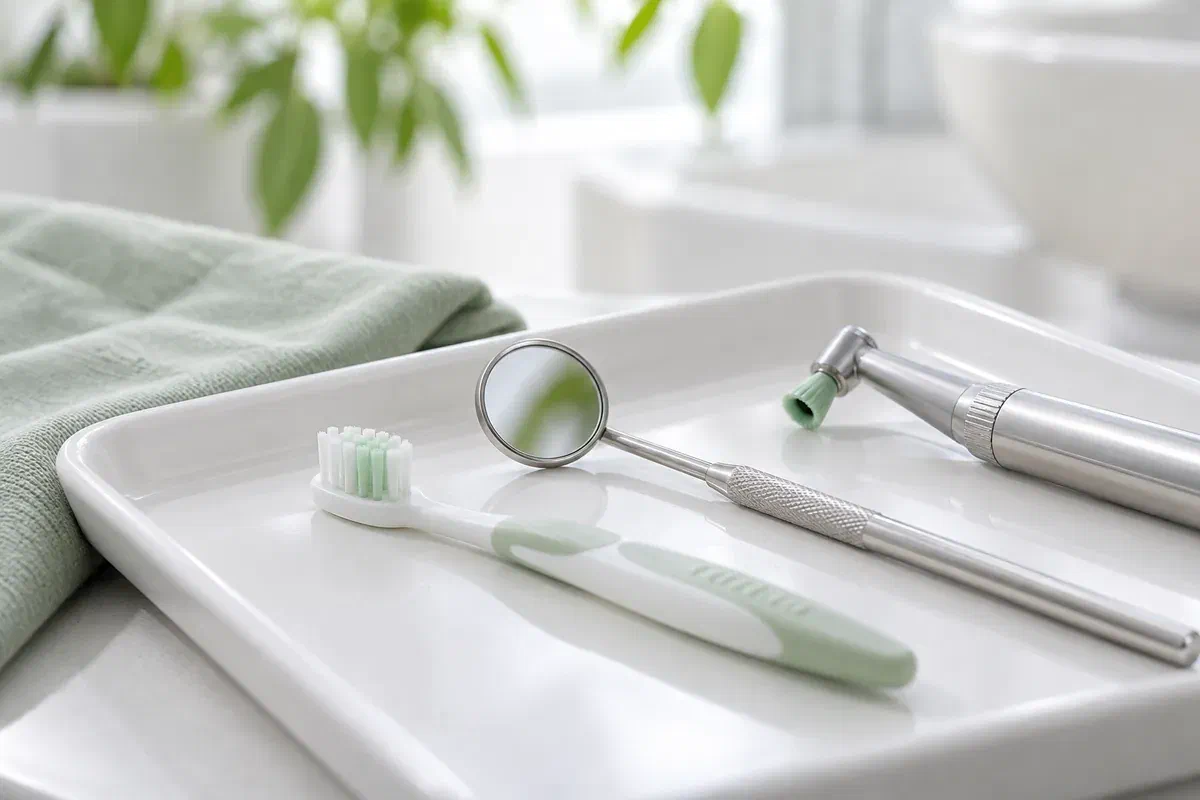
Illustrative child-sized toothbrush, dental mirror, and polishing instrument
What to mention when booking

Help us understand the mouth and the experience.

The practical details you share can make the appointment easier to plan. Describe what you notice without assuming that every concern is simply a need for more polishing.

Plaque, staining, or a rough-feeling area

Tell the team where you see buildup or a colour change and whether it has appeared recently. Some changes are surface deposits, while others need a different explanation. The appropriate assessment helps distinguish what cleaning may remove from a finding that needs further care.

Bleeding or discomfort during brushing

Mention sore gums, a tender tooth, or an area your child avoids. Explain whether the symptom affects eating or occurs only with cleaning. Do not ask your child to tolerate significant discomfort without telling the clinician; the cause may need examination.

Unfamiliar sensations or communication needs

Share concerns about noise, water, taste, touch, or understanding instructions. Tell us what helps your child communicate and settle. A useful plan can include explanations and pauses without promising that every child will manage the same amount of care at the first visit.

Mention new pain, swelling, or an injury when you call. A cleaning appointment may not be the right first visit for that concern, and the team can discuss the appropriate assessment.

What the appointment can contribute

Connect professional care with skills your child can practise.

Professional cleaning can remove identified plaque, external stains, and hardened deposits using appropriate methods. It can also support examination and provide a setting for practical home-care instruction. The extent of cleaning and need for other services depend on the findings.

A polished surface is not proof that the whole mouth is healthy. Cleaning alone does not repair cavities, diagnose every cause of pain, or guarantee that gum inflammation will not return. Ask which concerns the cleaning addresses and whether a separate examination or treatment discussion is needed.

Patient information: AAPD — the role of professional cleaning in pediatric care

A demonstration linked to a real area

Rather than receiving only a general reminder to brush, your family can ask about a particular difficult surface. The team can show a suitable approach and explain where an adult should help. A child who understands the target may find the routine less abstract.

A more familiar dental environment

A carefully explained visit gives your child information about the chair, tools, and sequence. Familiarity can be useful at future appointments, although confidence develops differently for each child. Tell the team what your child remembers afterward so that later visits can build on it.

A chance to simplify the routine

Ask whether the brush size, handle, and current technique fit your child's abilities. An additional product is not always the most useful change. Sometimes the next step is clearer adult assistance or a method that makes reaching a back tooth easier.

During the cleaning visit

Explain the tools, provide appropriate care, and practise the next step.

The team should discuss what is planned and adapt the explanation to your child. Confirm whether an examination, fluoride, or another service is arranged alongside cleaning.

  1. Start with a short conversation

    Review health updates, concerns, and what your child finds comfortable or difficult. Let them ask about a tool before it is used. Agree how they can signal for a pause, and tell the clinician if your child uses a communication method that needs preparation.

  2. Identify the cleaning needs

    The team looks at deposits, gum condition, and relevant dental work. A dentist may need to assess a finding before care proceeds. Ask what is being cleaned and whether a stain or sensitive area requires more than the planned cleaning.

  3. Use the methods suited to the findings

    Cleaning may involve a brush, polishing equipment, or other instruments where indicated. The clinician selects an appropriate approach rather than using every instrument at every appointment. Explain if your child needs help with water, taste, or an unfamiliar sensation.

  4. Review home care and the next appointment

    Ask for a demonstration of brushing and any appropriate cleaning between teeth. Confirm what was completed and whether further care remains. Discuss the next visit's purpose and timing, including any particular area that should be reviewed.

After your child’s cleaning

Keep the routine gentle, supported, and easy to understand.

Follow any instructions for additional products or treatment provided during the visit. Advice after fluoride or another procedure may differ from advice after cleaning alone.

Practise one useful change

Choose a clear takeaway from the demonstration, such as reaching the outside of a back molar or helping with the final brushing pass. Keep the approach calm and consistent. If it is difficult to reproduce at home, ask for further guidance.

Continue age-appropriate brushing help

Use the toothpaste and amount recommended for your child's age and assessed needs. Keep supervising and helping where necessary rather than assuming a successful appointment means independent brushing is now sufficient. Ask how to review progress as your child's skills develop.

Report ongoing soreness or a new problem

If discomfort is significant, worsening, or not settling as advised, contact the clinic. Persistent bleeding or pain deserves an explanation. Do not repeatedly scrub a tender area harder or try to remove deposits with a purchased metal scraper.

Choosing the appropriate visit

Cleaning, examination, and prevention serve connected but different purposes.

Ask what the appointment covers and why each proposed service is recommended. The right combination depends on your child's current needs.

When deposits and home-care skills are the focus

Professional cleaning with instruction

The visit addresses identified cleaning needs and provides practical guidance. The amount of care varies with the mouth and the child's ability to participate. Ask what was completed and whether another visit would serve a specific purpose.

When a symptom or finding needs diagnosis

An examination or focused assessment

Pain, a damaged tooth, unusual staining, or persistent gum symptoms may require examination beyond cleaning. Describe the concern before the visit. The dentist can explain whether a separate treatment plan is needed.

When risk or appointment needs call for more

Additional prevention or further support

Fluoride, sealants, or a different appointment approach may be discussed according to assessment. A child with more complex needs may benefit from additional planning or referral. Ask why the recommendation is useful rather than assuming it is a routine requirement.

Questions about children’s cleaning visits

Prepare for the experience as well as the procedure.

Ask about sounds, sensations, stains, and the role of home care. Your child's questions are welcome too.

(905) 876-4488
Does every child need the polishing cup at every cleaning appointment?
No single technique is automatically required for every child. The team considers deposits, surfaces, and what care is appropriate. Ask why a particular instrument is being used and whether another approach is suitable if your child finds the sensation difficult.
Will cleaning remove all of the dark marks I can see on my child’s teeth?
Not necessarily. Some marks are external stains, while others relate to the tooth itself or need assessment for another cause. Describe when the change appeared and ask what it represents. Cleaning should not be used as a substitute for diagnosing an unexplained mark.
Can my child practise the pause signal before the cleaning begins?
Yes, discuss a simple signal or another communication method with the team. Practising it can help everyone understand what it means. Tell the clinician if your child has difficulty using their hand or needs a different way to communicate during care.
Should I brush my child’s teeth before the professional cleaning visit?
Continue the usual gentle routine unless you have been given different instructions for another procedure. There is no need to scrub harder or hide areas that are difficult. An honest explanation of the everyday routine helps the team give more useful advice.
What if only part of the planned cleaning is completed because my child becomes overwhelmed?
Ask what was completed, what remains, and how the next step should be arranged. The plan may need a different approach or further support. Avoid describing the child as having failed; useful information about their needs can guide the next visit.
Does a professional cleaning replace helping my child brush that evening?
No. Continue the advised home routine, subject to any specific instructions for products used at the visit. Professional care does not replace daily plaque removal. If fluoride or another treatment was provided, clarify when brushing should resume for that preparation.
Children’s teeth cleaning in Milton

Let’s plan a visit your child can understand.

Contact our Bronte Street practice to discuss your child's cleaning needs and appointment preferences. Mention sensitive areas, previous experiences, and any support needs so the visit can be planned with useful context.

The cleaning approach and visit length depend on assessment. Please mention pain or swelling when arranging care.

Visit Milton Dental Clinic
Unit 1, 342 Bronte St. S, Milton, ON L9T 5B7
Get directions Clinic hours
Monday–Thursday
11am–7pm
Friday–Sunday
By appointment only

How can we help?

Milton Dental Clinic

Have a question about your smile? Choose the option that works best for you.

For urgent dental concerns, please call.
Messages are reviewed during clinic hours.