

Illustrative child learning about a toothbrush before a cleaning appointment
Children’s Dentistry

Children’s Teeth Cleaning in Acton

Bright lights, buzzing tools, a minty taste and water in the mouth can add up quickly for a child with sensory differences. We plan around what your child finds hard, clean away buildup with care, and talk through home brushing that suits them.

Sound, taste, touch and light

When the senses are the hardest part

For some children, the cleaning itself is not the challenge. It’s the hum of the polisher, the overhead light, the flavour of the paste, or the feeling of water pooling near the throat. Knowing which of those matter most to your child lets us plan around them while the team removes deposits from the areas that need it.

If you’re coming from Acton, tell us what usually overwhelms your child and what helps them settle. Do they prefer warnings or fewer words? Visual cues or spoken ones? Mention a sore tooth, a strong gag response or a difficult past visit too. We shape the cleaning to the child and the findings, rather than reproducing a grown-up appointment in miniature.

Home brushing can bring the same sensory challenges, so it’s worth raising. Ask which areas still need your help, and how to make brushing more tolerable. Professional cleaning supports the daily routine; it can’t replace it, and it won’t settle every stain, tender spot or dental problem on its own.

Plan a sensory-aware cleaning
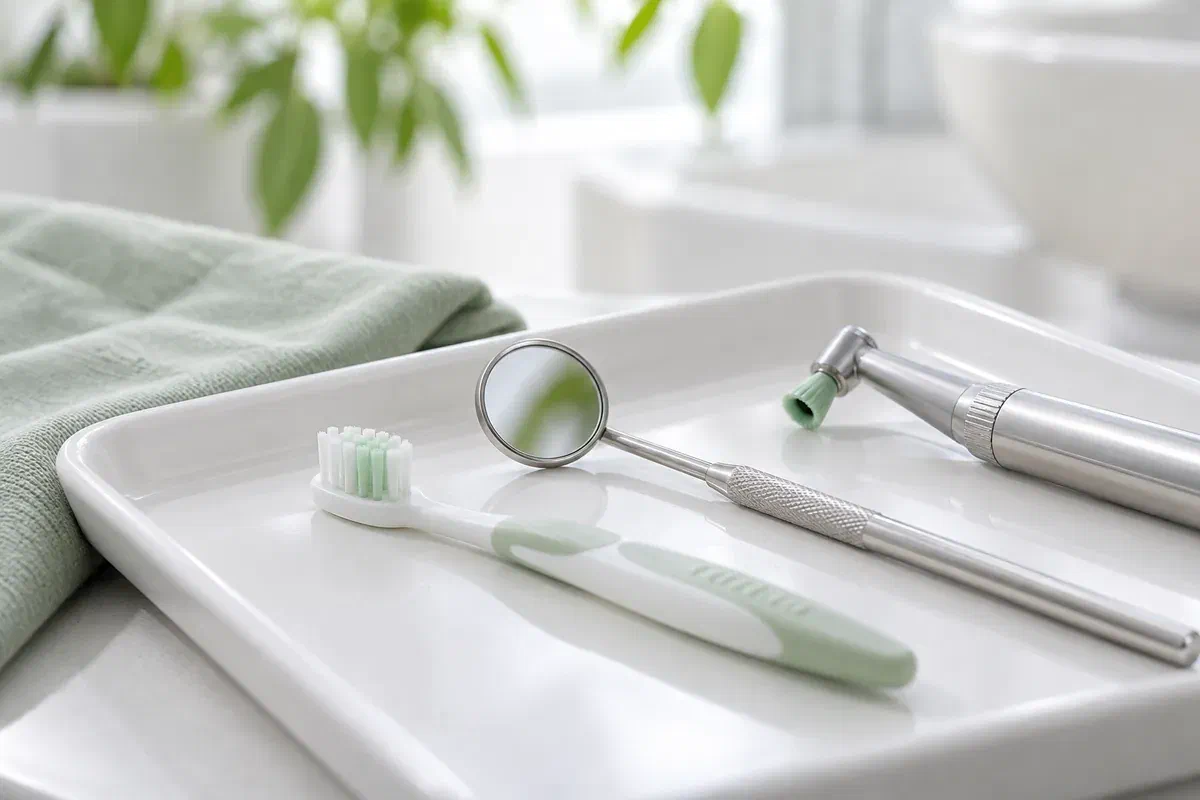
Illustrative child-sized toothbrush, dental mirror, and polishing instrument
Share these when booking

What would make the visit easier for your child?

The more specific you can be, the better we can prepare. Describe what you notice, and try not to assume every concern needs more polishing.

Deposits, discolouration or a rough patch

Tell us where you see buildup or a change in colour, and roughly when it appeared. Some changes are surface deposits; others come from a different cause. Assessment helps distinguish what cleaning may remove from findings that need other care, especially if brushing at home is difficult.

Bleeding gums or a sore tooth

Mention gums that bleed, a tender tooth, or an area your child won’t let the brush touch. Note whether eating is affected. Some children show pain through behaviour rather than words, so tell us what you’ve seen; the cause may need examination.

Sensory triggers and communication preferences

List what tends to be hard: noise, bright light, water, flavours, textures or being touched. Tell us how your child communicates and what calms them. We can plan explanations, quieter moments and breaks, without pretending every child will manage the same amount at a first visit.

Please mention new pain, swelling or an injury when you call. A cleaning may not be the right first appointment, and the team can help you choose a suitable assessment.

Why careful planning pays off

Cleaner teeth, with fewer overwhelming moments.

With methods chosen for your child, the team can remove the plaque, external stains and hardened deposits they find. Clean surfaces also make examination easier, and the appointment is a chance to explore brushing approaches that your child can tolerate. Any further care depends on findings.

A polished look doesn’t confirm that everything is healthy. Cleaning won’t repair decay, explain every source of discomfort, or stop gum inflammation coming back. Ask which of your concerns were addressed, and whether an examination or treatment conversation should follow.

Patient information: AAPD — the role of professional cleaning in pediatric care

Brushing advice that respects sensory needs

Ask about the area your child resists most. The team can suggest ways to reach it, such as a softer brush or a different order, and explain where you should help. When the routine feels more predictable, some children accept it more easily.

Predictability for next time

Each explained step adds to your child’s knowledge of the chair, tools and sequence. Predictability matters for many children with sensory differences, though progress varies widely. Tell us what your child remembers so the next visit can follow a familiar pattern.

Fewer new things to adjust to

Check whether the brush size, bristle feel and handle suit your child. Swapping products often isn’t helpful for a child who dislikes change. Sometimes the best step is keeping the same toothpaste and adjusting technique or adult support instead.

A predictable sequence

We tell your child what’s coming, every time.

Each step is explained in a way that suits your child, whether that’s words, pictures or a demonstration. Ask if an examination or fluoride is planned for the same day.

  1. Settle in and set the signals

    We review health updates, your concerns and your child’s sensory triggers. Your child can see and touch a tool before it’s used. We agree how they’ll ask for a break, and you can tell us about visual supports or devices to prepare.

  2. Check gently

    The team looks at deposits, gums and any dental work, going at your child’s pace. A dentist may need to assess a finding first. Ask which areas will be cleaned and whether something needs more than a cleaning.

  3. Clean with the least disruption

    The clinician picks tools to fit what’s found and how your child copes, perhaps hand instruments rather than a noisy polisher. Not every tool is needed. Let us know right away if water, taste or a texture becomes too much.

  4. Practise and look ahead

    Ask for a demonstration you can try at home, along with any suitable cleaning between teeth. We confirm what was completed, whether anything remains, and how and when the next appointment should be arranged.

Home again in Acton

Keep home brushing predictable.

Follow any instructions for products or treatment used during the visit. Advice after fluoride or another procedure can be different from cleaning alone.

Introduce one change slowly

Pick a single tip, like brushing the outside of a back molar first or you doing the last few strokes. Keep the routine the same each day. If the change is hard to introduce, ask us for other ideas.

Continue hands-on help

Use the toothpaste and amount advised for your child’s age and assessed needs. A calm visit doesn’t mean independent brushing is now enough. Keep helping, and ask how to review progress over time.

Watch for signs of soreness

Contact us if discomfort seems significant, gets worse or doesn’t settle. Behaviour changes can be a clue in children who don’t describe pain easily. Avoid scrubbing a sore area harder or using a bought metal scraper at home.

Choosing the visit type

Clean, check, or plan more support.

Ask what the visit covers and why each service is suggested. The right combination depends on your child’s needs now.

When buildup and routine are the focus

Cleaning with tailored home-care tips

This visit handles the cleaning needs we identify and gives practical guidance suited to your child. How much is done depends on the mouth and how your child manages. Ask what was completed and whether another visit has a clear purpose.

When a symptom needs a diagnosis

An examination or focused assessment

Pain, a damaged tooth, unusual staining or ongoing gum symptoms may need examination beyond cleaning. Describe the concern before the visit, and the dentist can explain whether separate treatment planning is required.

When risk or support needs are greater

Added prevention or specialised support

Fluoride, sealants or a different appointment format may be discussed after assessment. Some children with significant sensory or medical needs may benefit from extra planning or referral. Ask why each recommendation would help.

Sensory questions about cleanings

What Acton parents want to know before the first visit.

Ask about sounds, tastes, textures and home care. Your child’s own questions are welcome in whatever form they come.

(905) 876-4488
Can my child wear headphones or ear defenders during a cleaning?
Ask the team. Many children find reduced noise helpful, and it’s usually easy to accommodate. Agree on a visual pause signal in case your child can’t hear instructions as well.
Can you use an unflavoured paste if my child hates strong tastes?
Mention taste sensitivity when you book. The team can talk about the options available and whether a particular step is needed for your child’s deposits.
Would sunglasses help if the dental light bothers my child?
They can. Some children find tinted glasses make the overhead light easier to tolerate. Bring a pair if your child is comfortable wearing them, or ask the team about options.
Can we use a visual schedule or social story for the visit?
Yes, and preparing one at home can help. Ask the team about the usual order of steps so your schedule matches what will happen. Bring it with you so your child can follow along.
What if the sensations become too much and we have to stop?
We’ll stop, explain what was done and suggest how to approach the rest. Stopping isn’t a failure. Understanding what your child found hardest helps us plan a better next visit.
Is the polishing step essential, or can it be left out?
Not every technique is required for every child. The clinician considers the deposits and what’s appropriate. Ask why a step is suggested and whether an alternative would work if your child finds it hard.
Planning from Acton

Tell us what overwhelms your child. We’ll plan around it.

Phone our Bronte Street practice and we can go through your child’s cleaning and the times that work for you. Share sensory triggers, sore areas, previous experiences and support needs so we can prepare.

We decide the cleaning approach and timing after assessment. Please let us know about pain or swelling when you book.

Visit Milton Dental Clinic
Unit 1, 342 Bronte St. S, Milton, ON L9T 5B7
Get directions Clinic hours
Monday–Thursday
11am–7pm
Friday–Sunday
By appointment only

Areas we serve

  • Milton
  • Oakville
  • Mississauga
  • Georgetown
  • Halton Hills
  • Acton
  • Campbellville
  • Brampton
  • Burlington
  • Puslinch
  • Rockwood
  • Erin
  • Caledon
  • Etobicoke
  • Old Milton
  • Bronte Meadows
  • Timberlea
  • Dorset Park
  • Dempsey
  • Clarke
  • Beaty
  • Coates
  • Harrison
  • Scott
  • Willmott
  • Ford
  • Bowes
  • Cobden
  • Walker
  • Mountain View
  • Milton Heights
  • Hawthorne Village
  • Valley View
  • Fallingbrook
  • Nassagaweya
  • Trafalgar
  • Esquesing
  • Nelson
  • Brookville
  • Moffat
  • Glen Williams
  • Norval
  • Limehouse
  • Stewarttown
  • Ashgrove
  • Hornby
  • Silver Creek
  • Speyside
  • Scotch Block
  • North Oakville
  • River Oaks
  • Glen Abbey
  • West Oak Trails
  • Palermo
  • Bronte Creek
  • College Park
  • Joshua Creek
  • Uptown Core
  • Preserve
  • Iroquois Ridge
  • Lisgar
  • Meadowvale
  • Meadowvale Village
  • Churchill Meadows
  • Erin Mills
  • Central Erin Mills
  • Streetsville
  • East Credit
  • Creditview
  • Heartland
  • Sheridan
  • Mount Pleasant
  • Credit Valley
  • Huttonville
  • Churchville
  • Springbrook
  • Northwest Brampton
  • Bram West
  • Fletcher's Meadow
  • Fletcher's Creek South
  • Alton Village
  • Orchard
  • Millcroft
  • Headon Forest
  • Tansley
  • Brant Hills
  • Tyandaga
  • Kilbride
  • Lowville
  • Aberfoyle
  • Morriston
  • Arkell
  • Hillsburgh
  • Freelton
  • Carlisle
  • Waterdown
  • Flamborough
  • Mountsberg

How can we help?

Milton Dental Clinic

Have a question about your smile? Choose the option that works best for you.

For urgent dental concerns, please call.
Messages are reviewed during clinic hours.