

Illustrative child learning about a toothbrush before a cleaning appointment
Children’s Dentistry

Children’s Teeth Cleaning in Campbellville

Is it a cleaning your child needs, a checkup, or both? Knowing the difference helps rural households make one trip do the right job. We explain what a cleaning covers, remove buildup gently, and show you how to keep up the work at home.

Cleaning or checkup?

Knowing what you’re booking makes the drive worthwhile.

Parents often use “cleaning” and “checkup” as if they mean the same thing. They overlap, but they aren’t identical. A cleaning focuses on removing plaque and deposits and teaching home care; an examination looks for problems that need diagnosis. Many visits include both, and it helps to know which you’re arranging.

Households in Campbellville, out in the Nassagaweya part of Milton, often like to group appointments into one outing. When you call, tell us what your child understands about dental visits and what they’re unsure of. Mention a sensitive tooth, a strong gag reflex or a past experience that was difficult. The cleaning is built around your child’s needs and findings, not run as an adult appointment in a smaller chair.

We’ll also talk about the toothbrush at home. Ask which surfaces still need your help, and let your child see where the bristles should reach. A professional cleaning supports what you do every day, but it doesn’t replace it, and by itself it won’t clear up every stain, tender patch or dental issue.

Ask what your child’s visit should include
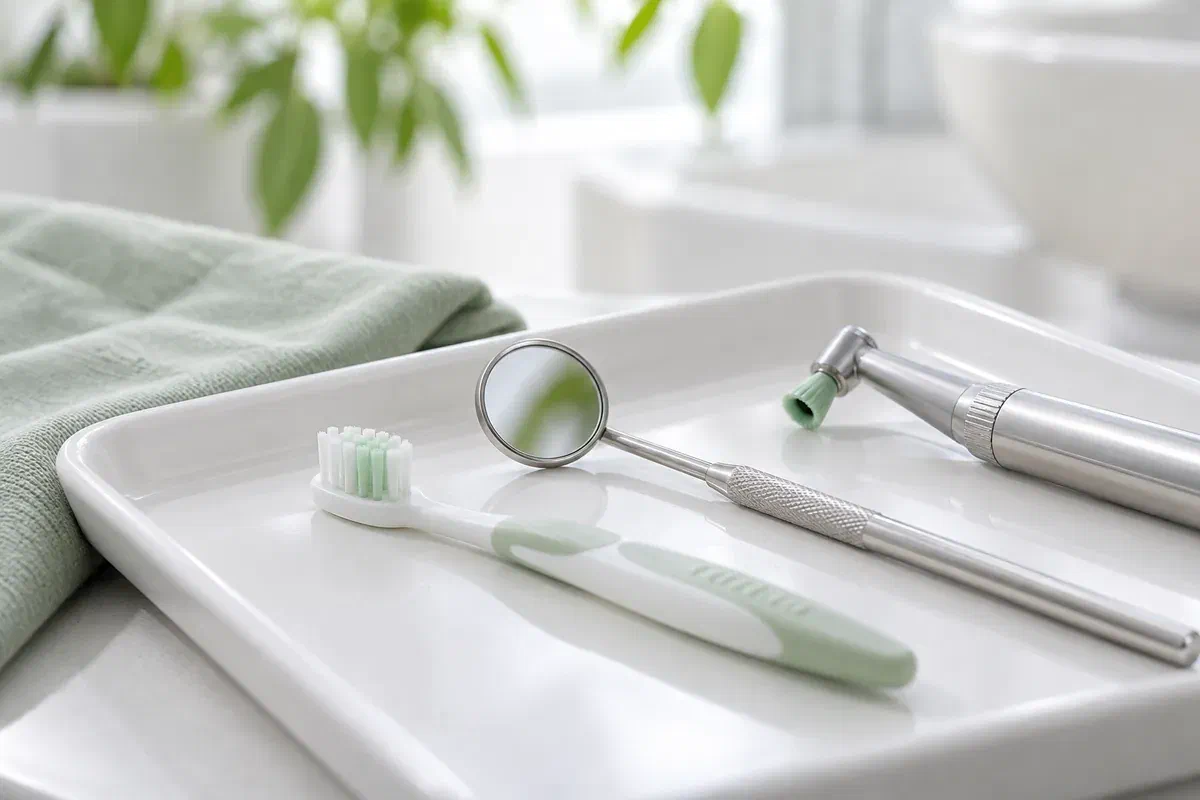
Illustrative child-sized toothbrush, dental mirror, and polishing instrument
Details for the booking call

Let us know what you’ve spotted.

A few observations help us decide whether a cleaning, an exam or both make sense. Describe what you see rather than assuming more polishing will sort it out.

Plaque, a stain or a rough-feeling surface

Tell us where buildup collects and when a discoloured area first appeared. Surface deposits may come away during cleaning. Other changes come from inside the tooth or another cause, and assessment helps sort one from the other.

Bleeding gums or a painful tooth

Mention sore gums, a tooth that hurts, or a section your child won’t brush, and whether chewing is affected. That may mean an exam should be part of the visit. Please don’t encourage your child to put up with real discomfort; it deserves a look.

Sensitivities and communication

Tell us if sound, water, taste or touch is difficult for your child, or if they need instructions given a particular way. We can plan explanations and pauses, while being upfront that a first visit may not achieve as much as later ones.

If there’s new pain, swelling or an injury, say so before you set out. A cleaning may not be the right first step, and we can talk about which assessment is.

What a cleaning adds

Removing buildup, and making the routine clearer.

The team can clear identified plaque, external staining and hardened deposits with methods suited to children. Clean surfaces make examination easier, and the cleaning offers a practical brushing lesson right in your child’s mouth. Whether more care is needed depends on findings.

Teeth that look and feel polished aren’t proof of a healthy mouth. A cleaning won’t repair a cavity, account for every cause of pain, or stop gum inflammation from returning. Ask which concerns were addressed and whether an exam or treatment discussion is also needed.

Patient information: AAPD — the role of professional cleaning in pediatric care

Help with a particular trouble spot

Rather than a general brush-more reminder, ask about the exact area your child misses. The team can demonstrate a way to reach it and explain where an adult should still do the work. Seeing the target often makes the routine more concrete.

A little more familiarity each visit

When each step is explained, your child learns about the chair, the tools and the order of events. That can make future visits feel easier, though confidence develops at different paces. Tell us what your child remembers afterward.

A simpler routine at home

Ask if your child’s brush size, handle and technique suit their age and skills. A new product isn’t always the best change. Sometimes the step that helps is clearer adult support or an angle that reaches the back molars.

The visit, start to finish

Here’s how the time in the chair is used.

We explain what’s planned in words your child can follow. Confirm when booking whether an exam, fluoride or anything else is part of the same visit.

  1. Catch up on health and worries

    We go over health changes, your concerns and what your child finds easy or difficult. Your child can see any tool before it’s used. We settle on a signal for a break, and you can tell us about a communication method to prepare.

  2. Identify what needs cleaning

    The team checks deposits, gums and dental work. If something needs diagnosing, a dentist may assess it before cleaning carries on. Ask what will be cleaned and whether a stain or tender area needs more than a cleaning.

  3. Clean where it’s needed

    The clinician uses tools suited to what’s found, which might be a rotating brush, polishing cup or hand instruments, but not every tool at every visit. Tell us if your child is struggling with water, taste or a new sensation.

  4. Practise, then confirm the plan

    Ask to see brushing demonstrated, plus any between-teeth cleaning that suits your child. We go over what was finished, whether anything is outstanding, and the reason and timing for the next appointment.

Back home

One habit at a time.

Follow any instructions about products or treatment provided during the visit. What to do after fluoride or a procedure may differ from what to do after a cleaning alone.

Practise one new tip

Choose a single takeaway, like reaching the outside of a back molar or finishing the brushing yourself. Keep it relaxed and regular. If it doesn’t translate at home, ask us to go over it again.

Keep a parent involved

Stick with the type and amount of toothpaste we recommended for your child. One smooth appointment doesn’t mean your child is ready to brush on their own. Ask how to tell when their skills are catching up.

Phone about soreness that lingers

Get in touch if discomfort is significant, increasing or not settling as advised. Ongoing bleeding or pain should be explained. Don’t scrub a tender area harder, and don’t use a metal scraper from a store.

Sorting out the appointment

Cleaning, examination and prevention, side by side

Ask what the visit includes and why each service is suggested. What fits depends on your child right now.

If buildup and brushing are the priority

Cleaning with home-care instruction

This addresses identified cleaning needs and gives practical guidance. How much is completed depends on your child’s mouth and comfort. Ask what was done and whether another visit would have a clear goal.

If a symptom or finding needs diagnosis

Examination or a focused assessment

Pain, a broken tooth, unusual staining or gum trouble that persists may need examination as well as, or instead of, cleaning. Describe it beforehand, and the dentist can explain whether a separate treatment plan is needed.

If risk or support needs are higher

Further prevention or extra support

Fluoride, sealants or a different appointment format may be discussed after assessment. Some children need added planning or a referral. Ask what each recommendation would accomplish.

Questions about what’s included

Clearing up the cleaning-versus-checkup confusion.

Ask about what each visit covers, the sensations involved and home care. Your child can ask questions too.

(905) 876-4488
What’s the actual difference between a cleaning and a checkup?
A cleaning removes plaque and deposits and includes home-care coaching. An examination looks for decay, gum problems and other findings that need diagnosis. Ask the team what your child’s appointment will include.
Can my child have the cleaning and the exam on the same day?
Often, yes. Ask when booking so the appointment is arranged to cover both, and confirm whether fluoride or anything else is planned.
Could we book cleanings for the whole family on one trip from Campbellville?
Mention everyone who needs an appointment when you call. The team can look for times that let you group visits, which may make one outing simpler.
Why would a dentist look at something before the cleaning is finished?
Sometimes the hygienist notices a finding, like a mark or a tender area, that should be assessed first. The dentist can explain whether it changes the plan or needs separate care.
If my child gets overwhelmed partway through, what happens next?
We’ll explain what was finished and what remains, and discuss how to arrange the rest, which may involve a different approach. It isn’t a failure. What we learn helps plan the next visit.
Is there anything to avoid eating before a child’s cleaning?
There’s usually no special preparation for a cleaning alone. Keep to your child’s normal routine, including gentle brushing, unless you’ve been given specific instructions for another procedure.
Campbellville bookings

One phone call to plan the whole visit.

Contact our Bronte Street practice to talk about your child’s cleaning, whether an exam should be included, and which times suit your household. Share sensitive areas, previous experiences and support needs.

The approach to cleaning and the visit length are decided after assessment. If your child has pain or swelling, tell us when you call.

Visit Milton Dental Clinic
Unit 1, 342 Bronte St. S, Milton, ON L9T 5B7
Get directions Clinic hours
Monday–Thursday
11am–7pm
Friday–Sunday
By appointment only

Areas we serve

  • Milton
  • Oakville
  • Mississauga
  • Georgetown
  • Halton Hills
  • Acton
  • Campbellville
  • Brampton
  • Burlington
  • Puslinch
  • Rockwood
  • Erin
  • Caledon
  • Etobicoke
  • Old Milton
  • Bronte Meadows
  • Timberlea
  • Dorset Park
  • Dempsey
  • Clarke
  • Beaty
  • Coates
  • Harrison
  • Scott
  • Willmott
  • Ford
  • Bowes
  • Cobden
  • Walker
  • Mountain View
  • Milton Heights
  • Hawthorne Village
  • Valley View
  • Fallingbrook
  • Nassagaweya
  • Trafalgar
  • Esquesing
  • Nelson
  • Brookville
  • Moffat
  • Glen Williams
  • Norval
  • Limehouse
  • Stewarttown
  • Ashgrove
  • Hornby
  • Silver Creek
  • Speyside
  • Scotch Block
  • North Oakville
  • River Oaks
  • Glen Abbey
  • West Oak Trails
  • Palermo
  • Bronte Creek
  • College Park
  • Joshua Creek
  • Uptown Core
  • Preserve
  • Iroquois Ridge
  • Lisgar
  • Meadowvale
  • Meadowvale Village
  • Churchill Meadows
  • Erin Mills
  • Central Erin Mills
  • Streetsville
  • East Credit
  • Creditview
  • Heartland
  • Sheridan
  • Mount Pleasant
  • Credit Valley
  • Huttonville
  • Churchville
  • Springbrook
  • Northwest Brampton
  • Bram West
  • Fletcher's Meadow
  • Fletcher's Creek South
  • Alton Village
  • Orchard
  • Millcroft
  • Headon Forest
  • Tansley
  • Brant Hills
  • Tyandaga
  • Kilbride
  • Lowville
  • Aberfoyle
  • Morriston
  • Arkell
  • Hillsburgh
  • Freelton
  • Carlisle
  • Waterdown
  • Flamborough
  • Mountsberg

How can we help?

Milton Dental Clinic

Have a question about your smile? Choose the option that works best for you.

For urgent dental concerns, please call.
Messages are reviewed during clinic hours.