

Illustrative child learning about a toothbrush before a cleaning appointment
Children’s Dentistry

Children’s Teeth Cleaning in Puslinch

A young child’s first cleaning might be short, partial or mostly about getting to know the chair, and that can still be a good start. We set realistic goals, clean what your child is ready for, and send you home with brushing help.

Setting expectations for a first cleaning

Success might look smaller than you expect.

For a small child, sitting back, opening wide and letting someone they’ve just met look inside their mouth is a lot. A first cleaning can be a real achievement even if it covers only some of the teeth. What matters is that your child leaves with a manageable experience and the team has a clearer picture of what their mouth needs.

Many families in Puslinch plan dental visits around a longer drive and busy rural routines, so it helps to know what a realistic first appointment looks like. Tell us how your child usually handles new places, whether a tooth seems sensitive, and if gagging or a hard past visit is part of the picture. We plan around your child and the findings, not around an adult checklist.

Brushing at home comes up too, since that is where most of the work happens. Ask which areas still need your hand, and let your child see where the brush has to go. The cleaning supports home care rather than replacing it, and it won’t clear every mark, sore spot or dental problem on its own.

Plan a first cleaning for your child
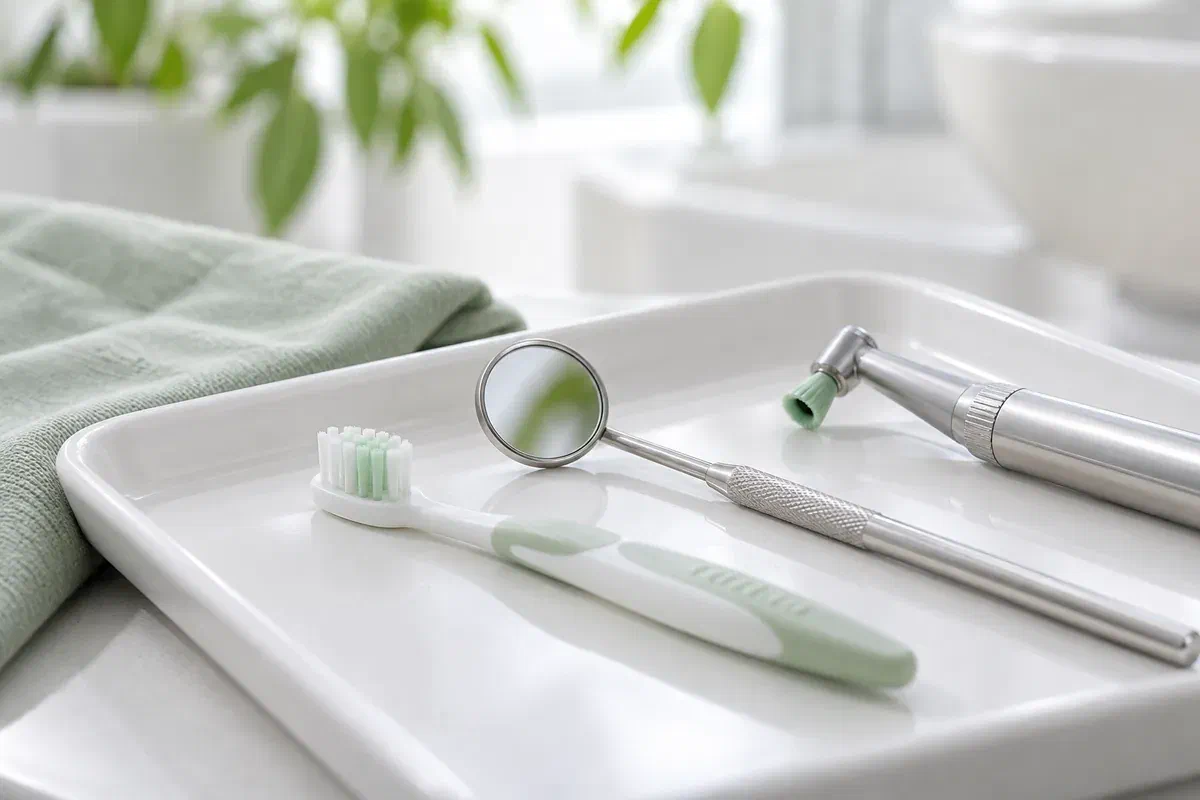
Illustrative child-sized toothbrush, dental mirror, and polishing instrument
Useful to mention

What should we know about your little one?

Your observations help us set the right goals. Describe what you notice, and don’t assume more polishing is the solution to every concern.

Buildup, colour changes or rough patches

Show us where plaque collects or a tooth looks different, and when you first noticed. Surface deposits may lift with cleaning; other changes have different causes. An assessment helps work out which is which, and what kind of care fits.

Sore gums, bleeding or a tender tooth

Tell us if gums bleed, a tooth seems to hurt, or your child pulls away when you brush one spot. Young children may not explain pain well, so describe what you’ve seen. Discomfort shouldn’t just be tolerated; the reason may need checking.

Temperament and communication

Does your child warm up slowly, dislike noise or water, or need things shown rather than told? Let us know what calms them. We’ll plan for explanations and breaks, with the understanding that a first visit may cover less than you hoped.

If your child has new pain, swelling or a recent fall or knock to the mouth, tell us when you call. An assessment may be needed before any cleaning.

Small steps, real value

A gentle beginning that the next visit can build on.

Using methods suited to a young child, the team can remove the plaque, surface stains and hardened deposits they find. Even a partial cleaning helps the examination, and the visit gives you hands-on advice for brushing a small mouth. Whether more is needed depends on findings.

Clean-looking teeth don’t guarantee a healthy mouth. Cleaning won’t treat decay, explain every ache, or stop gums from becoming inflamed again. Ask what was covered, and whether your child needs a separate examination or treatment conversation.

Patient information: AAPD — the role of professional cleaning in pediatric care

Brushing help for a small mouth

Ask how to position your child for brushing at home and how to reach the back teeth. The team can show where you need to do the work for now. A clearer method can make bedtime brushing less of a struggle.

A first memory that’s manageable

A short, well-explained visit gives your child a first impression of the chair and tools. That may make later visits easier, though each child adjusts at their own pace. Tell us what your child says afterward.

Keeping the routine simple

Check that the brush head and handle suit your child’s size and grip. More products rarely help a young child. Often the useful change is a parent brushing for them, or a position that lets you see the teeth properly.

A first cleaning, paced for a young child

Meet, look, clean a little, and practise.

We explain each step simply. Check whether an exam or fluoride is also planned for the visit.

  1. Meet the team and the chair

    We review health information and your concerns, and let your child explore the chair and a tool or two. We agree on a simple stop signal. If your child needs a particular way of communicating, tell us so we can prepare.

  2. Take a first look

    The team looks at deposits, gums and any dental work, often with your child sitting close to you. A dentist may assess something before cleaning. Ask what will be cleaned and whether a mark or sore spot needs more.

  3. Clean what your child is ready for

    Tools are chosen for what’s found and how your child is coping, often starting with a soft brush. We don’t insist on every step. If water, taste or a new feeling is too much, we’ll pause or stop.

  4. Practise and set the next goal

    Ask for a quick demonstration of brushing a young child’s teeth. The team will tell you what got done and what’s still to do, then suggest a realistic aim and timing for the next appointment.

At home after the first visit

Praise the effort and keep brushing gentle.

If a product or treatment was applied, follow the instructions you were given. Advice after fluoride may differ from advice after cleaning alone.

Try one technique from the visit

Choose a single tip, such as tilting your child’s head back on your lap, or brushing along the gums of the back teeth. Keep it calm. If it’s difficult, ask for another demonstration.

Keep doing the brushing for them

Young children need an adult to brush, using only the kind and amount of toothpaste we advised for their age. A good visit doesn’t change that. Ask how to know when your child can start taking part more.

Watch for discomfort

Call if your child seems to be in significant or increasing discomfort, or if it’s not settling as expected. Ongoing bleeding needs an explanation. Don’t scrub harder, and don’t use metal tools on your child’s teeth.

What kind of appointment fits

Getting familiar, getting clean, or getting checked.

Ask what each appointment involves and why it’s recommended. The right choice depends on your child’s age, comfort and needs.

For plaque, buildup and brushing questions

Cleaning and home-care guidance

We clean what we can and give you practical tips for home. With young children, the amount done varies a lot. You’ll hear what was completed and whether another visit is worth booking.

For pain, damage or a mark that worries you

An exam or a closer look at a concern

If a tooth hurts, has chipped, or shows a stain that doesn’t look like plaque, an examination may come first. Tell us about it when you call. The dentist will talk you through any treatment that might be needed.

For higher risk or additional needs

Prevention or extra support

Depending on what the assessment shows, fluoride, sealants or a differently planned appointment may be raised. A few children need more preparation or a referral. You can always ask what a recommendation is meant to achieve.

First-cleaning questions

What parents of little ones often wonder.

Ask about sensations, timing, stains and brushing at home. Your child’s questions are welcome too.

(905) 876-4488
Can my toddler sit on my lap for their first cleaning?
Ask the team. For some very young children, sitting with a parent helps them feel secure. The team will suggest a position that lets them see and clean the teeth safely.
How long does a first children’s cleaning usually take?
It varies with your child’s age, needs and comfort. Some first visits are brief. Ask when booking roughly how much time to set aside, especially if you’re coming from Puslinch and planning around other commitments.
Should I tell my child they’re getting their teeth cleaned or just counted?
Simple, honest words work best. You might say someone will count and clean their teeth and show them some tools. Avoid words like hurt or needle, which can create worry.
Is it normal for a first cleaning to cover only some teeth?
Yes, it can be. Young children may manage only part of a cleaning. We’ll explain what was done and how to approach the rest, and that information helps plan the next visit.
My child cries at bedtime brushing. Will they cry at the clinic too?
Possibly, and that’s okay. Children react differently in new settings. Let us know what happens at home, and we’ll plan for breaks and explanations. Crying doesn’t mean the visit has failed.
What toothpaste amount should I use after the cleaning?
Use the amount and type recommended for your child’s age and needs, and follow any specific advice given if fluoride was applied at the visit.
From Puslinch, booking a first visit

A realistic first step

Get in touch with our Bronte Street practice about your child’s first cleaning and the times that suit your family. Mention any sore areas, earlier experiences and support needs so we can plan a gentle start.

How much is cleaned, and how long the visit takes, depends on what we find and how your child manages. Tell us about pain or swelling when you book.

Visit Milton Dental Clinic
Unit 1, 342 Bronte St. S, Milton, ON L9T 5B7
Get directions Clinic hours
Monday–Thursday
11am–7pm
Friday–Sunday
By appointment only

Areas we serve

  • Milton
  • Oakville
  • Mississauga
  • Georgetown
  • Halton Hills
  • Acton
  • Campbellville
  • Brampton
  • Burlington
  • Puslinch
  • Rockwood
  • Erin
  • Caledon
  • Etobicoke
  • Old Milton
  • Bronte Meadows
  • Timberlea
  • Dorset Park
  • Dempsey
  • Clarke
  • Beaty
  • Coates
  • Harrison
  • Scott
  • Willmott
  • Ford
  • Bowes
  • Cobden
  • Walker
  • Mountain View
  • Milton Heights
  • Hawthorne Village
  • Valley View
  • Fallingbrook
  • Nassagaweya
  • Trafalgar
  • Esquesing
  • Nelson
  • Brookville
  • Moffat
  • Glen Williams
  • Norval
  • Limehouse
  • Stewarttown
  • Ashgrove
  • Hornby
  • Silver Creek
  • Speyside
  • Scotch Block
  • North Oakville
  • River Oaks
  • Glen Abbey
  • West Oak Trails
  • Palermo
  • Bronte Creek
  • College Park
  • Joshua Creek
  • Uptown Core
  • Preserve
  • Iroquois Ridge
  • Lisgar
  • Meadowvale
  • Meadowvale Village
  • Churchill Meadows
  • Erin Mills
  • Central Erin Mills
  • Streetsville
  • East Credit
  • Creditview
  • Heartland
  • Sheridan
  • Mount Pleasant
  • Credit Valley
  • Huttonville
  • Churchville
  • Springbrook
  • Northwest Brampton
  • Bram West
  • Fletcher's Meadow
  • Fletcher's Creek South
  • Alton Village
  • Orchard
  • Millcroft
  • Headon Forest
  • Tansley
  • Brant Hills
  • Tyandaga
  • Kilbride
  • Lowville
  • Aberfoyle
  • Morriston
  • Arkell
  • Hillsburgh
  • Freelton
  • Carlisle
  • Waterdown
  • Flamborough
  • Mountsberg

How can we help?

Milton Dental Clinic

Have a question about your smile? Choose the option that works best for you.

For urgent dental concerns, please call.
Messages are reviewed during clinic hours.