

Illustrative child and parent discussing a tooth model with a dental clinician
Children’s Dentistry

Children’s Tooth-Coloured Fillings

A repair should suit the tooth and the child. Explore children’s tooth-coloured fillings in Milton, with an assessment of the damage, a clear explanation of material choices, and a plan for comfort and continuing care.

A closer look at children’s tooth-coloured fillings

Repair a small tooth with its bigger role in mind.

A child's damaged tooth needs more than a decision about colour. The dentist considers where the damage is, how much healthy structure remains, whether the tooth is primary or permanent, and what will allow a suitable repair. A tooth-coloured filling may be one option when a direct restoration is appropriate.

At Milton Dental Clinic, the conversation includes your child as well as their tooth. Tell us about previous appointments, questions they have asked, and anything that makes dental care difficult. The treatment plan should explain the purpose of the repair, the material proposed, and how the appointment can be approached.

Repairing a cavity does not remove the reasons decay developed. Prevention remains part of care after the filling is placed. We want your family to understand both parts of the plan: restoring the area that needs treatment and supporting habits that help protect the remaining tooth surfaces.

Discuss your child’s damaged tooth
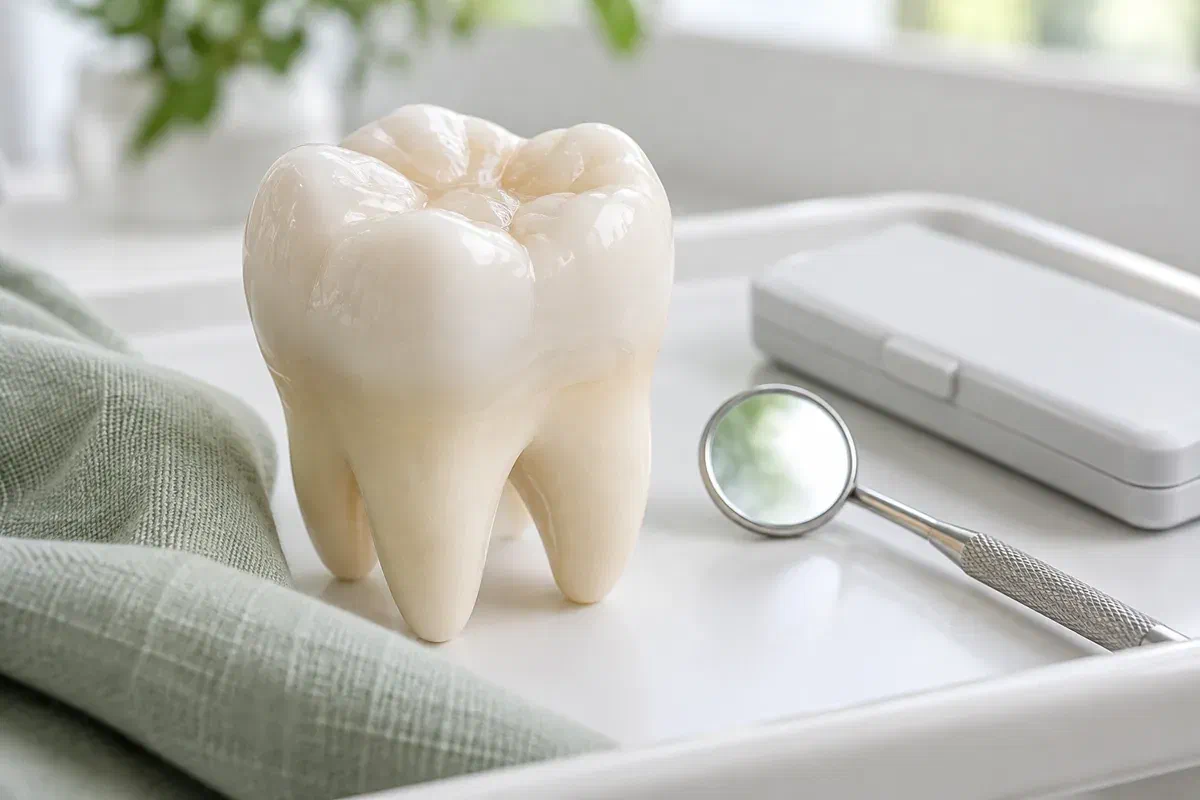
Illustrative opaque molar teaching model with a tooth-coloured repair
Before deciding on a filling

Start with the symptoms, the tooth, and your child’s needs.

A visible hole is only part of the information. Share what has changed and how it affects your child so the assessment can address the right concern.

Food catching or a broken edge

Describe where food gets trapped or where you have noticed a chip. A dentist needs to determine the cause and extent of the damage. Do not assume that a small opening means the area underneath is equally small or suitable for a simple repair.

Pain with eating or at other times

Explain when discomfort happens, how long it lasts, and whether it disrupts sleep. Swelling, spontaneous pain, or a change in eating may affect the treatment discussion. A filling alone may not address a tooth whose pulp has become significantly affected.

Difficulty managing an appointment

Tell us about communication needs, strong responses to taste or touch, and previous experiences with numbing. These details help with planning. The ability to keep the tooth appropriately isolated also matters when selecting a material and deciding how treatment should be provided.

Call promptly about pain, swelling, or a broken tooth. Do not wait for a routine filling visit if symptoms are increasing or your child is becoming unwell.

What a suitable repair can offer

Restore useful shape while considering appearance.

A direct filling replaces an area of damaged tooth and is shaped in the mouth. Depending on the location and material, it can rebuild a chewing surface or another part of the tooth. A tooth-coloured appearance is useful, but the ability to provide an appropriate restoration comes first.

Tooth-coloured materials are not all identical. Composite resin and other restorative materials have different properties and placement requirements. Ask which material is proposed, why it suits this tooth, and what limitations matter for your child. No filling comes with a promise of permanent success.

Patient information: AAPD — pediatric restorative dentistry

A repair chosen for the remaining structure

The dentist considers the size and location of the damaged area before recommending a filling. If too much tooth is weakened, a different restoration may provide more appropriate support. Understanding that distinction helps explain why two similar-looking teeth may receive different recommendations.

A shape that supports everyday function

The restoration is shaped and checked in relation to the surrounding teeth. Let the team know if your child later describes the tooth as meeting first or feeling uncomfortable when biting. A child's description may be simple, but it is still useful information.

A clearer prevention plan after repair

The appointment is an opportunity to review brushing help, fluoride advice, and the frequency of sugary foods or drinks. Those discussions should be practical for your household. Repairing one surface does not protect every other surface from future decay.

How a filling visit is planned

Explain the repair in steps your child can follow.

The details depend on the diagnosis, material, and appointment needs. Ask what your child may notice and how they can request a pause.

  1. Assess and discuss the available approaches

    The dentist examines the tooth and may recommend imaging where clinically indicated. You can discuss whether a filling is appropriate, what alternatives exist, and what could happen without care. Ask whether the tooth is primary or permanent and how that affects the plan.

  2. Prepare for comfort and moisture control

    Local anaesthetic may be used when indicated. The team explains suitable isolation to keep the working area appropriately controlled. Tell them if your child feels discomfort or needs help understanding a sensation; do not assume silence means they are comfortable.

  3. Prepare the tooth and place the material

    The dentist prepares the damaged area using the approach appropriate to the findings. Placement and setting steps depend on the selected material. Some restorations require particularly careful moisture control, which is one reason material choice must reflect the actual treatment conditions.

  4. Check the repair and explain what follows

    The restoration's shape and bite are assessed as appropriate. Confirm what your child may eat, how to manage any numbness, and when to call about symptoms. Ask whether additional teeth need care and when this repair should be reviewed.

Caring for the repaired tooth

Supervise the first hours and keep supporting the daily routine.

Follow the instructions given for the material and any anaesthetic used. Children may need help recognising that a numb lip or cheek can be injured by chewing.

Protect numb lips, cheeks, and tongue

Follow the team's eating advice until normal feeling returns. Watch for biting, sucking, or rubbing the numb area. Contact the clinic if you are unsure how to protect your child or if a soft-tissue injury occurs; numbness is not an invitation to test the tissues.

Listen for changes in the bite or symptoms

Tell the team about a tooth that seems to contact first, pain on chewing, or sensitivity that is significant, persistent, or worsening. Describe when it started and what triggers it. Do not ask your child to keep chewing through pain to settle the filling.

Continue cleaning and recommended reviews

A repaired tooth still needs daily care. Help with brushing and suitable cleaning between teeth as advised, and keep the review plan. Report a loose edge, new food trap, or broken material instead of trying to smooth or glue it yourself.

Patient information: AAPD — local anaesthesia for pediatric dental patients

Choosing the right repair for a child

Appearance is one consideration. The clinical findings guide the choice.

Ask why the proposed approach fits this tooth and whether another option would change the appointment, durability expectations, or follow-up.

When a direct restoration is appropriate

A suitable tooth-coloured filling

Composite or another tooth-coloured material may be considered according to the damage and placement conditions. The dentist can explain the trade-offs, including moisture control and the amount of remaining structure. A preference for a white repair cannot determine suitability on its own.

When the tooth needs more support or a different level of care

A crown or pulp-related treatment

A large area of damage or affected pulp may require more than a filling. Depending on diagnosis and prognosis, a crown, pulp treatment, or another approach may be discussed. Ask what each step is intended to achieve and whether referral is appropriate.

When immediate filling placement is not the selected plan

Prevention, monitoring, or another management approach

Not every early decay finding requires drilling and filling. Some lesions may be managed with prevention and monitoring, or another clinically appropriate approach. This requires a specific assessment and follow-up plan rather than simply leaving an unexplained cavity untreated.

Questions about fillings for children

Understand the material, the baby tooth, and the next visit.

Bring your child's questions too. A clear explanation can help your family understand why a repair has been recommended.

(905) 876-4488
Are all white fillings for children made from composite resin?
No. Several restorative materials can have a tooth-coloured appearance, and their properties differ. Ask the dentist to name the proposed material and explain why it suits the tooth, the extent of damage, and the conditions under which the repair can be placed.
Why discuss repairing a baby tooth if it will eventually fall out?
Primary teeth may still be needed for chewing and maintaining their role in the developing mouth. Timing, symptoms, remaining structure, and the expected course of the tooth matter. The dentist should explain whether repair, another treatment, or monitoring is appropriate for that particular tooth.
Can I choose a white filling solely because it is less noticeable?
You can share that preference, but appearance is one part of the decision. The size and position of the cavity, moisture control, and your child’s needs affect suitability. Ask about the benefits and limitations of the available options before agreeing on the plan.
Does placing my child’s filling mean the decay problem has been cured?
The repair addresses a damaged area; it does not remove the factors that allowed decay to develop. Continued brushing help, appropriate fluoride, dietary guidance, and review remain important. Ask which changes are most relevant to your child rather than assuming the filling ends the need for prevention.
What should I do if my child keeps biting their numb cheek after a filling?
Interrupt the biting gently and follow the clinician’s supervision and eating instructions until feeling returns. Children may not appreciate how easily numb tissue can be injured. Call for advice if an injury develops or you are unsure how to manage the situation.
Can a tooth-coloured filling be checked even if my child has no pain?
Yes. Planned reviews allow the dentist to assess the restoration and surrounding tooth, along with other oral health needs. A repair can need attention before it becomes painful. Keep the recommended follow-up schedule and report a new rough edge or food trap.
Children’s tooth-coloured fillings in Milton

Let’s understand the tooth before choosing its repair.

Arrange an assessment at our Bronte Street practice to discuss your child's damaged tooth. Share symptoms, previous treatment experiences, and any concerns about the appointment so we can discuss a suitable next step.

Material choice and treatment depend on examination. Call promptly about pain or swelling.

Visit Milton Dental Clinic
Unit 1, 342 Bronte St. S, Milton, ON L9T 5B7
Get directions Clinic hours
Monday–Thursday
11am–7pm
Friday–Sunday
By appointment only

How can we help?

Milton Dental Clinic

Have a question about your smile? Choose the option that works best for you.

For urgent dental concerns, please call.
Messages are reviewed during clinic hours.