

Illustrative child and parent discussing a tooth model with a dental clinician
Children’s Dentistry

Children’s Tooth-Coloured Fillings in Georgetown

Composite, glass ionomer, or something else? Parents from Georgetown can learn what tooth-coloured filling materials are, how a dentist picks one for a child’s tooth, and what each choice means for care.

Understanding the materials

Know the material before it goes in.

“White filling” sounds like one product, but several different materials can give a tooth-coloured result. They set in different ways, bond differently and cope differently with moisture and chewing forces. Knowing a little about them makes it easier to follow the dentist’s reasoning when a particular one is recommended.

Choosing a material starts with the tooth. The dentist considers the location and depth of the damage, how much healthy structure surrounds it, whether it belongs to the primary or permanent set, and how reliably saliva can be kept away during placement. If a direct repair is suitable, those findings point toward the material most likely to work well.

Many parents from Georgetown come with questions they have read about online. Bring them. Tell us, too, about your child’s past visits and anything that makes care harder. Whatever goes into the tooth, prevention at home is what helps protect the surfaces that are still healthy.

Ask which filling material suits your child
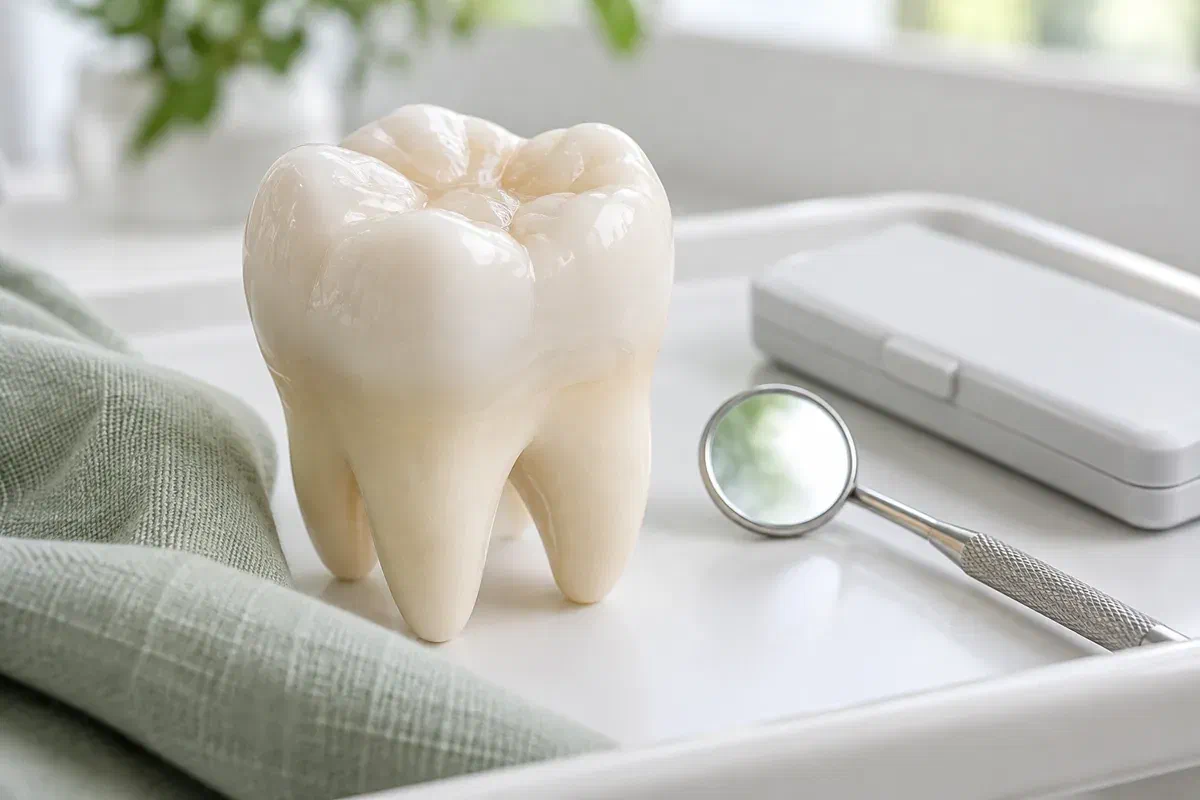
Illustrative opaque molar teaching model with a tooth-coloured repair
Information the dentist needs

What you notice helps narrow the choice.

Material decisions rely on the exam, but your description of symptoms and your child’s needs fills in the picture. Share what has changed and when.

Visible damage or a catching edge

Point out a chip, a dark spot or a place where food or floss catches. The dentist will examine it to judge cause and depth. Surface appearance can be misleading, and decay may extend further than the opening suggests.

When discomfort shows up

Explain whether cold, sweets or chewing trigger pain, how long it lasts and whether sleep is disrupted. Spontaneous pain, a tooth that throbs at night, or swelling of the gum can indicate the pulp is affected. In that case, the question shifts from which filling material to which treatment.

Factors that affect placement

Mention gagging, difficulty keeping the mouth open, sensitivity to tastes or textures, and past reactions to numbing. Some materials need a very dry field for longer, so your child’s comfort and cooperation help guide the choice.

Worsening pain, swelling or a fractured tooth should be assessed before any routine filling visit. Call us promptly; if your child becomes unwell, contact a doctor as well.

How the materials compare

Each option brings its own strengths.

All direct fillings replace lost tooth and are shaped during the appointment. Composite resin is bonded to the tooth and hardened with a curing light, and it can be polished to blend in. Glass ionomer materials bond chemically and release some fluoride, though they are generally less wear-resistant. Hybrid types sit between the two.

No material is best in every situation. The dentist weighs strength, wear, moisture tolerance and the expected lifespan of the tooth. Ask which one is proposed, why it suits your child, and what limitations come with it. Any filling may eventually need repair or replacement.

Patient information: AAPD — pediatric restorative dentistry

Chosen for the tooth’s condition

When a cavity is small to moderate and the walls are sound, a filling can work well. If decay has weakened a large part of the tooth, a crown or another restoration may be advised instead, regardless of which filling material is preferred.

Shaped for chewing comfort

Whatever the material, the filling is contoured and the bite is checked. If your child reports that the tooth feels high or sore when chewing, tell us. Small adjustments can make a difference.

Prevention that complements the material

Fluoride-releasing materials do not replace good habits. Use the visit to discuss brushing help, fluoride toothpaste and how often your child has sweet foods or drinks. The rest of the mouth still depends on daily care.

Placement, step by step

How a white filling is built.

Details differ with the material and the tooth. Set up a signal your child can use to ask for a short break at any point.

  1. Diagnose and agree on a material

    The dentist completes an exam and may advise X-rays where clinically indicated. Discuss whether a filling is suitable, which material is proposed and why, what alternatives exist, and what might happen without treatment. Confirm whether the tooth is primary.

  2. Comfort and a dry field

    Local anaesthetic may be given when indicated, with a simple explanation for your child. The tooth is isolated to control saliva. Mention any signs your child is unsettled, as children often say nothing even when uncomfortable.

  3. Prepare, condition and fill

    Decay is removed with a method suited to the findings. Depending on the material, the tooth surface may be conditioned or bonded, then the filling is placed in one or more layers and set by light or by chemical reaction.

  4. Finish, polish and review the plan

    The shape and bite are checked and the surface is smoothed. Ask about eating, numbness and warning signs. Find out whether other teeth need care, when the filling will be reviewed, and whether the chosen material has any specific aftercare.

Afterwards

Different materials, much the same aftercare.

Follow any material-specific advice and the instructions for anaesthetic. Many children need reminding that a frozen cheek or lip can be hurt without them feeling it.

Protect the numb area

Wait to eat as advised until feeling returns. Watch for nibbling, sucking or rubbing at the lip, cheek or tongue, and redirect gently. Phone us if you are unsure how to manage it or if a sore appears.

Check in about the bite

Let us know about a tooth that seems to hit first, pain on chewing, or sensitivity that is marked, lasting or increasing. Jot down the day it began and whether cold, sweets or biting set it off. Don’t encourage your child to bite through the discomfort.

Brush, clean and come back

Brush the filled tooth and clean between teeth as usual with your help as advised, and attend reviews. Some materials wear faster than others, so mention roughness, a new food trap or a broken piece instead of trying to fix it.

Patient information: AAPD — local anaesthesia for pediatric dental patients

Repair choices

Material choice sits inside a bigger decision.

Ask how each approach affects the visit, expected durability and the follow-up needed, and how the material choice fits into it.

If the tooth suits a filling

Tooth-coloured direct filling

Depending on the cavity, how long the tooth is expected to remain and how well moisture can be managed, the dentist may suggest composite, glass ionomer or a hybrid. Expect an explanation of the trade-offs, such as wear resistance against moisture tolerance. A preference for one material is worth sharing, but it can’t decide suitability alone.

When more structural support or deeper care is required

Crown or pulp treatment

Extensive decay or pulp involvement can require more than a filling, whichever material is preferred. Depending on the diagnosis and outlook for the tooth, the dentist may talk about covering it with a crown or treating the pulp first. Ask what each step would achieve, how many visits it involves, and whether referral to a pediatric specialist would be useful.

When immediate filling isn’t recommended

Prevention and close review

Some early decay may be managed with fluoride, diet and cleaning changes, and planned monitoring. This needs a specific assessment and review date so the area is followed, not overlooked.

Material questions

Blue lights, fluoride release and lifespan.

Kids are often curious about the blue light and the materials. We are happy to explain them in terms your child can follow.

(905) 876-4488
What is the blue light used during a white filling?
It is a curing light that hardens composite and some other materials within the tooth. Your child may be given tinted glasses to wear while it is used, and the team can explain it beforehand. Not every tooth-coloured material needs it.
Do some tooth-coloured fillings release fluoride?
Yes. Glass ionomer and some related materials release small amounts of fluoride. This can be useful in certain situations, but it does not replace fluoride toothpaste, brushing or reviews.
Why might glass ionomer be chosen over composite?
It can be more tolerant of moisture and bonds chemically, which may help in some children’s teeth or situations. It is usually less wear-resistant. The dentist will explain why one material suits the tooth better.
Could my child react to a filling material?
Reactions are uncommon. Tell the team about any known allergies or sensitivities before treatment, including reactions to latex, medications or dental products in the past. Report any unusual symptoms afterwards, such as a rash or irritation around the mouth, so they can be assessed.
How long does a white filling usually last in a child’s tooth?
It varies with the material, the size of the filling, the bite and home care. Some last many years; others need attention sooner. On a baby tooth, the goal is usually for the repair to serve until the tooth is naturally lost. Regular reviews help catch wear or new decay at the edges before it becomes a bigger problem.
Can I ask for a specific material for my child?
You can share your preference, including anything you have read or heard from other parents in Georgetown, and ask about it. The final recommendation depends on what is suitable for the tooth and the conditions during placement. The dentist should explain the pros and cons of each option.
Georgetown kids’ tooth-coloured fillings

Ask about the material. We’ll explain the reasoning.

Arrange an exam at our Bronte Street practice to discuss your child’s tooth and the filling options that may suit it. Share symptoms, previous experiences and your questions about materials, and we’ll plan a suitable next step.

Material choice depends on examination. Call promptly if pain or swelling develops.

Visit Milton Dental Clinic
Unit 1, 342 Bronte St. S, Milton, ON L9T 5B7
Get directions Clinic hours
Monday–Thursday
11am–7pm
Friday–Sunday
By appointment only

Areas we serve

  • Milton
  • Oakville
  • Mississauga
  • Georgetown
  • Halton Hills
  • Acton
  • Campbellville
  • Brampton
  • Burlington
  • Puslinch
  • Rockwood
  • Erin
  • Caledon
  • Etobicoke
  • Old Milton
  • Bronte Meadows
  • Timberlea
  • Dorset Park
  • Dempsey
  • Clarke
  • Beaty
  • Coates
  • Harrison
  • Scott
  • Willmott
  • Ford
  • Bowes
  • Cobden
  • Walker
  • Mountain View
  • Milton Heights
  • Hawthorne Village
  • Valley View
  • Fallingbrook
  • Nassagaweya
  • Trafalgar
  • Esquesing
  • Nelson
  • Brookville
  • Moffat
  • Glen Williams
  • Norval
  • Limehouse
  • Stewarttown
  • Ashgrove
  • Hornby
  • Silver Creek
  • Speyside
  • Scotch Block
  • North Oakville
  • River Oaks
  • Glen Abbey
  • West Oak Trails
  • Palermo
  • Bronte Creek
  • College Park
  • Joshua Creek
  • Uptown Core
  • Preserve
  • Iroquois Ridge
  • Lisgar
  • Meadowvale
  • Meadowvale Village
  • Churchill Meadows
  • Erin Mills
  • Central Erin Mills
  • Streetsville
  • East Credit
  • Creditview
  • Heartland
  • Sheridan
  • Mount Pleasant
  • Credit Valley
  • Huttonville
  • Churchville
  • Springbrook
  • Northwest Brampton
  • Bram West
  • Fletcher's Meadow
  • Fletcher's Creek South
  • Alton Village
  • Orchard
  • Millcroft
  • Headon Forest
  • Tansley
  • Brant Hills
  • Tyandaga
  • Kilbride
  • Lowville
  • Aberfoyle
  • Morriston
  • Arkell
  • Hillsburgh
  • Freelton
  • Carlisle
  • Waterdown
  • Flamborough
  • Mountsberg

How can we help?

Milton Dental Clinic

Have a question about your smile? Choose the option that works best for you.

For urgent dental concerns, please call.
Messages are reviewed during clinic hours.