

Illustrative child and parent discussing a tooth model with a dental clinician
Children’s Dentistry

Children’s Tooth-Coloured Fillings in Halton Hills

Floss that shreds in the same gap every night can be the first hint of a cavity between back teeth. From Halton Hills, learn how hidden decay is found, when a white filling suits it, and how prevention follows.

Between the back teeth

The trouble often starts where no one can see.

Cavities do not always appear on the surface you can look at in the bathroom mirror. Many children’s cavities start where two molars touch, out of sight and out of reach of a toothbrush. A recurring food trap, floss that frays in one spot or a complaint about chewing on one side may be the only early clue.

Finding the extent of decay between teeth usually needs an exam and, where indicated, X-rays. Once the dentist understands how deep it goes, how much healthy tooth remains, and whether it is in a baby molar or a permanent one, a plan can be suggested. A tooth-coloured filling may suit when a direct repair is appropriate and the tooth can be isolated.

Households across Halton Hills, from Georgetown and Acton to Glen Williams, often fit visits around school, sports and work. Let us know what is practical, and tell us how your child handles dental care. A repair is only part of the answer; cleaning between those teeth matters too.

Ask about decay between your child’s teeth
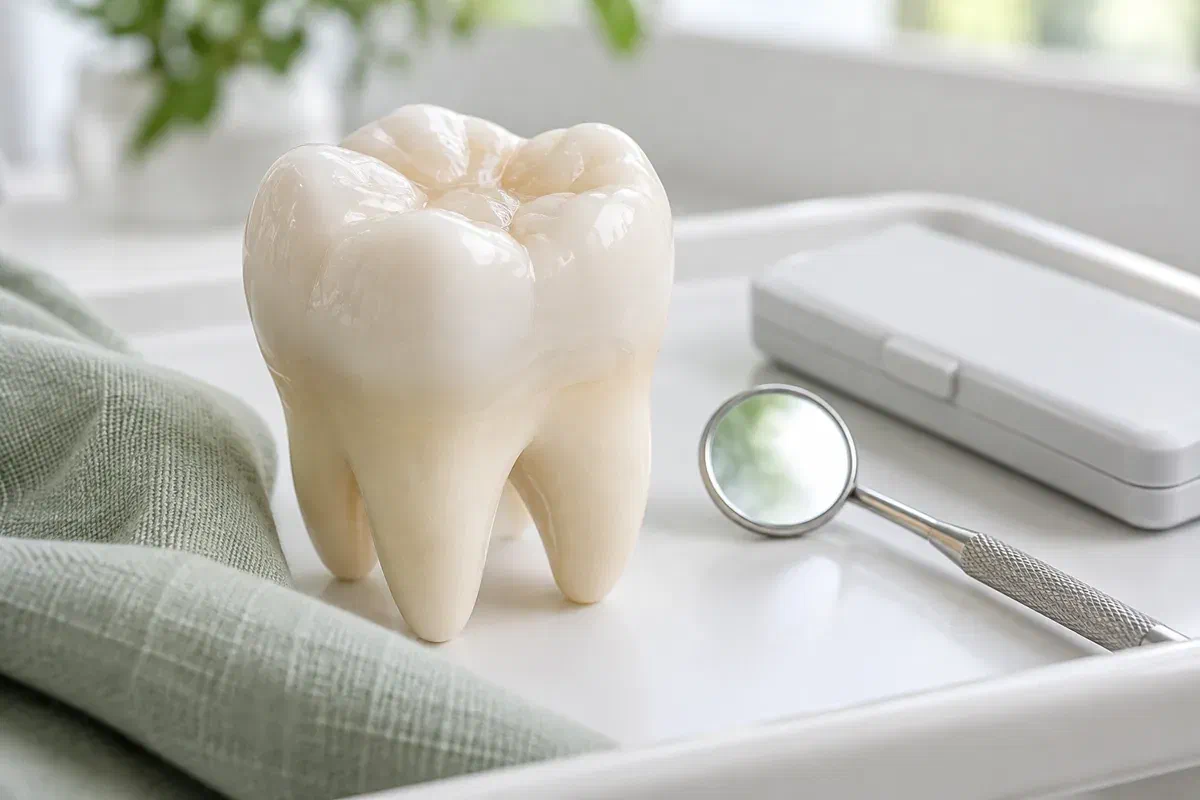
Illustrative opaque molar teaching model with a tooth-coloured repair
Small signs, worth mentioning

Pay attention to the gap that keeps catching food.

Children rarely announce a cavity. Note what you see at brushing time or meals, and describe it at the appointment.

A food trap or frayed floss

If floss catches, shreds or comes out smelling unpleasant in one place, mention which teeth. Food that wedges in after every meal is also worth noting. The dentist must see how far any damage reaches, since a small opening can hide a larger cavity.

Discomfort when chewing on one side

Watch for a child who switches sides, eats slowly or complains with sweets or cold. Note how long it lasts and whether it affects sleep. Constant pain, swelling or pain that starts on its own may mean the nerve is involved and a filling alone may not be enough.

Things that make care harder

Share sensitivities to taste, sound or touch, communication needs, and how previous numbing went. These details help plan the appointment. Cavities between teeth need careful isolation, so they also affect which material is practical.

Don’t wait for a booked filling if pain is getting worse, the face or gum is swelling, or a tooth has broken. Phone the clinic without delay, and have a doctor see a child who seems unwell.

What repairing it achieves

Close the gap so food stops packing in.

For a cavity between teeth, a direct filling rebuilds the side wall and the contact with the neighbouring tooth. That can stop food from wedging in and make cleaning easier. The material is shaped in the mouth, and its natural colour is an advantage, though suitability comes before looks.

Tooth-coloured materials have different characters. Composite resin and glass ionomer types vary in strength, bonding and how much moisture they tolerate, which matters a great deal between back teeth. Ask what is being proposed and why. Fillings can wear, chip or develop new decay at the edges, and none is guaranteed to last.

Patient information: AAPD — pediatric restorative dentistry

Matched to the remaining structure

A cavity between teeth can undermine the side of a tooth. If too little support remains, a crown or another restoration may be more suitable. That is why the dentist may recommend different repairs for two cavities that look similar on an X-ray.

A contact that feels normal

The dentist shapes the filling so floss can pass through but food does not get stuck. The bite is also checked. If your child mentions the area still traps food or feels sore when chewing, let us know.

A better between-teeth routine

The visit is a chance to learn how to floss or clean between your child’s back teeth, and to discuss fluoride and snacking frequency. Advice should be workable for your family. Fixing one side of one tooth does not protect any other contact.

What happens in the chair

Find it, isolate it, rebuild the contact.

Steps depend on the diagnosis, the material and your child’s needs. Agree on a signal your child can use to ask for a short pause.

  1. Confirm the cavity and talk options

    An exam and, where clinically indicated, bitewing X-rays show the size of decay between teeth. Ask whether a filling is the right choice, what other options exist and what could happen without care. Check whether it is a primary molar or a permanent molar.

  2. Numbing, isolation and a matrix band

    Local anaesthetic may be used when indicated, with an explanation your child can follow. The tooth is isolated, and a thin band is often placed to help shape the side of the filling. Tell the clinician straight away when your child looks uncomfortable.

  3. Remove decay and place the material

    The affected structure is prepared according to the findings, then the material is placed and set as it requires. Moisture control between back teeth can be difficult, which is one reason the treatment conditions affect the material chosen.

  4. Check the contact and bite

    The dentist checks that floss passes, the shape is smooth and the bite is even. Ask about eating, numbness and when to call. Find out whether other contacts need care and when this filling will be reviewed.

After the appointment

Mind the numb cheek, then floss as shown.

Follow the instructions for the material and anaesthetic used. Children often don’t realise how easily a numb cheek, lip or tongue can be bitten.

Keep teeth off numb tissue

Hold off on eating as advised until feeling returns, and redirect any chewing, sucking or rubbing at the numb area. Call us for advice if a sore develops or you are unsure how to manage it.

Notice the bite and the gap

Report a tooth that seems to touch first, pain when chewing, or sensitivity that is strong, ongoing or getting worse. Also mention if food still packs into the treated gap. Please don’t ask your child to chew on it until it “settles.”

Clean between the teeth daily

Help your child floss or clean between teeth as shown, along with regular brushing, and keep review appointments. If floss catches on a rough edge or a piece seems to have broken, call us rather than trying to fix it.

Patient information: AAPD — local anaesthesia for pediatric dental patients

Ways forward

Filling, fuller coverage, or careful watching.

Ask how each approach affects appointments, expected lifespan and follow-up, and how it fits around your family’s week.

When the cavity suits direct repair

White filling between teeth

A composite or comparable material may be suggested if the cavity size and isolation allow. The dentist can explain how well each material handles the forces and moisture between back teeth. A preference for white is welcome, but it cannot decide suitability alone.

When the tooth needs more support

A crown or pulp therapy

Decay that has weakened much of the tooth or reached the pulp may call for a crown, pulp treatment or another option. Ask what each would achieve and whether a pediatric specialist referral should be considered.

When an early lesion may not need drilling

Prevention and monitoring

Some early changes between teeth can be managed with fluoride, better cleaning and follow-up X-rays. That needs a defined assessment, a review date and specific home steps, rather than leaving a cavity unexplained.

Hidden cavity questions

Why decay between teeth is easy to miss.

Your child can ask questions too. Showing them the X-ray or a model often helps them understand what is being fixed.

(905) 876-4488
Why do cavities form between back teeth so often?
Where molars touch, food and plaque collect in a space a toothbrush cannot reach. Without regular cleaning between teeth, decay can start there unnoticed. Baby molars often sit tightly together, which can make the area harder to keep clean.
Does my child need X-rays to find a cavity between teeth?
Often, yes. Decay between teeth is frequently invisible during a visual exam. The dentist will recommend X-rays only when they are clinically useful, considering your child’s age, risk and history.
Will a filling between teeth make flossing harder?
It shouldn’t. The filling is shaped so floss can pass while food is less likely to catch. If floss shreds or catches on the filling, let us know, as it may need checking.
How do I floss a young child’s back teeth?
Have your child lie back or sit facing away from you, and use floss or a flossing tool to gently clean each contact. The team can show you techniques at the visit, so you can practise them back home in Halton Hills. Ask what suits your child’s age and dexterity.
Can a cavity on one tooth spread to the tooth next to it?
Decay does not jump across, but the conditions that caused it affect both surfaces. The neighbouring tooth may also show early changes. The dentist checks both sides of the contact and will tell you if either needs care.
Does a white filling mean my child no longer needs fluoride?
No. Fluoride helps protect the other surfaces, including the edges of the filling. Ask what toothpaste amount and any in-clinic fluoride the dentist recommends for your child’s age and risk.
Halton Hills kids’ fillings

A careful look at the spaces between.

Schedule a visit with our Bronte Street team to check the teeth that keep catching food. Let us know about symptoms, earlier experiences with dental care and anything your child finds difficult, so we can plan the next step.

Material and treatment depend on examination. Please call promptly about pain or swelling.

Visit Milton Dental Clinic
Unit 1, 342 Bronte St. S, Milton, ON L9T 5B7
Get directions Clinic hours
Monday–Thursday
11am–7pm
Friday–Sunday
By appointment only

Areas we serve

  • Milton
  • Oakville
  • Mississauga
  • Georgetown
  • Halton Hills
  • Acton
  • Campbellville
  • Brampton
  • Burlington
  • Puslinch
  • Rockwood
  • Erin
  • Caledon
  • Etobicoke
  • Old Milton
  • Bronte Meadows
  • Timberlea
  • Dorset Park
  • Dempsey
  • Clarke
  • Beaty
  • Coates
  • Harrison
  • Scott
  • Willmott
  • Ford
  • Bowes
  • Cobden
  • Walker
  • Mountain View
  • Milton Heights
  • Hawthorne Village
  • Valley View
  • Fallingbrook
  • Nassagaweya
  • Trafalgar
  • Esquesing
  • Nelson
  • Brookville
  • Moffat
  • Glen Williams
  • Norval
  • Limehouse
  • Stewarttown
  • Ashgrove
  • Hornby
  • Silver Creek
  • Speyside
  • Scotch Block
  • North Oakville
  • River Oaks
  • Glen Abbey
  • West Oak Trails
  • Palermo
  • Bronte Creek
  • College Park
  • Joshua Creek
  • Uptown Core
  • Preserve
  • Iroquois Ridge
  • Lisgar
  • Meadowvale
  • Meadowvale Village
  • Churchill Meadows
  • Erin Mills
  • Central Erin Mills
  • Streetsville
  • East Credit
  • Creditview
  • Heartland
  • Sheridan
  • Mount Pleasant
  • Credit Valley
  • Huttonville
  • Churchville
  • Springbrook
  • Northwest Brampton
  • Bram West
  • Fletcher's Meadow
  • Fletcher's Creek South
  • Alton Village
  • Orchard
  • Millcroft
  • Headon Forest
  • Tansley
  • Brant Hills
  • Tyandaga
  • Kilbride
  • Lowville
  • Aberfoyle
  • Morriston
  • Arkell
  • Hillsburgh
  • Freelton
  • Carlisle
  • Waterdown
  • Flamborough
  • Mountsberg

How can we help?

Milton Dental Clinic

Have a question about your smile? Choose the option that works best for you.

For urgent dental concerns, please call.
Messages are reviewed during clinic hours.