

Illustrative child and parent discussing a tooth model with a dental clinician
Children’s Dentistry

Children’s Tooth-Coloured Fillings in Oakville

Fill it, watch it, or treat it another way? For parents coming from Oakville, we explain how a dentist decides whether a child’s tooth suits a tooth-coloured filling and what each choice would mean.

A decision, not a reflex

One small molar, three possible plans.

“It’s a baby tooth, so does it even need fixing?” is one of the most common questions parents ask. Sometimes the answer is yes, sometimes another approach fits better, and occasionally careful monitoring is the right call. What matters is that the choice comes from looking closely at this specific tooth rather than a general rule.

The dentist weighs where the decay is, how deep it has travelled, how much sound structure is left, and how long the tooth is expected to stay before an adult tooth replaces it. If a direct repair suits it, a tooth-coloured filling may be offered. The ability to keep the area dry during placement also shapes which material can work.

Families travelling from Oakville often like to settle the plan in as few visits as is sensible, so bring your questions to the first appointment. Include your child’s worries and past experiences, too. Whatever repair is chosen, it works best alongside changes at home that protect the surfaces that are still healthy.

Ask whether your child’s tooth needs a filling
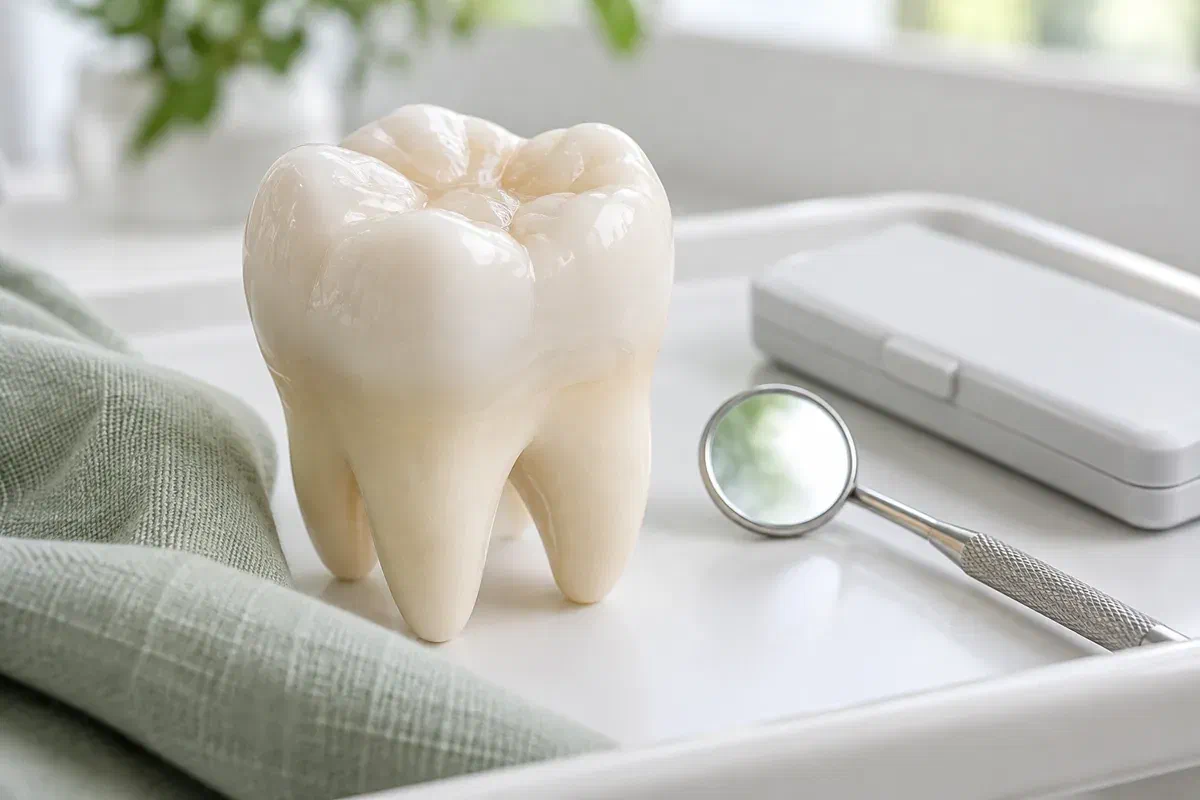
Illustrative opaque molar teaching model with a tooth-coloured repair
Clues that shape the decision

How serious is it? Start with what you have seen.

Your observations help the dentist judge urgency and depth. Mention anything new, even if it seems minor, and how it is affecting your child’s day.

Something visible or something catching

A brown line, a chalky patch, a broken edge, or floss that snags all deserve a mention. An exam, and sometimes an X-ray, shows how much tooth is involved. A narrow opening at the surface can hide decay that has spread further beneath it.

Discomfort and its pattern

Tell us whether it hurts with sweets, cold or biting, or whether it starts on its own. Note how long it lingers and whether sleep is affected. Spontaneous pain or swelling can signal that the pulp is involved, which may mean a filling is not the right treatment.

What makes appointments hard

Share anything about attention, anxiety, sensory reactions or how numbing went before. These details help the team plan length and pacing. They also affect whether the tooth can be kept well isolated, which bears on the choice of material.

Pain that is building, swelling, or a tooth that has just broken should be seen sooner than a routine slot. Call us promptly, and get medical help if your child becomes unwell.

When filling is the answer

Rebuild the tooth so it can keep working.

Once the decay is cleared, a direct filling restores the missing part of the tooth and is shaped in place. That can bring back a smooth chewing surface or seal a side that was letting food in. The natural look is welcome, though the dentist’s first goal is a repair that suits the tooth.

Tooth-coloured materials vary. Composite resin, glass ionomer and hybrid options each have their own strengths, setting methods and sensitivity to moisture. It is reasonable to ask what is planned, why it fits, and what its weaknesses are. A filling can last for years, but nothing guarantees it will never need attention.

Patient information: AAPD — pediatric restorative dentistry

Sized to the damage, not the hope

A filling is recommended when the remaining tooth can support it. If decay has hollowed out a large part of the tooth, a crown or another option may protect it better. That is why a cavity that looks small to you may still lead to a broader recommendation.

Bite and contact checked

The dentist shapes the filling to meet the teeth around and opposite it. If your child later mentions that something feels high, rough or sore when chewing, let us know. Even a simple “it feels funny” is worth passing on.

A clearer picture of prevention

A cavity is a signal worth acting on. Use the visit to talk about brushing support, fluoride and how often your child snacks or sips sweet drinks. Advice should fit real routines, because a repair on one surface protects nothing else.

If you go ahead

From first look to final bite check.

Each step depends on the diagnosis, the material and your child. Before you begin, agree on how your child can ask the dentist to stop for a moment.

  1. Diagnose and weigh the options

    The tooth is examined, and X-rays may be suggested when they would help. This is your chance to ask whether a filling is suitable, what alternatives exist and what the risks of waiting are. Confirm whether the tooth is primary or permanent, since that changes the plan.

  2. Freezing and a dry working area

    When appropriate, local anaesthetic is used and explained to your child in simple terms. The tooth is isolated to keep saliva out. If your child looks tense or unsure, tell the team; children do not always say when something bothers them.

  3. Treat the decay and place the material

    The affected area is prepared in the way the findings call for. The material is then placed and set using its specific technique. Some options need especially dry conditions, so what can realistically be achieved in the chair affects the final choice.

  4. Check the result and plan follow-up

    The dentist checks the shape and the bite. Ask about eating, numbness and which symptoms should prompt a call. Find out whether other teeth need work, and if so, how those visits could be grouped, and when this filling will be reviewed.

After the filling

Mind the freezing. Keep the habits.

Follow the instructions for the material placed and any anaesthetic used. Children often do not realise that a numb lip or cheek can be chewed and injured.

Protect soft tissue while it is numb

Hold off on food as advised until feeling comes back. Gently stop any biting, sucking or rubbing of the lip, cheek or tongue. Call us if you are not sure how to keep your child safe or if a sore spot develops.

Pay attention to the bite

Should the tooth seem to touch first, hurt when chewing, or become very sensitive, or should the sensitivity last or increase, let us know. Note when it started and what triggers it. Don’t ask your child to keep biting on it in the hope it settles.

Return to normal cleaning

Brush and clean around the filled tooth as usual, with your help as advised, and keep review visits. If you notice a lifted edge, a new place where food catches, or a broken piece, call rather than trying to fix it.

Patient information: AAPD — local anaesthesia for pediatric dental patients

Comparing the routes

Which path fits this tooth?

For each option, ask how it changes the number of appointments, what durability to expect and what follow-up is involved.

If the tooth suits a direct repair

Direct white filling

Composite resin or another tooth-coloured material may be chosen according to the damage and whether the area can be kept dry. The dentist will explain trade-offs such as moisture sensitivity and remaining structure. Preferring white does not, by itself, make it suitable.

When more support or deeper care is needed

Crown or pulp therapy

Large decay or pulp involvement can require more than a filling. After diagnosis, a crown, pulp therapy or another approach may be suggested. Ask what each one would achieve and whether a pediatric specialist referral is worth considering.

If immediate filling is not recommended

Monitor with prevention

Early enamel changes can sometimes be managed without drilling, using fluoride, diet changes and planned rechecks. This only works with a specific assessment and a clear review date, rather than leaving a cavity unexplained.

Deciding together

Questions about fill-or-wait decisions.

Your child is welcome to ask the dentist directly. Hearing the reasons in plain language helps families feel settled about the plan.

(905) 876-4488
How does the dentist decide between filling now and watching a spot?
The decision rests on how deep the change appears, whether the surface has broken, your child’s overall cavity risk and how reliably the area can be rechecked. Monitoring is a plan with defined steps and dates, not a way of putting off a decision.
What can happen if a cavity in a baby tooth is left untreated?
Decay can continue to spread, and in some cases lead to pain, infection or a tooth that cannot be saved. Not every lesion progresses quickly, which is why the dentist looks at each tooth individually and explains the reasoning behind any recommendation.
Can a filled baby tooth get another cavity?
Yes. Decay can form at the edges of a filling or on other surfaces of the same tooth. Good brushing, fluoride and limiting frequent sugar help, and regular reviews let the dentist spot changes early.
Does it matter which baby tooth has the cavity?
It does. Front teeth and back molars are replaced at different ages, and molars often stay longer. The tooth’s position, timing and role in chewing all feed into whether a repair, another treatment or monitoring makes sense.
Is a white filling strong enough for a back tooth?
Many back teeth are repaired with tooth-coloured materials, but suitability depends on the cavity size, how the teeth bite together and how well saliva can be held back. Ask the dentist how the proposed material is expected to hold up in that position.
Can several teeth be treated in one visit from Oakville?
Sometimes. It depends on your child’s comfort, the treatment needed and what is safe in one sitting. Let the team know you are coming from Oakville, and ask whether visits can be planned to keep trips to a sensible number.
Oakville children’s fillings

Get a clear answer about the tooth first.

Book an assessment at our Bronte Street practice to discuss your child’s cavity and the options that suit it. Share any symptoms, earlier treatment experiences and concerns about the visit so we can recommend a sensible next step.

Treatment and material depend on the exam. Phone promptly if your child has pain or swelling.

Visit Milton Dental Clinic
Unit 1, 342 Bronte St. S, Milton, ON L9T 5B7
Get directions Clinic hours
Monday–Thursday
11am–7pm
Friday–Sunday
By appointment only

Areas we serve

  • Milton
  • Oakville
  • Mississauga
  • Georgetown
  • Halton Hills
  • Acton
  • Campbellville
  • Brampton
  • Burlington
  • Puslinch
  • Rockwood
  • Erin
  • Caledon
  • Etobicoke
  • Old Milton
  • Bronte Meadows
  • Timberlea
  • Dorset Park
  • Dempsey
  • Clarke
  • Beaty
  • Coates
  • Harrison
  • Scott
  • Willmott
  • Ford
  • Bowes
  • Cobden
  • Walker
  • Mountain View
  • Milton Heights
  • Hawthorne Village
  • Valley View
  • Fallingbrook
  • Nassagaweya
  • Trafalgar
  • Esquesing
  • Nelson
  • Brookville
  • Moffat
  • Glen Williams
  • Norval
  • Limehouse
  • Stewarttown
  • Ashgrove
  • Hornby
  • Silver Creek
  • Speyside
  • Scotch Block
  • North Oakville
  • River Oaks
  • Glen Abbey
  • West Oak Trails
  • Palermo
  • Bronte Creek
  • College Park
  • Joshua Creek
  • Uptown Core
  • Preserve
  • Iroquois Ridge
  • Lisgar
  • Meadowvale
  • Meadowvale Village
  • Churchill Meadows
  • Erin Mills
  • Central Erin Mills
  • Streetsville
  • East Credit
  • Creditview
  • Heartland
  • Sheridan
  • Mount Pleasant
  • Credit Valley
  • Huttonville
  • Churchville
  • Springbrook
  • Northwest Brampton
  • Bram West
  • Fletcher's Meadow
  • Fletcher's Creek South
  • Alton Village
  • Orchard
  • Millcroft
  • Headon Forest
  • Tansley
  • Brant Hills
  • Tyandaga
  • Kilbride
  • Lowville
  • Aberfoyle
  • Morriston
  • Arkell
  • Hillsburgh
  • Freelton
  • Carlisle
  • Waterdown
  • Flamborough
  • Mountsberg

How can we help?

Milton Dental Clinic

Have a question about your smile? Choose the option that works best for you.

For urgent dental concerns, please call.
Messages are reviewed during clinic hours.