

Illustrative child and parent discussing a tooth model with a dental clinician
Children’s Dentistry

Children’s Tooth-Coloured Fillings in Old Milton

Parents and grandparents often remember silver fillings and wonder what their child will get today. Close to Old Milton, we talk through tooth-coloured options, the reasons behind a material, and how the visit can go.

Then and now

Not the fillings you had as a kid?

Plenty of adults in Milton’s historic downtown still have the grey fillings they received decades ago. So when a child needs a repair, a common first question is simply what will go in the tooth this time. The honest answer is that it depends on the tooth, and tooth-coloured materials are now one of several choices a dentist can consider.

Colour is the part people notice, yet the dentist starts elsewhere: the location of the damage, how much healthy structure surrounds it, whether it is a primary or permanent tooth, and whether the area can be kept dry while the material goes in. Those factors decide whether a white filling is a sensible fit or whether something else would serve better.

Grandparents, aunts and older siblings often help with appointments in Old Milton households, so share who will be coming and what your child has heard about fillings from them. A repair is only one half of the plan. The other half is the daily care that protects the rest of the mouth.

Talk about your child’s repair options
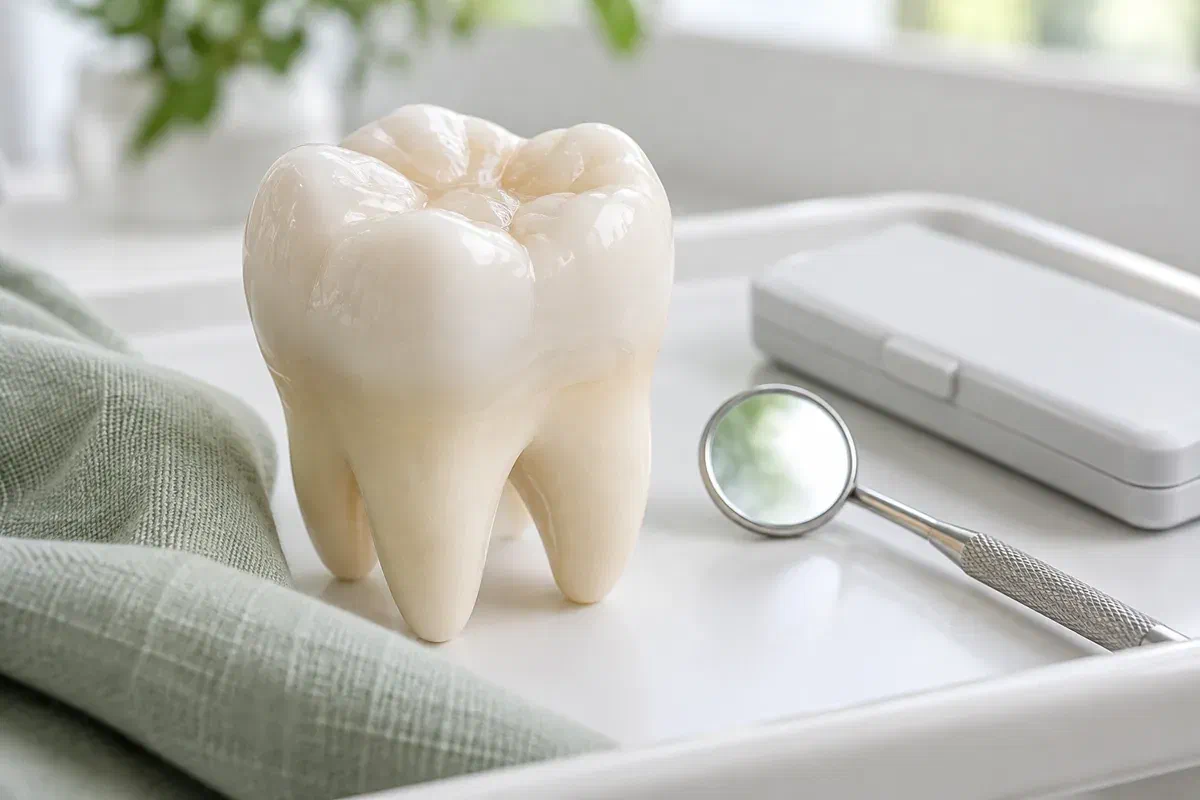
Illustrative opaque molar teaching model with a tooth-coloured repair
Signs worth describing

What made you think something was wrong?

Even a vague observation helps. Tell us what prompted the visit and how your child has been affected, so the exam can focus on the right question.

A chipped corner or a sticky spot

Maybe floss shreds in one place, or a corner looks rough after a fall. Mention it. A dentist must find out what caused the change and how far it goes. A tiny visible hole can sit over a larger area of softened tooth underneath.

Wincing at certain foods or times

Describe the pattern: cold, sweet, chewing, bedtime. Note how long the discomfort lasts and whether it interrupts sleep. Pain that starts without a trigger, swelling, or refusing food on one side may point to deeper involvement, which a filling alone might not resolve.

Worries carried from earlier visits

Let us know if your child gags easily, dislikes certain textures, or found numbing difficult before. Planning around those reactions matters. Keeping the tooth properly isolated also affects which material can be used and how the appointment is arranged.

Don’t hold off for a routine filling slot if your child has growing pain, swelling or a broken tooth. Phone us promptly, and seek medical help if they are becoming unwell.

What has improved

Repairs that can look natural, chosen for function first.

A direct filling is placed and shaped right in the mouth to replace tooth lost to decay or damage. It can rebuild a biting surface or the side of a tooth. A tooth-coloured result is appealing, especially on a visible tooth, but suitability comes before appearance.

There is no single white material. Composite resin is widely used, while glass ionomer and related materials have different strengths and handling needs. Ask which one is being suggested and why it suits your child’s tooth. Silver amalgam may also still come up in some situations. Every filling has limits, and none is guaranteed to last forever.

Patient information: AAPD — pediatric restorative dentistry

A choice that respects the remaining tooth

The size and position of the damage guide the recommendation. When a cavity has undermined too much of the tooth, a stronger form of coverage may be wiser. This explains why a sibling’s tooth and your child’s tooth might be handled differently.

Shaped so chewing feels normal

The dentist contours the filling and checks how it meets neighbouring and opposing teeth. If your child later says the tooth feels “bumpy” or sore when biting, pass that along. A child’s simple description is often enough to spot something worth adjusting.

A reset for everyday habits

This visit is a good time to revisit brushing help, fluoride and how often sweet treats appear, including the ones offered by visiting relatives. Advice should suit your household. A single repaired surface leaves every other surface still depending on prevention.

Step by step

A visit your child can picture beforehand.

Details shift with the diagnosis and material. Practise a hand-raise signal at home so your child knows how to ask for a pause.

  1. Examine and lay out the options

    The dentist looks at the tooth and may recommend X-rays where clinically indicated. Ask whether a filling is appropriate, what the alternatives are, and what could happen if nothing is done. Find out whether this is a baby tooth or an adult tooth and why that matters.

  2. Settle in and isolate the tooth

    Local anaesthetic may be offered when it is indicated, and the team describes it in a child-friendly way. The tooth is then kept dry with suitable isolation. Speak up if your child seems uncomfortable or confused, because staying still does not always mean feeling fine.

  3. Clean out the damage and fill

    The dentist removes the affected structure using a technique that fits what was found. The selected material is placed and set in the way it requires. Some white materials need very dry conditions, so what is happening in the mouth on the day can influence the choice.

  4. Confirm the fit and talk about tomorrow

    The finished shape and bite are checked. Ask what your child can eat and when, how to handle numbness, what symptoms warrant a call, whether other teeth need work, and when the dentist would like to see this filling again.

Home again

A careful afternoon, then ordinary brushing.

Follow the guidance for the material used and any freezing. Many children need reminders that a numb cheek or lip can be hurt without them feeling it.

Guard the frozen side

Wait to eat as the team advises. Watch for chewing, sucking or rubbing on a numb lip, cheek or tongue, and redirect gently. If a sore appears or you are unsure how to protect your child, call us for advice.

Ask how the bite feels

Report it if one tooth seems to land first, chewing hurts, or sensitivity is strong, stays, or grows. Mention when it began and what triggers it. Please don’t suggest your child chew through the soreness to break the filling in.

Keep the routine going

A filled tooth needs the same brushing and cleaning between teeth as the rest. Help as advised and keep follow-up appointments. If an edge lifts or a piece breaks off, contact us instead of smoothing or patching it at home.

Patient information: AAPD — local anaesthesia for pediatric dental patients

Matching repair to tooth

The tooth decides. Preferences still count.

Ask how each route compares for appointment length, expected durability and the follow-up it needs.

For damage suited to a direct repair

White filling material

Composite or another tooth-coloured material may be considered based on the extent of decay and whether the area can stay dry. The dentist can walk you through the trade-offs. A wish for a white filling is welcome, but it cannot settle the question by itself.

For a tooth needing more protection or deeper treatment

A crown or pulp care

A wide cavity or an affected nerve may need more than a filling. Depending on diagnosis, a crown, pulp treatment or another option might be discussed. Ask what each one is meant to accomplish and whether seeing a specialist would help.

For early changes that may not need drilling yet

Prevention and watchful review

Some early decay can be managed with fluoride, home changes and close monitoring. That route still needs a proper assessment and a set date to look again, so a cavity is never simply ignored.

Questions from parents and grandparents

Old habits, new materials, and the baby-tooth question.

Children often have their own questions after hearing family stories. We are happy to answer theirs as well as yours.

(905) 876-4488
Are silver fillings still used for children?
Amalgam remains an option in some situations, though tooth-coloured materials are frequently chosen today. The dentist can explain which materials are suitable for this particular tooth and why, so you can weigh the options together.
Will the white filling match my child’s tooth exactly?
The dentist chooses a shade intended to blend in, but an exact match is not guaranteed. Some materials are more translucent or opaque than natural enamel. Appearance can also change slightly over time with staining or wear.
Can a grandparent bring my child to the filling appointment?
Ask the clinic in advance about consent and who can accompany your child. It helps if the adult attending knows your child’s medical history and the plan that was discussed, and can supervise them closely afterward while numbness wears off.
If baby teeth fall out anyway, why not just wait?
Some baby molars remain for years and help with chewing and keeping space for the adult teeth. Waiting can be appropriate for certain teeth, but that should be a deliberate plan. The dentist will explain the timing, symptoms and remaining structure behind the advice.
Could a sealant have prevented this cavity?
Sealants can help protect suitable grooves on back teeth, but they do not cover the surfaces between teeth and they are not a guarantee. Ask whether sealants make sense for your child’s other molars as part of the prevention plan.
My child had a filling elsewhere. Can you look at it?
Yes. Bring any records you have. During an exam the dentist can check the existing filling and the tooth around it, and let you know whether it looks sound or needs attention, even if your child has no symptoms.
Old Milton children’s fillings

Start with a look at the tooth itself.

Arrange a visit at our Bronte Street practice, close to Old Milton, to discuss the tooth that needs repair. Tell us about symptoms, previous dental care and anything your child is nervous about, and we will talk through a suitable plan.

Material and treatment are decided after an exam. Phone promptly about pain or swelling.

Visit Milton Dental Clinic
Unit 1, 342 Bronte St. S, Milton, ON L9T 5B7
Get directions Clinic hours
Monday–Thursday
11am–7pm
Friday–Sunday
By appointment only

Areas we serve

  • Milton
  • Oakville
  • Mississauga
  • Georgetown
  • Halton Hills
  • Acton
  • Campbellville
  • Brampton
  • Burlington
  • Puslinch
  • Rockwood
  • Erin
  • Caledon
  • Etobicoke
  • Old Milton
  • Bronte Meadows
  • Timberlea
  • Dorset Park
  • Dempsey
  • Clarke
  • Beaty
  • Coates
  • Harrison
  • Scott
  • Willmott
  • Ford
  • Bowes
  • Cobden
  • Walker
  • Mountain View
  • Milton Heights
  • Hawthorne Village
  • Valley View
  • Fallingbrook
  • Nassagaweya
  • Trafalgar
  • Esquesing
  • Nelson
  • Brookville
  • Moffat
  • Glen Williams
  • Norval
  • Limehouse
  • Stewarttown
  • Ashgrove
  • Hornby
  • Silver Creek
  • Speyside
  • Scotch Block
  • North Oakville
  • River Oaks
  • Glen Abbey
  • West Oak Trails
  • Palermo
  • Bronte Creek
  • College Park
  • Joshua Creek
  • Uptown Core
  • Preserve
  • Iroquois Ridge
  • Lisgar
  • Meadowvale
  • Meadowvale Village
  • Churchill Meadows
  • Erin Mills
  • Central Erin Mills
  • Streetsville
  • East Credit
  • Creditview
  • Heartland
  • Sheridan
  • Mount Pleasant
  • Credit Valley
  • Huttonville
  • Churchville
  • Springbrook
  • Northwest Brampton
  • Bram West
  • Fletcher's Meadow
  • Fletcher's Creek South
  • Alton Village
  • Orchard
  • Millcroft
  • Headon Forest
  • Tansley
  • Brant Hills
  • Tyandaga
  • Kilbride
  • Lowville
  • Aberfoyle
  • Morriston
  • Arkell
  • Hillsburgh
  • Freelton
  • Carlisle
  • Waterdown
  • Flamborough
  • Mountsberg

How can we help?

Milton Dental Clinic

Have a question about your smile? Choose the option that works best for you.

For urgent dental concerns, please call.
Messages are reviewed during clinic hours.