

Illustrative child and parent learning about tooth alignment with a dental model
Children’s Dentistry

Early Orthodontic Assessment

Growing smiles change quickly. An early orthodontic assessment in Milton looks at tooth eruption, spacing, and the way the bite meets, helping your family understand whether monitoring, further records, or a specialist opinion is the next step.

A closer look at early orthodontic assessment

Understand the developing bite before deciding what comes next.

The years when baby and permanent teeth share the mouth can raise plenty of questions. A new tooth may appear behind another, a space may look unusually wide, or the front teeth may meet differently than expected. An assessment helps put those observations in the context of your child's development.

At Milton Dental Clinic, an early review can consider the teeth that have erupted, the available space, and how the upper and lower teeth meet. The aim is to explain what is present and what information is still needed. A recommendation may involve monitoring or referral rather than immediate treatment.

An assessment is not a promise that early braces are necessary or that future treatment can be avoided. Some concerns are useful to identify during growth; others are better reviewed as more teeth develop. Your family should understand why a particular timing is suggested and what the next visit is intended to clarify.

Discuss your child’s developing bite
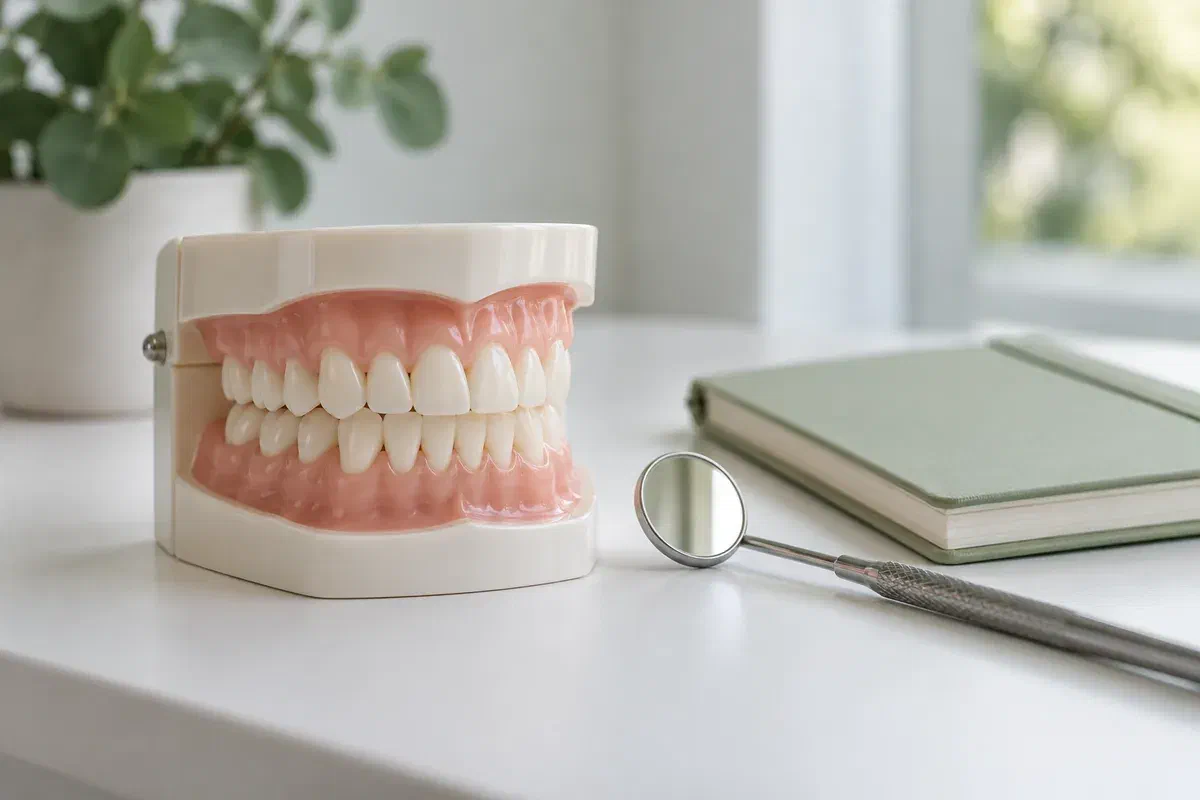
Illustrative upper and lower dental teaching model beside a mirror and notebook
Changes worth mentioning

Describe what you see and how your child uses their teeth.

You do not need to identify an orthodontic problem yourself. The history, examination, and any clinically indicated records help distinguish a finding to monitor from one that needs more investigation.

Crowding, spacing, or an unusual eruption pattern

Tell the dentist if a permanent tooth seems to be arriving in an unexpected position or if one side is developing differently. The appearance alone does not determine the answer. Available space, the remaining primary teeth, and the wider eruption pattern all need consideration.

A bite that seems to shift or meet unevenly

Mention teeth that appear to cross over each other or a jaw movement you notice when your child closes. Explain any difficulty biting or chewing. The clinician can assess whether the observation relates to the teeth, the way the jaw moves, or another concern.

Habits, previous injuries, or early tooth loss

Share relevant thumb or finger sucking, dental injuries, and primary teeth lost earlier than expected. These details can influence the assessment and follow-up discussion. Include breathing or sleep concerns too, while recognising that those may also need medical assessment.

An orthodontic review does not replace urgent care for pain, swelling, or a recent injury. Describe those symptoms when booking so the appropriate appointment can be arranged.

Why an early review can be useful

Get a reasoned plan for timing, rather than a deadline based on appearance.

The Canadian Association of Orthodontists recommends an orthodontic specialist assessment by age seven. This is an opportunity to identify developing concerns; it does not mean every seven-year-old needs treatment. Ask how a dental review and a specialist assessment fit together for your child.

Some children benefit from an intervention during growth, while others can be monitored before a later decision. A general dental assessment should be clear about its scope and when specialist input is appropriate. No clinician can promise a particular future treatment course from appearance alone.

Patient information: Canadian Association of Orthodontists — assessment and treatment questions

An explanation of the current stage

Understanding which teeth are primary and which are permanent can make a changing smile less confusing. Ask the dentist to point out the findings that matter and explain what may change naturally. This is more useful than comparing your child's smile with a sibling's.

A defined purpose for monitoring

If observation is recommended, ask what will be checked at the next review. The plan might involve eruption, available space, or the way teeth meet. Monitoring should have a reason and a review interval, rather than leave your family unsure when to return.

Time to consider a specialist recommendation

A referral can provide a fuller discussion of diagnosis, treatment timing, and alternatives. Ask what information will be shared and whether existing records are useful. You should have room to understand the proposal before agreeing to an appliance or treatment programme.

What happens at an early assessment

Look at development, explain the findings, and agree on the next step.

The appointment is a chance to ask questions about growth and tooth position. Tell us about your child's concerns, even when they differ from the changes you noticed.

  1. Review the history and your observations

    Discuss health updates, previous dental treatment, injuries, habits, and the timing of any tooth loss. Explain chewing difficulties and changes in the bite. Bring relevant records if available, and mention any previous orthodontic opinion so the current discussion has useful context.

  2. Examine the teeth and how they meet

    The clinician assesses the developing dentition, spacing, and bite relationships within the scope of the visit. Your child may be asked to open and close or bite together. An explanation of each step can help them understand what the clinician is looking at.

  3. Identify whether further information is needed

    Imaging or other records may be recommended when justified by the findings. They are not automatically required simply because the appointment is called an orthodontic assessment. Ask what question a proposed record will answer and whether a specialist should obtain or review it.

  4. Discuss monitoring, referral, or treatment assessment

    Review the findings and the reason for the proposed timing. If referral is advised, clarify who arranges it and what should happen in the meantime. If monitoring is appropriate, record the review interval and the changes that should prompt an earlier call.

Between assessment and review

Keep the plan clear while your child’s smile continues to change.

An assessment alone does not usually introduce an appliance-care routine. Follow the specific advice provided, and keep everyday dental care going while decisions about development are reviewed.

Keep the agreed review or referral

Make a note of the recommended timing and purpose. If you cannot arrange the next appointment, contact the team rather than assuming the concern has disappeared. A plan to observe a developing tooth still depends on returning to assess its progress.

Support cleaning around newly arriving teeth

New back teeth and crowded areas may be difficult for a child to reach. Ask for brushing guidance and continue age-appropriate adult help. Orthodontic planning does not replace prevention, cavity assessment, or other care needed to maintain a healthy mouth.

Report meaningful changes without trying to correct them

Contact the clinician about a new functional difficulty, unexpected tooth loss, or another change they asked you to watch. Do not use elastic bands or online devices to move a tooth yourself. Tooth movement needs diagnosis, planning, and professional supervision.

Choosing what happens next

Early assessment can lead to several appropriate paths.

Ask what the recommendation aims to achieve now and what may still be needed later. Early action is useful only when there is a reason for that timing.

When more development will clarify the picture

Planned observation during development

The clinician may recommend reviewing eruption and bite changes at a defined interval. Ask what they expect to observe and when you should return sooner. A monitoring plan can be an active clinical decision rather than a missed opportunity.

When a fuller diagnosis or timing discussion is needed

An orthodontic specialist assessment

A specialist can assess the developing concern and discuss treatment approaches within their expertise. Referral does not commit your family to starting braces. It provides an opportunity to consider the diagnosis, alternatives, likely stages, and practical requirements.

When an identified problem merits intervention

Treatment for a selected early concern

Some findings may justify treatment before all permanent teeth arrive. The recommendation should explain its specific goal and limitations. Early treatment does not guarantee that later orthodontics, extractions, or other care will be unnecessary.

Questions about early orthodontic reviews

Know the difference between an assessment and a treatment commitment.

Timing can be confusing when your child still has baby teeth. Ask for an explanation tied to their development and findings.

(905) 876-4488
Does the recommendation for an orthodontic check by seven mean braces should start at seven?
No. The Canadian Association of Orthodontists recommends specialist assessment by that age so developing concerns can be identified. Many children will not need treatment immediately. The outcome may be monitoring, additional information, or a discussion about a selected concern that merits earlier attention.
Can my child have an orthodontic assessment while several baby teeth remain?
Yes. The period with both primary and permanent teeth can provide useful information about eruption and the developing bite. There is no need to assume that every baby tooth must fall out first. Ask whether your child’s findings warrant specialist assessment now.
Is a dental bite review the same as being treated by an orthodontic specialist?
No. A dental clinician can identify concerns and discuss appropriate next steps, while an orthodontic specialist has additional specialist training. Ask who is providing the assessment, what it covers, and whether referral is recommended for diagnosis or treatment planning.
Will early orthodontic treatment guarantee that my child avoids a second phase?
No. A selected early intervention has a particular goal, and later treatment may still be needed as development continues. Ask what the proposed phase can reasonably achieve, what it cannot predict, and how future needs will be reassessed.
Should I wait until age seven if my younger child’s bite seems to shift when closing?
Mention the concern to the dentist rather than waiting for a birthday. Recommendations based on age do not replace assessment of an individual problem. Explain what you observe and any difficulty with chewing so the clinician can discuss appropriate timing.
What should I bring if another clinician has already assessed my child’s alignment?
Bring the clinician’s details and any written advice or records you can access. Tell the team when imaging was taken so existing information can be considered before new records are requested. Also explain what remains unclear and whether any treatment has already started.
Early orthodontic assessment in Milton

Turn questions about a changing smile into a clear next step.

Contact our Bronte Street practice to discuss your child's tooth development and bite. Share what you have noticed and any previous advice so we can plan an assessment and explain when a specialist opinion may be useful.

Assessment does not mean immediate treatment. Recommendations and referral depend on your child's findings.

Visit Milton Dental Clinic
Unit 1, 342 Bronte St. S, Milton, ON L9T 5B7
Get directions Clinic hours
Monday–Thursday
11am–7pm
Friday–Sunday
By appointment only

How can we help?

Milton Dental Clinic

Have a question about your smile? Choose the option that works best for you.

For urgent dental concerns, please call.
Messages are reviewed during clinic hours.