

Illustrative child and parent learning about tooth alignment with a dental model
Children’s Dentistry

Early Orthodontic Assessment in Georgetown

A back baby tooth came out years ahead of schedule, and now you wonder whether the adult tooth underneath will have room. An early orthodontic assessment for children from Georgetown looks at that gap, the neighbouring teeth and the developing bite, then explains the sensible next step.

After a baby tooth leaves too soon

Will the adult tooth still fit?

Baby teeth hold places for the adult teeth beneath them. When one is lost early, because of decay, an injury or an extraction, parents reasonably ask what happens to that space in the years before its successor arrives. The answer depends on which tooth it was, your child’s age and how the neighbours are behaving.

At the review, the dentist looks at the gap, the teeth on either side and the adult teeth already through. We also consider overall space in the arch and the way your child bites. From there, we can explain what is likely to matter and what needs time or further information to judge.

Early tooth loss does not automatically call for treatment, and it is not always harmless either. Some situations are worth addressing during growth, while others are simply watched. Children from Georgetown and elsewhere deserve a clear reason for whichever timing is suggested, and a sense of what the next visit should reveal.

Ask about an early gap
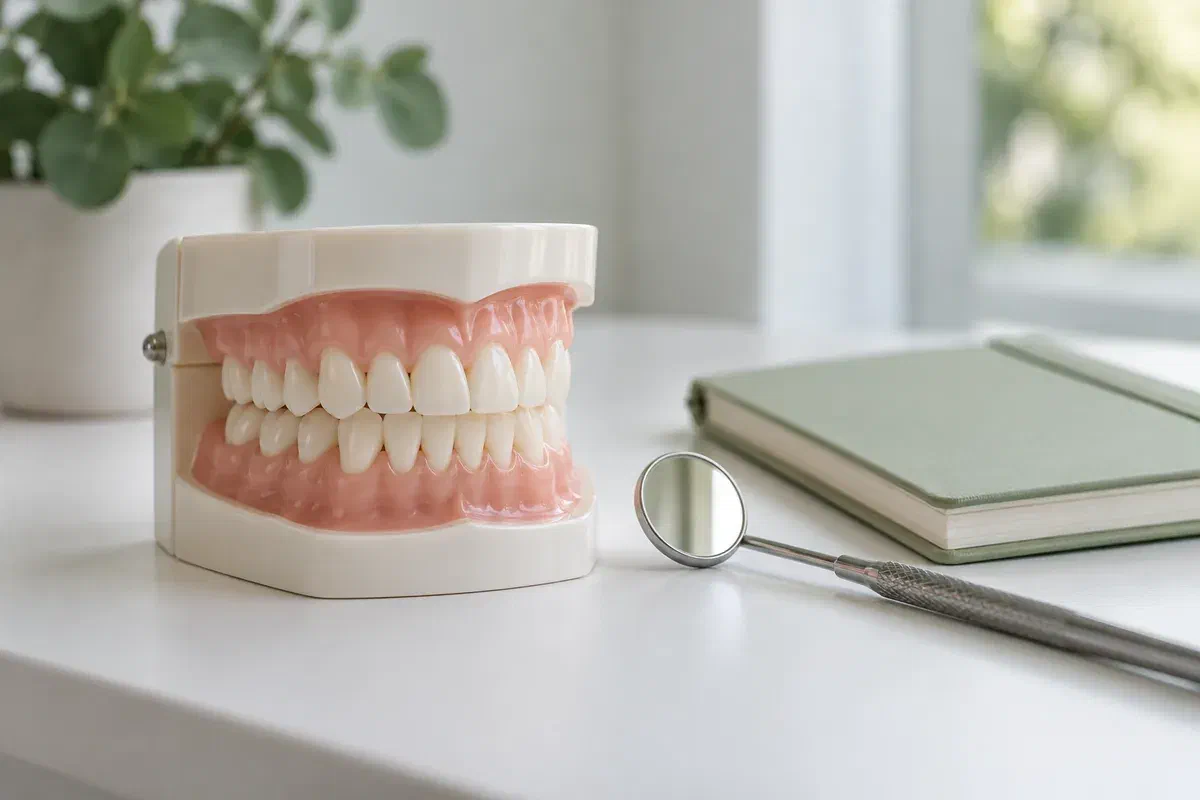
Illustrative upper and lower dental teaching model beside a mirror and notebook
What to tell us

Which tooth, when, and what has changed since

You are not expected to know whether a gap is a problem. What you describe, what we see on examination and, if they are justified, a few records help us separate a feature to keep an eye on from one that needs further investigation.

Gaps, crowding or neighbours drifting

Tell us if the space from a lost baby tooth seems to be narrowing, or if adult teeth nearby are coming in at an angle. Appearance only goes so far. The dentist weighs arch space, the remaining baby teeth and the order teeth are erupting.

A bite that has changed or feels uneven

Mention any shift of the jaw when your child closes, teeth that seem to cross, or a new difficulty chewing on one side. Those details help the clinician decide whether tooth position, jaw movement or something else is involved.

The story behind the lost tooth

Share whether the baby tooth was lost to decay, an accident or an extraction, and roughly when. Thumb or finger habits and other injuries matter too. If sleep or breathing concerns have come up, mention them, though a physician may need to assess those.

A new injury, pain or swelling needs prompt care rather than an orthodontic review. Let us know about those symptoms when you call so we can book the right appointment.

The case for an early look

Timing based on space, growth and your child, not guesswork

The Canadian Association of Orthodontists recommends that children have an orthodontist evaluate their bite by about seven. That check is designed to catch developing concerns, which can include space changes after early tooth loss. It does not mean most children need treatment at that age. Ask how our review fits alongside it.

Some children benefit from an intervention while still growing; many others can be watched and reassessed. A general dental review should be candid about its limits and should say plainly when an orthodontist needs to weigh in. Looking at the teeth alone never lets anyone guarantee a future course of treatment.

Patient information: Canadian Association of Orthodontists — assessment and treatment questions

Knowing what the gap means today

The dentist can sort the baby teeth from the adult ones, describe where the replacement tooth probably sits and say what may change by itself. That is more helpful than estimating from a sibling’s experience.

A purpose for each follow-up

If watching is the plan, ask what will be checked: whether the space is holding, how neighbouring teeth are moving or how the bite is developing. Each review should have a goal and an approximate date.

Room to weigh specialist input

A referral can bring a fuller conversation about the diagnosis, when to act and what the alternatives are. Ask what details will be passed on and whether existing records can be reused. Nothing should be fitted until you are comfortable with the reasoning.

The appointment, step by step

History, examination, records if needed, then a decision

Ask anything you like about how the teeth are growing in. Children sometimes worry quietly about a gap, so give yours the chance to say so.

  1. Start with the tooth that was lost

    We ask how and when it came out, along with general health, earlier dental work, habits and other injuries. Describe any changes since then. If another clinician removed the tooth or gave advice, bring whatever notes or records you have.

  2. Examine the space and the bite

    The dentist checks the gap, neighbouring teeth, overall spacing and how the upper and lower teeth contact, within the scope of this visit. We will invite your child to bite together and open again, explaining each step.

  3. Decide whether imaging would answer a question

    An X-ray may help show where an unerupted adult tooth sits, but only if the findings justify it. Records are not automatic for every orthodontic visit. Ask what a proposed image will clarify and whether a specialist should take it.

  4. Agree on watching, referral or a treatment discussion

    We go through the findings and why a particular timing fits. Should a specialist visit be the next step, check whether we or you will book it, and what to watch for while you wait. Should we be monitoring, write down the interval and the changes that justify coming in early.

While the space is being watched

Small steps that keep the plan working

Most assessments do not add an appliance to look after. Follow any specific advice you receive, and keep everyday brushing and regular checkups going while development is reviewed.

Keep the agreed follow-up

Record the date and purpose of the next review or referral. If you cannot attend, call rather than letting it lapse. Watching a space only works if someone examines it again at the planned time.

Clean carefully around the gap and new teeth

Food can collect near a gap and around molars that are just breaking through. Ask us for brushing tips and continue hands-on help suited to your child’s age. Preventing new cavities matters just as much as watching the space.

Report changes without trying to correct them

Let us know if the gap looks smaller, a neighbouring tooth tilts or chewing becomes difficult. Please do not use elastics or online products to move teeth. Tooth movement needs diagnosis, planning and professional supervision.

Possible recommendations

Watching, a specialist opinion, or early care

Each option answers a different question about the space. Find out what the suggestion is for, and what it leaves for later; early action only earns its place when the timing has a clear purpose.

When development will make the picture clearer

Monitoring the space and eruption

The dentist may suggest rechecking the gap and the bite after a defined interval. Ask what they expect to see and which changes should bring you back sooner. Monitoring is a deliberate clinical choice, not a missed opportunity.

When a fuller diagnosis or timing discussion is needed

An orthodontist’s assessment

An orthodontist can judge how the space and the teeth around it are developing, and talk through the approaches their training covers. Going to that appointment is not agreeing to braces. It is a chance to hear the diagnosis, the alternatives, any likely stages and what they would ask of your family.

When a specific finding justifies intervention

Early treatment for an identified concern

Now and then, the way a space is behaving justifies stepping in while baby teeth remain. Any such proposal should name its goal and be honest about what it will not do. Acting early gives no guarantee that later orthodontics, extractions or other care can be skipped.

Questions about early tooth loss

When a baby tooth goes before its time

These general answers can help you prepare. The details depend on your child’s examination and development.

(905) 876-4488
Does losing a baby tooth early always cause crowding?
Not always. It depends on which tooth was lost, your child’s age and how the neighbouring teeth behave. The dentist can examine the area and explain whether the space needs watching or further assessment.
My child had a baby tooth removed because of decay. Should we have the bite checked?
It is worth mentioning at your next visit. The dentist can look at the space and the developing bite, and also check that the cause of the decay is being managed so other teeth stay healthy.
How will we know when the adult tooth is on its way?
Sometimes you can feel a bump in the gum, but timing varies widely. The dentist can estimate based on your child’s stage of development and, if clinically justified, imaging may help show where the tooth sits.
Does an orthodontic check by age seven mean braces then?
No. Seven is when orthodontists like to take a first look, so that developing issues such as space loss are noticed in time. For most children the result is a plan to review, not an appliance. If earlier care is raised, the reason should be spelled out.
If early treatment is suggested, will my child avoid braces later?
That cannot be promised. A first phase is aimed at one problem, and growth over the following years may still bring new needs. Ask what this stage is expected to accomplish, what it leaves open and when the bite will be looked at again.
Coming from Georgetown, can a space check be paired with a regular cleaning?
Often, yes, when the timing suits. Let the team know when booking so there is enough time for both the routine visit and a careful look at the space being monitored.
Early orthodontic assessment for Georgetown children

A clear plan for an early gap

Get in touch with our Bronte Street practice to describe the lost tooth and anything you have noticed since. We will book a review, explain what the space means at your child’s stage and let you know whether an orthodontist should take a look.

Assessment is not the same as treatment. Any recommendation or referral depends on your child’s findings.

Visit Milton Dental Clinic
Unit 1, 342 Bronte St. S, Milton, ON L9T 5B7
Get directions Clinic hours
Monday–Thursday
11am–7pm
Friday–Sunday
By appointment only

Areas we serve

  • Milton
  • Oakville
  • Mississauga
  • Georgetown
  • Halton Hills
  • Acton
  • Campbellville
  • Brampton
  • Burlington
  • Puslinch
  • Rockwood
  • Erin
  • Caledon
  • Etobicoke
  • Old Milton
  • Bronte Meadows
  • Timberlea
  • Dorset Park
  • Dempsey
  • Clarke
  • Beaty
  • Coates
  • Harrison
  • Scott
  • Willmott
  • Ford
  • Bowes
  • Cobden
  • Walker
  • Mountain View
  • Milton Heights
  • Hawthorne Village
  • Valley View
  • Fallingbrook
  • Nassagaweya
  • Trafalgar
  • Esquesing
  • Nelson
  • Brookville
  • Moffat
  • Glen Williams
  • Norval
  • Limehouse
  • Stewarttown
  • Ashgrove
  • Hornby
  • Silver Creek
  • Speyside
  • Scotch Block
  • North Oakville
  • River Oaks
  • Glen Abbey
  • West Oak Trails
  • Palermo
  • Bronte Creek
  • College Park
  • Joshua Creek
  • Uptown Core
  • Preserve
  • Iroquois Ridge
  • Lisgar
  • Meadowvale
  • Meadowvale Village
  • Churchill Meadows
  • Erin Mills
  • Central Erin Mills
  • Streetsville
  • East Credit
  • Creditview
  • Heartland
  • Sheridan
  • Mount Pleasant
  • Credit Valley
  • Huttonville
  • Churchville
  • Springbrook
  • Northwest Brampton
  • Bram West
  • Fletcher's Meadow
  • Fletcher's Creek South
  • Alton Village
  • Orchard
  • Millcroft
  • Headon Forest
  • Tansley
  • Brant Hills
  • Tyandaga
  • Kilbride
  • Lowville
  • Aberfoyle
  • Morriston
  • Arkell
  • Hillsburgh
  • Freelton
  • Carlisle
  • Waterdown
  • Flamborough
  • Mountsberg

How can we help?

Milton Dental Clinic

Have a question about your smile? Choose the option that works best for you.

For urgent dental concerns, please call.
Messages are reviewed during clinic hours.