

Illustrative child and parent learning about tooth alignment with a dental model
Children’s Dentistry

Early Orthodontic Assessment in Milton

A permanent tooth pushing in behind a baby tooth, a gap that keeps widening, front teeth that close at an odd angle: these are the moments that send parents looking for answers. An early orthodontic assessment here in Milton explains what is happening and what, if anything, should come next.

When a new tooth arrives in an unexpected place

A second row of teeth is a common reason to ask.

Plenty of parents first notice it while helping with bedtime brushing: a lower front tooth coming through behind a baby tooth that has not loosened yet. It can look alarming. Often it is part of a normal changeover, but sometimes it hints at limited space or an eruption pattern worth following.

Our team in Milton looks at which teeth are already in, how much room the arch seems to have, and how your child closes their back and front teeth together. We then describe what we see in plain terms, including the parts that cannot be judged until more adult teeth come in.

Nothing about this visit commits you to braces. Some findings are best caught during growth, and others make more sense once development has moved along. You should leave knowing why a certain timing is being suggested and what the following appointment is meant to answer.

Ask about your child’s new teeth
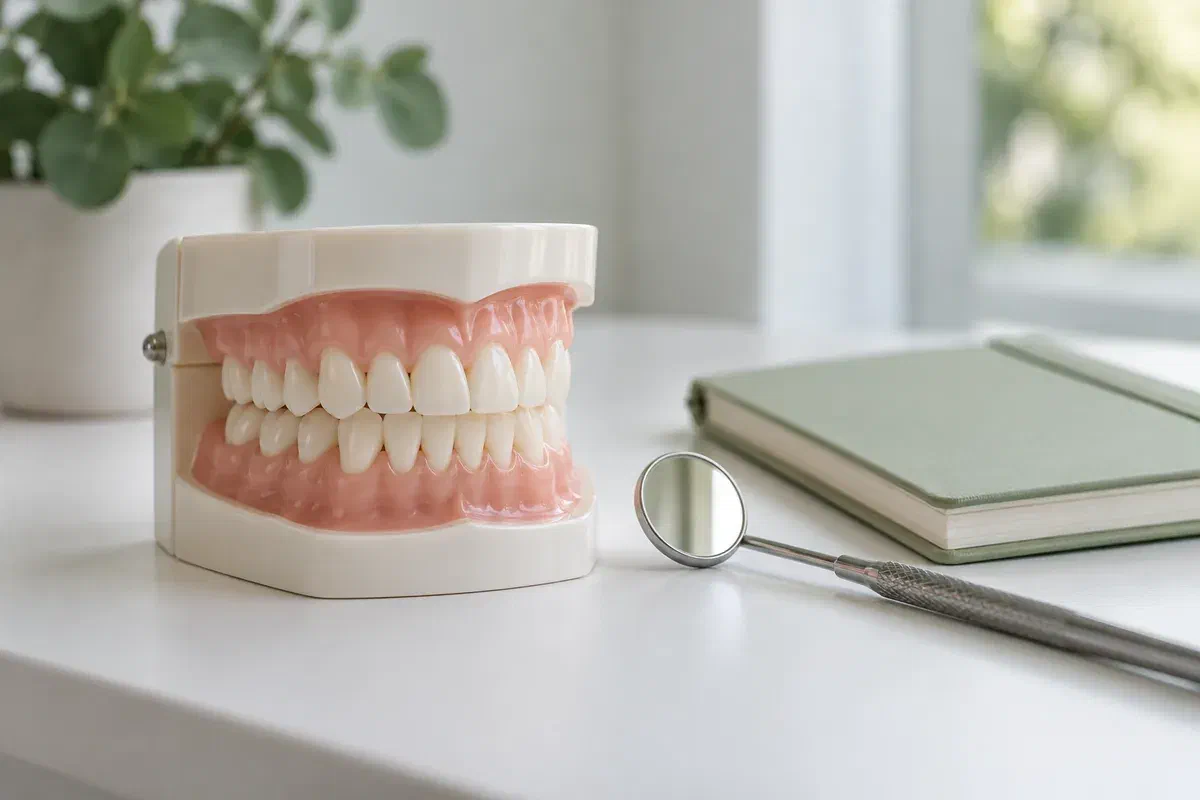
Illustrative upper and lower dental teaching model beside a mirror and notebook
Things parents tend to spot first

Small observations at home are worth bringing in.

Diagnosing an orthodontic issue is our job, not yours. Your notes, a careful examination and any records that are clinically justified help us decide whether a finding simply needs watching or deserves a closer look.

Teeth arriving behind, beside or out of turn

Let us know if an adult tooth seems to be erupting in an odd spot or if one side of the mouth is changing faster than the other. How it looks is only part of the story. We also weigh available room, which baby teeth remain and the overall order of eruption.

Front or back teeth that close oddly

Tell us about upper teeth that sit behind the lower ones, or a sideways slide of the jaw as your child bites down. Mention trouble chewing particular foods. The clinician can then judge whether the cause sits with tooth position, jaw movement or something else entirely.

Thumb habits, knocks and baby teeth lost early

Finger or thumb sucking, past bumps to the mouth and baby teeth that came out ahead of schedule all shape the conversation. Please share them. If you have noticed snoring or other sleep or breathing worries, mention those as well, knowing a physician may need to assess them.

This is not an appointment for toothache, swelling or a fresh injury. If any of those are present, say so when you call and we will arrange the right kind of visit.

What an early look can offer

Timing decisions based on reasons, not on how a smile looks today.

Canada’s orthodontic specialists’ association advises that children see an orthodontist for assessment by around seven. The point is to spot developing issues early. It does not suggest that most seven-year-olds need an appliance. Ask us how a dental review here relates to that specialist check.

For some children, a step taken during growth is helpful; for others, watching and deciding later is the sounder choice. A general dental visit should be honest about what it covers and when a specialist ought to weigh in. Nobody can forecast a child’s full treatment path just by looking.

Patient information: Canadian Association of Orthodontists — assessment and treatment questions

Clarity about which teeth are which

A mix of baby and adult teeth can make any smile look uneven. We can show you which ones are temporary, which findings carry weight and which changes often settle on their own. That tends to be more reassuring than measuring against a cousin or classmate.

Monitoring with a stated purpose

When we suggest watching, we will say what we are watching for, whether that is an erupting tooth, the space around it or how the bite is coming together. You should also know roughly when to come back, so the plan does not drift.

Room to weigh a referral

Seeing a specialist can give you a fuller picture of diagnosis, timing and alternative approaches. Ask which records we would send and whether anything already taken can be reused. Take the time you need to understand a proposal before agreeing to any appliance.

How the appointment runs

History first, then the teeth, then a plan you can follow.

Think of the visit as a conversation about growth and tooth position. If your child has worries of their own, even ones different from yours, encourage them to speak up.

  1. Hear your observations and background

    We go over general health, earlier dental work, any falls or knocks, habits and when baby teeth were lost. Describe chewing troubles or changes you have seen in the bite. If another clinician has offered an orthodontic opinion before, bring what you have so we can build on it.

  2. Check the teeth and how they come together

    The clinician looks at the developing teeth, spacing and the bite, staying within what this visit is designed to cover. Your child may be asked to open wide, close gently or bite on their back teeth. We explain each request so nothing feels like a surprise.

  3. Decide whether more records would help

    X-rays or other records are suggested only when the findings call for them. They are not routine just because the visit has an orthodontic name. Ask what a particular record is meant to clarify and whether a specialist would be better placed to take or interpret it.

  4. Agree on watching, referral or a treatment discussion

    We walk through what we found and why a certain timing makes sense. If a referral is recommended, we confirm who books it and what to do in the meantime. If watching is the plan, we note when to return and which changes should prompt a call sooner.

In the months that follow

Hold on to the plan while the teeth keep moving.

An assessment on its own does not usually come with appliance instructions. Follow whatever specific advice you were given and keep up regular brushing and checkups while development is being watched.

Book the review or referral you agreed on

Write down when the next step is due and what it is for. If the timing no longer works, call us instead of letting it lapse. Watching an erupting tooth only works when someone actually checks on it again.

Help with brushing as new teeth come in

Fresh molars and crowded spots can be tricky for small hands to reach. Ask us for brushing tips and keep giving hands-on help suited to your child’s age. Planning for alignment never replaces cavity prevention or the routine care a healthy mouth needs.

Report changes, but leave correction to us

Call if chewing becomes difficult, a tooth comes out unexpectedly or something we asked you to watch changes. Please avoid rubber bands or devices sold online for moving teeth at home. Shifting a tooth safely takes diagnosis, a plan and professional oversight.

Possible next steps

One assessment, several sensible directions.

Ask what any recommendation is trying to achieve right now and what might still be needed down the road. Acting early only makes sense when there is a clear reason for that timing.

When more growth will make things clearer

Watching as development continues

We may suggest checking eruption and the bite again after a set interval. Ask what we expect to see by then and what should bring you in earlier. Choosing to watch is a deliberate decision, not a chance that slipped by.

When a full diagnosis or timing discussion is warranted

Referral to an orthodontist

An orthodontic specialist can examine the concern in depth and talk through the approaches that fall within their training. Seeing one does not sign your child up for braces. It gives you a chance to hear the diagnosis, the options, likely stages and what each would involve.

When a particular finding justifies acting now

Early treatment for a specific problem

Certain issues may be worth addressing before every adult tooth has come in. Any recommendation should spell out its aim and its limits. Treating early does not promise that later orthodontic work, extractions or further care will be avoided.

Parents often ask

Straight answers about early bite checks.

Mixed baby and adult teeth can make timing hard to judge. These answers cover common questions, but your child’s own findings matter most.

(905) 876-4488
Is it normal for an adult tooth to come in behind a baby tooth?
It happens often, especially with the lower front teeth. Sometimes the baby tooth loosens and the new one settles forward over time. In other cases the baby tooth stays firm or space looks tight. Mention it so the clinician can judge whether watching or a closer look is sensible.
Does an orthodontic check around age seven mean my child will start treatment then?
Usually not. The age-seven guidance from Canadian orthodontists is about spotting developing issues in time. Many children simply need monitoring. A smaller number may have a specific concern where earlier attention is discussed, and the reasons for that should be explained clearly.
My child is nervous about dental visits. What will they actually have to do?
Mostly open, close and bite together while the clinician looks. We explain each step first and go at a pace that suits your child. If they are anxious, tell us when booking so we can allow a little extra time and keep the visit calm.
How often might a child be monitored after an early assessment?
There is no single schedule. The interval depends on what is being watched and how quickly that part of the mouth is changing. Ask the clinician to name the review timing and the reason for it, along with any changes that should bring you back sooner.
Can a gap between the front teeth close by itself?
Spacing is common while adult teeth are coming in, and some gaps narrow as neighbouring teeth erupt. Others persist. The clinician can look at your child’s stage of development and say whether the gap is something to watch or something to discuss further.
We live close by in Milton. Can a monitoring check line up with a regular cleaning?
Often, yes. Being nearby makes it easier to pair a review with a routine checkup when the timing fits. Mention the orthodontic follow-up when you book so the team can allow enough time to look at the specific concern being watched.
Early bite checks for Milton children

Bring your questions about a changing smile.

Call our Bronte Street practice to talk about your child’s tooth development and the way their teeth come together. Tell us what you have noticed and any earlier advice you received, and we will plan an assessment and explain when a specialist view could help.

An assessment is not a commitment to treatment. Any next step or referral depends on what we find.

Visit Milton Dental Clinic
Unit 1, 342 Bronte St. S, Milton, ON L9T 5B7
Get directions Clinic hours
Monday–Thursday
11am–7pm
Friday–Sunday
By appointment only

Areas we serve

  • Milton
  • Oakville
  • Mississauga
  • Georgetown
  • Halton Hills
  • Acton
  • Campbellville
  • Brampton
  • Burlington
  • Puslinch
  • Rockwood
  • Erin
  • Caledon
  • Etobicoke
  • Old Milton
  • Bronte Meadows
  • Timberlea
  • Dorset Park
  • Dempsey
  • Clarke
  • Beaty
  • Coates
  • Harrison
  • Scott
  • Willmott
  • Ford
  • Bowes
  • Cobden
  • Walker
  • Mountain View
  • Milton Heights
  • Hawthorne Village
  • Valley View
  • Fallingbrook
  • Nassagaweya
  • Trafalgar
  • Esquesing
  • Nelson
  • Brookville
  • Moffat
  • Glen Williams
  • Norval
  • Limehouse
  • Stewarttown
  • Ashgrove
  • Hornby
  • Silver Creek
  • Speyside
  • Scotch Block
  • North Oakville
  • River Oaks
  • Glen Abbey
  • West Oak Trails
  • Palermo
  • Bronte Creek
  • College Park
  • Joshua Creek
  • Uptown Core
  • Preserve
  • Iroquois Ridge
  • Lisgar
  • Meadowvale
  • Meadowvale Village
  • Churchill Meadows
  • Erin Mills
  • Central Erin Mills
  • Streetsville
  • East Credit
  • Creditview
  • Heartland
  • Sheridan
  • Mount Pleasant
  • Credit Valley
  • Huttonville
  • Churchville
  • Springbrook
  • Northwest Brampton
  • Bram West
  • Fletcher's Meadow
  • Fletcher's Creek South
  • Alton Village
  • Orchard
  • Millcroft
  • Headon Forest
  • Tansley
  • Brant Hills
  • Tyandaga
  • Kilbride
  • Lowville
  • Aberfoyle
  • Morriston
  • Arkell
  • Hillsburgh
  • Freelton
  • Carlisle
  • Waterdown
  • Flamborough
  • Mountsberg

How can we help?

Milton Dental Clinic

Have a question about your smile? Choose the option that works best for you.

For urgent dental concerns, please call.
Messages are reviewed during clinic hours.