

Illustrative child and parent learning about tooth alignment with a dental model
Children’s Dentistry

Early Orthodontic Assessment in Old Milton

You wore braces as a teenager, and now your child’s teeth look crowded in a familiar way. An early orthodontic assessment for children in Old Milton looks at their own eruption, spacing and bite, so the next step is based on what is actually there.

Family resemblance, individual bite

Their smile may look like yours. Their plan should be their own.

Many parents in Old Milton remember their own teenage orthodontics, or a grandparent mentions that crooked teeth run in the family. That history is worth sharing. Still, a child’s jaw size, tooth sizes and eruption order are their own, and family stories cannot tell you what their mouth needs.

During an early review, the dentist notes which adult teeth have arrived, how much space is left for the rest and how the upper teeth close over the lower ones. You get an explanation of what is present now and what remains uncertain. Monitoring or referral is often the outcome, rather than an appliance.

Treatment now is not assumed, and neither is a future without orthodontics. A few concerns are easier to manage when spotted during growth, while many are clearer later. Ask why a particular timing is being suggested and what the next visit should help you understand.

Talk to us about your child’s bite
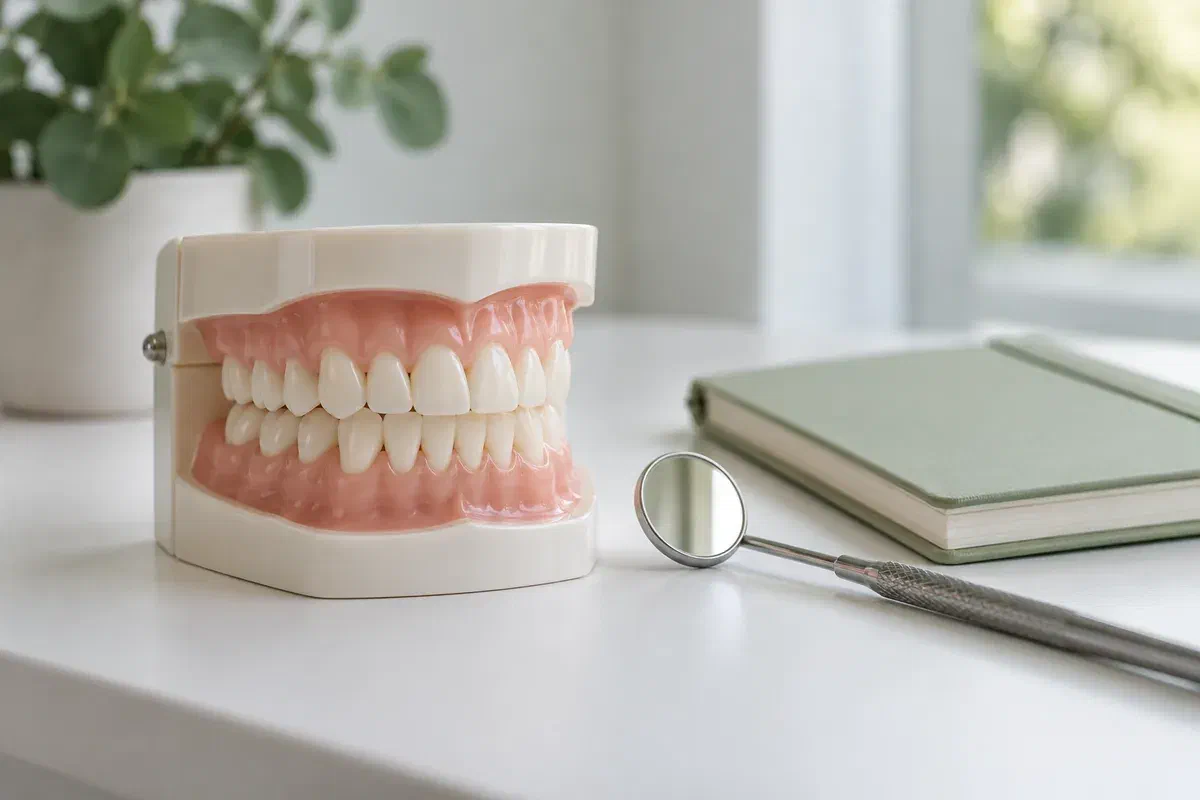
Illustrative upper and lower dental teaching model beside a mirror and notebook
What to mention at the visit

Bring the family history, then tell us what you see today.

There is no need to label anything as an orthodontic problem. Background, examination and only those records that the findings justify help separate a feature to keep an eye on from one that warrants further investigation.

Tight space, wide gaps or teeth erupting out of line

Point out an adult tooth that seems to be coming through at an angle, or one side of the arch that looks different from the other. Appearance is only a starting point. Room in the jaw, the baby teeth still present and the order teeth are arriving all factor in.

A bite that slides, crosses or does not quite meet

Describe any teeth that sit on the wrong side of their opposite numbers, or a shift of the lower jaw when your child closes. Note foods they avoid or struggle to bite. The dentist can then consider whether teeth, jaw movement or something else explains it.

Habits, bumps and baby teeth that left early

Tell us about thumb or finger sucking, any dental injuries and baby teeth lost well ahead of the usual time. These details shape what we look for. Mention breathing or sleep concerns too, bearing in mind that a physician may need to assess those.

Toothache, swelling or a recent knock to the mouth need a different kind of appointment. Let us know about those when you call, and we will book accordingly.

The value of looking early

A timing decision with reasons attached.

The national body representing Canadian orthodontists suggests a specialist assessment by the time a child turns seven. That recommendation is about noticing developing issues, not about fitting appliances on every seven-year-old. Ask how a dental review fits alongside a visit with an orthodontist.

Some children do well with a measure taken during growth; others are better watched and reassessed. A general dental assessment should be clear about its limits and about when specialist input makes sense. No clinician can map out a child’s future treatment from appearance alone.

Patient information: Canadian Association of Orthodontists — assessment and treatment questions

Knowing where development stands

It helps to learn which teeth are baby teeth and which are adult. The dentist can show you the findings that actually matter and those likely to change by themselves. That is more useful than comparing with an older sibling or with your own childhood photos.

A reason behind every follow-up

If the advice is to watch and wait, ask what will be checked next time, such as eruption, spacing or the bite. Each review should have a purpose and an approximate date, so you are not left wondering when to come back.

Space to think about a referral

A specialist visit can offer a fuller conversation about diagnosis, timing and alternatives. Ask what will be passed along and whether existing records can be used. You should be able to understand a proposal properly before saying yes to an appliance or treatment.

Inside the assessment

Four steps from first questions to a clear decision

Bring your questions about growth and tooth position. If your child has their own worries, even ones that differ from yours, we want to hear those as well.

  1. Start with the story so far

    We cover health changes, previous dental care, injuries, habits and when baby teeth came out. Family orthodontic history belongs here too. Mention chewing difficulties or bite changes, and bring any earlier orthodontic opinion so today’s discussion builds on what is already known.

  2. Look closely at the teeth and bite

    The dentist assesses the developing teeth, the spacing and how the upper and lower arches relate, within what this appointment is set up to cover. Your child may be asked to open, close and bite together, and we explain what each check is for.

  3. Consider whether records would add anything

    Imaging or other records may be suggested if the findings justify them. They are not part of every visit simply because it concerns orthodontics. Ask what a proposed record would show and whether a specialist should take or review it instead.

  4. Settle on monitoring, referral or a treatment conversation

    We review what we found and why a certain timing fits. If you are referred, confirm who arranges the appointment and what to do until then. If we are monitoring, note the interval and the signs that should prompt an earlier call.

While you wait for the next review

Keep track of the plan as your child grows.

Most assessments do not involve a new appliance to care for. Follow any specific advice you receive, and keep everyday brushing and regular checkups going while development is being reviewed.

Keep the follow-up on the calendar

Record when the review or referral is due and what it is meant to check. If the date stops working, call rather than assuming the concern has gone away. Watching a developing tooth depends on actually coming back to look.

Help brush around teeth that are just arriving

New molars and crowded spots are hard for children to clean well. Ask for brushing tips and keep helping in a way that suits their age. Orthodontic planning sits alongside prevention and cavity checks; it does not replace them.

Report changes rather than trying to fix them

Contact us about a new chewing difficulty, a tooth lost unexpectedly or any change we asked you to watch. Please do not use elastics or online kits to move a tooth. Tooth movement needs diagnosis, a plan and professional supervision.

Where an assessment can lead

Three paths, each with a purpose

Ask what a recommendation is meant to achieve now and what may still lie ahead. Acting early is only worthwhile when there is a reason for doing it at this stage.

When further growth will make things clearer

Watching development with a plan

The dentist may suggest rechecking eruption and the bite after a set period. Ask what they hope to see and when you should return sooner. Monitoring is an active clinical choice, not a missed chance.

When diagnosis or timing needs a fuller look

A visit with an orthodontic specialist

An orthodontist can examine the developing concern and discuss approaches within their specialty. Being referred does not mean braces are starting. It is a chance to understand the diagnosis, the alternatives, possible stages and what each would ask of your family.

When a particular finding justifies stepping in

Treating one specific early concern

Some issues may be worth addressing before all adult teeth have erupted. The proposal should state its goal and its limits clearly. Early treatment cannot promise that later orthodontics, extractions or other care will never be needed.

Questions we hear often

What families want to know before an early bite check

Timing is hard to judge while baby teeth are still around. These answers are general, so ask how they apply to your child’s findings.

(905) 876-4488
I needed braces as a child. Does that mean my son or daughter will too?
Not necessarily. Jaw and tooth size can run in families, but every child develops differently. The dentist looks at your child’s own spacing, eruption and bite, and family history is simply one piece of background that helps shape the conversation.
Do baby teeth need to fall out before an orthodontic check is worthwhile?
No. The stage when baby and adult teeth are both present can reveal a good deal about eruption and how the bite is developing. Ask whether what we see suggests a specialist assessment now or a later review.
Can a grandparent bring my child to the assessment?
A trusted adult can accompany your child, but please let us know in advance and make sure consent and health information are in order. It also helps if whoever attends knows the history and can pass along the findings and next steps afterwards.
Who carries out the review, and is it the same as seeing an orthodontist?
A dentist can spot developing concerns and talk through next steps, while an orthodontist has completed extra specialist training. Ask who is examining your child, what the visit covers and whether a referral is suggested for diagnosis or planning.
Is there anything I should watch for at home after the visit?
Only what the dentist asks you to watch, such as a particular tooth coming in or a shift in the bite. Note any chewing difficulty or a tooth lost unexpectedly. There is no need to examine your child’s mouth every day.
Does early treatment rule out braces in the teenage years?
It cannot promise that. An early intervention aims at one particular goal, and development may still call for later care. Ask what the proposed treatment can realistically do, what it cannot predict and how future needs will be checked.
Old Milton early orthodontic reviews

Start with what you have noticed.

Our Bronte Street practice is close to Milton’s historic downtown. Get in touch to talk about your child’s tooth development, share any family history or previous advice, and we will set up a review and talk about whether a specialist opinion may help.

Being assessed is not the same as starting treatment. Recommendations and referrals depend on your child’s findings.

Visit Milton Dental Clinic
Unit 1, 342 Bronte St. S, Milton, ON L9T 5B7
Get directions Clinic hours
Monday–Thursday
11am–7pm
Friday–Sunday
By appointment only

Areas we serve

  • Milton
  • Oakville
  • Mississauga
  • Georgetown
  • Halton Hills
  • Acton
  • Campbellville
  • Brampton
  • Burlington
  • Puslinch
  • Rockwood
  • Erin
  • Caledon
  • Etobicoke
  • Old Milton
  • Bronte Meadows
  • Timberlea
  • Dorset Park
  • Dempsey
  • Clarke
  • Beaty
  • Coates
  • Harrison
  • Scott
  • Willmott
  • Ford
  • Bowes
  • Cobden
  • Walker
  • Mountain View
  • Milton Heights
  • Hawthorne Village
  • Valley View
  • Fallingbrook
  • Nassagaweya
  • Trafalgar
  • Esquesing
  • Nelson
  • Brookville
  • Moffat
  • Glen Williams
  • Norval
  • Limehouse
  • Stewarttown
  • Ashgrove
  • Hornby
  • Silver Creek
  • Speyside
  • Scotch Block
  • North Oakville
  • River Oaks
  • Glen Abbey
  • West Oak Trails
  • Palermo
  • Bronte Creek
  • College Park
  • Joshua Creek
  • Uptown Core
  • Preserve
  • Iroquois Ridge
  • Lisgar
  • Meadowvale
  • Meadowvale Village
  • Churchill Meadows
  • Erin Mills
  • Central Erin Mills
  • Streetsville
  • East Credit
  • Creditview
  • Heartland
  • Sheridan
  • Mount Pleasant
  • Credit Valley
  • Huttonville
  • Churchville
  • Springbrook
  • Northwest Brampton
  • Bram West
  • Fletcher's Meadow
  • Fletcher's Creek South
  • Alton Village
  • Orchard
  • Millcroft
  • Headon Forest
  • Tansley
  • Brant Hills
  • Tyandaga
  • Kilbride
  • Lowville
  • Aberfoyle
  • Morriston
  • Arkell
  • Hillsburgh
  • Freelton
  • Carlisle
  • Waterdown
  • Flamborough
  • Mountsberg

How can we help?

Milton Dental Clinic

Have a question about your smile? Choose the option that works best for you.

For urgent dental concerns, please call.
Messages are reviewed during clinic hours.