

Illustrative teenager and parent discussing a clear aligner with a dental clinician
Children’s Dentistry

Invisalign for Teens

Clear aligners need a clear plan. Explore Invisalign for teens in Milton with a discussion of your teen’s bite, treatment suitability, school-day routines, and the daily commitment involved in moving and retaining teeth.

A closer look at Invisalign for teens

Make the treatment plan fit the smile and the person behind it.

A teenager may be interested in clear aligners because of how they look. A parent may be thinking about appointments, school lunches, and whether the trays will stay in their case instead of disappearing into a napkin. Both perspectives belong in the conversation before orthodontic treatment starts.

Invisalign treatment uses a prescribed series of removable clear aligners to move teeth. Suitability depends on an assessment of the teeth, bite, oral health, and development, together with the ability to follow the plan. The brand name alone cannot tell you which approach will meet your teen's needs.

At Milton Dental Clinic, bring the questions that matter to your family. We can discuss an assessment and whether a specialist opinion is appropriate. The next step should leave your teen understanding the practical responsibilities as well as the intended tooth movements, without assuming treatment must begin immediately.

Discuss aligner options for your teen
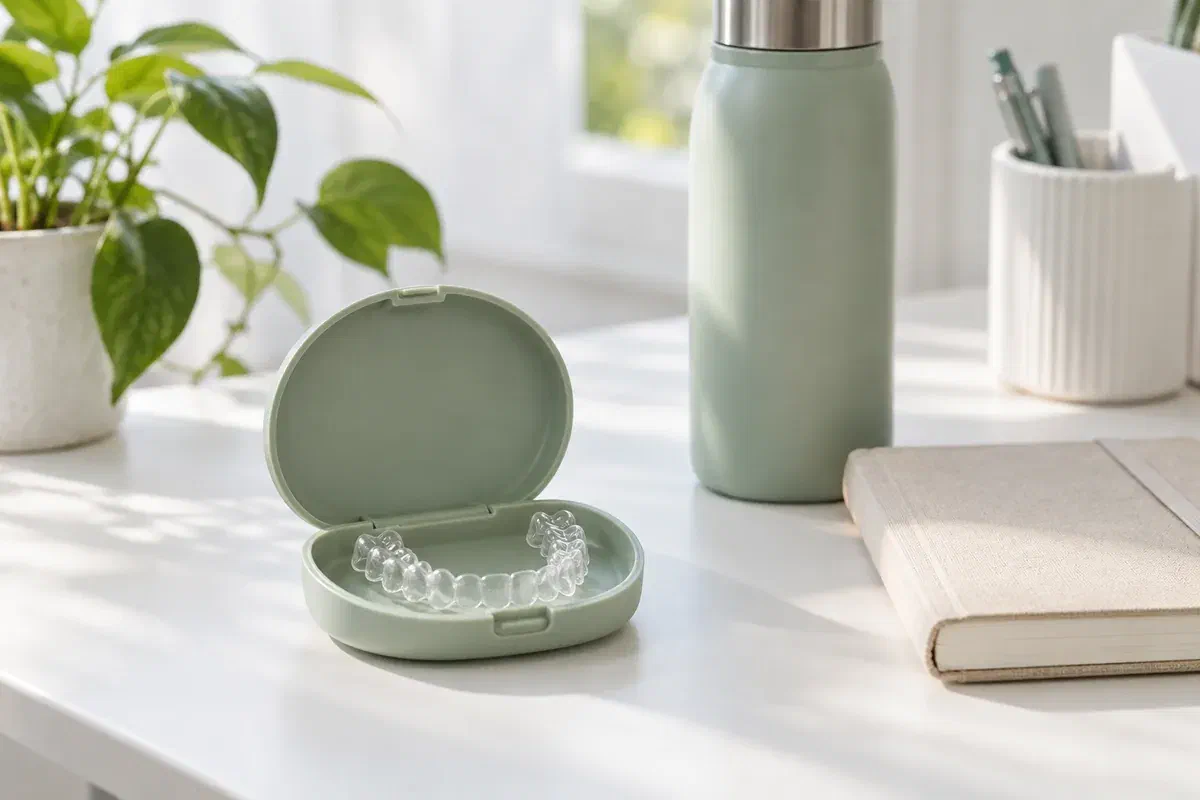
Illustrative clear aligner in a protective case beside a school notebook
Before choosing clear aligners

Look beyond straight front teeth.

An orthodontic discussion should address the whole bite and the day-to-day demands of care. Explain what your teen hopes to change and what might make the routine difficult.

The bite, spacing, and developing teeth

Crowding or a visible gap is only part of the assessment. The relationship between the upper and lower teeth, eruption, and other findings can affect treatment options. Ask which concerns aligners could address and whether a different approach or specialist assessment would be more suitable.

A realistic daily wearing routine

Discuss meals, snacks, sports, music, travel, and time spent away from home. Removability creates responsibilities as well as flexibility. Your teen should be involved in planning how prescribed wear will fit around ordinary activities rather than receiving instructions only through a parent.

Healthy teeth and gums before movement

Mention cavities, bleeding gums, previous injuries, and dental work that is planned or underway. These findings may need attention before orthodontics begins. Regular dental care continues during treatment; aligner reviews do not automatically replace examinations and hygiene appointments.

Bring details of previous orthodontic treatment or retainers. A fresh assessment is needed before using an old tray or trying to restart an unfinished sequence.

What clear aligners can offer

A removable option, with responsibilities that remain.

Clear aligners are less visually prominent than some fixed appliances, although attachments or other prescribed features may still be noticeable. They are removed for eating and oral hygiene according to instructions. That can suit some teenagers, but it does not make treatment effortless or appropriate for every bite.

The expected result, duration, and limitations should be explained for the individual case. Teeth do not always move exactly as planned, and additional assessment or aligners may be needed. Ask how progress will be checked and how a change to the proposed course would be discussed.

Patient information: American Association of Orthodontists — clear aligners

The chance to discuss appearance openly

A teenager can ask about the trays, attachments, and how their speech might feel while adapting. Honest expectations are more useful than describing treatment as completely invisible. Their concerns about school or social situations deserve a practical answer.

Access for a thorough cleaning routine

Because aligners can be removed, teeth can be brushed and cleaned between as directed. The trays need their own care too. Ask for a routine that is realistic at home and school, including what to do after meals when the usual facilities are unavailable.

A plan with defined checkpoints

Review appointments provide opportunities to assess fit, movement, oral health, and any difficulties with wear. Your teen can explain what has actually been happening. Accurate information helps the clinician make decisions; hiding a missed routine makes that assessment less useful.

From assessment to active treatment

Understand the proposed course before the first tray.

Ask who will plan and supervise care, which records are needed, and when referral is appropriate. A consultation should explain the choices without committing your family to one.

  1. Review the teeth, bite, and treatment goals

    The clinician considers dental and medical history, oral health, and the alignment concerns. Records such as photographs, scans, or radiographs may be recommended when indicated. Discuss what your teen would like to change and which findings need a specialist's input.

  2. Discuss the plan and its practical requirements

    Ask about proposed movements, any attachments or additional procedures, estimated timing, and alternatives. Clarify the review schedule, retention plan, and what the fee includes. Digital illustrations can support explanation, but they are not a guarantee of the final result.

  3. Learn insertion, removal, and daily care

    If treatment proceeds, the clinician explains how the prescribed aligners should fit and be handled. Typical Invisalign wear is twenty to twenty-two hours daily, but follow the treating clinician's instructions. Change trays only on the schedule they provide and confirm whom to contact about problems.

  4. Attend reviews and plan for retention

    The team assesses progress and decides whether the course needs adjustment. Keep discussing missed wear, discomfort, or fit changes. Before active movement finishes, confirm the retainer arrangements, ongoing appointments, and how to respond if a retainer later becomes damaged or stops fitting.

Managing school days and evenings

Build a routine your teen can repeat.

Treatment continues between reviews. A practical plan should cover meals, cleaning, storage, and how to ask for help when something does not go as expected.

Keep the case part of the routine

Use the supplied or recommended protective case when the aligners are out. Avoid wrapping them in a tissue or leaving them where pets can reach them. Tell the treating clinician promptly if a tray is lost, broken, or distorted, and ask which tray to wear.

Follow food, drink, and cleaning instructions

Remove aligners for meals and drinks other than plain water as instructed. Clean the teeth and trays using the recommended methods before reinsertion. Do not use hot water or improvise with household cleaners, and ask for specific advice about managing lunch away from home.

Report fit or comfort concerns early

Some pressure can accompany tooth movement, but significant pain, a persistent sore area, or a tray that will not seat needs advice. Do not cut or force it into place. Keep regular dental visits and follow the retainer schedule after active treatment.

Patient information: Invisalign — retainers after treatment

Choosing an orthodontic approach

Choose a plan the bite needs and your teen can follow.

Ask about the benefits, limitations, and responsibilities of each suitable option. Appearance matters, but it is not the only reason to select an appliance.

When the movements and daily routine are suitable

Supervised clear aligner treatment

Aligners may be an appropriate option after assessment. The plan needs consistent wear, safe handling, cleaning, and review. Ask how changes in tooth eruption or progress would be managed and whether additional features are anticipated.

When a different approach better addresses the findings

Fixed appliances or another specialist plan

Braces or another approach may be recommended for particular treatment needs. Fixed appliances have their own hygiene, dietary, and appointment requirements. A specialist opinion can help your family compare realistic options rather than choose solely from photographs.

When health, development, or readiness needs attention first

Preparation or a planned review before treatment

A clinician may advise completing dental care, improving the home routine, or monitoring development before beginning. Ask why waiting is appropriate and when to return. A delay should have a reason and a clear plan for reassessment.

Questions families ask about teen aligners

Talk through the ordinary details before they become surprises.

School, snacks, sports, and shared responsibilities are all reasonable topics for the consultation. Your teen should have a chance to ask directly.

(905) 876-4488
Can my teenager wear Invisalign aligners only after school and overnight?
That is not the usual wearing routine. Invisalign generally requires twenty to twenty-two hours daily, according to the treating clinician’s plan. If that seems unrealistic, discuss it before starting. Do not assume a shorter routine will produce the same movement or treatment timing.
What should my teen do if an aligner is accidentally thrown away at lunch?
Contact the treating clinician promptly and explain which tray was lost and when it was last worn. They can advise whether to use another tray or arrange a replacement. Do not jump ahead in the sequence without guidance or hide the loss until the next review.
Will every teen Invisalign plan include visible attachments?
Not every plan is the same. Attachments and other features depend on the intended movements and clinical decisions. Ask to see an explanation of what is proposed for your teen. Clear trays do not mean that every part of treatment will be unnoticeable.
Can my teen keep the aligners in while drinking a sports drink?
Follow the clinician’s instructions, which generally require removing aligners for drinks other than plain water. Sugary or acidic drinks introduce additional oral-health concerns. Discuss how drinks, cleaning, and prescribed wearing time can be managed during school or sporting activities.
Who should we tell if my teen has regularly missed the prescribed wearing time?
Tell the treating clinician honestly and early. Explain what makes the routine difficult so they can assess fit and progress and discuss the next step. Do not compensate by forcing a new tray or changing the schedule without advice.
Will my teenager still need retainers after finishing Invisalign treatment?
Retention is normally part of maintaining orthodontic results. Ask what retainer is proposed, how it should be worn, and how follow-up and replacement are arranged. Teeth can move after active treatment, so finishing the aligner sequence does not end the need for ongoing care.
Invisalign for teens in Milton

Start with an honest conversation about the smile and the routine.

Contact our Bronte Street practice to discuss an orthodontic assessment for your teen. Bring questions about suitability, daily wear, appointment planning, and when a specialist opinion may help your family decide.

Suitability, treatment supervision, and any referral are discussed after assessment. Results and timing vary.

Visit Milton Dental Clinic
Unit 1, 342 Bronte St. S, Milton, ON L9T 5B7
Get directions Clinic hours
Monday–Thursday
11am–7pm
Friday–Sunday
By appointment only

How can we help?

Milton Dental Clinic

Have a question about your smile? Choose the option that works best for you.

For urgent dental concerns, please call.
Messages are reviewed during clinic hours.