

Illustrative teenager and parent discussing a clear aligner with a dental clinician
Children’s Dentistry

Invisalign for Teens in Etobicoke

Coming from Etobicoke for teen aligner care means planning ahead. We can talk about bite assessment and suitability, how to organise fewer, well-prepared review visits, and what your teen should do about a tray problem before the next appointment.

Planning care from a distance

Fewer trips, better prepared

Orthodontic treatment is a series of visits rather than a single one, and that changes the planning for a family with a longer drive. Before agreeing to aligners, it makes sense to ask how often reviews are likely, what can be handled by phone, and what your teen should do if a tray cracks on a Tuesday night.

Invisalign shifts teeth through a planned set of removable clear aligners, each worn for a set period. To know whether it suits your teen, the clinician needs to examine the bite, the teeth and gums, and how development is progressing, and you both need to judge whether near-constant wear is realistic. The brand cannot decide that for you.

For households in Etobicoke, a first consultation can map the whole journey. We can assess your teen, explain what aligners might achieve, and say when an orthodontist closer to home or a specialist opinion would be sensible. You should leave knowing the practical demands and the likely visit pattern, with no pressure to begin.

Ask how teen aligner visits could be planned
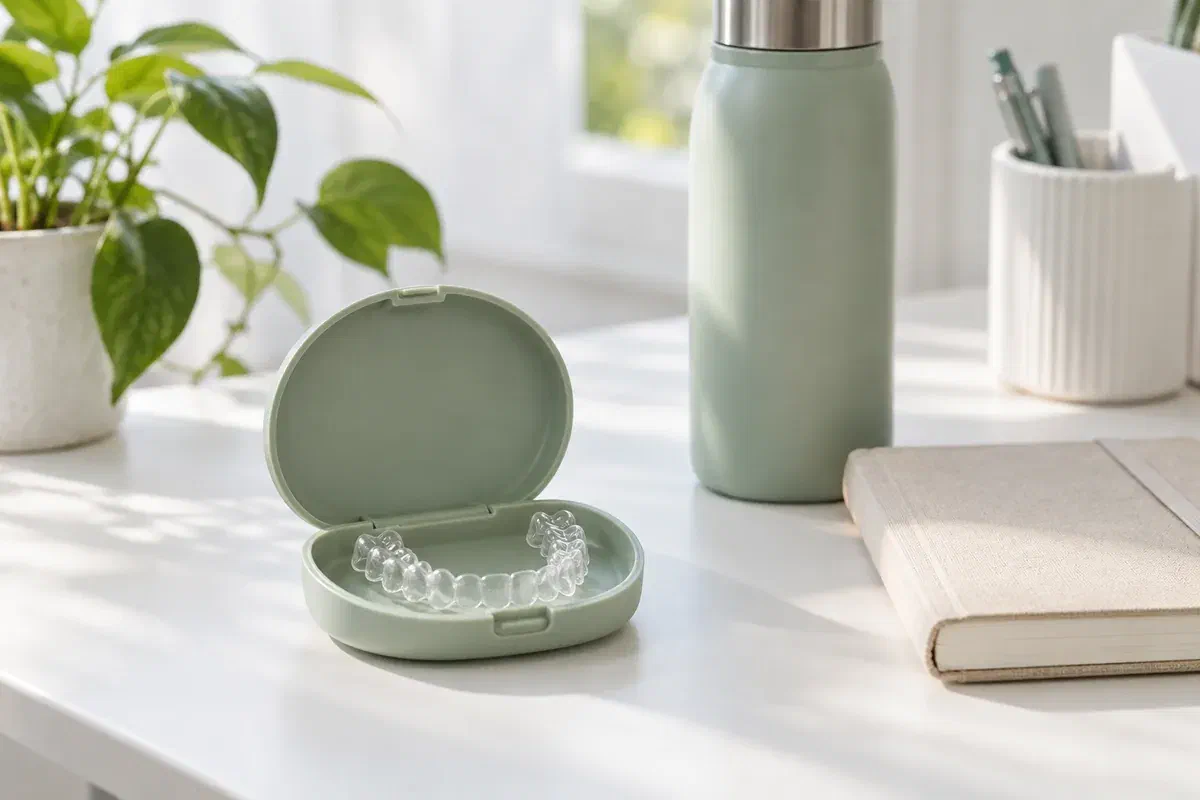
Illustrative clear aligner in a protective case beside a school notebook
Questions about suitability and logistics

Can the plan work with a longer journey?

A sound discussion covers the full bite and the realities of your week, including travel. Tell us what your teen wants to change and anything that could make wear or visits difficult.

Bite, spacing, and erupting teeth

Visible crowding is only one element. The way the teeth close, teeth that are still to erupt, and other findings affect which approach is realistic. Ask what aligners could address and whether a different appliance or a specialist would be a better fit.

Wear hours and visit planning

Go through school, activities, part-time work, and how far you are willing to travel for reviews. Trays that come out still need to be worn most of the day. Involve your teen in deciding how wear and appointments will fit, so it feels like their plan.

A healthy mouth to begin with

Let us know about cavities, bleeding gums, past injuries, and treatment that is underway with another dentist. Some issues need care before movement. Regular exams and cleanings continue through treatment, wherever your family usually has them.

Bring records or details of any earlier orthodontic care. An old tray or unfinished set should not be used again until a new assessment has been done.

What aligners might offer

Practical for some teens, with homework attached

Clear aligners are typically less visible than many fixed appliances, though attachments or other prescribed features may be noticeable. They are removed for meals and cleaning as directed. Because there are no brackets to come loose, some families find there are fewer unplanned trips, but treatment still takes effort and is not right for every bite.

The expected outcome, duration, and limitations should be explained for your teen’s case. Teeth may not move exactly as planned, and refinements or reassessment could add visits. Ask how progress will be monitored and how a change in direction would be communicated.

Patient information: American Association of Orthodontists — clear aligners

Candour about appearance

Your teen can ask how trays and attachments look and how speech might feel at first. Saying aligners are invisible creates false expectations. Their concerns about school and friends deserve thoughtful, practical replies.

Room to brush and floss properly

With the aligners out, teeth can be cleaned as directed, and the trays need their own care. Ask for a routine that works at home, at school, and on travel days, including after lunch when there is nowhere to brush.

Purposeful review appointments

Each review is a chance to check fit, movement, gum health, and wear. Because visits involve travel, it helps to arrive with notes about what has been happening. Honest information supports better decisions than hiding missed hours.

The treatment pathway

What happens at each stage, and how often

Ask who will plan and supervise the treatment, which records are needed, and when referral is appropriate. The consultation should clarify choices without committing your family.

  1. Assess the bite and agree on aims

    The clinician reviews your teen’s history, oral health, and alignment. Photos, scans, or radiographs may be recommended when indicated, and gathering them in one visit can save a trip. Discuss what your teen hopes to change and any findings that need a specialist.

  2. Discuss the plan, visit pattern, and costs

    Ask about proposed movements, attachments or extra procedures, estimated duration, and alternatives. Clarify how often reviews are expected, what retention involves, and what the fee covers. A digital preview helps explain the plan but does not promise a result.

  3. Learn how to fit and handle aligners

    If treatment begins, your teen is shown how trays should seat and be removed. Invisalign is commonly worn twenty to twenty-two hours daily, per the treating clinician’s instructions. Change trays only on schedule, and ask what to do if a problem comes up between visits.

  4. Attend reviews, then move to retention

    Progress is assessed and the plan adjusted as needed. Keep reporting missed wear, discomfort, or fit changes. Before active movement ends, confirm the retainer plan, follow-up visits, and how a broken retainer would be replaced without unnecessary travel.

Between visits

Handle the small problems at home, and know when to call.

Most of treatment happens far from the clinic. A practical plan covers meals, cleaning, storage, and how your teen gets advice when something goes wrong.

Protect the trays you have

Store aligners in the protective case whenever they are out. Napkins and tissues lead to lost trays, and pets can chew them. Ask whether to keep the previous tray as a backup, and call the treating clinician promptly if one is lost, cracked, or distorted.

Keep to the eating and cleaning rules

Remove aligners for meals and for drinks other than plain water, as directed. Clean teeth and trays before putting them back in. Avoid hot water and household cleaners, and ask how to handle lunch and long days away from home.

Call before you drive in

Mild pressure is common, but significant pain, a persistent sore spot, or a tray that will not fit needs advice. Phone first, so the team can say whether a visit is needed. Do not trim or force a tray, and keep regular dental care going.

Patient information: Invisalign — retainers after treatment

Your choices

Aligners, braces, or a pause: each has a different rhythm.

Ask about the benefits, limitations, and visit demands of each suitable option. Appearance matters, but it is only one reason to choose an appliance.

When the movements and your schedule fit

Aligner treatment with planned reviews

Assessment may show aligners are appropriate. Success depends on steady wear, careful handling, cleaning, and attending reviews. Ask how changes in eruption or slower progress would be managed and whether more features or visits might be needed.

When the findings suggest another approach

Braces or care with an orthodontist

Fixed braces or another plan may suit some needs better, and adjustments may mean regular visits. A specialist nearer your home might be worth considering. An opinion can help your family compare realistic options rather than choose from photos.

When oral health, growth, or readiness needs time

Get ready first, or review later

The clinician may advise completing dental care, improving brushing, or monitoring development first. Ask why waiting is suggested and when to come back. A delay should have a reason and a set point for reassessment.

Planning questions from further afield

Practical answers for families who travel in

School, snacks, activities, and who handles what are all fair to discuss. Your teen should feel welcome to ask questions directly.

(905) 876-4488
How can we keep the number of trips to a minimum during treatment?
Ask at the consultation how often reviews are likely and whether records or other steps can be grouped into one visit. Booking reviews early, around school, helps. Planning cannot remove every visit, but it can reduce wasted trips.
Should we hold on to the previous tray in case one breaks?
That decision belongs to the treating clinician. Many families are advised to keep the most recent tray in its case as a backup, but only use it as instructed. Call about a lost or broken tray rather than skipping ahead.
What counts as urgent enough to seek care nearer home?
Facial swelling, a significant injury to the teeth, or severe pain should be assessed promptly, and closer urgent care may be the right choice. For a loose attachment or tray discomfort, call us first for advice.
Can my teen switch to braces partway if aligners are not working out?
It may be possible, depending on the situation. Talk to the treating clinician early, before missed wear builds up. They can review progress and discuss options, including a specialist opinion.
Can school days be protected when booking reviews?
Our weekday hours run into the evening, which may help some families. Ask about available times when planning, and book ahead where you can so reviews are not missed.
Who checks the retainer once active treatment finishes?
Ask what follow-up is planned and who will review retainer fit over time. Teeth can shift after treatment, so ongoing retainer wear and checks matter. Report a lost or damaged retainer promptly.
Teen Invisalign for Etobicoke families

Plan the whole course at the first visit.

Contact our Bronte Street practice to arrange an orthodontic assessment for your teen. Ask about suitability, daily wear, how reviews could be scheduled for a longer trip, and when a specialist opinion would help.

Suitability, treatment supervision, and referral options are discussed after assessment. Outcomes and timing differ from one teen to the next.

Visit Milton Dental Clinic
Unit 1, 342 Bronte St. S, Milton, ON L9T 5B7
Get directions Clinic hours
Monday–Thursday
11am–7pm
Friday–Sunday
By appointment only

Areas we serve

  • Milton
  • Oakville
  • Mississauga
  • Georgetown
  • Halton Hills
  • Acton
  • Campbellville
  • Brampton
  • Burlington
  • Puslinch
  • Rockwood
  • Erin
  • Caledon
  • Etobicoke
  • Old Milton
  • Bronte Meadows
  • Timberlea
  • Dorset Park
  • Dempsey
  • Clarke
  • Beaty
  • Coates
  • Harrison
  • Scott
  • Willmott
  • Ford
  • Bowes
  • Cobden
  • Walker
  • Mountain View
  • Milton Heights
  • Hawthorne Village
  • Valley View
  • Fallingbrook
  • Nassagaweya
  • Trafalgar
  • Esquesing
  • Nelson
  • Brookville
  • Moffat
  • Glen Williams
  • Norval
  • Limehouse
  • Stewarttown
  • Ashgrove
  • Hornby
  • Silver Creek
  • Speyside
  • Scotch Block
  • North Oakville
  • River Oaks
  • Glen Abbey
  • West Oak Trails
  • Palermo
  • Bronte Creek
  • College Park
  • Joshua Creek
  • Uptown Core
  • Preserve
  • Iroquois Ridge
  • Lisgar
  • Meadowvale
  • Meadowvale Village
  • Churchill Meadows
  • Erin Mills
  • Central Erin Mills
  • Streetsville
  • East Credit
  • Creditview
  • Heartland
  • Sheridan
  • Mount Pleasant
  • Credit Valley
  • Huttonville
  • Churchville
  • Springbrook
  • Northwest Brampton
  • Bram West
  • Fletcher's Meadow
  • Fletcher's Creek South
  • Alton Village
  • Orchard
  • Millcroft
  • Headon Forest
  • Tansley
  • Brant Hills
  • Tyandaga
  • Kilbride
  • Lowville
  • Aberfoyle
  • Morriston
  • Arkell
  • Hillsburgh
  • Freelton
  • Carlisle
  • Waterdown
  • Flamborough
  • Mountsberg

How can we help?

Milton Dental Clinic

Have a question about your smile? Choose the option that works best for you.

For urgent dental concerns, please call.
Messages are reviewed during clinic hours.