

Illustrative teenager and parent discussing a clear aligner with a dental clinician
Children’s Dentistry

Invisalign for Teens in Georgetown

Lunch at school is where many aligner plans wobble: trays out, food in, and nowhere obvious to brush. For a teen from Georgetown, we look at the bite and suitability first, then help build a midday routine that keeps wear on track.

The midday challenge

Think about lunchtime before the first tray arrives.

A crowded cafeteria, twenty-five minutes, a sandwich, and two clear trays that have to come out and go back in. That small window is where a lot of aligner routines succeed or slip. Parents often picture the appointments; teens tend to picture lunch. Planning both is part of deciding whether aligners make sense.

Invisalign is a sequence of removable, custom-made clear trays that move teeth gradually. Before anyone recommends it, the clinician needs to examine the bite, teeth, gums, and stage of development, and your teen needs to be honest about whether near-full-time wear is doable. No brand can answer those questions on its behalf.

Teens and parents from Georgetown are welcome to raise all of this at a first visit. We can assess the bite, describe what aligners may achieve, and recommend an orthodontist when a specialist would be more appropriate. Your teen should come away with a clear sense of the daily tasks, and nobody needs to commit on the spot.

Plan a school-friendly aligner routine
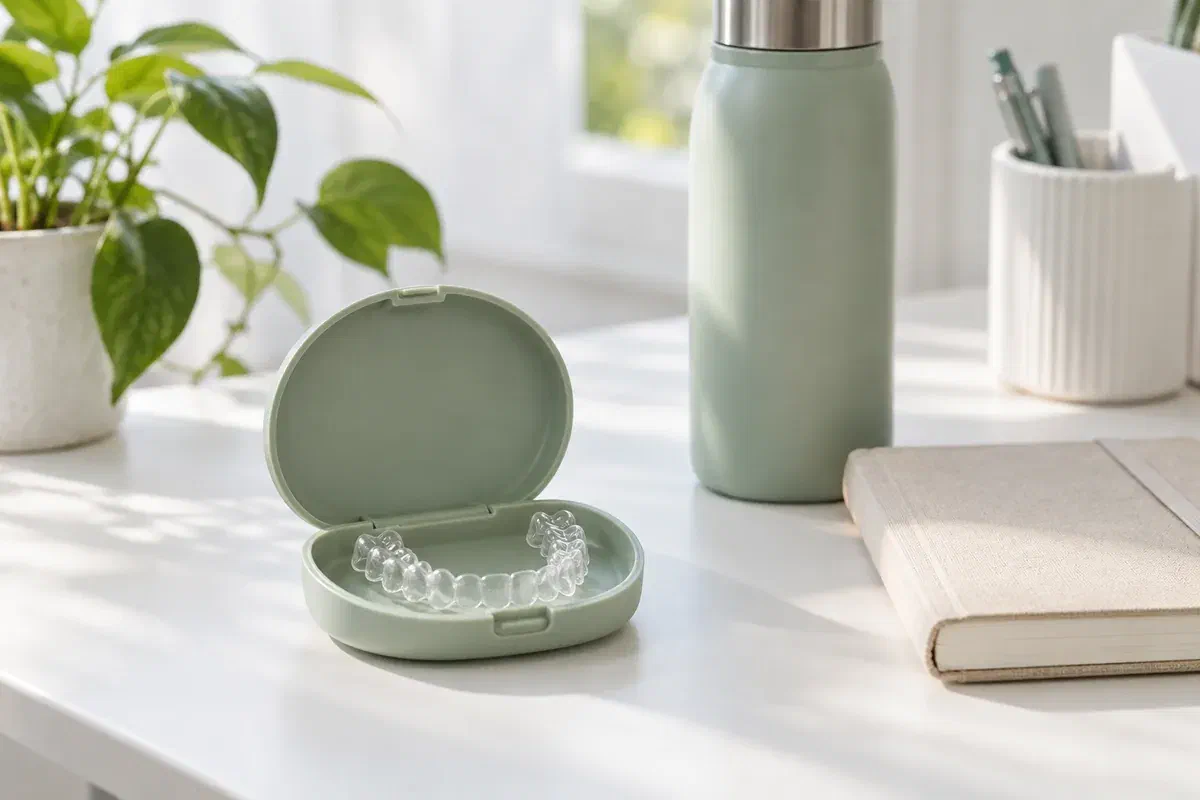
Illustrative clear aligner in a protective case beside a school notebook
Things to weigh up

Bite first, then the school day, then oral health

Good planning looks at how the teeth work together and at how your teen’s days actually unfold. Share what they want to change and where wear could fall apart.

How the teeth line up and erupt

Front-tooth crowding is what most people notice. The bite, permanent teeth that have not appeared yet, and other findings matter just as much. Ask which concerns aligners could treat, and whether braces or a specialist opinion might suit better.

Lunch, snacks, and spare periods

Think through each break in the school day, plus sports, part-time work, and weekends. Removing trays is easy; remembering to put them back is the harder part. Plan the routine with your teen so the solutions are ones they will really use.

Teeth and gums ready for treatment

Point out any cavities, puffy or bleeding gums, past injuries, and work that is underway. These may need care before movement begins. Checkups and cleanings carry on during orthodontics and are not covered by aligner reviews.

Tell us about previous braces, aligners, or retainers. Before an old tray goes back in or an unfinished series is resumed, a new assessment is needed.

What appeals to teens

Trays that come out for lunch, then go straight back

Clear aligners are generally less obvious than many fixed appliances, although attachments or other features may be visible. Because they come out for eating and brushing as instructed, some teens find them easier to live with. That convenience still needs discipline, and aligners are not suitable for every bite.

The expected result, likely length, and limitations of treatment should be explained for your teen. Teeth may not follow the plan exactly, so further trays or assessment could be needed. Ask how progress is measured and how any revision would be explained.

Patient information: American Association of Orthodontists — clear aligners

Honest answers about how trays look

Your teen can ask what the aligners and attachments look like in class and how speech may feel at first. Overselling invisibility does nobody any favours. Concerns about friends and school deserve practical answers.

Brushing that doesn’t dodge brackets

Taking the trays out lets your teen brush and floss as instructed. Aligners also need regular cleaning. Ask for a realistic routine, including what to do after lunch when a sink and toothbrush are not available.

Reviews that keep things on course

At each review, the clinician looks at fit, movement, gum health, and how wear is going. Your teen can say what has really happened. Candour supports good decisions, while hiding a run of missed lunches makes the review less useful.

The road from consultation to retainer

What to expect along the way

Ask who plans and supervises the work, which records are needed, and whether a referral would help. The consultation should explain options without tying you to one.

  1. Start with history and a close look

    Your teen’s medical and dental background, oral health, and alignment are reviewed. Photos, a scan, or radiographs may be suggested as needed. Discuss what your teen would like to change and whether any finding needs a specialist.

  2. Talk through movements, timing, and fees

    Ask about the planned tooth movements, attachments or extra procedures, estimated length, and alternatives. Confirm the review schedule, the retention plan, and the fee. A digital preview explains the idea; it is not a guarantee.

  3. Practise insertion and removal

    When treatment begins, your teen learns how each tray should fit and how to handle it safely. Invisalign typically calls for twenty to twenty-two hours of daily wear, following the treating clinician’s instructions. Move to the next tray only on schedule and know who to contact.

  4. Keep reviewing, then retain

    Progress is checked and the course refined where needed. Keep discussing missed wear, soreness, or fit changes. Before movement finishes, agree on retainer wear, follow-up visits, and a plan for a retainer that is damaged or stops fitting.

Keeping it going

A lunch kit for aligners

Treatment continues between appointments, especially during the school day. A good plan covers food, cleaning, storage, and getting help when something goes wrong.

The case, not a napkin

Put the trays in their case whenever they are out. Napkins end up in the garbage, and pets at home can chew trays left on a table. If one goes missing or is damaged, contact the treating clinician soon and ask which tray to use.

Rinse, brush when you can, reinsert

Remove aligners for meals and any drink besides plain water, as directed. Clean teeth and trays before they go back. Avoid hot water and household cleaners, and ask the clinician for a midday routine when brushing is not possible.

Tell someone about soreness

Pressure can be expected with movement, but marked pain, a sore spot that persists, or a tray that will not sit properly needs advice. Don’t trim or force the aligner. Keep routine dental visits and follow the retainer plan afterwards.

Patient information: Invisalign — retainers after treatment

Comparing paths

Which approach will your teen actually stick with?

Each suitable option comes with strengths, limits, and responsibilities, so hear about all three. How an appliance looks is one factor, not the only one.

When the movements and the school routine both work

Aligners, regularly reviewed

Aligners may be appropriate after assessment. They depend on reliable wear, careful handling, cleaning, and review. Ask how emerging teeth or slower progress would be managed and whether more features might be added.

When the findings suit another option

Fixed braces or a specialist’s approach

Braces or a different plan may be recommended for some needs. Fixed appliances stay in at lunch but come with their own cleaning and food rules. A specialist opinion can help your family compare realistic choices.

When health, growth, or readiness comes first

Preparation, or review at a later date

The clinician may suggest finishing dental care, strengthening the brushing routine, or monitoring development before starting. Ask why a wait is advised and when to return. A delay should be explained and followed by a reassessment.

School-day questions from Georgetown

The everyday details parents and teens ask about

Lunches, snacks, sport, and shared responsibilities are all fair topics for the consultation. Your teen is welcome to ask directly.

(905) 876-4488
Does my teen need to brush after every snack at school?
Ask the clinician for a routine that is realistic. Teeth and trays should be clean before the aligners go back in. When brushing is not possible, the clinician can suggest what to do until your teen is home.
What is the best way to carry the aligner case to school?
Keep it in the same pocket of the backpack every day so it becomes a habit. Avoid leaving trays loose in a lunch bag or napkin, where they are easily thrown away.
Can my teen eat with the aligners in if they are in a hurry?
No. Aligners are removed for food. Eating with trays in can damage them and trap food against the teeth. If lunch periods are short, discuss practical strategies with the clinician.
Will my teen be able to talk normally in class with trays in?
Speech may feel slightly different for a short time while adjusting, and it often improves with wear. Mention it to the treating clinician if it continues or a tray does not seem to fit.
What should my teen do if they forget to put the trays back in after lunch?
Put them back in as soon as they remember, and be honest with the clinician if it happens often. Repeated gaps can affect progress, so ask for help building a reminder routine.
How should a retainer be stored during the day?
Use the case provided and follow the treating clinician’s instructions on wear. Retainers are easily lost when wrapped in tissue. Ask about replacement if one breaks or goes missing.
Teen aligners for Georgetown

Bring your lunchtime questions with you.

Contact our Bronte Street practice to request an orthodontic assessment for your teen. We can discuss suitability, daily wear, school-day routines, review visits, and whether a specialist opinion would help.

Suitability, who supervises treatment, and any referral are discussed once your teen has been assessed. Results and timing differ for each person.

Visit Milton Dental Clinic
Unit 1, 342 Bronte St. S, Milton, ON L9T 5B7
Get directions Clinic hours
Monday–Thursday
11am–7pm
Friday–Sunday
By appointment only

Areas we serve

  • Milton
  • Oakville
  • Mississauga
  • Georgetown
  • Halton Hills
  • Acton
  • Campbellville
  • Brampton
  • Burlington
  • Puslinch
  • Rockwood
  • Erin
  • Caledon
  • Etobicoke
  • Old Milton
  • Bronte Meadows
  • Timberlea
  • Dorset Park
  • Dempsey
  • Clarke
  • Beaty
  • Coates
  • Harrison
  • Scott
  • Willmott
  • Ford
  • Bowes
  • Cobden
  • Walker
  • Mountain View
  • Milton Heights
  • Hawthorne Village
  • Valley View
  • Fallingbrook
  • Nassagaweya
  • Trafalgar
  • Esquesing
  • Nelson
  • Brookville
  • Moffat
  • Glen Williams
  • Norval
  • Limehouse
  • Stewarttown
  • Ashgrove
  • Hornby
  • Silver Creek
  • Speyside
  • Scotch Block
  • North Oakville
  • River Oaks
  • Glen Abbey
  • West Oak Trails
  • Palermo
  • Bronte Creek
  • College Park
  • Joshua Creek
  • Uptown Core
  • Preserve
  • Iroquois Ridge
  • Lisgar
  • Meadowvale
  • Meadowvale Village
  • Churchill Meadows
  • Erin Mills
  • Central Erin Mills
  • Streetsville
  • East Credit
  • Creditview
  • Heartland
  • Sheridan
  • Mount Pleasant
  • Credit Valley
  • Huttonville
  • Churchville
  • Springbrook
  • Northwest Brampton
  • Bram West
  • Fletcher's Meadow
  • Fletcher's Creek South
  • Alton Village
  • Orchard
  • Millcroft
  • Headon Forest
  • Tansley
  • Brant Hills
  • Tyandaga
  • Kilbride
  • Lowville
  • Aberfoyle
  • Morriston
  • Arkell
  • Hillsburgh
  • Freelton
  • Carlisle
  • Waterdown
  • Flamborough
  • Mountsberg

How can we help?

Milton Dental Clinic

Have a question about your smile? Choose the option that works best for you.

For urgent dental concerns, please call.
Messages are reviewed during clinic hours.