

Illustrative teenager and parent discussing a clear aligner with a dental clinician
Children’s Dentistry

Invisalign for Teens in Halton Hills

Is the start of high school a good time for aligners, or should you wait? Families from across Halton Hills can talk with us about timing, bite development, suitability, and the everyday wear that clear aligner treatment depends on.

Timing teen treatment

Now, next year, or after a review?

Big transitions such as a new school, a new team, or a first job make parents think about timing. Some prefer to begin before the changes pile up; others would rather let a teen settle first. The better question is what the teeth and the bite are doing, and whether this season leaves room for a demanding routine.

Invisalign uses a sequence of removable clear trays, each prescribed to shift teeth slightly. Suitability comes from examining tooth position, the bite, gum and tooth health, and how far development has progressed, alongside an honest judgment about wearing the trays nearly all day. A familiar brand name cannot settle the timing question.

From Georgetown, Acton, or the smaller communities around them, families can bring this decision to our Bronte Street practice. We can assess your teen, explain what aligners might accomplish now, and say when a specialist or a planned recheck makes more sense. Starting later is sometimes the right answer, and that is fine.

Ask whether now is a good time
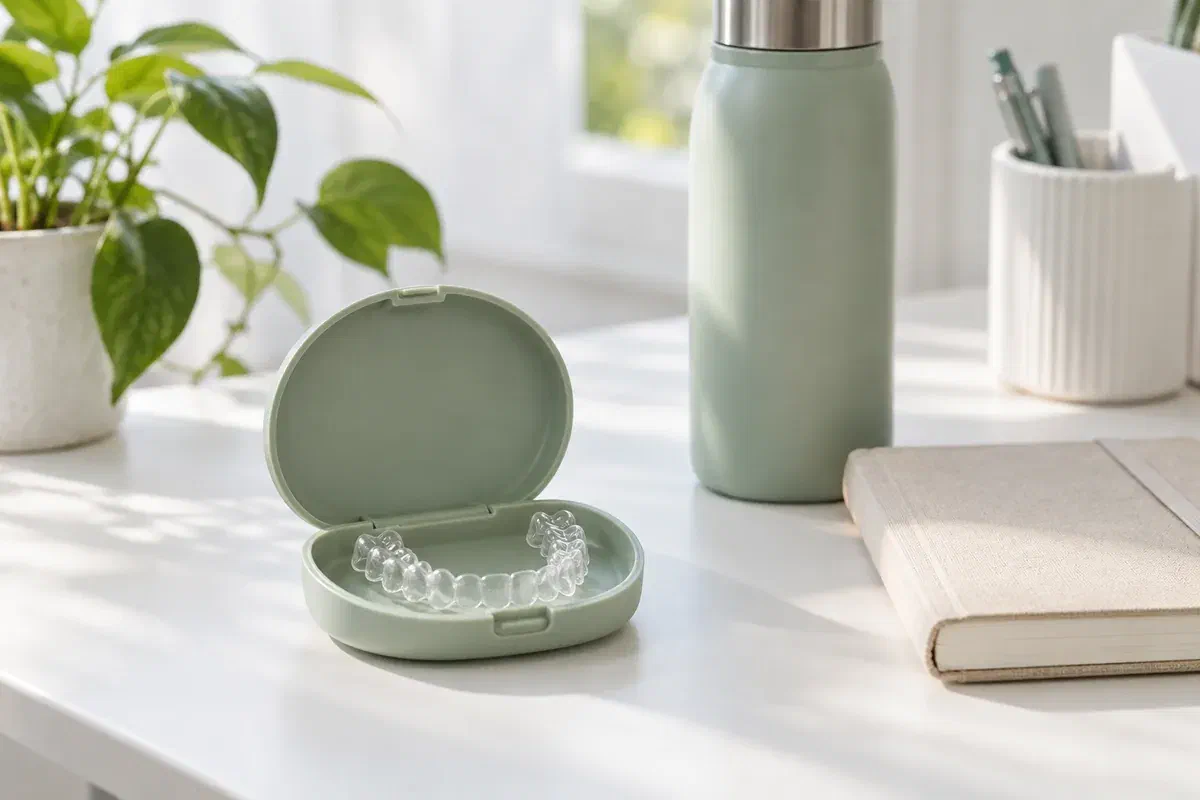
Illustrative clear aligner in a protective case beside a school notebook
What affects timing

Development, readiness, and a clean bill of health

When to begin depends on the whole bite and on your teen’s capacity to keep up with wear. Tell us what they want to change and what the coming months look like.

Teeth that are still arriving

Some permanent teeth may not be fully in yet, and the bite can keep changing. Crowding is only part of the picture. Ask whether eruption or growth affects the timing of aligners and when a different approach or specialist view might be advised.

A season that can carry the routine

Consider exams, tryouts, a new job, and trips planned for the year ahead. Trays need to be in most of the day, every day. Let your teen weigh in on whether now is manageable, rather than deciding entirely on their behalf.

Healthy teeth before tooth movement

Cavities, swollen or bleeding gums, earlier injuries, and unfinished dental work may need treatment first. Tell the clinician about all of them. Exams and hygiene visits continue during orthodontics, separate from aligner progress checks.

Previous orthodontic care, including retainers, should be mentioned. Without a fresh assessment, avoid reusing old trays or picking up a sequence that was left incomplete.

Reasons teens choose aligners

Subtle on the outside, structured underneath

Most people notice clear trays less than fixed braces, although small bonded attachments can show. The aligners come out for eating and brushing according to instructions. Some teens appreciate that freedom, but it calls for self-discipline, and aligners are not the right tool for every bite.

Your clinician should explain the likely result, how long treatment may take, and its limits for your teen’s case. Progress does not always match the plan, and extra trays or a further assessment may be needed. Ask how movement will be checked and how you would hear about any change.

Patient information: American Association of Orthodontists — clear aligners

A chance to ask about looks

Teens can ask what attachments are, how visible the trays will be, and whether speech feels different while adjusting. Accurate expectations work better than claims of invisibility. Social worries are worth practical discussion.

Cleaning without wires

Since aligners come out, teeth can be brushed and flossed as recommended. The trays need cleaning too. Ask for a routine that suits school as well as home, including the times after lunch when brushing is not possible.

Regular opportunities to recalibrate

Reviews let the clinician examine fit, movement, gum health, and how wear is going. Your teen can describe the real routine. Truthful updates guide good decisions; concealing missed hours makes reviews less useful.

The four main stages

Assessment first, then a plan, then trays

Ask who will design and oversee treatment, which records are required, and when a referral is sensible. A consultation explains the options rather than committing you to one.

  1. Examine, record, and discuss aims

    History, oral health, and alignment are reviewed together. If needed, photographs, scans, or radiographs may be taken. Your teen can explain what they would like to change, and any findings that call for a specialist will be raised.

  2. Review the proposal and its timing

    Ask about planned movements, attachments or other procedures, expected length, and alternatives, including waiting. Confirm the review schedule, the retention plan, and what is included in the fee. Simulations explain; they do not guarantee.

  3. Start wearing and caring for the trays

    If you go ahead, your teen learns how aligners should seat and how to take them in and out. Typical Invisalign wear is twenty to twenty-two hours a day, though the treating clinician sets the instructions. Swap trays only on schedule, and know who to contact with concerns.

  4. Check in regularly and prepare to retain

    The clinician assesses progress and adjusts the plan as required. Raise any missed wear, soreness, or fit problems. Before active movement ends, settle on a retainer, future checkups, and a plan for a retainer that gets lost, cracked, or tight.

The day-to-day part

Routines your teen can own

Treatment happens mostly between appointments. Agree on meals, cleaning, storage, and the steps to take when a tray causes trouble.

Trays live in the case

Whenever the aligners are out, they belong in their protective case, not a pocket or a paper towel. Pets also find them tempting. If a tray is lost, broken, or warped, contact the treating clinician promptly and ask which one to wear.

Remove to eat, clean to return

Take trays out for meals and for any drink besides plain water, following instructions. Brush and clean the aligners before they go back in. Hot water and household products can damage them; ask how to handle lunches at school.

Flag fit or pain problems

Pressure is normal with a new tray, but strong pain, a sore spot that lingers, or an aligner that will not sit flat needs a call. Don’t alter or force it. Keep up dental checkups and follow the retainer plan once treatment ends.

Patient information: Invisalign — retainers after treatment

Approaches to consider

Start, choose differently, or wait with a plan

Ask what each suitable option offers, where it is limited, and what it asks of your teen. Appearance is one consideration, not the whole decision.

When the bite and the routine are ready

Clear aligners, with supervision

Aligners may suit your teen after assessment. They require faithful wear, careful handling, cleaning, and reviews. Ask how teeth that are still erupting or slower progress would be managed, and whether additional features may be needed.

When the findings favour another approach

Braces or a specialist plan

Fixed braces or another method may be recommended for some needs. They bring their own hygiene, food, and visit expectations. A specialist can help your family compare realistic options instead of relying on photos.

When growth, health, or readiness needs more time

Prepare now, reassess later

The clinician may suggest completing dental care, improving brushing, or monitoring development before beginning. Ask why waiting is recommended and when to come back. Every delay should have a reason and a reassessment date.

Halton Hills families ask

Questions about when, and how

School, snacks, activities, and shared responsibility are all good topics for the consultation. Your teen can ask directly too.

(905) 876-4488
Is it better to start aligners in the summer before a new school year?
Some families like to use a quieter period to get used to the routine, but the right timing depends on the bite and your teen’s readiness. Ask the clinician whether timing matters in your teen’s case.
What if some of my teen’s baby teeth haven’t fallen out yet?
That can affect planning. The clinician can assess which teeth are still to come in and explain whether aligners are suitable now, whether another approach is better, or whether a review later makes sense.
Will wisdom teeth affect aligner treatment?
Ask the clinician to explain what they see on any records taken. Wisdom teeth are assessed individually, and the clinician can discuss whether they are relevant to your teen’s plan.
How many hours a day do the trays really need to be in?
Invisalign is usually worn twenty to twenty-two hours daily, according to the treating clinician’s plan. If that seems hard to manage, say so at the start. Shorter wear may not move teeth as intended.
Who do we tell if wear has slipped for a couple of weeks?
Tell the treating clinician honestly and soon. They can check fit and progress and explain the next step. Don’t try to catch up by forcing a new tray or changing the schedule yourselves.
Do retainers have to be worn every night forever?
Retention plans vary, but ongoing retainer wear is usually needed because teeth can shift after treatment. Ask what retainer is planned, how often to wear it over time, and how follow-up works.
Teen aligner timing in Halton Hills

Find out whether this is the right season to begin.

Contact our Bronte Street practice to book an orthodontic assessment for your teen. Bring questions about suitability, timing, daily wear, review visits, and when a specialist opinion could help your family decide.

Suitability, treatment supervision, and any referral are talked through after an assessment. Results and timing vary from teen to teen.

Visit Milton Dental Clinic
Unit 1, 342 Bronte St. S, Milton, ON L9T 5B7
Get directions Clinic hours
Monday–Thursday
11am–7pm
Friday–Sunday
By appointment only

Areas we serve

  • Milton
  • Oakville
  • Mississauga
  • Georgetown
  • Halton Hills
  • Acton
  • Campbellville
  • Brampton
  • Burlington
  • Puslinch
  • Rockwood
  • Erin
  • Caledon
  • Etobicoke
  • Old Milton
  • Bronte Meadows
  • Timberlea
  • Dorset Park
  • Dempsey
  • Clarke
  • Beaty
  • Coates
  • Harrison
  • Scott
  • Willmott
  • Ford
  • Bowes
  • Cobden
  • Walker
  • Mountain View
  • Milton Heights
  • Hawthorne Village
  • Valley View
  • Fallingbrook
  • Nassagaweya
  • Trafalgar
  • Esquesing
  • Nelson
  • Brookville
  • Moffat
  • Glen Williams
  • Norval
  • Limehouse
  • Stewarttown
  • Ashgrove
  • Hornby
  • Silver Creek
  • Speyside
  • Scotch Block
  • North Oakville
  • River Oaks
  • Glen Abbey
  • West Oak Trails
  • Palermo
  • Bronte Creek
  • College Park
  • Joshua Creek
  • Uptown Core
  • Preserve
  • Iroquois Ridge
  • Lisgar
  • Meadowvale
  • Meadowvale Village
  • Churchill Meadows
  • Erin Mills
  • Central Erin Mills
  • Streetsville
  • East Credit
  • Creditview
  • Heartland
  • Sheridan
  • Mount Pleasant
  • Credit Valley
  • Huttonville
  • Churchville
  • Springbrook
  • Northwest Brampton
  • Bram West
  • Fletcher's Meadow
  • Fletcher's Creek South
  • Alton Village
  • Orchard
  • Millcroft
  • Headon Forest
  • Tansley
  • Brant Hills
  • Tyandaga
  • Kilbride
  • Lowville
  • Aberfoyle
  • Morriston
  • Arkell
  • Hillsburgh
  • Freelton
  • Carlisle
  • Waterdown
  • Flamborough
  • Mountsberg

How can we help?

Milton Dental Clinic

Have a question about your smile? Choose the option that works best for you.

For urgent dental concerns, please call.
Messages are reviewed during clinic hours.