

Illustrative teenager and parent discussing a clear aligner with a dental clinician
Children’s Dentistry

Invisalign for Teens in Oakville

Braces or aligners? For families coming from Oakville, that choice should follow an assessment of your teen’s bite, not the other way round. We can explain suitability, what daily wear involves, and when a specialist opinion is worth getting.

Choosing an appliance from Oakville

Braces or clear trays? Let the bite answer first.

Many households arrive with the decision half made. The teen prefers aligners because they look discreet, while a parent wonders whether removable trays will actually get worn. Neither view is wrong, and a good consultation weighs them against what the examination shows.

Invisalign moves teeth with a planned sequence of removable clear aligners. Whether it is appropriate depends on the alignment, how the teeth meet, gum and tooth health, and where your teen is in their development. Their ability to keep the trays in for most of every day counts just as much. No product name can make that call for you.

For teens coming from Oakville, the first appointment is a chance to understand the options side by side. We can assess, explain what aligners might and might not accomplish, and recommend an orthodontist’s opinion when the findings call for one. Your teen should come away clear about the work involved, with no expectation to start right away.

Compare aligners and braces with us
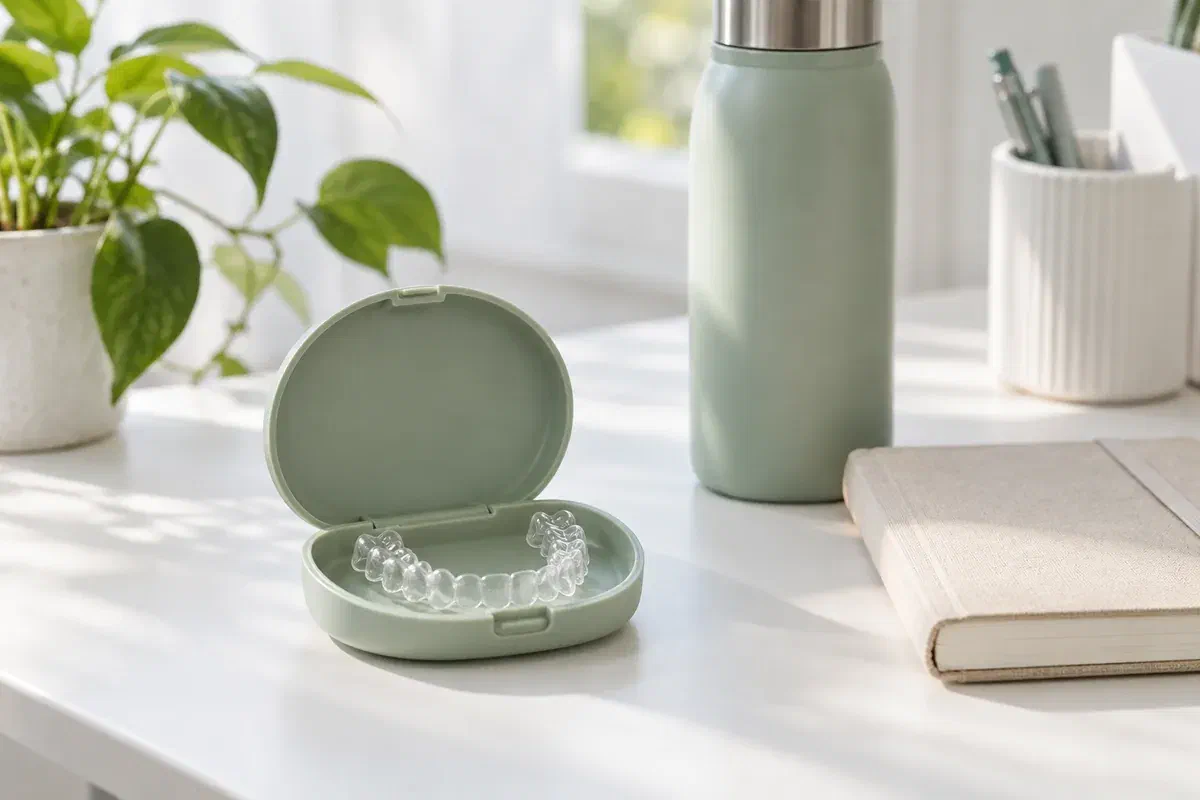
Illustrative clear aligner in a protective case beside a school notebook
Factors that shape the choice

What decides between trays and brackets?

The answer comes from the whole bite and from your teen’s real schedule. Tell us what they would like to change and what could get in the way of steady wear.

Bite relationships and eruption

Visible crowding tells only part of the story. How upper and lower teeth line up, which permanent teeth have yet to appear, and other findings can make one appliance more suitable than another. Ask what aligners could handle here and when a specialist should weigh in.

Self-management day to day

Braces stay put; aligners rely on the wearer. Talk honestly about meals out, sports, instruments, and evenings with friends. Plan the routine with your teen rather than for them, so the prescribed hours feel like their own commitment.

A healthy starting point

Cavities, bleeding gums, earlier injuries, and unfinished dental work should all be mentioned. Some may need treatment before any movement begins. Routine exams and cleanings continue during treatment, separately from aligner reviews.

Share details of any past orthodontic work or retainers. Old trays should not be reused, and an incomplete set should not be restarted, without a fresh assessment.

Where aligners can help

Discreet trays, real responsibility

Compared with many fixed appliances, clear aligners draw less attention, although bonded attachments or other features may be visible. They come out for meals and brushing as directed. That suits some teenagers, but it does not make the process effortless, and it is not suitable for every bite.

The likely result, timeframe, and limits of treatment should be described for your teen individually. Teeth do not always track the plan exactly, and further trays or assessment may become necessary. Ask how progress will be judged and how you would be told if the approach needed to change.

Patient information: American Association of Orthodontists — clear aligners

A fair conversation about looks

Your teen can ask what trays and attachments look like up close and how speech may feel during the first days. Expecting complete invisibility leads to disappointment. Concerns about school and friends deserve concrete answers.

No brackets to brush around

With the aligners out, teeth can be brushed and flossed as instructed, and the trays need their own cleaning. Ask for a routine that works on busy school days, including after lunch when proper facilities are not available.

Built-in review points

Regular appointments let the clinician look at fit, movement, gum health, and any wear problems. Your teen can describe what has really been happening. Candid answers lead to better decisions than covering up missed hours.

Step by step

Know the route before treatment begins

Ask who will plan and supervise the work, what records are needed, and when a referral would help. The consultation should clarify the options rather than sign you up for one.

  1. Look closely at the teeth and the goals

    The clinician considers medical and dental history, oral health, and the alignment concerns. Photographs, a digital scan, or X-rays may be suggested when indicated. Discuss what your teen wants changed and which findings may need a specialist.

  2. Understand the plan and its demands

    Ask about the proposed movements, any attachments or added procedures, expected duration, and alternatives such as braces. Confirm the review schedule, the retention plan, and what the fee covers. A digital simulation is an explanation, not a promise.

  3. Get comfortable with the trays

    If treatment goes ahead, your teen is shown how each aligner should fit, go in, and come out. Typical Invisalign wear is twenty to twenty-two hours daily, though the treating clinician’s guidance comes first. Change trays only as scheduled and know who to contact with problems.

  4. Track progress and set up retention

    Progress is assessed and the course adjusted where needed. Keep raising missed wear, discomfort, or fit changes. Before active movement ends, agree on the retainer, the follow-up visits, and what to do if a retainer is damaged or no longer fits.

Making the routine stick

Habits matter more than the trays themselves.

Most progress happens between appointments. Plan for meals, cleaning, storage, and what your teen should do when something unexpected comes up.

Always use the case

When the trays are out, keep them in their protective case. A folded napkin on a cafeteria tray is a common way to lose one, and pets find them too. Contact the treating clinician promptly about a lost, cracked, or warped tray and ask what to wear next.

Meals, drinks, and cleaning

Take the aligners out to eat and for any drink besides plain water, as instructed. Clean teeth and trays before putting them back. Hot water and household cleaners can damage them, so ask for practical advice about lunch away from home.

Raise problems early

Pressure often accompanies a new tray, but significant pain, a lasting sore area, or an aligner that will not sit properly needs attention. Do not trim or force it. Continue regular dental visits, and follow the retainer plan once movement is complete.

Patient information: Invisalign — retainers after treatment

Side-by-side options

Pick the approach that fits both the teeth and the teenager.

Every suitable option has strengths, limitations, and obligations worth hearing about. Appearance is a fair concern, but it should be one factor among several.

When the movements and the routine are a good match

Aligners, closely supervised

After assessment, aligners may be a sensible fit. They need reliable wear, careful handling, cleaning, and reviews. Ask how changes in eruption or slower progress would be managed and whether additional features are expected.

When another method suits the findings better

Fixed braces or another specialist approach

Braces or a different plan may be advised for particular needs. Fixed appliances bring their own hygiene, food, and appointment considerations. A specialist opinion helps your family compare realistic choices instead of relying on photos.

When health, development, or readiness comes first

Groundwork or a scheduled review

The clinician might recommend completing dental care, improving daily cleaning, or watching development before starting. Ask why waiting is advised and when to come back. Any delay should have a clear reason and a reassessment date.

Decision questions

Before you choose, ask these.

School, snacks, sports, and who handles what are all worth discussing at the consultation. Your teen can ask their own questions too.

(905) 876-4488
Are aligners faster than braces for teenagers?
Not necessarily. Treatment length depends on the movements needed and how consistently the plan is followed. Ask the clinician for an estimate for each suitable option, and remember that any timeline can change as treatment progresses.
Which is easier to keep clean, aligners or braces?
Aligners come out, so brushing and flossing can be done without wires in the way. However, the trays need cleaning too, and teeth should be clean before trays go back in. Both options need a dependable routine.
What if my teen starts with aligners and it isn’t working?
Speak with the treating clinician as soon as you notice a problem. They can assess fit, wear, and progress and explain the options, which might include refining the plan or considering another approach. Avoid changing anything on your own.
How should my teen handle drinks other than water during the school day?
The usual guidance is to remove aligners for anything besides plain water. Sugary or acidic drinks raise their own concerns for teeth. Ask how to fit drinks, cleaning, and wearing hours into school and sport.
How often will we need review appointments?
Review frequency depends on the plan and the clinician’s approach. Ask at the consultation, and if you are coming from Oakville, it helps to schedule visits around school timetables early so reviews are not missed.
Is a retainer needed even if the teeth look straight at the end?
Yes, retention is normally part of keeping the result. Teeth can drift after active treatment. Ask what retainer is recommended, how it should be worn, and how replacements and follow-up are handled.
Teen orthodontic options for Oakville families

Come in with the comparison, leave with clearer answers.

Contact our Bronte Street practice to request an orthodontic assessment for your teen. We can discuss suitability, daily wear, review scheduling, and when it would help to hear from a specialist before deciding.

Suitability, treatment supervision, and any referral are discussed after assessment. Results and timing vary between individuals.

Visit Milton Dental Clinic
Unit 1, 342 Bronte St. S, Milton, ON L9T 5B7
Get directions Clinic hours
Monday–Thursday
11am–7pm
Friday–Sunday
By appointment only

Areas we serve

  • Milton
  • Oakville
  • Mississauga
  • Georgetown
  • Halton Hills
  • Acton
  • Campbellville
  • Brampton
  • Burlington
  • Puslinch
  • Rockwood
  • Erin
  • Caledon
  • Etobicoke
  • Old Milton
  • Bronte Meadows
  • Timberlea
  • Dorset Park
  • Dempsey
  • Clarke
  • Beaty
  • Coates
  • Harrison
  • Scott
  • Willmott
  • Ford
  • Bowes
  • Cobden
  • Walker
  • Mountain View
  • Milton Heights
  • Hawthorne Village
  • Valley View
  • Fallingbrook
  • Nassagaweya
  • Trafalgar
  • Esquesing
  • Nelson
  • Brookville
  • Moffat
  • Glen Williams
  • Norval
  • Limehouse
  • Stewarttown
  • Ashgrove
  • Hornby
  • Silver Creek
  • Speyside
  • Scotch Block
  • North Oakville
  • River Oaks
  • Glen Abbey
  • West Oak Trails
  • Palermo
  • Bronte Creek
  • College Park
  • Joshua Creek
  • Uptown Core
  • Preserve
  • Iroquois Ridge
  • Lisgar
  • Meadowvale
  • Meadowvale Village
  • Churchill Meadows
  • Erin Mills
  • Central Erin Mills
  • Streetsville
  • East Credit
  • Creditview
  • Heartland
  • Sheridan
  • Mount Pleasant
  • Credit Valley
  • Huttonville
  • Churchville
  • Springbrook
  • Northwest Brampton
  • Bram West
  • Fletcher's Meadow
  • Fletcher's Creek South
  • Alton Village
  • Orchard
  • Millcroft
  • Headon Forest
  • Tansley
  • Brant Hills
  • Tyandaga
  • Kilbride
  • Lowville
  • Aberfoyle
  • Morriston
  • Arkell
  • Hillsburgh
  • Freelton
  • Carlisle
  • Waterdown
  • Flamborough
  • Mountsberg

How can we help?

Milton Dental Clinic

Have a question about your smile? Choose the option that works best for you.

For urgent dental concerns, please call.
Messages are reviewed during clinic hours.