

Illustrative parent and child discussing a molar model during a dental consultation
Children’s Dentistry

Pediatric Pulpectomy in Brampton

When two parents, a grandparent and a sitter all share the school run, everyone needs the same clear picture of a child’s dental plan. For households in Brampton, we explain pulpectomy for a baby tooth, its alternatives, and the aftercare each caregiver should know.

One plan, several caregivers

Everyone who looks after your child should understand the tooth.

Here is the short version to pass along. Deep in each baby tooth is soft tissue called pulp. If it becomes inflamed beyond recovery or dies, yet the tooth is otherwise strong enough to keep, the dentist may suggest a pulpectomy. That means removing the pulp from the crown and all the root canals, cleaning those channels, and filling them with a material designed for primary teeth.

Relatives who have had a root canal sometimes assume this is the same thing. It is not. Baby-tooth roots shrink naturally to let the adult tooth through, and that adult tooth is already developing below, which changes the choice of materials and the follow-up. It is also more extensive than a pulpotomy, where healthy tissue in the roots is left in place.

Our first question is whether keeping this tooth makes sense for your child. The answer depends on symptoms, root condition, how much tooth is left, general health and what else the mouth needs. We are glad to explain it to more than one family member, and we will say clearly if a pediatric dentist or a different treatment would be a better fit.

Get a plan the whole family can follow
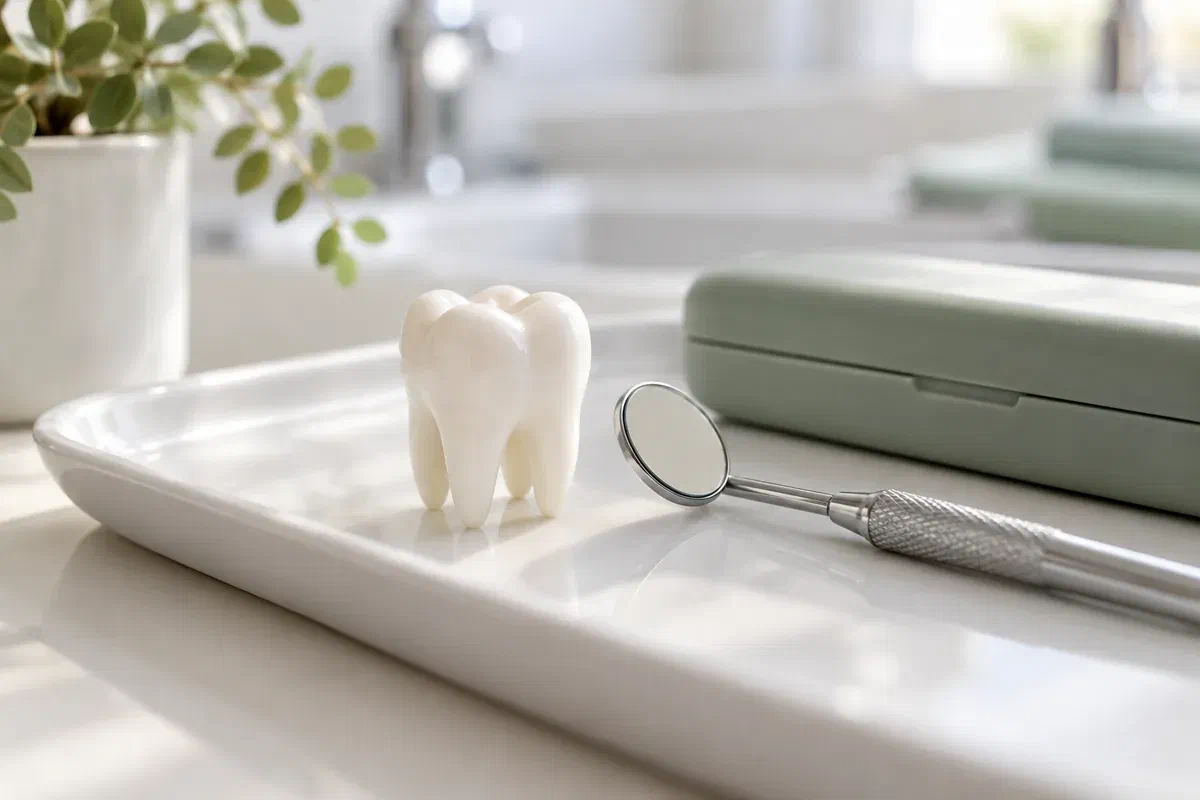
Illustrative opaque molar model and mirror on a clean dental tray
Pooling what everyone noticed

Different adults may have seen different warning signs.

Ask each caregiver what they have observed before the appointment. We combine that history with an examination and suitable imaging, because one calm visit does not cancel a difficult week.

Pain reported at different times of day

A sitter may hear about pain after lunch, while a parent sees it at bedtime. Gather when it started, whether it happens without eating and whether it disturbs sleep, plus which medicines were given and by whom.

A gum bump one person saw and another missed

Tell us about any bump on the gum, discharge, bad taste or facial swelling, even if it vanished before others noticed. These signs need checking. Nobody should squeeze the bump or treat drainage as a cure.

A tooth that may be close to falling out

How much crown remains and how far the roots have resorbed both shape the advice. Ask how much time the tooth likely has. The size of the cavity alone cannot decide whether treatment is sensible.

Make sure every caregiver knows: suspected infection needs prompt dental advice, and breathing or swallowing difficulty, fast-spreading facial swelling, or a child who seems seriously ill needs emergency medical care.

Why treat the inside of the tooth

Calm the infection. Then decide if the tooth has a future.

For a primary tooth that is a good candidate, a pulpectomy aims to control diseased pulp and help the tooth carry on working. Root findings weigh heavily in that choice. Removal belongs in the same discussion, since holding on to a tooth is not always appropriate.

Nobody can promise success. A good plan explains the outlook for this tooth, what treatment can’t achieve, and what would happen if symptoms carried on or came back. With that in hand, your family can choose on the merits rather than assuming that every tooth is worth saving.

Patient information: AAPD — non-vital pulp therapies in primary teeth

Fits your child’s development

Ask what this tooth would do for your child in the months or years it has left, such as chewing and supporting the growing teeth. Consider too how much treatment your child can comfortably manage and whether the family can keep up with each visit.

Covers the whole tooth

Treating the canals does not repair the broken top of the tooth. A final restoration is part of the plan from the beginning. Ask what it will be, when it will be placed, and whether every stage is already booked.

Builds a record for later

Notes and suitable X-rays let the dentist compare the tooth at each review. Ask when the first follow-up is due and who will be reminded. Everyday observations from any caregiver about eating or swelling are useful too.

The sequence of care

Four steps, and who should know about each

Some teeth need one visit and some need two or more, depending on the tooth and on your child. We can explain the comfort plan and whether another setting would suit your child better.

  1. Agree on the diagnosis and plan

    The clinician weighs symptoms, examination, root findings and the chance of a sound repair, then explains the alternatives and expected outlook. Ask whether a specialist should be involved and how unexpected findings would be handled. Share the plan with other caregivers afterward.

  2. Arrange comfort and isolation

    Local anaesthetic and isolation are planned to suit the case. Practise a simple hand signal your child can use. Let the team know in advance about earlier difficult visits, health conditions or support needs.

  3. Treat the canal system

    The dentist removes affected pulp, cleans the internal spaces with suitable techniques, and fills the canals with a resorbable material meant for primary teeth. The approach depends on the tooth, and it is clinical work only.

  4. Restore and set reminders

    The tooth is sealed and rebuilt, sometimes with a crown, and imaging may record the result as indicated. Confirm any remaining appointment and the review schedule, and put them where every caregiver can see them.

The handover after treatment

Write it down, share it, and call if things change.

Ask what your child may feel after the exact treatment given. Pass the eating limits, medicine advice and next appointment on to everyone who will be minding your child.

Numbness: the first few hours

Local anaesthetic can leave the lip and cheek numb for a while, and children may bite them without realising. Whoever is supervising should watch for this and follow the food and drink advice. Give only pain medicine suited to your child’s age, weight and health, as the treating professional directs.

Temporary filling: the days between visits

When treatment is staged, everyone should know how to protect the temporary repair and when the next visit is. Report a lost filling, loose crown or food trap promptly. Never use household glue, and don’t cancel the final step because your child feels better.

Reviews: the months that follow

A pain-free tooth is encouraging, but it does not confirm success. Put the clinical and X-ray reviews on the shared family calendar and keep them. Ask about protecting the other teeth, and agree who will handle brushing help on busy days.

Patient information: AAPD — local anaesthesia and pediatric aftercare

Choices to discuss together

Different teeth, different answers.

Ask how the diagnosis, the roots, the remaining tooth and the visit schedule shape what is advised. Each alternative should be clear enough to explain to the rest of the family.

If the tooth is suitable

Pulpectomy followed by a full restoration

Canal treatment may be advised when the pulp requires it and the tooth is restorable and worth retaining. The dentist should describe the outlook and the reviews. A family’s wish to avoid extraction cannot be the only reason to choose it.

If the findings suggest a different route

Another kind of pulp treatment

Some teeth have healthy pulp in the roots and need a different procedure; others warrant a specialist’s opinion. Ask why the recommendation fits. Pulpotomy and pulpectomy are not picked by how long the appointment takes.

If keeping it is unlikely to succeed

Removing the tooth and reviewing the gap

Extraction may be the better plan when restoration isn’t possible, the roots have changed considerably, or other findings rule out retention. Ask whether the space needs later assessment. A space maintainer is weighed case by case.

Questions families raise

Practical answers for busy households

Bring any written plan or earlier images. They help us explain what was suggested and what we still need to check.

(905) 876-4488
Can both parents join the consultation?
Yes, and it often helps when big decisions are being made. If one parent can’t attend, take notes or ask for a written summary of the plan so everyone hears the same explanation.
What should a sitter know on the day of treatment?
They should know that the mouth may be numb for a while, what your child can eat and drink, any medicine instructions, and the clinic’s number. Make sure they know which signs mean calling the clinic and which mean emergency care.
Can my child go back to school after a pulpectomy?
Many children return to normal activities soon after, but it depends on the treatment, the anaesthetic and how your child feels. Ask the dentist on the day, and keep in mind the need to avoid biting numb tissue.
Why can’t the dentist just put a filling on top?
When the pulp is diseased, a surface filling alone does not deal with the tissue inside the tooth. That is why canal treatment or removal is discussed. A restoration is still needed after a pulpectomy to seal and protect the tooth.
Is there any chance the treated tooth will need more care later?
Yes. Persistent or returning infection, a problem with the restoration or new findings can change the plan, which could include extraction. Ask about this tooth’s outlook so you know what to watch for.
How can we keep visits manageable when coming from Brampton?
Ask for the full appointment sequence early and book staged visits together where possible. Agree in advance which caregiver will attend each one, and treat spreading swelling or breathing trouble as an emergency wherever you are.
Brampton households

Clear information you can pass along.

Whichever caregiver has the details, get in touch with our Bronte Street practice to describe the symptoms or share the pulpectomy plan you were given. We can explain the assessment, talk through retaining or removing the primary tooth, and say when a referral would help.

Each plan follows an examination and suitable X-rays. If the face is swelling or pain keeps rising, please phone us.

Visit Milton Dental Clinic
Unit 1, 342 Bronte St. S, Milton, ON L9T 5B7
Get directions Clinic hours
Monday–Thursday
11am–7pm
Friday–Sunday
By appointment only

Areas we serve

  • Milton
  • Oakville
  • Mississauga
  • Georgetown
  • Halton Hills
  • Acton
  • Campbellville
  • Brampton
  • Burlington
  • Puslinch
  • Rockwood
  • Erin
  • Caledon
  • Etobicoke
  • Old Milton
  • Bronte Meadows
  • Timberlea
  • Dorset Park
  • Dempsey
  • Clarke
  • Beaty
  • Coates
  • Harrison
  • Scott
  • Willmott
  • Ford
  • Bowes
  • Cobden
  • Walker
  • Mountain View
  • Milton Heights
  • Hawthorne Village
  • Valley View
  • Fallingbrook
  • Nassagaweya
  • Trafalgar
  • Esquesing
  • Nelson
  • Brookville
  • Moffat
  • Glen Williams
  • Norval
  • Limehouse
  • Stewarttown
  • Ashgrove
  • Hornby
  • Silver Creek
  • Speyside
  • Scotch Block
  • North Oakville
  • River Oaks
  • Glen Abbey
  • West Oak Trails
  • Palermo
  • Bronte Creek
  • College Park
  • Joshua Creek
  • Uptown Core
  • Preserve
  • Iroquois Ridge
  • Lisgar
  • Meadowvale
  • Meadowvale Village
  • Churchill Meadows
  • Erin Mills
  • Central Erin Mills
  • Streetsville
  • East Credit
  • Creditview
  • Heartland
  • Sheridan
  • Mount Pleasant
  • Credit Valley
  • Huttonville
  • Churchville
  • Springbrook
  • Northwest Brampton
  • Bram West
  • Fletcher's Meadow
  • Fletcher's Creek South
  • Alton Village
  • Orchard
  • Millcroft
  • Headon Forest
  • Tansley
  • Brant Hills
  • Tyandaga
  • Kilbride
  • Lowville
  • Aberfoyle
  • Morriston
  • Arkell
  • Hillsburgh
  • Freelton
  • Carlisle
  • Waterdown
  • Flamborough
  • Mountsberg

How can we help?

Milton Dental Clinic

Have a question about your smile? Choose the option that works best for you.

For urgent dental concerns, please call.
Messages are reviewed during clinic hours.