

Illustrative parent and child discussing a molar model during a dental consultation
Children’s Dentistry

Pediatric Pulpectomy in Burlington

A small bump on your child’s gum, above a baby tooth, can be the first visible clue that the pulp inside is in trouble. For children from Burlington, we can check the tooth and roots, explain whether a pulpectomy is suitable, and plan the repair and reviews.

The gum bump that keeps returning

Spotted a pimple on the gum? Look at the tooth beside it.

A raised spot on the gum, sometimes with a little drainage, often marks an infection draining from a tooth whose pulp has died. Children may not complain at all. When the tooth itself is still restorable, one treatment the dentist may discuss is a pulpectomy, which removes the diseased pulp from the crown and canals, cleans the inside of the tooth, and fills it with a material designed for primary teeth.

This differs from a pulpotomy, where only the upper pulp is removed because the tissue in the roots is judged healthy. It also differs from adult root canal treatment. Baby-tooth roots gradually dissolve to make way for the permanent tooth below, so the dentist has to think about that tooth and that timeline when choosing materials and follow-up.

Our first job is deciding whether this tooth should stay. Burlington parents often arrive expecting a quick fix for the bump, and we want to be clear that the answer depends on the roots, the remaining crown, your child’s symptoms and health, and their other dental needs. Where a pediatric dental referral or another plan fits better, we will explain why.

Get the tooth behind the bump checked
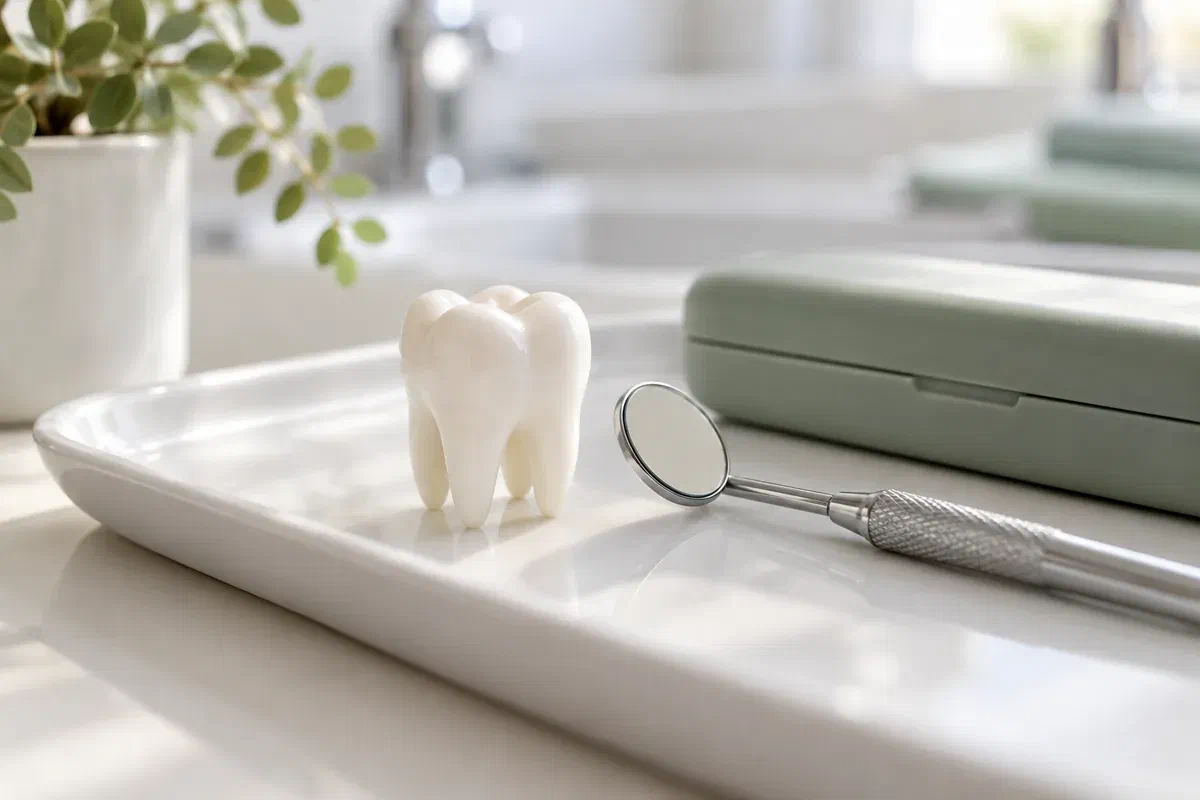
Illustrative opaque molar model and mirror on a clean dental tray
What to mention

Even signs that faded are part of the picture.

Diagnosis rests on your account, the examination and appropriate X-rays. A bump that has flattened by appointment day still tells the dentist something.

Pain, or a surprising lack of it

Some children with an infected baby tooth have pain that wakes them; others feel little. Say when any discomfort began, whether it happens without eating, and what medicine you have tried. Lack of pain does not rule out a problem.

Drainage, taste or a swollen face

Describe the gum bump, any discharge or bad taste, and any facial swelling, including when it last flared. Each warrants an assessment. Please don’t pop the bump, and don’t assume drainage means the infection is gone.

Uncertainty about the tooth’s remaining time

How much tooth is left and how the roots look affect whether treatment is sensible. Ask how close it may be to falling out on its own. The visible cavity cannot answer that by itself.

Get prompt dental advice when infection is suspected. A child with breathing or swallowing trouble, rapidly spreading facial swelling, or serious illness needs emergency medical care.

What canal treatment can offer

Remove the infection’s source, and keep the tooth only if that makes sense.

In a suitable primary tooth, pulpectomy aims to manage the diseased pulp that is feeding the infection and to help the tooth keep functioning. Root findings play a major role in whether a tooth qualifies. Removal deserves equal consideration, because some teeth are better taken out.

There is no guarantee of success. Your dentist should describe the outlook for this tooth, the treatment’s limits, and what would happen if the bump or pain came back. That understanding means you are not choosing treatment simply because keeping a tooth sounds better.

Patient information: AAPD — non-vital pulp therapies in primary teeth

Linked to your child’s stage of growth

Ask what the tooth would add before it is naturally lost, including chewing and its role as the adult teeth develop. Weigh that against how much treatment your child can manage and whether the restoration and reviews are workable.

Rebuilding the outside after treating the inside

Once the canals are treated, the decayed or broken surface still needs a proper restoration. Ask how the tooth will be sealed and protected and whether every stage is booked.

A starting point for future checks

Notes and suitable radiographs give the dentist something to compare against. Ask when the first follow-up should be and how reviews will be arranged. Tell us if the bump reappears or eating becomes uncomfortable.

Inside the treatment visit

From the first X-ray to the finished seal

An infected tooth may be treated in one sitting or across two, depending on the findings and your child. We will explain the comfort plan and whether a different setting would be more suitable.

  1. Decide whether the tooth can be saved

    Symptoms, the examination, root findings and the possibility of a lasting restoration are weighed. You will hear the alternatives and the likely outlook. Ask whether a specialist should be involved and what would change if unexpected findings appeared.

  2. Make the tooth numb and keep it clean

    Local anaesthetic and isolation are planned for the case. Agree with your child on a way to signal if something feels uncomfortable. Share past difficulties, health conditions or support needs before the appointment.

  3. Remove the infected tissue

    The dentist clears diseased pulp from the crown and canals and cleans the spaces with suitable techniques. A resorbable material made for primary teeth then fills the canals. Methods depend on the tooth.

  4. Seal, restore and schedule the review

    The tooth is sealed and rebuilt, which may mean a crown. Imaging may record the result as indicated. Confirm any further visit, the home-care steps, and when the bump area, the restoration and the surrounding tissue will be checked.

Keeping watch afterward

The bump should not come back. Tell us if it does.

Ask what is expected after your child’s particular treatment. Every caregiver should know any limits on food, the medicine advice and when the next appointment is.

Prevent bites while the mouth is numb

If local anaesthetic was used, supervise your child so they don’t chew numb lips or cheeks. Follow the food and drink guidance. Any pain medicine should match your child’s age, weight and health, as directed by the treating professional.

Look after any interim filling

With staged treatment, ask how to protect the temporary repair and when to return. Report a lost filling, loose crown or food trap quickly. Do not use household glue, and do not put off the final restoration because things feel better.

Keep follow-up appointments

A calm tooth is encouraging but does not confirm the treatment worked. Attend the clinical and X-ray reviews recommended. Keep helping with brushing and ask about protecting the other teeth.

Patient information: AAPD — local anaesthesia and pediatric aftercare

Weighing the choices

Why one tooth gets a pulpectomy and another is removed

Ask how diagnosis, roots, remaining structure and the number of visits influence the advice. You should understand each alternative well enough to compare.

If the tooth meets the criteria

Pulpectomy and a dependable restoration

Canal treatment may be advised when the pulp requires it and the tooth can be kept and rebuilt. Ask about its outlook and the review plan. Wanting to avoid an extraction is not, on its own, a reason to choose it.

If the findings suggest it

Different pulp care

Where healthy pulp remains in the roots, a different treatment may fit; some cases call for specialist input. Ask why the chosen procedure suits what was found. The two pulp treatments are not swapped for convenience.

If keeping it has a poor outlook

Extraction, then checking the space

Removal may be wiser if the tooth can’t be restored, the roots have changed markedly, or other findings argue against keeping it. Ask whether the gap should be reviewed. A space maintainer is decided per case, not fitted automatically.

Your questions, answered

About gum bumps, baby teeth and canal treatment

If you have a written plan or earlier X-rays, bring them. They help us explain what has been suggested and what still needs to be examined.

(905) 876-4488
What is the small pimple on my child’s gum?
It is often a sign that infection from inside a tooth is draining through the gum. It needs a dental examination to find the source. Do not squeeze it, and book an assessment even if it shrinks.
My child says nothing hurts. Does the tooth still need treatment?
Possibly. A tooth whose pulp has died may not cause much pain, yet infection can still be present. The dentist will look at the tooth and X-rays and explain whether treatment, removal or monitoring is advised.
Can the infection affect the adult tooth developing underneath?
Infection around a baby tooth sits close to the permanent tooth forming below it, which is one reason it should be assessed rather than ignored. Ask the dentist what the X-rays show about the developing tooth.
Why does root resorption affect whether a baby tooth can be treated?
As a primary tooth nears its natural loss, its roots shorten. Extensive resorption or other unfavourable findings can make canal treatment less suitable. The dentist should show you what the images reveal before recommending a plan.
Will my child need a crown after the pulpectomy?
Often a crown is used to protect a treated baby molar, though the right restoration depends on the tooth. Ask what is planned and whether it will be placed at the same visit or later.
Is a midweek evening appointment possible for children coming from Burlington?
Our regular hours run Monday to Thursday from 11am to 7pm, with Friday to Sunday by appointment only. Call to ask what suits your child’s treatment and school schedule.
Burlington bookings

Find out what that bump is telling you.

Contact our Bronte Street practice about your child’s gum bump, symptoms or a recommended pulpectomy. We can explain the assessment, the reasons a primary tooth might be kept or removed, and when referral would be the better step.

Treatment depends on examination and appropriate X-rays. If the face is swelling or pain is increasing, phone us first.

Visit Milton Dental Clinic
Unit 1, 342 Bronte St. S, Milton, ON L9T 5B7
Get directions Clinic hours
Monday–Thursday
11am–7pm
Friday–Sunday
By appointment only

Areas we serve

  • Milton
  • Oakville
  • Mississauga
  • Georgetown
  • Halton Hills
  • Acton
  • Campbellville
  • Brampton
  • Burlington
  • Puslinch
  • Rockwood
  • Erin
  • Caledon
  • Etobicoke
  • Old Milton
  • Bronte Meadows
  • Timberlea
  • Dorset Park
  • Dempsey
  • Clarke
  • Beaty
  • Coates
  • Harrison
  • Scott
  • Willmott
  • Ford
  • Bowes
  • Cobden
  • Walker
  • Mountain View
  • Milton Heights
  • Hawthorne Village
  • Valley View
  • Fallingbrook
  • Nassagaweya
  • Trafalgar
  • Esquesing
  • Nelson
  • Brookville
  • Moffat
  • Glen Williams
  • Norval
  • Limehouse
  • Stewarttown
  • Ashgrove
  • Hornby
  • Silver Creek
  • Speyside
  • Scotch Block
  • North Oakville
  • River Oaks
  • Glen Abbey
  • West Oak Trails
  • Palermo
  • Bronte Creek
  • College Park
  • Joshua Creek
  • Uptown Core
  • Preserve
  • Iroquois Ridge
  • Lisgar
  • Meadowvale
  • Meadowvale Village
  • Churchill Meadows
  • Erin Mills
  • Central Erin Mills
  • Streetsville
  • East Credit
  • Creditview
  • Heartland
  • Sheridan
  • Mount Pleasant
  • Credit Valley
  • Huttonville
  • Churchville
  • Springbrook
  • Northwest Brampton
  • Bram West
  • Fletcher's Meadow
  • Fletcher's Creek South
  • Alton Village
  • Orchard
  • Millcroft
  • Headon Forest
  • Tansley
  • Brant Hills
  • Tyandaga
  • Kilbride
  • Lowville
  • Aberfoyle
  • Morriston
  • Arkell
  • Hillsburgh
  • Freelton
  • Carlisle
  • Waterdown
  • Flamborough
  • Mountsberg

How can we help?

Milton Dental Clinic

Have a question about your smile? Choose the option that works best for you.

For urgent dental concerns, please call.
Messages are reviewed during clinic hours.