

Illustrative parent and child discussing a molar model during a dental consultation
Children’s Dentistry

Pediatric Pulpectomy in Old Milton

A back tooth that keeps your child up at night is worth a proper look. For families in Old Milton, we can assess whether the pulp of a baby molar can be treated through its canals, how the tooth would be rebuilt, and when another route makes more sense.

When a toothache wakes your child

Why does a baby tooth hurt at two in the morning?

Pain that arrives unprompted, especially at night, often points past the surface of the tooth to the pulp inside it. Deep decay or an old injury can leave that tissue inflamed past the point of recovery, or no longer alive. If enough of the tooth remains, a pulpectomy may be offered: the dentist removes the affected pulp from the crown and every canal, cleans the spaces, and fills them with a material made for primary teeth.

It helps to know what this is not. A pulpotomy keeps healthy tissue in the roots and treats only the upper part; a pulpectomy goes further. And while the word sounds like an adult root canal, baby teeth have roots that naturally dissolve and a permanent tooth growing beneath, so diagnosis, materials and checkups are handled differently.

Our Bronte Street practice sits close to Milton’s historic downtown, and many households near Main Street bring grandparents or other relatives into a child’s care. Whoever attends, our starting question is whether this tooth should be kept at all. We look at symptoms, the roots, what is left of the crown, your child’s health and the rest of the mouth, and we will say so if a pediatric specialist or another option fits better.

Ask us about your child’s night-time toothache
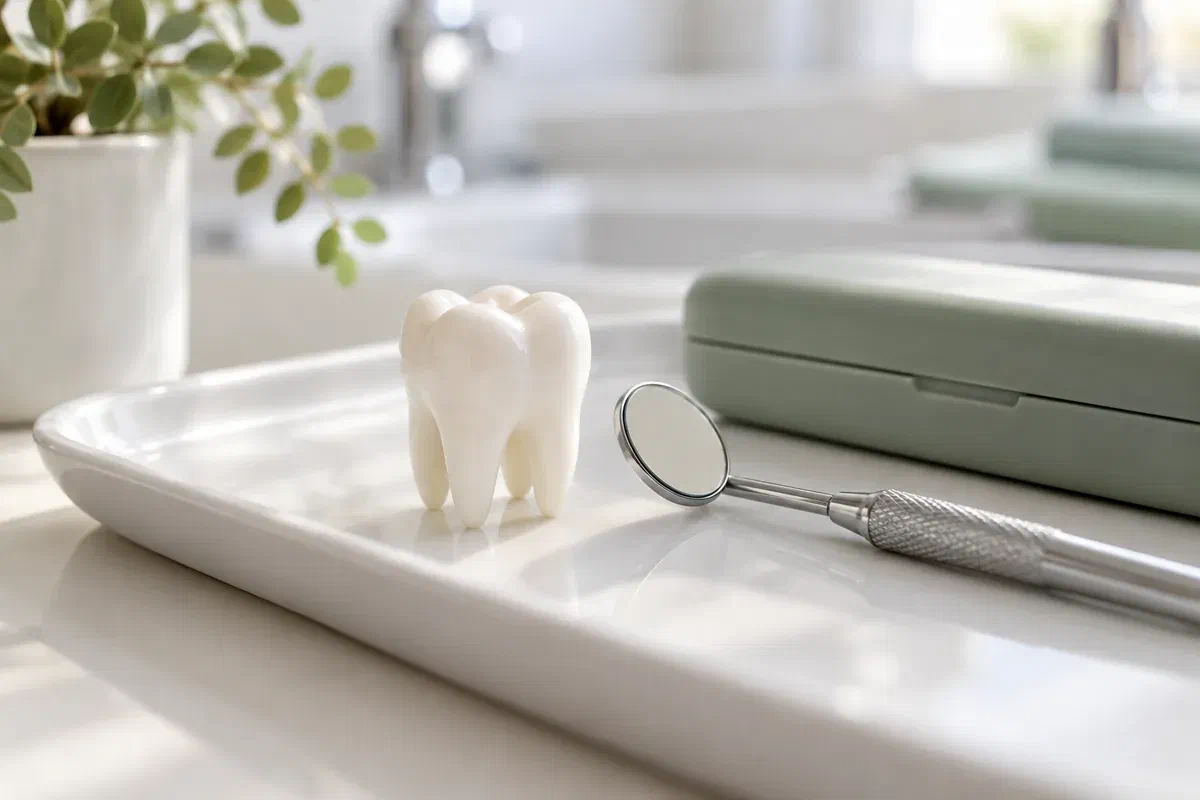
Illustrative opaque molar model and mirror on a clean dental tray
Signs to describe

Patterns over days tell us more than a single bad moment.

Your history, a careful examination and suitable X-rays all feed into the assessment. A cheerful child at the appointment does not cancel out a week of broken sleep.

Aching that interrupts sleep or play

Jot down when it started, whether it hurts without food, and how often it has woken your child. Include any pain relief you have tried and how long it worked. Clear notes help the clinician judge the tooth fairly.

A small gum blister that comes and goes

A pimple-like bump beside the tooth, a sour taste, discharge or a puffy cheek all deserve attention, even when they settle. Avoid squeezing anything, and do not treat drainage as proof the cause has gone.

A tooth that may be close to its natural end

How much crown is left and how far the roots have dissolved both affect whether treatment is sensible. Ask how much time the tooth likely has before it would loosen on its own. A photo of the hole cannot decide this.

Get prompt dental advice if an infection seems likely. Difficulty breathing or swallowing, swelling that spreads fast, or a child who seems very ill needs emergency medical care.

Why the canals are treated

Remove the source of the trouble, then judge whether the tooth can carry on.

When the case is right, a pulpectomy aims to control diseased pulp so the primary tooth can stay in place and keep working. Root condition is central to that choice. Extraction belongs in the same conversation, since keeping a tooth is not always the wiser path.

Success is not guaranteed. Expect the dentist to describe this tooth’s outlook, the limits of treatment, and what happens if symptoms linger or return. With that picture, your family can choose without assuming every baby tooth must be saved.

Patient information: AAPD — non-vital pulp therapies in primary teeth

Thinking about the years ahead

Ask what this tooth could contribute before it would naturally fall out. That may include chewing and the way neighbouring and adult teeth develop. Balance that against how demanding treatment would be for your child.

Sealing the top as well as the inside

Treating the canals leaves the broken chewing surface untouched. The final restoration is part of the job, not an extra. Ask how the tooth will be closed and protected, and whether each stage is already scheduled.

A baseline for later comparison

Notes and appropriate X-rays let the dentist see whether things are stable over time. Ask when the first review falls and how later ones will be arranged. Tell us what you notice about eating, comfort and swelling too.

What happens, step by step

Can the tooth be rebuilt? That question comes first.

Visit length and number vary with the tooth and with your child. Ask how comfort will be managed and whether treatment would be better provided somewhere else.

  1. Check restorability and agree on a plan

    Symptoms, the examination, root findings and the chance of a sound repair are weighed together. Alternatives and the likely outlook are explained. Ask whether a specialist should be involved and how surprises during treatment would be handled.

  2. Numb the area and keep it dry

    Local anaesthetic and isolation are arranged to suit the case. Agree on a signal your child can use if something feels uncomfortable. Mention earlier tough visits, health conditions or extra support needs before the day.

  3. Clear the canals and fill them

    Diseased pulp is removed and the inner spaces are cleaned with suitable methods. The canals are then filled with a resorbable material that suits a baby tooth. Techniques vary, and this is strictly clinical work.

  4. Restore the crown and set the review date

    The tooth is sealed and rebuilt, sometimes with a crown. An X-ray may record the completed treatment where indicated. Leave knowing any remaining visit, the aftercare steps, and when the tooth, the repair and the gums will be checked again.

The first evening and beyond

Share the instructions with everyone who cares for your child.

Ask what your child is likely to feel after this specific treatment. Grandparents, sitters and other caregivers should all know about food, medicine and upcoming visits.

Watch for chewing on numb skin

Numbness can last a while after local anaesthetic, so keep your child from biting their lip or cheek. Stick to the food and drink advice you were given. Only use pain medicine appropriate for your child’s age, weight and health, following clear professional directions.

Protect a temporary filling between stages

If the work is split across visits, check how to care for the temporary repair and when to return. Report a lost filling, loose crown or new food trap quickly. Never try household glue, and keep the final appointment even when the tooth feels fine.

Treat reviews as part of treatment

No pain is encouraging, though it does not confirm success. Keep the clinical and X-ray reviews you were given. Help with brushing and ask how to protect the other teeth as well.

Patient information: AAPD — local anaesthesia and pediatric aftercare

Three possible routes

Keep, treat differently, or remove: each has its place.

Ask how the diagnosis, the roots, the remaining structure and the visit demands shape the advice. You should be able to compare the options side by side.

If the tooth is a good candidate

Canal treatment and a lasting repair

A pulpectomy may be suggested when the pulp condition requires it and the tooth can be kept and rebuilt. Ask about its outlook and review plan. A parent’s wish to avoid an extraction is not, by itself, enough reason to choose it.

If the findings point another way

A different pulp treatment

Some teeth still have healthy living tissue and need a different procedure; others need a specialist’s view. Ask why the recommended option fits. Pulpotomy and pulpectomy are not chosen by which takes less chair time.

If keeping it is unlikely to work

Extraction and a look at the gap

Taking the tooth out may be better when it cannot be restored, the roots have changed a great deal, or other findings argue against keeping it. Ask whether the space should be checked later. A space maintainer is considered individually, not fitted after every extraction.

Common questions

What parents and grandparents in Old Milton want to know.

Bring any written recommendation or earlier X-rays if you have them. They make it easier to explain what was suggested and what still needs checking.

(905) 876-4488
Why would a baby tooth hurt more at night?
Inflamed pulp can throb when a child lies down and there are fewer distractions. Night pain without an obvious trigger is worth reporting because it can suggest the pulp is involved. Only an examination and appropriate X-rays can confirm what is happening.
Could a fall from months ago be the cause?
Yes, an injury can damage the pulp even if the tooth looked fine at the time. A tooth that turns grey or darker, or develops a gum bump later, should be assessed. Mention any past bumps or falls when you book.
Does the pulpectomy filling stay in after the adult tooth comes through?
The materials used in baby-tooth canals are chosen to resorb along with the roots as the tooth is naturally shed. That is one reason this is not simply an adult procedure done smaller. Ask which material is planned and how it will be monitored.
Can a grandparent bring our child to the appointment?
Another trusted adult can often attend, but a parent or legal guardian may need to give consent for treatment. Call ahead so we can explain what is required, and make sure whoever comes knows your child’s health history and medicines.
Is the tooth certain to last until it falls out naturally?
No outcome is certain. Ongoing or returning disease, a failed restoration or new findings can change the plan. Ask about this tooth’s particular outlook and what would be considered if treatment does not succeed.
We are near downtown Milton. Is it easy to drop in if the gum bump returns?
Please phone first rather than arriving unannounced, so the team can advise how soon your child should be seen. Describe the bump, any swelling and how your child seems. Spreading swelling or trouble breathing needs emergency care instead.
Old Milton appointments

Sleep better once you know the plan.

From Old Milton, call our Bronte Street practice about your child’s symptoms or a pulpectomy someone has recommended. We will explain the assessment, why a baby tooth might be kept or removed, and when a referral could be the better step.

Treatment is planned only after an examination and suitable X-rays. If swelling appears or pain is getting worse, please call rather than waiting.

Visit Milton Dental Clinic
Unit 1, 342 Bronte St. S, Milton, ON L9T 5B7
Get directions Clinic hours
Monday–Thursday
11am–7pm
Friday–Sunday
By appointment only

Areas we serve

  • Milton
  • Oakville
  • Mississauga
  • Georgetown
  • Halton Hills
  • Acton
  • Campbellville
  • Brampton
  • Burlington
  • Puslinch
  • Rockwood
  • Erin
  • Caledon
  • Etobicoke
  • Old Milton
  • Bronte Meadows
  • Timberlea
  • Dorset Park
  • Dempsey
  • Clarke
  • Beaty
  • Coates
  • Harrison
  • Scott
  • Willmott
  • Ford
  • Bowes
  • Cobden
  • Walker
  • Mountain View
  • Milton Heights
  • Hawthorne Village
  • Valley View
  • Fallingbrook
  • Nassagaweya
  • Trafalgar
  • Esquesing
  • Nelson
  • Brookville
  • Moffat
  • Glen Williams
  • Norval
  • Limehouse
  • Stewarttown
  • Ashgrove
  • Hornby
  • Silver Creek
  • Speyside
  • Scotch Block
  • North Oakville
  • River Oaks
  • Glen Abbey
  • West Oak Trails
  • Palermo
  • Bronte Creek
  • College Park
  • Joshua Creek
  • Uptown Core
  • Preserve
  • Iroquois Ridge
  • Lisgar
  • Meadowvale
  • Meadowvale Village
  • Churchill Meadows
  • Erin Mills
  • Central Erin Mills
  • Streetsville
  • East Credit
  • Creditview
  • Heartland
  • Sheridan
  • Mount Pleasant
  • Credit Valley
  • Huttonville
  • Churchville
  • Springbrook
  • Northwest Brampton
  • Bram West
  • Fletcher's Meadow
  • Fletcher's Creek South
  • Alton Village
  • Orchard
  • Millcroft
  • Headon Forest
  • Tansley
  • Brant Hills
  • Tyandaga
  • Kilbride
  • Lowville
  • Aberfoyle
  • Morriston
  • Arkell
  • Hillsburgh
  • Freelton
  • Carlisle
  • Waterdown
  • Flamborough
  • Mountsberg

How can we help?

Milton Dental Clinic

Have a question about your smile? Choose the option that works best for you.

For urgent dental concerns, please call.
Messages are reviewed during clinic hours.