

Illustrative child and father discussing a tooth model with a dental clinician
Children’s Dentistry

Pediatric Pulpotomy

When a deep cavity reaches the pulp of a baby tooth, a filling may not be the whole answer. Learn about pediatric pulpotomy in Milton, including suitability, preserving the remaining living pulp, and protecting the tooth afterward.

A closer look at pediatric pulpotomy

Care inside the tooth, with its remaining healthy tissue in mind.

The pulp is the soft tissue inside a tooth. In a suitable primary tooth, a pulpotomy removes the pulp from the crown portion while aiming to preserve the living pulp in the roots. This is different from simply filling a cavity and from removing pulp throughout the root canals.

The decision depends on the diagnosis and the condition of the tooth. Deep decay does not automatically mean a pulpotomy is appropriate. The dentist must consider symptoms, examination and imaging findings, the ability to restore the tooth, and what is found during treatment. A different approach may be needed.

At Milton Dental Clinic, you can ask for an explanation of the proposed care before your child begins. We want your family to understand why preserving this primary tooth is being considered, how the appointment will be planned, and how the tooth will be restored and reviewed afterward.

Discuss a proposed pulpotomy
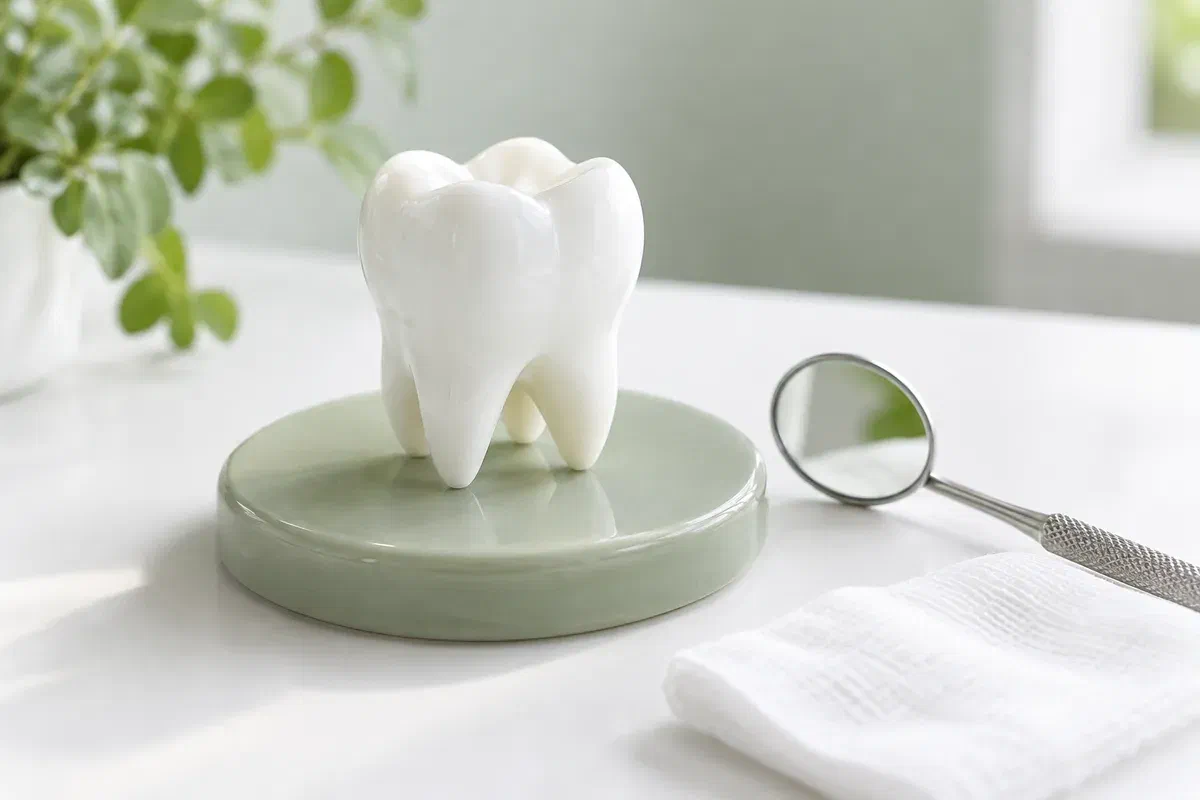
Illustrative solid primary molar model beside a dental mirror and gauze
Information that guides the diagnosis

A symptom history helps explain what the tooth may need.

Tell the team what your child has experienced, even if they feel comfortable on the appointment day. No single symptom or photograph can establish whether a pulpotomy is suitable.

Pain that happens without a clear trigger

Mention pain that starts on its own, wakes your child, or continues after eating or drinking. Explain how long it lasts and what helps. These details may affect the diagnosis and whether preserving the root pulp is an appropriate goal.

Swelling, a gum bump, or unusual looseness

Report a bump near the tooth, drainage, facial swelling, or movement that seems unrelated to normal tooth loss. These findings need assessment and can point toward care other than a pulpotomy. A disappearing bump does not establish that the underlying problem has resolved.

The tooth’s remaining structure and role

A primary tooth may still have an important role in chewing and the developing mouth. The dentist considers whether it can be restored and how its expected remaining time affects the decision. Keeping a tooth is useful only when the proposed care has a reasonable clinical basis.

Call promptly if your child has increasing pain or swelling. Breathing or swallowing difficulty, spreading facial swelling, or a child who seems seriously unwell requires urgent medical attention.

The purpose of a suitable pulpotomy

Treat the crown pulp while aiming to preserve vitality in the roots.

In an appropriately selected primary tooth, the procedure aims to keep the remaining root pulp healthy and maintain the tooth in function. It is a vital-pulp treatment. It should not be described as a universal way to save a tooth with infection throughout its roots.

The result depends on diagnosis, treatment conditions, the material used, the restoration, and follow-up. Ask the dentist what findings support the recommendation and what could change it. A successful appointment does not remove the need to check the tooth over time.

Patient information: AAPD — vital pulp therapies in primary teeth

A defined reason for retaining the tooth

The dentist can explain the value of this primary tooth in your child's current development. Ask how treatment compares with removing it and whether tooth loss would require a separate space assessment. The discussion should focus on this tooth rather than a blanket rule about baby teeth.

A treatment plan that includes a dependable seal

The restoration above the treated pulp helps protect the tooth from leakage and further damage. A crown may be recommended depending on the tooth and extent of decay. Ask how the pulp treatment and restoration fit together, including whether both are planned for the same visit.

A clearer route for reassessment

Planned clinical and radiographic reviews help assess the treated tooth and its supporting tissues. Your family should know which symptoms need an earlier call. Follow-up is part of the original treatment plan, rather than something reserved only for a painful tooth.

What the treatment may involve

Plan comfort, reassess the findings, and restore the tooth.

Your child's appointment needs and the tooth's condition guide the details. Ask what is expected and how an unexpected finding would be discussed before care proceeds.

  1. Confirm the diagnosis and proposed alternatives

    Review the history, examination, and relevant images. Discuss why a pulpotomy is proposed, the expected restoration, and other reasonable approaches. Confirm the comfort plan and whether specialist referral or a different treatment setting would better meet your child's needs.

  2. Numb and isolate the treatment area

    Local anaesthesia and appropriate isolation help provide care under suitable conditions. The team explains what your child may notice and how to signal a concern. Tell the clinician about pain, discomfort, or difficulty coping rather than asking your child to remain silent.

  3. Treat the crown pulp if the findings remain suitable

    The clinician removes the crown portion of pulp and assesses the remaining tissue. If its condition does not support the planned treatment, another approach may be needed. In a suitable case, an appropriate material is placed to support the intended vital-pulp treatment.

  4. Complete the restoration and review instructions

    The tooth needs a suitable restoration after pulp treatment. Confirm whether the final repair is complete or another appointment is required. Before leaving, review eating advice, numbness precautions, pain guidance, and the plan for checking the treated tooth.

After a primary-tooth pulpotomy

Protect the restoration and keep the follow-up plan.

Follow the instructions for your child's treatment and any anaesthetic or other appointment support used. Ask the team to clarify anything you will need to explain to another caregiver.

Supervise while the mouth is numb

Children may bite or suck a numb lip, cheek, or tongue without appreciating the injury it can cause. Follow the clinician's advice about food and supervision until feeling returns. Use pain relief only as advised for your child's age, weight, and health.

Check in about eating and comfort

Ask how the tooth feels when your child returns to the advised routine. Report a bite that seems uncomfortable, persistent or worsening pain, or a damaged restoration. Do not assume substantial discomfort is something the child must tolerate because treatment has already been completed.

Continue cleaning and attend reviews

Keep helping with appropriate brushing and cleaning around the restoration. A treated tooth can still develop problems, and other teeth still need prevention. Attend the advised clinical and imaging reviews even when your child is comfortable and the outside of the tooth looks unchanged.

Patient information: AAPD — local anaesthesia in pediatric dental care

Choosing treatment for deep decay

The pulp diagnosis determines which approach makes sense.

Ask what each option would achieve and why it is suitable or unsuitable for this tooth. A less involved procedure is not automatically enough, and a larger one is not automatically better.

When living tissue can appropriately be preserved

A suitable vital-pulp approach

Depending on the findings, indirect pulp treatment or a pulpotomy may be discussed. These are different procedures with different indications. Ask why the recommended method fits the condition of the tooth rather than choosing by the procedure's name alone.

When the root pulp cannot be preserved as planned

Pulpectomy or another indicated pulp treatment

A selected restorable primary tooth with more extensive pulp disease may need treatment through the root canals. That is a different diagnosis and procedure from pulpotomy. Root condition and other findings affect whether it is an appropriate option.

When retaining the tooth is not appropriate

Extraction and development planning

Removal may be recommended if the tooth cannot be suitably restored or has an unfavourable outlook. Ask how the tooth's loss will be managed and whether space or eruption should be monitored. Referral may help when treatment needs are more complex.

Questions about pediatric pulpotomy

Understand what stays, what changes, and what needs review.

The terminology can sound similar to other dental procedures. Ask the clinician to explain the recommendation using your child's actual tooth and findings.

(905) 876-4488
Does a pulpotomy remove all of the pulp from my child’s baby tooth?
No. In a primary-tooth pulpotomy, the crown portion is removed while the treatment aims to preserve suitable living pulp in the roots. Removing pulp throughout the root canals is a different procedure. The diagnosis determines which approach, if any, is appropriate.
Can every deep cavity in a baby molar be treated with a pulpotomy?
No. The pulp condition, signs of infection, remaining structure, root findings, and your child’s needs all matter. Some teeth need a different vital-pulp approach, more extensive treatment, or removal. Ask what evidence supports the recommendation for this particular tooth.
Why might the dentist change a planned pulpotomy after opening the tooth?
Direct assessment can provide information that was not fully available beforehand. If the remaining pulp does not meet the conditions for the planned procedure, another approach may be appropriate. Discuss this possibility and the alternatives before treatment so you understand how decisions will be made.
Why is a crown sometimes recommended after a pulpotomy on a baby molar?
The tooth still needs a restoration that provides an appropriate seal and support. Extensive damage may make a crown more suitable than a smaller filling. Ask why it is recommended, which type is proposed, and whether it will be placed at the same appointment.
Does a comfortable tooth still need X-rays after a pulpotomy?
Clinical and radiographic follow-up are part of evaluating pulp treatment. Some changes cannot be assessed by symptoms alone. The dentist can explain the purpose and timing of recommended images and how they relate to the tooth’s treatment history and current findings.
Is the pulpotomy plan for a newly erupted permanent tooth identical to a baby-tooth plan?
No. Permanent teeth, particularly those with developing roots, require their own diagnosis and treatment considerations. This page focuses on primary teeth. Ask which tooth is involved and whether a clinician with additional pediatric or endodontic expertise should assess it.
Pediatric pulpotomy in Milton

Let’s make the recommendation easier to understand.

Contact our Bronte Street practice to discuss an assessment or a pulpotomy that has been proposed for your child. Bring previous advice and describe any symptoms so we can explain the next step and appropriate treatment planning.

Treatment depends on diagnosis and restorability. Call about active pain or swelling rather than waiting for an online reply.

Visit Milton Dental Clinic
Unit 1, 342 Bronte St. S, Milton, ON L9T 5B7
Get directions Clinic hours
Monday–Thursday
11am–7pm
Friday–Sunday
By appointment only

How can we help?

Milton Dental Clinic

Have a question about your smile? Choose the option that works best for you.

For urgent dental concerns, please call.
Messages are reviewed during clinic hours.