Pain without an obvious cause
Unprovoked pain, pain that wakes your child, or pain that lasts after eating may suggest the pulp is more inflamed. Describe how long it lasts and what helps. This history can make a change of plan more or less likely.

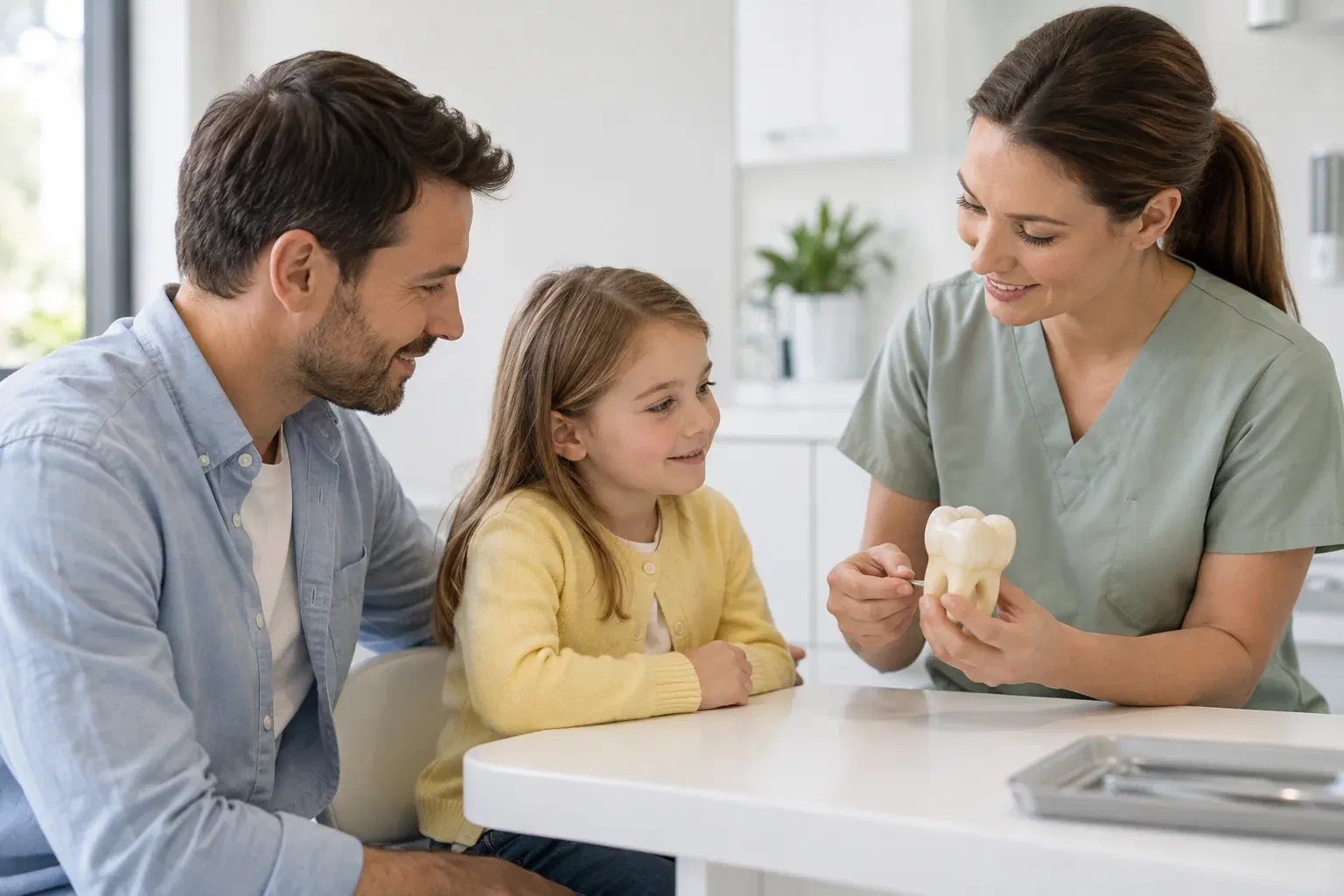
A planned pulpotomy can change once the dentist actually sees the pulp. For families in Acton, this page explains how the treatment works on a baby tooth, which findings might lead to a different approach, and how you can agree in advance on how such decisions will be made.
An X-ray is a shadow picture, and it cannot show everything about living tissue. That is why a pulpotomy plan always carries an “if.” The procedure is meant for a baby tooth where decay has reached the pulp: the crown portion is removed, the dentist checks the tissue left in the roots, and if it looks healthy, it is protected and the tooth is sealed.
Several things go into the decision beforehand: your child’s symptoms, the examination, X-ray findings, and how much tooth remains to restore. A deep cavity is only the beginning of that assessment. Then, during treatment, the appearance of the pulp itself may confirm the plan or call for another one.
Parents in Acton often want to know these possibilities before they say yes, and that is a sensible instinct. Ask us to walk through what each finding would mean, how we would let you know, why this baby tooth is worth keeping, and how the repair and later reviews would be handled.
Tell the team what your child has experienced, even if the tooth feels fine today. No one symptom or image proves a pulpotomy is the right choice.
Unprovoked pain, pain that wakes your child, or pain that lasts after eating may suggest the pulp is more inflamed. Describe how long it lasts and what helps. This history can make a change of plan more or less likely.
A bump on the gum, fluid draining from it, facial swelling, or unexpected looseness may mean infection has spread beyond what a pulpotomy can address. These signs need an examination. A bump that goes away does not confirm healing.
Even healthy root pulp is of little use if the tooth cannot be sealed and restored. The dentist considers remaining structure, the tooth’s role in chewing and spacing, and how long it should last. If too little sound tooth is left, the conversation may turn toward other options before treatment is ever booked.
If pain or swelling is increasing, phone promptly. Get emergency medical help if your child has trouble breathing or swallowing, swelling spreading across the face, or seems very unwell.
When the tooth turns out to be a good candidate, the aim is for the remaining root pulp to stay healthy so the tooth keeps working until it sheds. That is what places it among vital-pulp treatments. It does not apply to teeth with infection through the roots.
The outcome depends on diagnosis, treatment conditions, the material, the restoration and follow-up. Ask what supports the recommendation and what findings would change it. Even when everything goes to plan, the tooth still needs reviewing.
Patient information: AAPD — vital pulp therapies in primary teeth
Ask why this particular baby tooth is worth keeping at your child’s stage, and how treatment compares with removal, including any spacing assessment needed. The reasoning should stand on this tooth’s findings.
A restoration over the treated pulp keeps bacteria out and supports the tooth. A crown may be advised for extensive decay. Ask how the restoration will be chosen and whether it can be completed at the same visit.
Scheduled examinations and X-rays help the dentist judge whether the treatment is holding. Ask which symptoms should prompt an earlier call. Reviews are part of the treatment from the start.
Your child’s needs and the tooth guide each step. Before you begin, agree with the dentist on how a change of plan would be explained and when you would be asked.
The dentist reviews history, examination and images, explains why a pulpotomy is proposed, the restoration that would follow and what the alternatives are if the findings differ. You also agree on comfort support and whether a specialist would be more suitable.
Local anaesthetic is used and the tooth is isolated to keep it clean and dry. The team tells your child what to expect and how to signal. Your child should feel free to report pain.
After the crown pulp is removed, the dentist looks closely at the tissue in the roots. If it does not support a pulpotomy, another approach may be needed, as discussed beforehand. If it does, a protective material is placed.
The tooth is sealed with a restoration. Ask whether this is the final repair or whether a further visit is needed. Before leaving, you will hear plainly what was found and what was done, and go over eating, numbness, pain relief and the review schedule.
Follow the instructions given for the treatment your child actually received, which may differ from the original plan, and for any anaesthetic support. Ask the team to note anything another caregiver will need.
Children can bite a numb lip, cheek or tongue without realising. Supervise and follow the food guidance until normal feeling returns. Use pain relief only as the clinician recommends for your child.
Once normal eating resumes, ask your child how the tooth feels. Call about a bite that seems wrong, pain that persists or worsens, or a damaged restoration. Real discomfort deserves a call.
Help with brushing around the restored tooth. A treated tooth can still develop problems, and other teeth still need prevention. Attend the review examinations and X-rays even when your child feels well.
Patient information: AAPD — local anaesthesia in pediatric dental care
Ask the dentist to explain the recommendation, and any possible changes, using your child’s own tooth and X-rays.
Contact our Bronte Street practice to arrange an assessment or discuss a pulpotomy suggested for your child. Bring earlier advice and describe any symptoms, and we will explain the plan, the alternatives, and how decisions would be made.
Treatment depends on diagnosis and restorability. For pain or swelling right now, call us rather than waiting for an online response.
