

Illustrative child and father discussing a tooth model with a dental clinician
Children’s Dentistry

Pediatric Pulpotomy in Mississauga

“It’s only a baby tooth, so why not just pull it?” is one of the most common questions parents ask. For Mississauga households, this page explains when a pulpotomy is worth considering, when removal may be wiser, and how a treated tooth is sealed and followed.

Keep it or let it go?

A baby tooth can still have years of work ahead

Back molars in particular often stay put until a child is around ten to twelve, chewing food and holding room for the adult teeth underneath. When decay reaches the pulp of one of these teeth, a pulpotomy is one way to keep it. The dentist removes the affected pulp from the crown and aims to leave healthy, living pulp in the roots, then seals the tooth.

That does not mean every decayed baby tooth should be kept. A deep cavity raises the question; it does not answer it. Your dentist looks at symptoms, examination and X-ray findings, how much sound tooth remains, how long the tooth is expected to stay, and the pulp’s appearance during treatment. Sometimes removal is the better path.

For a family coming from Mississauga, it helps to hear both sides before choosing. We can explain what this particular tooth is doing for your child, how a treatment visit would be organised, and how the tooth would be restored and reviewed, so the decision rests on the facts rather than the label “baby tooth.”

Discuss keeping your child’s tooth
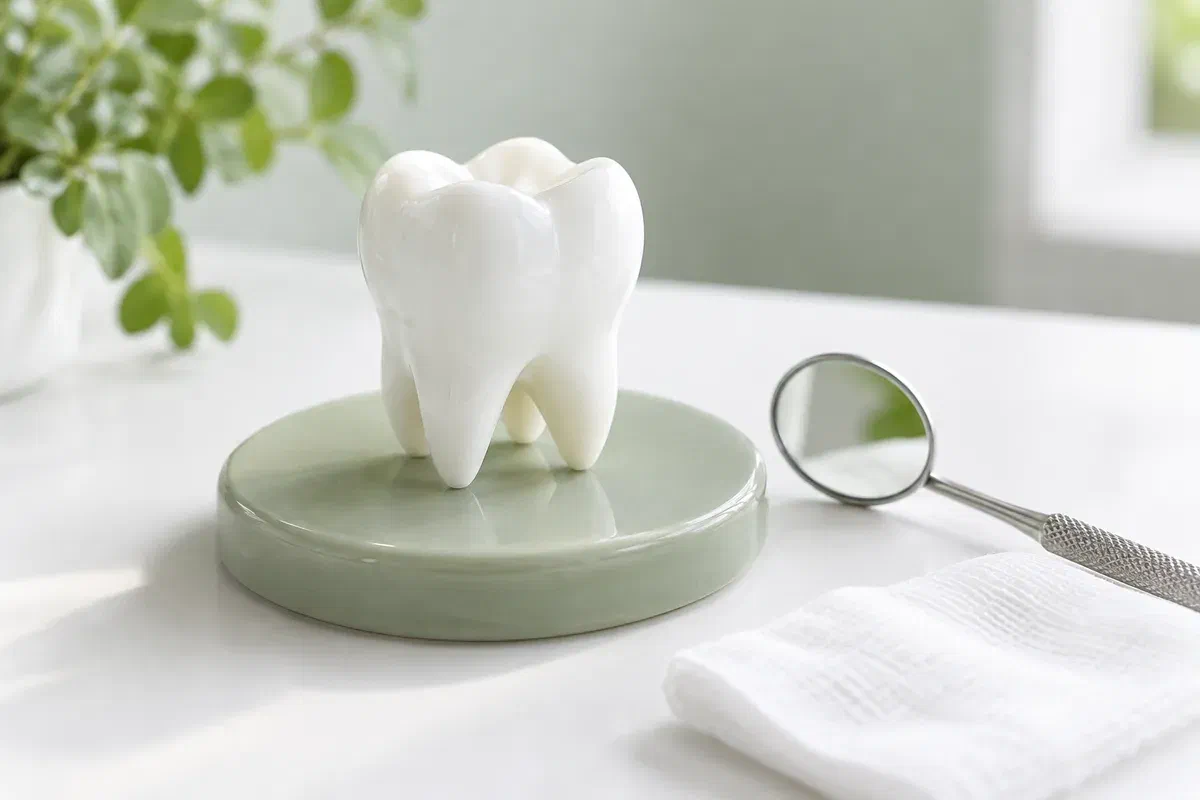
Illustrative solid primary molar model beside a dental mirror and gauze
Signs that shape the decision

What you report can tip the balance

Tell the dentist what your child has been experiencing, even if there is no pain today. A single symptom or a photo cannot confirm that a pulpotomy fits.

Unprompted or lasting toothache

Pain that appears without a trigger, disturbs sleep, or carries on after eating is important information. Describe how long it lasts and what makes it better. It can affect whether the root pulp is likely healthy enough to keep.

Swelling, discharge, or a tooth loosening early

A bump on the gum, fluid draining from it, swelling of the face, or looseness that does not fit normal shedding all need an examination. They can suggest the tooth needs something other than a pulpotomy. A bump that disappears may not mean the problem has resolved.

How long the tooth still needs to last

A baby molar that is years away from falling out may be worth keeping for chewing and spacing; one that is nearly ready to go may not be. The dentist also considers whether it can be restored well. Treatment should have a sound clinical reason behind it.

If your child’s pain or swelling is getting worse, call promptly. Seek emergency medical care for trouble breathing or swallowing, facial swelling that is spreading, or a child who seems gravely unwell.

Why keeping the tooth can matter

Chewing, spacing and a healthy root pulp

When a primary tooth is a suitable candidate, the procedure aims to keep the root pulp healthy and the tooth in service until its natural replacement comes in. That is the purpose of vital-pulp therapy. It is not meant for a tooth whose roots are already infected throughout.

Success depends on the diagnosis, how treatment is carried out, the material, the restoration placed afterward and ongoing follow-up. Ask what supports the recommendation, and what would lead the dentist to suggest removal instead. Even after a smooth visit, the tooth needs periodic checks.

Patient information: AAPD — vital pulp therapies in primary teeth

An honest comparison with extraction

Ask the dentist to explain what this tooth does for your child now and what would change if it were removed. Early loss may call for a space assessment or a space maintainer. The answer depends on this tooth and your child’s stage, not a rule about baby teeth.

A seal that protects the treatment

A well-fitting restoration keeps bacteria out of the treated pulp and supports the weakened tooth. A crown is sometimes advised for extensive decay. Ask how the pulp step and restoration fit together and whether they can be done in one visit.

A schedule for watching the tooth

Examinations and X-rays at planned intervals show how the tooth and surrounding bone are doing. If you are travelling from Mississauga, ask whether these can line up with routine cleanings. Know which symptoms warrant an earlier call.

What a treatment visit looks like

Plan, numb, treat, seal

Your child’s needs and the tooth’s condition shape the details. Ask what to expect and how any surprising finding would be discussed with you before work continues.

  1. Compare treatment with the alternatives

    The dentist goes over history, examination and images, explains why a pulpotomy is suggested and what restoration would follow, and sets out other reasonable choices, including removal. You agree on a comfort plan and discuss whether a specialist would better suit your child.

  2. Numb and isolate

    Local anaesthetic is used, and the tooth is isolated so it stays clean and dry. The team explains what your child might notice and how to ask for a pause. Children are encouraged to say if something hurts.

  3. Remove crown pulp and check the roots

    The pulp in the crown is removed and the remaining tissue is examined. If it does not look suitable, another treatment may be recommended instead. If it does, a material that supports the living root pulp is placed.

  4. Restore and explain aftercare

    The tooth receives a restoration. Ask whether it is the final one or whether another visit is planned. Before leaving, you will cover eating, numbness, pain relief and when the tooth will next be checked.

Looking after a treated baby molar

Protect the seal, then keep watching

Follow the instructions for your child’s treatment and any anaesthetic or calming support used. If another adult will take over care, ask the team what to tell them.

Prevent lip and cheek bites

Children can injure a numb lip, cheek or tongue by chewing on it without realising. Supervise them and follow the food guidance until normal feeling returns. Give pain medicine only in the form and dose suited to your child, as advised.

Listen for complaints when eating

Once your child is back to the suggested diet, ask how the tooth feels. Call about a bite that feels wrong, pain that continues or increases, or a broken restoration. Discomfort is worth reporting rather than ignoring.

Brush carefully and return for reviews

Keep helping your child clean around the restored tooth. Treated teeth can still develop issues, and the other teeth still need prevention. Attend the planned examinations and X-rays, even when the tooth seems fine.

Patient information: AAPD — local anaesthesia in pediatric dental care

Every option on the table

Save the pulp, treat the canals, or remove the tooth

Ask what each choice would achieve and why it does or does not suit this tooth. The simplest option is not automatically enough, and the most involved is not automatically best.

If living pulp can be kept

Vital-pulp treatment

Indirect pulp treatment or a pulpotomy may be discussed depending on the findings. Each has its own indications. Ask why the recommended method matches this tooth’s condition, rather than going by the procedure’s name.

If the root pulp cannot be kept

Pulpectomy or another pulp treatment

A restorable baby tooth with more extensive pulp disease may need treatment through the root canals. That is a different diagnosis and procedure from a pulpotomy. The roots’ condition and other findings decide whether it is appropriate.

If keeping the tooth is not sensible

Extraction with spacing in mind

Removal may be recommended when a tooth cannot be restored well or is close to its natural loss. Ask how the space will be managed and whether a space maintainer or monitoring is needed. Referral can help when needs are complex.

Questions about keeping baby teeth

Straight answers for a tricky choice

Treatment names can sound alike. Ask the dentist to explain the advice using your child’s own tooth, images and stage of development.

(905) 876-4488
Why not just pull a baby tooth that has a deep cavity?
Sometimes removal is the right choice. But a baby molar may still have years of chewing and space-holding ahead, and early loss can affect where adult teeth come in. The dentist weighs those factors against the tooth’s condition and outlook.
What is a space maintainer, and when would one be needed?
It is an appliance that can hold room for an adult tooth after a baby tooth is lost early. Whether one is needed depends on which tooth is lost, your child’s age and development. The dentist can explain whether it applies to your child.
How long does a baby molar usually stay in the mouth?
It varies by tooth and by child. Back baby molars are often among the last to fall out. The dentist can use the examination and X-rays to estimate how much time this tooth likely has left, which affects the treatment choice.
Does a pulpotomy keep the whole pulp?
No. The pulp in the crown is removed while healthy pulp in the roots is kept where possible. Removing pulp throughout the canals is a separate treatment. Which approach fits depends on the diagnosis.
Can a treated baby tooth affect the adult tooth underneath?
Problems in a baby tooth, such as infection, can affect surrounding tissues, which is one reason follow-up X-rays matter. Ask the dentist what they will watch for and what signs should prompt an earlier visit.
Can a decision be made at the first appointment, or can we think it over?
Unless there is urgent pain or swelling, you can usually take time to consider the options and ask more questions. The dentist can explain how quickly treatment should happen, given the tooth’s condition.
Coming from Mississauga

Make the keep-or-remove decision with confidence

Contact our Bronte Street practice in Milton to book an assessment or talk through a pulpotomy suggested for your child. Bring earlier advice and tell us about any symptoms, and we will explain the options for this tooth and how planning would proceed.

Treatment depends on diagnosis and whether the tooth can be restored. For pain or swelling happening now, please call instead of waiting on an online message.

Visit Milton Dental Clinic
Unit 1, 342 Bronte St. S, Milton, ON L9T 5B7
Get directions Clinic hours
Monday–Thursday
11am–7pm
Friday–Sunday
By appointment only

Areas we serve

  • Milton
  • Oakville
  • Mississauga
  • Georgetown
  • Halton Hills
  • Acton
  • Campbellville
  • Brampton
  • Burlington
  • Puslinch
  • Rockwood
  • Erin
  • Caledon
  • Etobicoke
  • Old Milton
  • Bronte Meadows
  • Timberlea
  • Dorset Park
  • Dempsey
  • Clarke
  • Beaty
  • Coates
  • Harrison
  • Scott
  • Willmott
  • Ford
  • Bowes
  • Cobden
  • Walker
  • Mountain View
  • Milton Heights
  • Hawthorne Village
  • Valley View
  • Fallingbrook
  • Nassagaweya
  • Trafalgar
  • Esquesing
  • Nelson
  • Brookville
  • Moffat
  • Glen Williams
  • Norval
  • Limehouse
  • Stewarttown
  • Ashgrove
  • Hornby
  • Silver Creek
  • Speyside
  • Scotch Block
  • North Oakville
  • River Oaks
  • Glen Abbey
  • West Oak Trails
  • Palermo
  • Bronte Creek
  • College Park
  • Joshua Creek
  • Uptown Core
  • Preserve
  • Iroquois Ridge
  • Lisgar
  • Meadowvale
  • Meadowvale Village
  • Churchill Meadows
  • Erin Mills
  • Central Erin Mills
  • Streetsville
  • East Credit
  • Creditview
  • Heartland
  • Sheridan
  • Mount Pleasant
  • Credit Valley
  • Huttonville
  • Churchville
  • Springbrook
  • Northwest Brampton
  • Bram West
  • Fletcher's Meadow
  • Fletcher's Creek South
  • Alton Village
  • Orchard
  • Millcroft
  • Headon Forest
  • Tansley
  • Brant Hills
  • Tyandaga
  • Kilbride
  • Lowville
  • Aberfoyle
  • Morriston
  • Arkell
  • Hillsburgh
  • Freelton
  • Carlisle
  • Waterdown
  • Flamborough
  • Mountsberg

How can we help?

Milton Dental Clinic

Have a question about your smile? Choose the option that works best for you.

For urgent dental concerns, please call.
Messages are reviewed during clinic hours.