Pain with no trigger
Tell the dentist about aching that started on its own, woke your child, or lasted after eating. Describe how long and what eased it. This affects both the diagnosis and what the dentist will look for at follow-up.

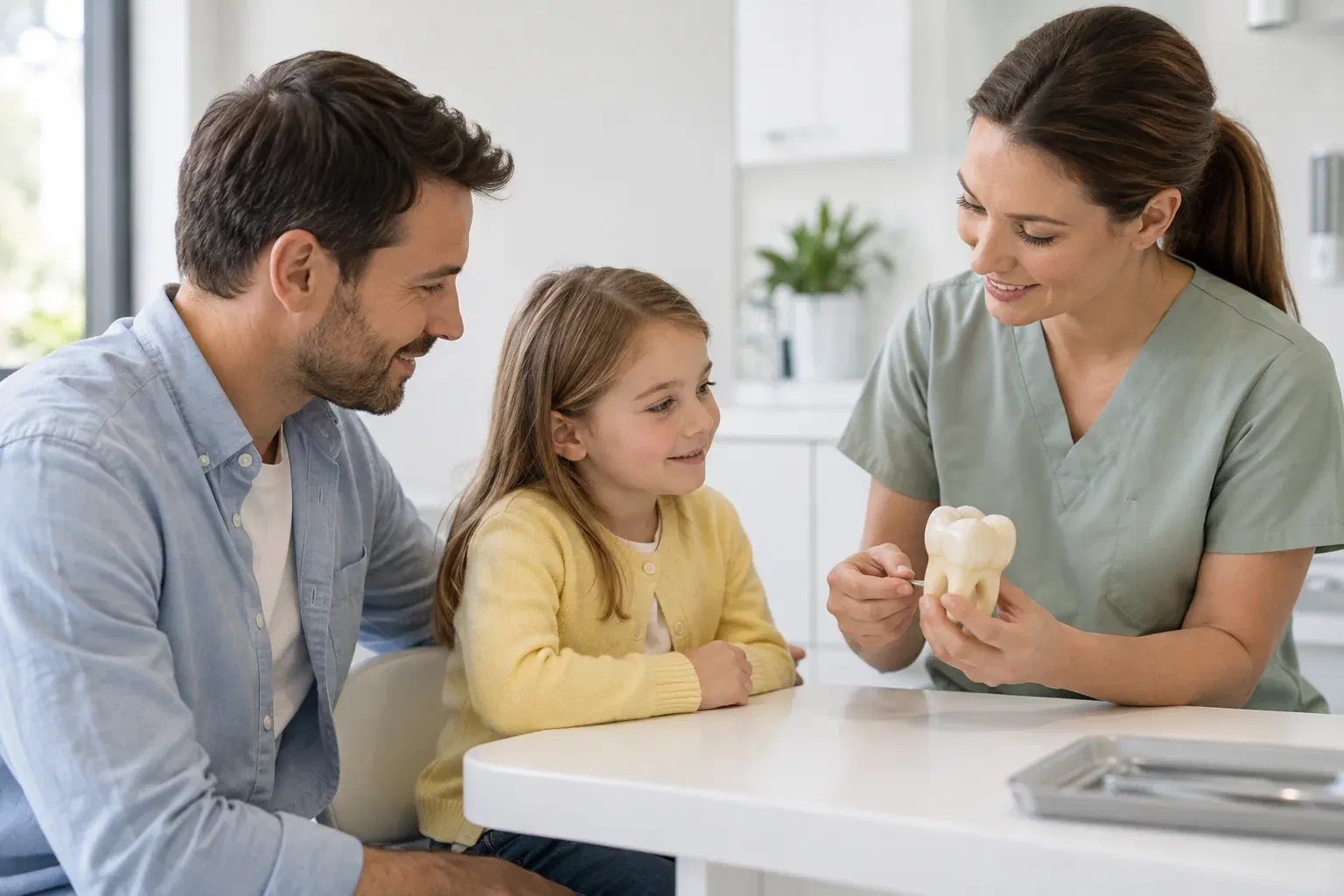
The appointment where the tooth is treated is not the end of a pulpotomy. For households in Puslinch, this page covers how the procedure works on a baby tooth, how the decision is made, and why the follow-up examinations and X-rays matter even when the tooth feels fine.
Once a sore baby tooth settles down after treatment, it is easy to assume the story is over. Yet a pulpotomy is designed to be watched. The dentist removes pulp from the crown of a primary tooth where decay has reached it, aims to keep healthy pulp alive in the roots, then seals the tooth. Whether that root tissue stays healthy is something only time and review can show.
Getting to treatment involves its own judgment. Deep decay starts the conversation; it does not end it. The dentist looks at symptoms, examination, X-rays, how much tooth can be restored, and the condition of the pulp once reached. Any of these might lead to a different recommendation.
For a family in Puslinch, where a dental visit usually means a planned drive, it helps to know the review schedule from the start. Ask us why this baby tooth is worth saving, how the treatment visit will be set up for your child, and how follow-up checks can fit into routine care.
Share what your child has felt, even if the tooth is quiet now. A single symptom or image cannot establish that a pulpotomy is suitable, and the history also helps later reviews.
Tell the dentist about aching that started on its own, woke your child, or lasted after eating. Describe how long and what eased it. This affects both the diagnosis and what the dentist will look for at follow-up.
A bump near the tooth, drainage, facial swelling, or movement out of step with normal shedding needs examining. These signs may point to treatment other than a pulpotomy. A bump that disappears may still have an underlying cause.
A baby molar that has years left may be worth the treatment and the reviews that come with it. The dentist weighs restorability, the tooth’s role in chewing and spacing, and how close it is to falling out. The case needs clinical support.
Call soon if pain or swelling is worsening. Seek emergency medical attention for breathing or swallowing difficulty, facial swelling that spreads, or a child who seems very unwell.
For a suitable primary tooth, the goal is for the root pulp to remain healthy so the tooth keeps working until its natural replacement arrives. That makes it a vital-pulp treatment. It is not intended for teeth with infection through the roots.
Outcome depends on diagnosis, treatment conditions, the material, the restoration and follow-up. Ask which findings support the plan and what would change it. A tooth can feel completely normal while changes show on an X-ray, which is why reviews are planned.
Patient information: AAPD — vital pulp therapies in primary teeth
Ask what this tooth contributes now and how treating it compares with removal. Early loss may call for a spacing assessment. The discussion should centre on this particular tooth.
A crown or filling over the treated pulp keeps bacteria out. A leaking or broken restoration can affect the outcome, which reviews also check. Ask which restoration is planned and whether both steps can be done at one visit.
Planned clinical checks and X-rays let the dentist see how the tooth and surrounding bone are doing, sometimes before any symptoms appear. You should know which signs mean calling before the next review.
Every child and every tooth is a little different, so the visit bends to fit. It is fair to ask in advance what is likely to happen, roughly how long it takes, and how you would be told if the dentist saw something unexpected.
Your child’s dentist pulls together the symptom history, what the examination showed and the X-rays, then sets out the case for a pulpotomy, the restoration that would follow it, and the other reasonable paths. This is also the moment to plan comfort support and to ask whether a pediatric specialist might be a better fit.
Local anaesthetic numbs the tooth and gum, and a barrier keeps saliva away while the dentist works. Your child hears, in words that suit their age, what they may feel and how to signal a problem. Saying that something hurts is always allowed.
Once the pulp in the crown chamber is out, the dentist studies the tissue left behind. Healthy-looking root pulp is covered with a material meant to support it. Tissue that does not look right may mean switching to another approach, which is why that possibility is raised beforehand.
The tooth is closed with a crown or filling; ask whether it is the final version. Before you head back to Puslinch, go over eating, numbness and pain relief, and note when the first review is due, ideally alongside a routine cleaning.
Follow the instructions for your child’s procedure and any anaesthetic support. Ask for written notes on what to watch for, so anyone caring for your child knows the signs.
A numb lip feels odd, and children often nibble or suck on it without realising they are causing a sore. Stay nearby, hold off on food as directed until sensation returns, and give pain medicine only in the way the clinician suggested for your child.
As regular eating resumes, ask your child how the tooth is feeling. Phone the clinic about a bite that seems uneven, pain that hangs on or builds, or a crown or filling that cracks or loosens. Real discomfort is worth reporting, not riding out.
Keep helping with brushing around the restored tooth, and keep the other teeth protected with the same routine. Turn up for the planned reviews and X-rays even when your child has no complaints, since some problems only show on images.
Patient information: AAPD — local anaesthesia in pediatric dental care
Ask the dentist to explain the plan using your child’s tooth, images and treatment history, including how often reviews are recommended.
Contact our Bronte Street practice to arrange an assessment or discuss a pulpotomy suggested for your child. Bring earlier advice and describe symptoms, and we will explain the next step and how follow-up can fit your routine.
Treatment depends on diagnosis and restorability. If your child has pain or swelling now, please call rather than waiting for a message reply.
