

Illustrative child and parent discussing a silver-crowned tooth teaching model
Children’s Dentistry

Pediatric Stainless Steel Crowns

Some baby molars need more coverage than a filling provides. Explore pediatric stainless steel crowns in Milton, including why a crown may be recommended, how placement is planned, and what to expect as your child’s teeth develop.

A closer look at pediatric stainless steel crowns

Give a weakened baby molar the coverage it needs.

A stainless steel crown is a preformed metal covering selected and fitted over the visible part of a tooth. In children, it is often considered for a primary molar with damage that needs more support than a smaller filling can provide. It has a silver appearance rather than matching the enamel.

The recommendation should explain more than the material. The dentist considers the extent of decay or weakness, the condition of the pulp, the tooth's expected remaining role, and your child's treatment needs. A crown may be appropriate after pulp treatment or for another restoration need identified during assessment.

At Milton Dental Clinic, ask why a crown is being proposed and how it compares with the other suitable options. Your child can ask about the appearance and the appointment too. We want the plan to be understandable before treatment, including how the tooth will be cared for and checked afterward.

Discuss a crown for your child’s tooth
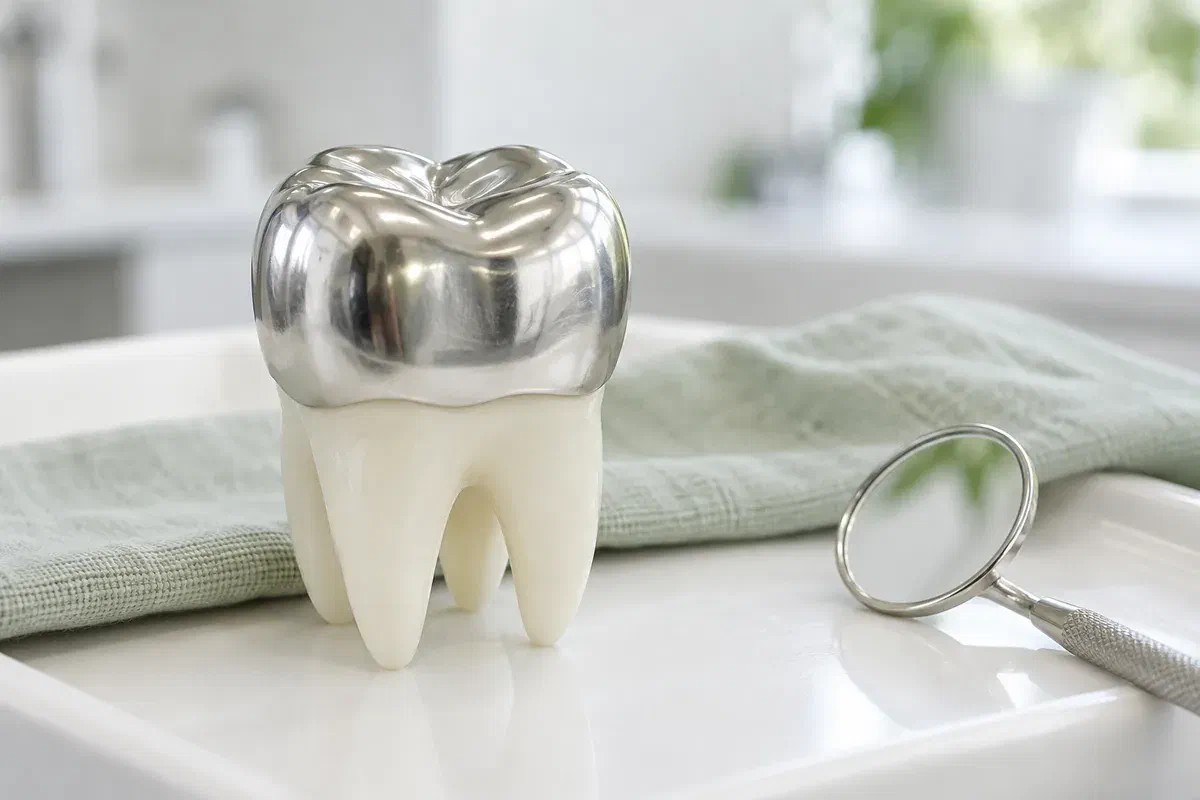
Illustrative molar teaching model with a smooth stainless steel crown
When a larger restoration is considered

Look at the remaining tooth, not only the visible hole.

The size of a cavity, the number of affected surfaces, and the condition inside the tooth can change the repair options. Explain symptoms and previous treatment as part of the assessment.

A large cavity or repeated filling problems

A tooth with several damaged surfaces may not provide the same support for a filling as a smaller defect. Tell the dentist about previous repairs or broken edges. The recommendation should explain whether a covering restoration offers a more appropriate approach for this tooth.

A tooth that has needed pulp treatment

A pulpotomy or pulpectomy addresses tissue inside the tooth, while the restoration above it provides a separate part of care. Ask whether a crown is needed to complete the plan. Comfort after pulp treatment does not mean the final restorative step can be overlooked.

Material concerns and appointment needs

Tell the clinician about known material allergies, including nickel, and any previous reactions. Mention sensory or communication needs and concerns about appearance. Those details should be considered before choosing the material and deciding how treatment will be provided.

Pain, swelling, or a gum bump may indicate that the tooth needs more than a crown. Describe these findings when booking rather than assuming a new covering will address the cause.

What a suitable crown can provide

Cover the chewing surface and sides as part of one restoration.

A stainless steel crown surrounds the visible crown portion of the tooth, rather than replacing only one damaged area. This can be useful for selected primary molars with substantial decay, structural weakness, or a need for restoration after pulp treatment. The diagnosis still comes first.

The aim is to provide an appropriate restoration for the tooth's remaining time in the mouth. Crowns can loosen, wear, or need further attention, and the underlying tooth can still develop a problem. A metal covering does not remove the need for cleaning, prevention, and review.

Patient information: AAPD — restorative dentistry for children

Coverage where several surfaces need care

Ask the dentist to explain how the damaged surfaces affect the choice. A crown may be more appropriate than extending a large filling into weakened areas. The recommendation should be linked to the tooth's structure and expected function, not simply to a preference for metal.

A restoration considered alongside development

Retaining a suitable primary molar can allow it to continue its role while the mouth develops. The expected timing of natural tooth loss helps frame the discussion. Ask whether the tooth's future or a developing permanent tooth changes the treatment decision.

An opportunity to complete a broader care plan

A crown may be one part of managing several dental needs. Confirm which teeth need treatment and how the appointments fit together. Your family should also receive practical prevention advice, so attention does not end with restoring the tooth that currently has the largest problem.

How crown placement is planned

Assess the tooth, explain the technique, and check the fit.

There are different ways to place a preformed metal crown. The dentist should explain which approach is proposed and why it is suitable for the diagnosed condition.

  1. Confirm the findings and restoration choice

    Review symptoms, examination, and any clinically indicated images. Discuss whether pulp treatment is needed and whether the tooth can be restored appropriately. Ask about alternatives, the crown's appearance, material concerns, and the plan for comfort or referral.

  2. Prepare according to the selected technique

    Conventional placement may involve local anaesthesia, decay management, and shaping the tooth. For selected primary molars, a Hall technique may be considered instead. That approach has specific suitability criteria and should not be assumed to fit every decayed or painful tooth.

  3. Select, fit, and secure the crown

    The clinician selects a suitable preformed crown and assesses its fit before securing it with dental cement. The details depend on the tooth and technique. Your child should have a way to communicate discomfort, and the team can explain unfamiliar pressure or sensations.

  4. Review the bite and home-care instructions

    Ask what your child may notice when eating or closing their teeth, and what should prompt a call. Confirm any numbness precautions and follow-up appointments. If other treatment remains, make sure you understand how and when the rest of the plan will be completed.

Living with a crowned baby tooth

Keep it clean and pay attention to changes.

Follow the advice for the placement technique and any anaesthetic used. Ask for instructions you can share with another parent, caregiver, or school if your child needs support afterward.

Supervise the first meals and any numbness

Follow the clinician's advice about when and what to eat. If your child is numb, help prevent lip, cheek, or tongue biting until feeling returns. Ask about suitable pain relief if needed; significant or worsening pain should be reported rather than managed indefinitely at home.

Brush the crown and clean around its edges

The gum margin and neighbouring teeth still need daily care. Continue age-appropriate brushing help and cleaning between teeth as advised. Tell the team about an area that repeatedly catches food or is difficult to clean so they can assess it and demonstrate a suitable approach.

Call about looseness, damage, or persistent symptoms

Report a crown that moves, comes off, or appears worn through. Keep a detached crown in a safe container and contact the clinic; do not glue it back or leave it loose in your child's mouth. Continue reviews even if no obvious problem is present.

Patient information: Guy’s and St Thomas’ — stainless steel crowns for children

Choosing coverage for a primary molar

The best comparison starts with what this tooth can support.

Ask how each suitable option differs in preparation, appearance, follow-up, and likely limitations. A white appearance and a small repair are not always possible together.

When full coverage is clinically appropriate

A preformed stainless steel crown

A metal crown may be proposed for a damaged primary molar or following pulp treatment. The dentist should explain the chosen placement approach and material considerations. It is intended as a fitted restoration, not a removable cover for use only during meals.

When another restoration meets the tooth’s needs

A filling or another suitable crown material

A smaller defect may be suitable for a direct filling, while another crown material may be considered in selected circumstances. Appearance, remaining structure, placement requirements, and the child's needs affect the discussion. Ask which alternatives are actually appropriate for this tooth.

When a covering alone cannot address the problem

Additional treatment or removal

A tooth with affected pulp may need care inside it before restoration, while a non-restorable tooth may require extraction. Ask how the diagnosis changes the options. If removal is advised, the developing bite and any space-management needs can be assessed separately.

Questions about children’s metal crowns

Know what the silver tooth means for everyday care.

Your child may focus on appearance while you wonder about durability and development. Both are useful topics for a clear treatment discussion.

(905) 876-4488
Will the stainless steel crown come out when my child’s baby tooth falls out?
A crown on a primary tooth is generally intended to remain with that tooth through its remaining time in the mouth. When the tooth naturally sheds, the crown can come out with it. Some teeth or crowns need earlier attention, so the dentist should continue reviewing them.
Is every stainless steel crown placed using the Hall technique?
No. Conventional preparation and the Hall technique are different approaches. The Hall technique can be considered for selected primary molars and is not appropriate for every tooth. Ask which method is proposed, why it fits the findings, and what your child should expect.
Should I mention a nickel allergy before my child receives a metal crown?
Yes. Tell the clinician about any known allergy or previous reaction before material selection. Stainless steel crown materials can contain nickel. The dentist can review the relevant history and discuss suitable alternatives or further advice rather than assuming the usual material is appropriate.
Can my child take a stainless steel crown out to clean underneath it?
No. It is cemented as a fixed restoration and should not be removed at home. Clean the outside, gum margin, and neighbouring areas as advised. If it feels loose or comes away, contact the clinic and keep the crown safely out of your child’s mouth.
What if my child says their teeth feel different when biting after crown placement?
Discuss the expected adjustment with the dentist because it can depend on the placement technique. Report significant pain, inability to eat comfortably, or a change that does not settle as advised. Do not attempt to file the crown or ask the child to force the bite together.
Does a stainless steel crown mean the rest of my child’s teeth are protected from cavities?
No. The crown restores a particular tooth; it does not protect the rest of the mouth from decay. Continue the recommended brushing help, fluoride advice, dietary changes, and reviews. Ask which prevention steps are most relevant to the reasons your child needed treatment.
Pediatric stainless steel crowns in Milton

Understand the coverage your child’s tooth needs.

Contact our Bronte Street practice to discuss a crown recommendation or a damaged primary molar. We can explain the assessment, suitable restoration options, and how the proposed care fits into your child's wider dental plan.

Crown material and placement technique depend on assessment. Mention pain, swelling, or known material allergies when arranging care.

Visit Milton Dental Clinic
Unit 1, 342 Bronte St. S, Milton, ON L9T 5B7
Get directions Clinic hours
Monday–Thursday
11am–7pm
Friday–Sunday
By appointment only

How can we help?

Milton Dental Clinic

Have a question about your smile? Choose the option that works best for you.

For urgent dental concerns, please call.
Messages are reviewed during clinic hours.